 flip
flipSaffron-Roasted Lamb with Pomegranate Glaze
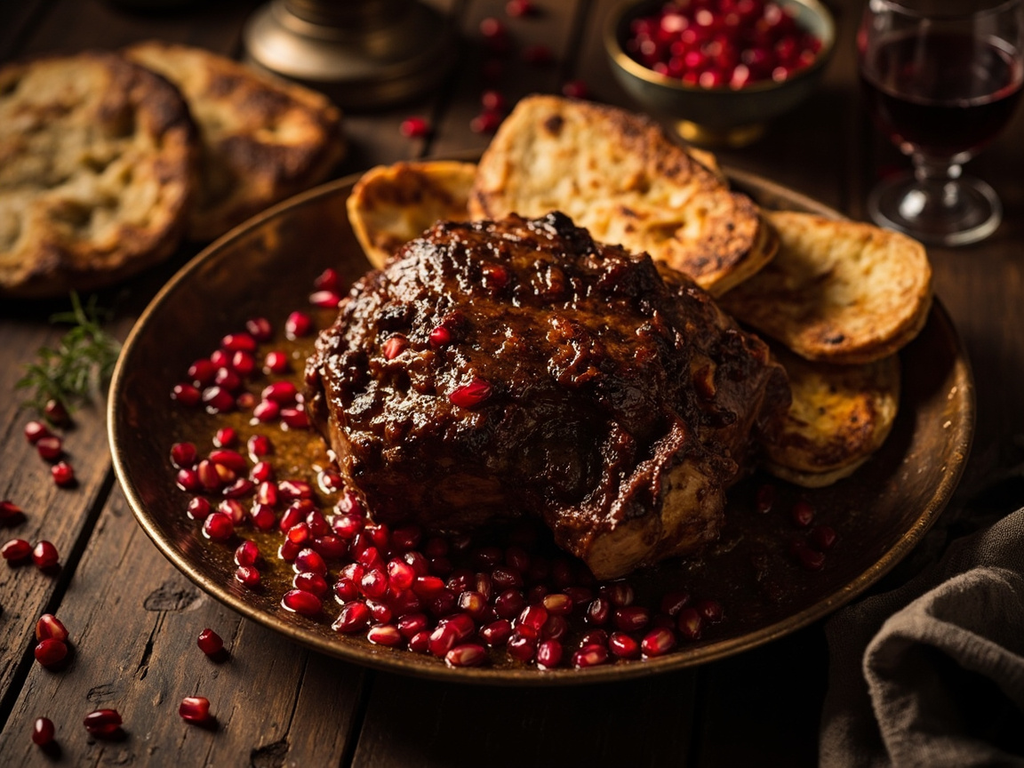
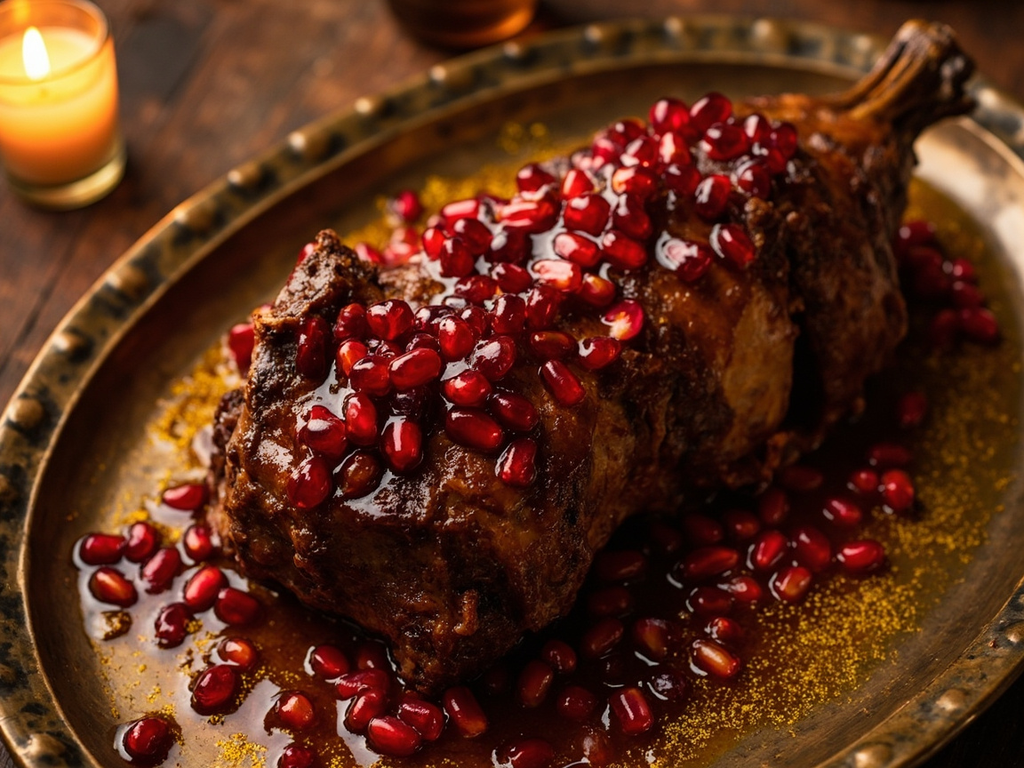
Saffron-Roasted Lamb with Pomegranate Glaze
Why this dish? The union of Amytis with Cyrus the Great sealed the alliance of Medes and Persians: a royal wedding celebrated with banquets where roasted meat in abundance — mutton, game — affirmed the power of the two united houses. Saffron and pomegranate, splendors of the Iranian plateau, marked the queen's table.
A lamb shoulder rubbed with saffron and salt, slow-roasted until it falls off the bone, then lacquered with a syrup of reduced pomegranate juice, tangy and brilliant like a ruby.
The day I was wed to the Persian, whole herds were put on the spits of Ecbatana. I want you to know this dish: we rub the lamb with saffron that my maids have gathered thread by thread, more precious than gold by weight, then we turn it over the fire until its flesh yields under the finger. At the end, we bathe it in the clear blood of the pomegranate reduced with honey — see how it shines! Thus eats a king of the Medes and Persians: not greedily, but with what proves that the earth obeys him.
- •Mutton or lamb shoulder — one piece (meat)
- •Saffron — a few threads (spice-color)
- •Pomegranate juice — the juice of several fruits (tangy glaze)
- •Honey — one spoonful (sweet binder)
- •Onion — two (aromatic bed)
- •Salt — to taste (seasoning)
Saffron-Roasted Lamb with Pomegranate Glaze
A lamb shoulder rubbed with saffron and salt, slow-roasted until it falls off the bone, then lacquered with a syrup of reduced pomegranate juice, tangy and brilliant like a ruby.
Why this dish? The union of Amytis with Cyrus the Great sealed the alliance of Medes and Persians: a royal wedding celebrated with banquets where roasted meat in abundance — mutton, game — affirmed the power of the two united houses. Saffron and pomegranate, splendors of the Iranian plateau, marked the queen's table.
The day I was wed to the Persian, whole herds were put on the spits of Ecbatana. I want you to know this dish: we rub the lamb with saffron that my maids have gathered thread by thread, more precious than gold by weight, then we turn it over the fire until its flesh yields under the finger. At the end, we bathe it in the clear blood of the pomegranate reduced with honey — see how it shines! Thus eats a king of the Medes and Persians: not greedily, but with what proves that the earth obeys him.
Ingredients (period version)
- Mutton or lamb shoulder — one piece (meat)
- Saffron — a few threads (spice-color)
- Pomegranate juice — the juice of several fruits (tangy glaze)
- Honey — one spoonful (sweet binder)
- Onion — two (aromatic bed)
- Salt — to taste (seasoning)
Ingredients
- Lamb shoulder — 1.2 to 1.5 kg (meat)
- Saffron — 1 generous pinch (infused in 3 tbsp hot water) (spice-color)
- Unsweetened pomegranate juice — 400 ml (tangy glaze)
- Honey — 1 tbsp (sweet binder)
- Onions — 2, cut into thick wedges (aromatic bed)
- Sesame oil — 2 tbsp (fat)
- Salt — 2 tsp (seasoning)
- Fresh pomegranate seeds — 1 handful (garnish)
Method
- Rub the lamb with oil, salt, and the saffron infusion; let rest for 1 hour at room temperature.
- Place the meat on the onion bed in a dish, cover, and roast in the oven at 150°C for 3 to 3.5 hours, until it falls off the bone.
- Meanwhile, reduce the pomegranate juice with the honey over medium heat until syrupy (15 to 20 minutes).
- Uncover the lamb, brush generously with pomegranate glaze, and return to the oven at 200°C for 20 minutes, basting twice to lacquer.
- Let rest for 10 minutes, sprinkle with fresh pomegranate seeds, and serve with the pan juices.
How it was made : The Persians roasted large pieces of meat whole — mutton, goat, game, sometimes beef — during feasts, often on spits or buried under embers. Saffron (from crocus cultivated in Iran since antiquity) served both as a golden dye and a prestige spice. Tangy pomegranate juice, before lemon and verjuice, played the role of an acid agent to balance the richness of fatty meats.
The contemporary twist : Present the whole shoulder on a bed of glazed confit onions, sprinkled with pomegranate: an "inverted rhyton" where the meat replaces the drinking horn at the center of the table.
Amytis · Charactorium