 flip
flipIpocrasso (clarified spiced wine for banquets)
Ipocrasso (clarified spiced wine for banquets)
Why this dish? When the master received a patron—a Medici, a merchant, or the Venetians come to negotiate the Colleoni statue—this spiced wine was served after the meal, considered digestive and a sign of wealth. The spices proclaimed Florence's splendor; the proffered glass sealed the contract for a future work.
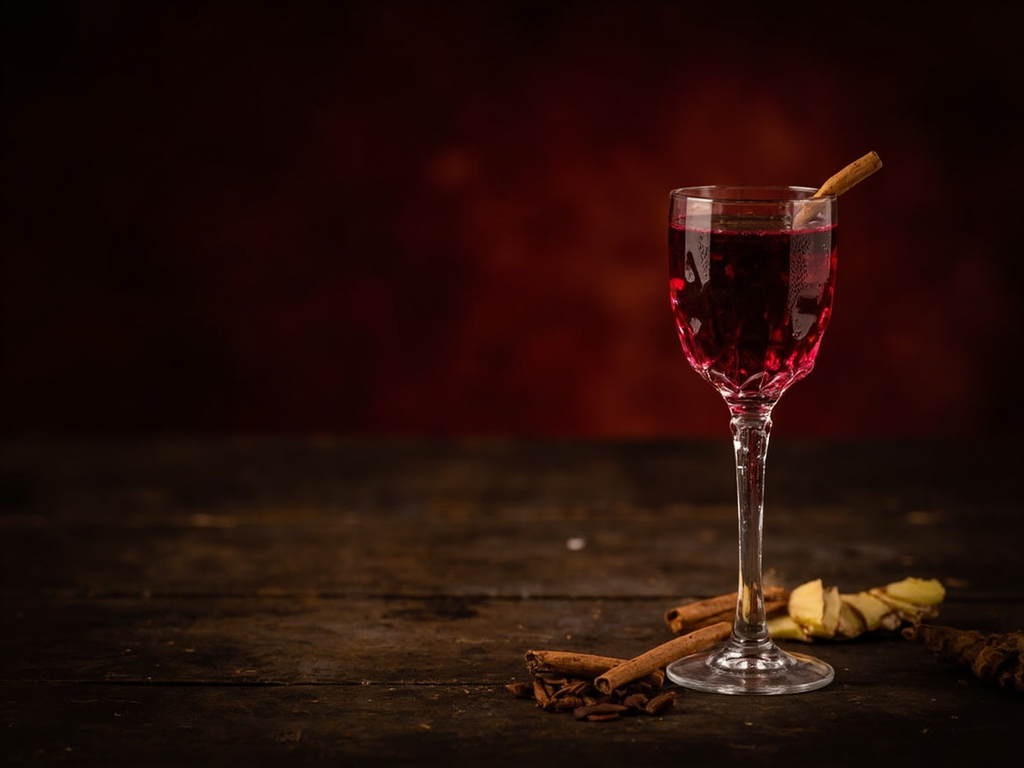
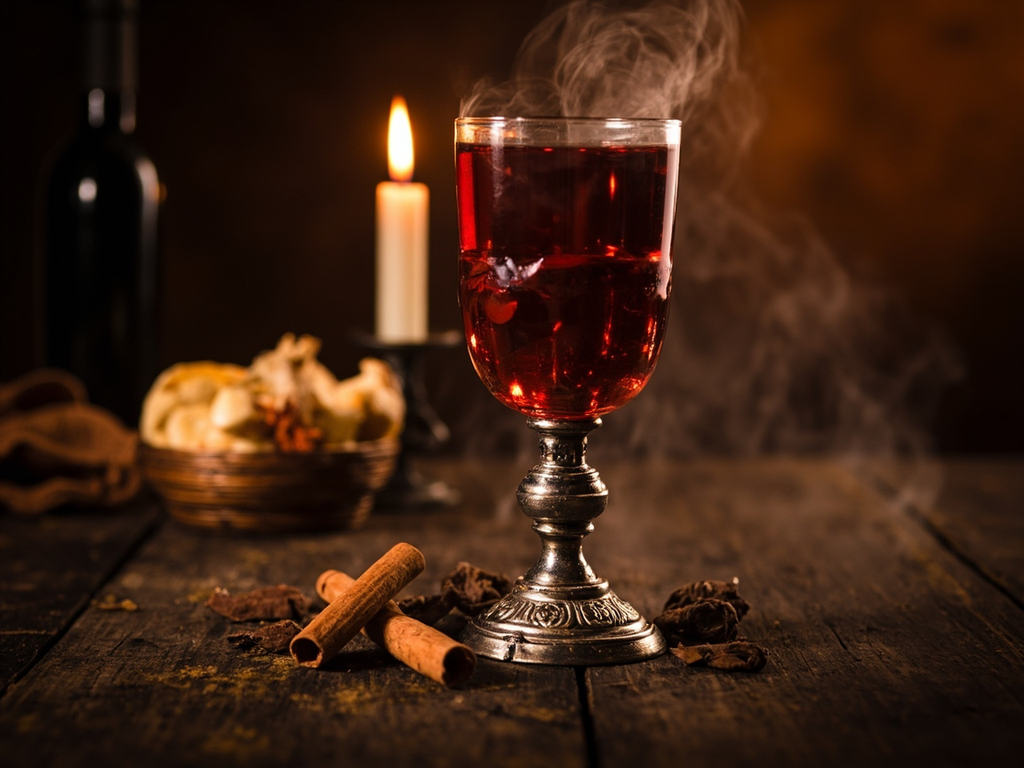
Red wine sweetened with honey and long infused with noble spices—cinnamon, ginger, clove, nutmeg—then clarified through a cloth. A warm or tepid, fragrant and comforting drink that closed festive meals.
When a man of quality came to my table, I would not let him leave without his glass of *ipocrasso*. I would heat good wine with honey, then throw in cinnamon, ginger, cloves, and a grating of nutmeg—all rare things worth their weight in silver. I let the spices marry, then strained the whole through a tight cloth, just as one filters molten wax of its impurities, until the wine was clear as Venetian glass. Warm, it warms the stomach and loosens the tongue: that is how one concludes a fine commission.
- •Red wine — a pitcher (base)
- •Honey — to taste (sweetness)
- •Cinnamon — one stick (master spice)
- •Ginger — a piece (spicy warmth)
- •Cloves — a few (fragrance)
- •Nutmeg — a grating (fragrance)
- •Long pepper or grains of paradise — a pinch (noble pungency)
Ipocrasso (clarified spiced wine for banquets)
Red wine sweetened with honey and long infused with noble spices—cinnamon, ginger, clove, nutmeg—then clarified through a cloth. A warm or tepid, fragrant and comforting drink that closed festive meals.
Why this dish? When the master received a patron—a Medici, a merchant, or the Venetians come to negotiate the Colleoni statue—this spiced wine was served after the meal, considered digestive and a sign of wealth. The spices proclaimed Florence's splendor; the proffered glass sealed the contract for a future work.
When a man of quality came to my table, I would not let him leave without his glass of *ipocrasso*. I would heat good wine with honey, then throw in cinnamon, ginger, cloves, and a grating of nutmeg—all rare things worth their weight in silver. I let the spices marry, then strained the whole through a tight cloth, just as one filters molten wax of its impurities, until the wine was clear as Venetian glass. Warm, it warms the stomach and loosens the tongue: that is how one concludes a fine commission.
Ingredients (period version)
- Red wine — a pitcher (base)
- Honey — to taste (sweetness)
- Cinnamon — one stick (master spice)
- Ginger — a piece (spicy warmth)
- Cloves — a few (fragrance)
- Nutmeg — a grating (fragrance)
- Long pepper or grains of paradise — a pinch (noble pungency)
Ingredients
- Red wine (full-bodied, lightly oaked) — 750 ml (base)
- Honey — 80 to 100 g (sweetness)
- Cinnamon — 1 stick (master spice)
- Fresh ginger — 3 slices (spicy warmth)
- Cloves — 4 (fragrance)
- Nutmeg — 1 grating (fragrance)
- Black peppercorns — 4 grains (noble pungency)
Method
- Pour the wine into a saucepan, add honey, and heat gently without boiling (the wine should not simmer vigorously).
- Add all spices and infuse over very low heat for 15 to 20 minutes.
- Remove from heat and let rest for 10 minutes to develop flavors.
- Strain carefully through a clean cloth or fine muslin until the wine is clear.
- Serve warm in small glasses at the end of the meal.
How it was made : Hypocras (from medieval Latin linked to Hippocrates) was the quintessential spiced drink of the late Middle Ages and Renaissance, served at the end of banquets and reputed as digestive. It was filtered through the "sleeve of Hippocrates," a conical cloth bag. The spices, transiting through Venice and Genoa, made it as much a marker of social prestige as a pleasure.
The contemporary twist : Serve chilled in summer with a few shavings of bitter orange zest—a "refreshed" hypocras the master would not have scorned.
Sources : Le Ménagier de Paris (ca. 1393), recipe for hypocras · Bartolomeo Sacchi (Platina), De honesta voluptate et valetudine (ca. 1474)
Andrea del Verrocchio · Charactorium