 flip
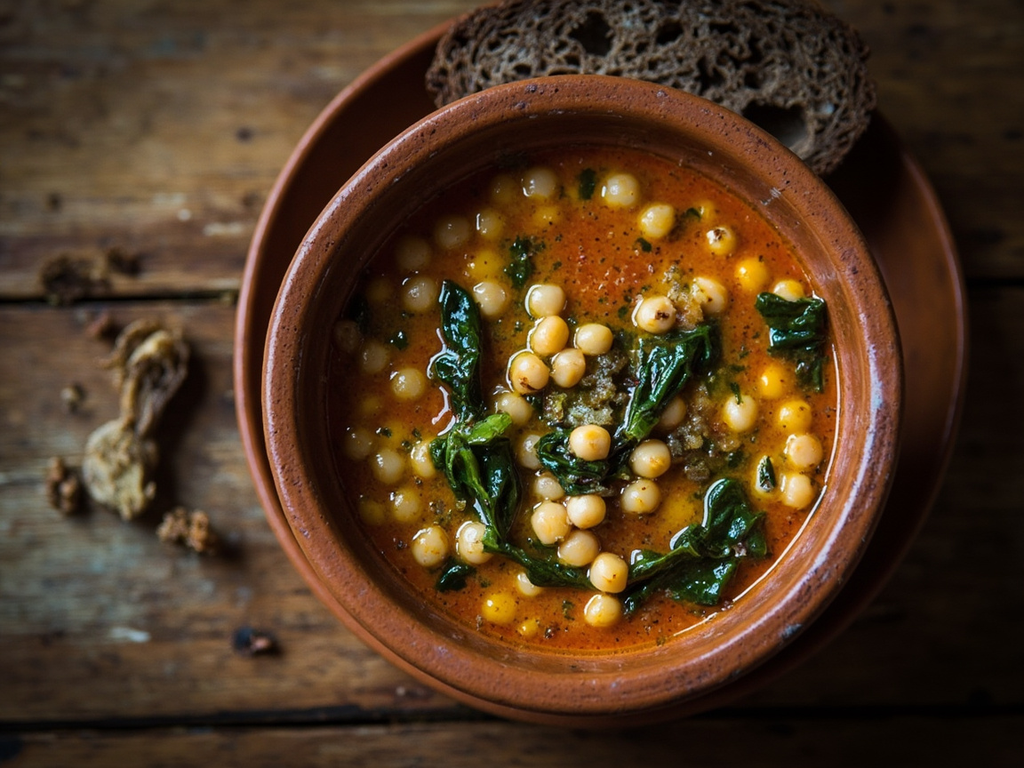
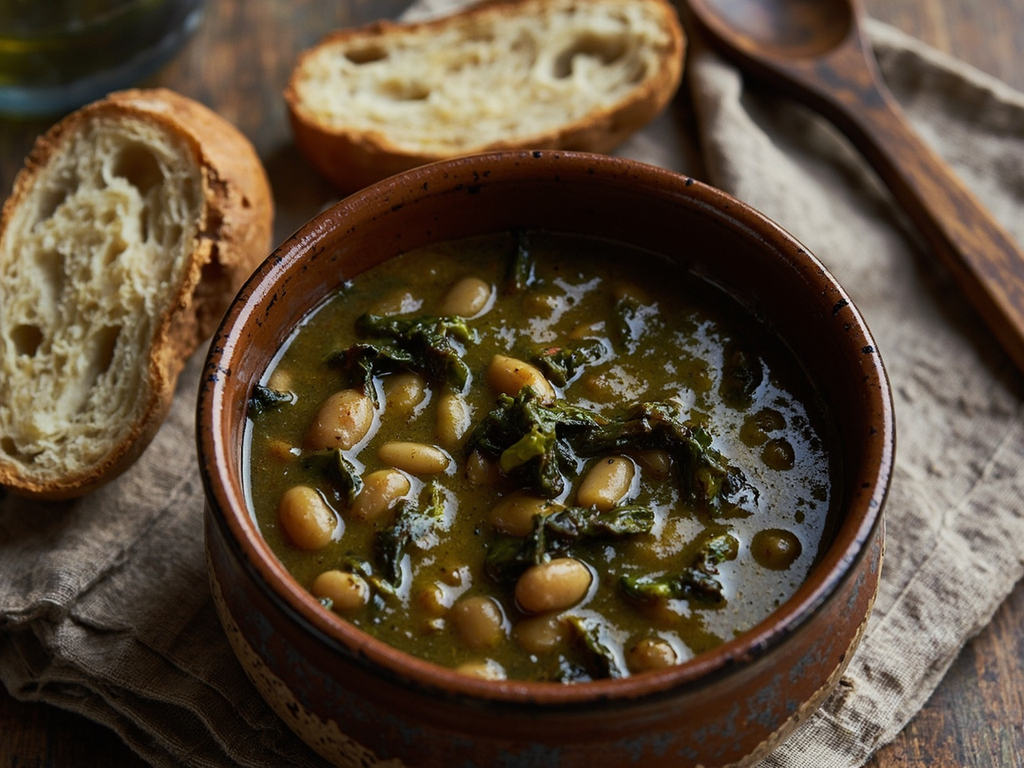
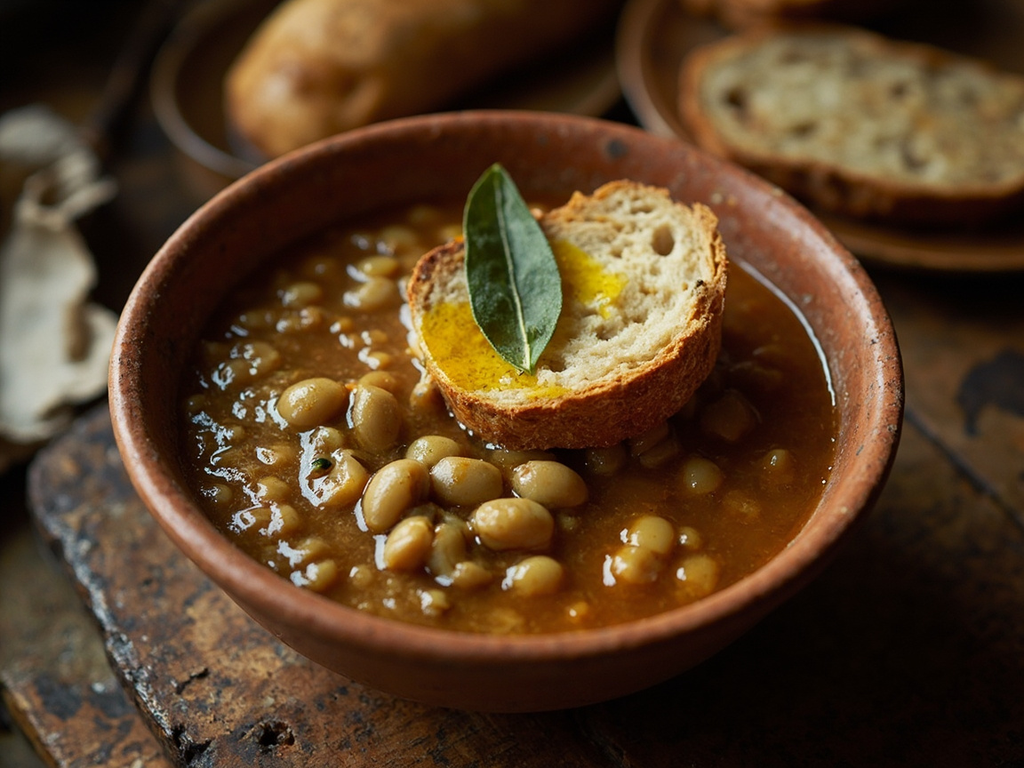
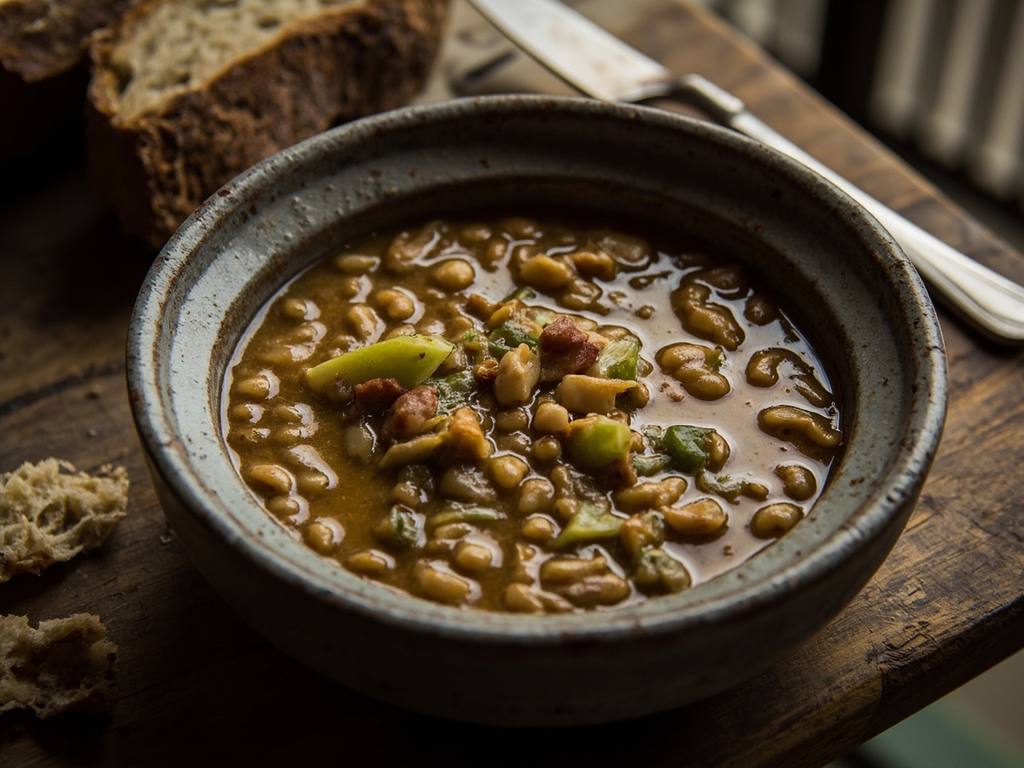
flipMinestra di fave e pane (fava bean and stale bread soup)
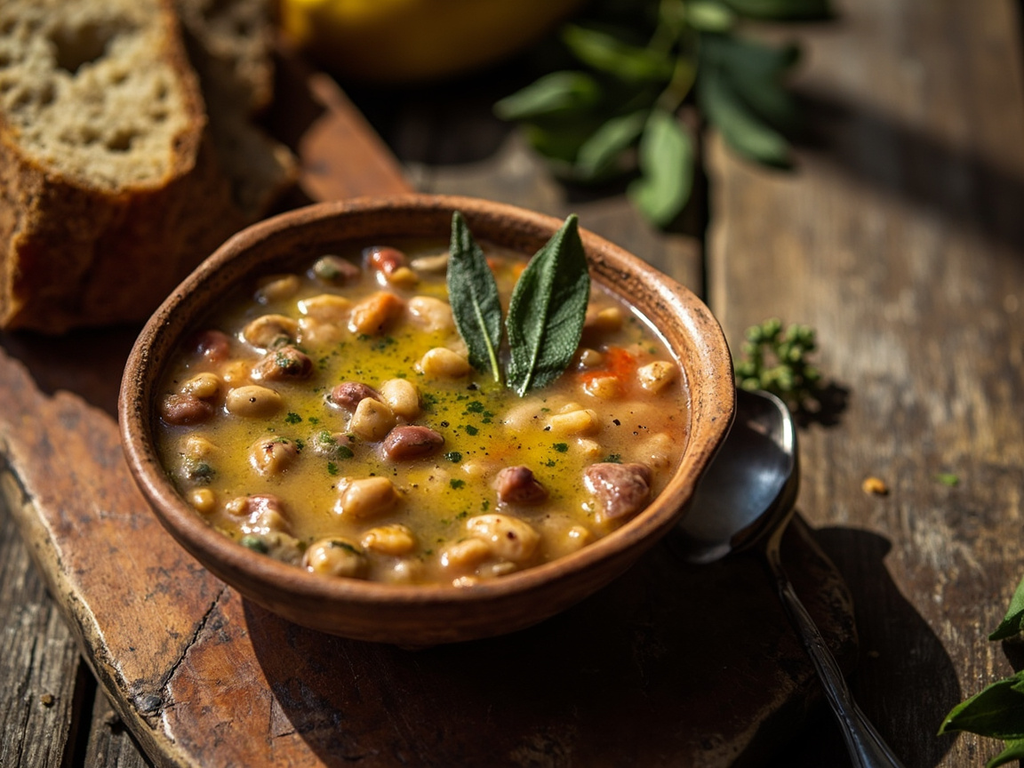
Minestra di fave e pane (fava bean and stale bread soup)
Why this dish? Verrocchio was first an artisan among artisans, son of a brickmaker. Before the glory of the Colleoni statue, the workshop ate frugally: the fava bean, legume of both poor and master, and yesterday's bread soaked in broth nourished boys and apprentices between pours.
A thick, comforting soup where dried fava beans melt into a broth scented with sage, bound by stale bread that collapses in the bowl. The daily fare of Florentine workshops, simple and restorative.
Now then, my good fellow, do not turn up your nose at a bowl of fava beans: from them my boys drew the strength to beat bronze all day long. I would soak the beans the night before, just as one softens wax before melting it, then let them simmer gently with a sprig of sage from my garden. When serving, I crumbled in yesterday's bread, for in Florence we waste nothing, and a drizzle of good oil on top: that is enough to keep a man going until evening.
- •Dried shelled fava beans — two handfuls per person (nourishing base)
- •Stale country bread — a few slices (binder and base)
- •Tuscan olive oil — a good drizzle (fat and flavor)
- •Onion or leek — one (aromatic base)
- •Fresh sage — one sprig (garden fragrance)
- •Salt — to taste (seasoning)
Minestra di fave e pane (fava bean and stale bread soup)
A thick, comforting soup where dried fava beans melt into a broth scented with sage, bound by stale bread that collapses in the bowl. The daily fare of Florentine workshops, simple and restorative.
Why this dish? Verrocchio was first an artisan among artisans, son of a brickmaker. Before the glory of the Colleoni statue, the workshop ate frugally: the fava bean, legume of both poor and master, and yesterday's bread soaked in broth nourished boys and apprentices between pours.
Now then, my good fellow, do not turn up your nose at a bowl of fava beans: from them my boys drew the strength to beat bronze all day long. I would soak the beans the night before, just as one softens wax before melting it, then let them simmer gently with a sprig of sage from my garden. When serving, I crumbled in yesterday's bread, for in Florence we waste nothing, and a drizzle of good oil on top: that is enough to keep a man going until evening.
Ingredients (period version)
- Dried shelled fava beans — two handfuls per person (nourishing base)
- Stale country bread — a few slices (binder and base)
- Tuscan olive oil — a good drizzle (fat and flavor)
- Onion or leek — one (aromatic base)
- Fresh sage — one sprig (garden fragrance)
- Salt — to taste (seasoning)
Ingredients
- Dried shelled fava beans — 250 g (soaked overnight) (nourishing base)
- Stale country bread — 4 slices (binder and base)
- Extra virgin olive oil — 4 tbsp (fat and flavor)
- Onion — 1 large (aromatic base)
- Fresh sage — 6 leaves (garden fragrance)
- Water or vegetable broth — 1.2 liters (cooking liquid)
- Salt — to taste (seasoning)
Method
- The night before, soak the dried fava beans in plenty of cold water.
- Slice the onion and gently sweat it in olive oil without browning.
- Add the drained beans, sage, cover with water or broth, and simmer for 1 to 1.5 hours until they fall apart.
- Salt at the end of cooking (salt too early hardens the beans). Roughly mash some of the beans to thicken.
- Place the stale bread in the bottom of bowls, pour the hot soup over, and let the bread soak for 2 minutes.
- Drizzle with raw olive oil before serving.
How it was made : Legumes were the heart of popular and artisan Tuscan cuisine: fava beans, chickpeas, and later cannellini formed the "poor man's meat." Stale bread was never thrown away: it was reclaimed in soups (acquacotta, ribollita, pancotto), a table economy that Tuscan cooking elevated to an art.
The contemporary twist : Serve in a warm verrine with a toasted crouton stuck in like a little "drawing tablet," a nod to the tools of the workshop.
Sources : Anonimo Toscano, Libro della cucina (14th century) · Bartolomeo Sacchi (Platina), De honesta voluptate et valetudine (ca. 1474)
Andrea del Verrocchio · Charactorium