 flip
flipPeposo alla fornacina (foundryman's peppered beef)
Peposo alla fornacina (foundryman's peppered beef)
Why this dish? Verrocchio cast bronze, like the equestrian statue Bartolomeo Colleoni, in the heat of workshop furnaces. Tuscan legend attributes this stew to the *fornacini*, the brick and iron furnace workers: they would slide a pot of beef and pepper onto the edge of the embers and let it cook while they worked the fire. No dish speaks more of the master founder's world.
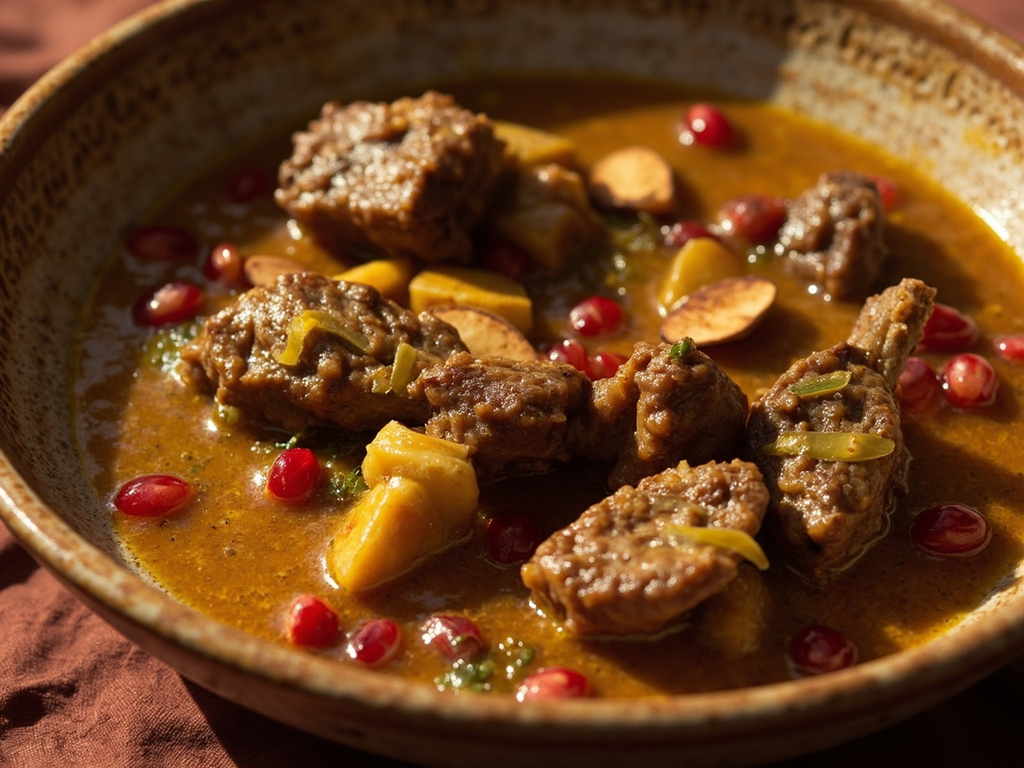
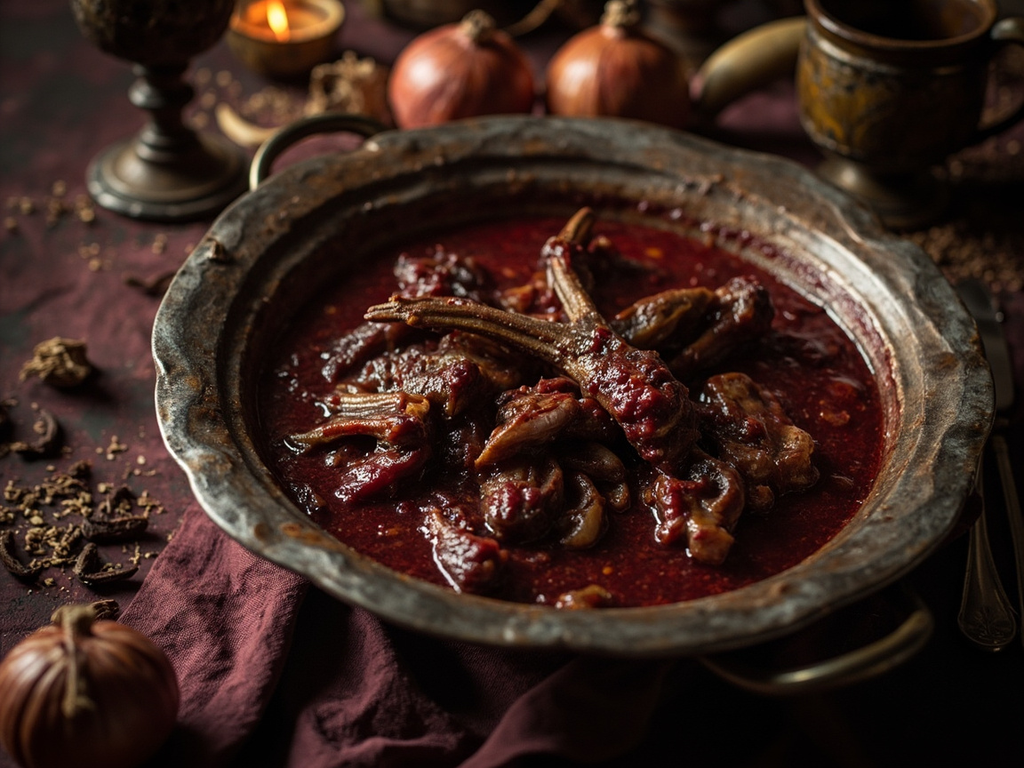
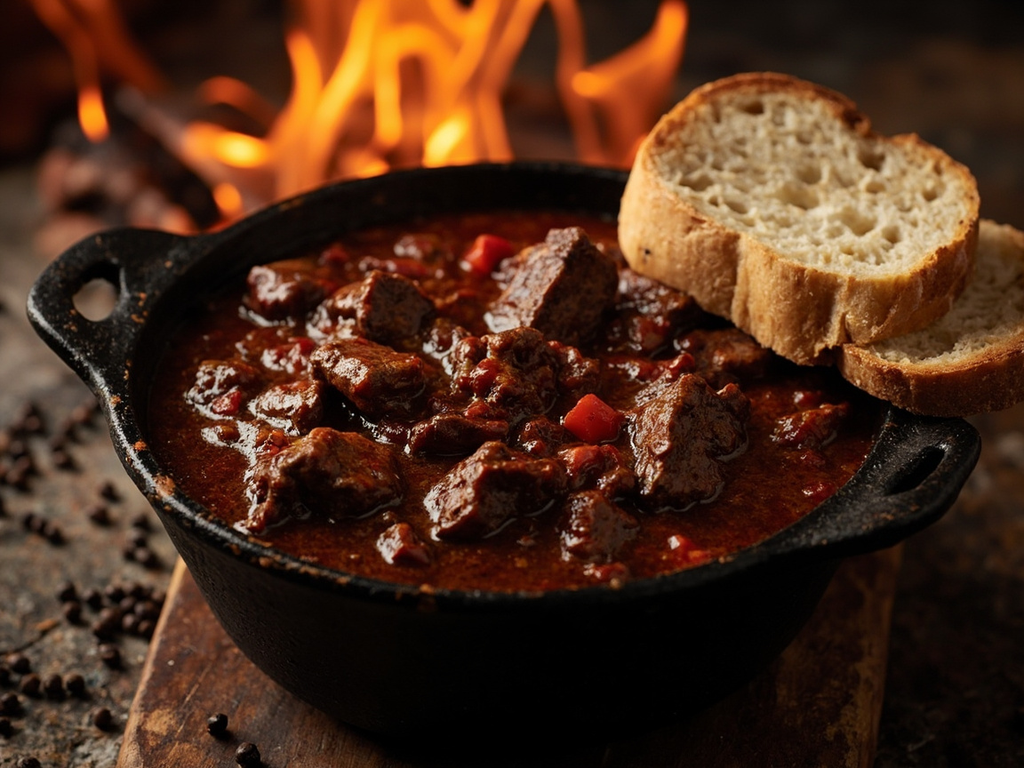
A beef stew cooked for hours over very low heat in Tuscan red wine, generously peppered and scented with garlic. The meat becomes tender, the sauce deep and peppery. The dish of fire-men, turned festive fare.
Listen well, for this dish is of my world, that of furnaces and embers. While I cast bronze, I would set a terrine of beef at the edge of the *fornace*, drowned in Chianti wine and a full handful of peppercorns—yes, pepper without counting, for in Florence we are not stingy when we feast. No need to watch: the covered fire does the work by itself, like wax flowing silently from the mold. Come evening, the meat fell apart under the spoon, and we dipped bread into that black, burning juice.
- •Beef for braising (cheek, shank, chuck) — a nice piece (main meat)
- •Black peppercorns — a full handful (spicy signature)
- •Garlic — several cloves (aromatic)
- •Tuscan red wine (sangiovese) — enough to cover (cooking liquid and acidity)
- •Salt — to taste (seasoning)
Peposo alla fornacina (foundryman's peppered beef)
A beef stew cooked for hours over very low heat in Tuscan red wine, generously peppered and scented with garlic. The meat becomes tender, the sauce deep and peppery. The dish of fire-men, turned festive fare.
Why this dish? Verrocchio cast bronze, like the equestrian statue Bartolomeo Colleoni, in the heat of workshop furnaces. Tuscan legend attributes this stew to the *fornacini*, the brick and iron furnace workers: they would slide a pot of beef and pepper onto the edge of the embers and let it cook while they worked the fire. No dish speaks more of the master founder's world.
Listen well, for this dish is of my world, that of furnaces and embers. While I cast bronze, I would set a terrine of beef at the edge of the *fornace*, drowned in Chianti wine and a full handful of peppercorns—yes, pepper without counting, for in Florence we are not stingy when we feast. No need to watch: the covered fire does the work by itself, like wax flowing silently from the mold. Come evening, the meat fell apart under the spoon, and we dipped bread into that black, burning juice.
Ingredients (period version)
- Beef for braising (cheek, shank, chuck) — a nice piece (main meat)
- Black peppercorns — a full handful (spicy signature)
- Garlic — several cloves (aromatic)
- Tuscan red wine (sangiovese) — enough to cover (cooking liquid and acidity)
- Salt — to taste (seasoning)
Ingredients
- Beef cheek or shank — 1 kg, cut into large cubes (main meat)
- Black peppercorns — 2 tbsp (coarsely crushed) (spicy signature)
- Garlic — 6 cloves (aromatic)
- Chianti red wine (sangiovese) — 750 ml (cooking liquid and acidity)
- Salt — 1 to 2 tsp (seasoning)
Method
- Place the beef cubes in a cast-iron or earthenware pot, without browning.
- Add the peeled whole garlic cloves, crushed pepper, and cover completely with red wine.
- Bring to a simmer, then reduce to the lowest heat. Cover and cook for 3 to 3.5 hours (in the oven at 140°C or on minimal stovetop heat).
- Stir occasionally; if the liquid reduces too much, add a little hot water. Salt halfway through cooking.
- At the end, the meat should fall apart with a fork and the sauce be syrupy and black with pepper.
- Serve piping hot with wide slices of Tuscan bread (unsalted, as is the Tuscan custom) for sopping.
How it was made : Long covered-embers cooking was the norm before thermostats: people used fires already lit for other tasks (bread ovens, brick kilns, foundry furnaces). Pepper, imported via Venice, remained costly: using "a full handful" was ostentatious luxury, a sign of celebration. *Peposo* is traditionally associated with the *fornacini* of Impruneta, near Florence.
The contemporary twist : Plate on a slate with a "pour" of peppery sauce, homage to molten bronze flowing from the mold.
Sources : Culinary tradition of Impruneta (peposo dell'Impruneta) · Pellegrino Artusi, La scienza in cucina e l'arte di mangiar bene (1891), for the Tuscan lineage
Andrea del Verrocchio · Charactorium