 Flip the card
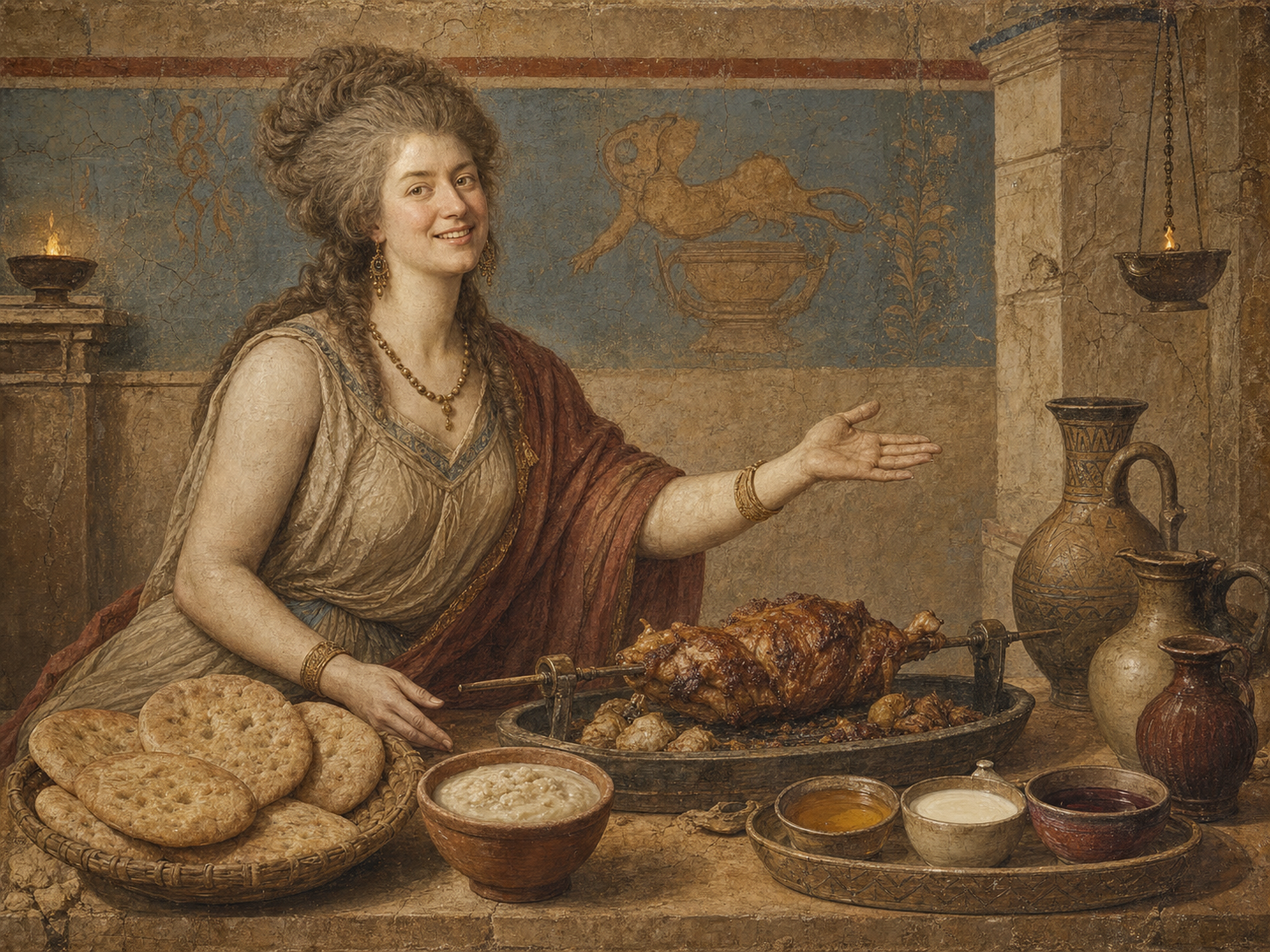
Andromache at the table
On the menu
Sîtos & ópson (the staple and the accompaniment)
The archaic Greek meal revolves around sîtos — the cereal staple: barley or wheat bread, flatcakes, porridges. Alongside comes ópson, what is eaten "with" the bread: olives, cheese, legumes, fish, or on feast days, roasted meat. All is washed down with wine mixed with water. At the table of a Trojan princess, one distinguishes the daily frugal meal from the sacrificial banquet (the hekatombe), and offerings poured to gods and the dead are never forgotten.
Signature : Olive oil & roasted barley
Olive oil is the fatty heart of all this cuisine — on bread, in porridge, as libation. Barley, humbler than wheat, roasted then ground (álphita), gives mâza, the flatcake of families and Homeric heroes alike.
click to flip back
Andromache at the table
5 period recipes
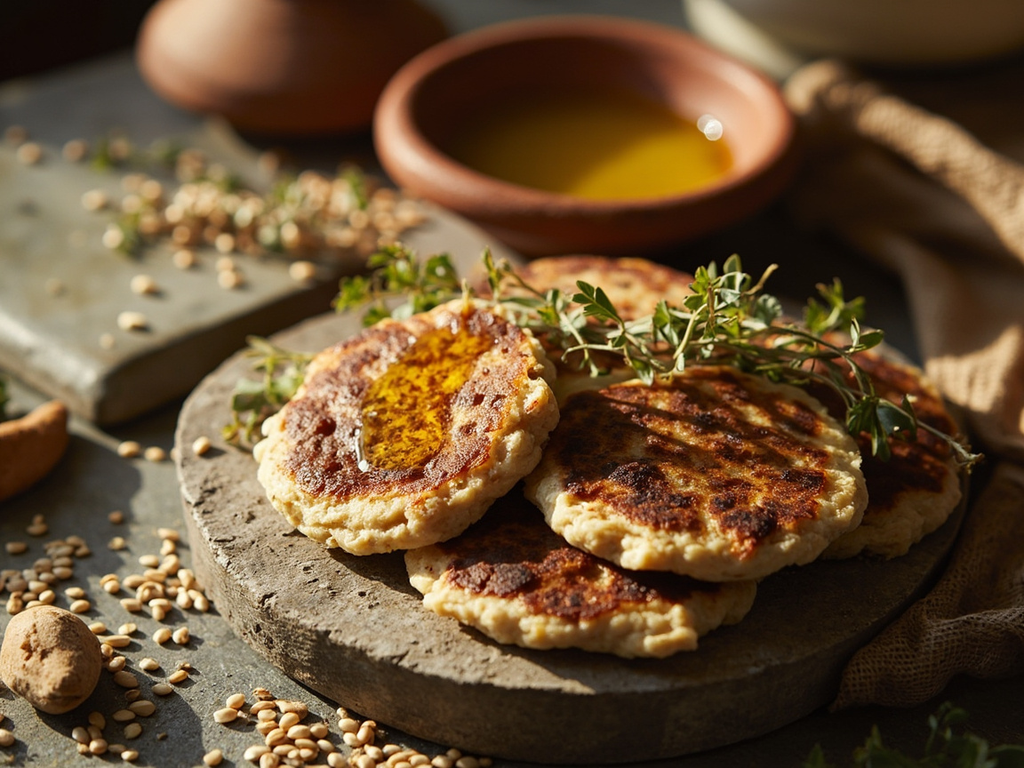 Everyday
Mâza, the everyday barley flatcake
Sîtos (staple food)
🧂 ☕· 30 min
View the recipe
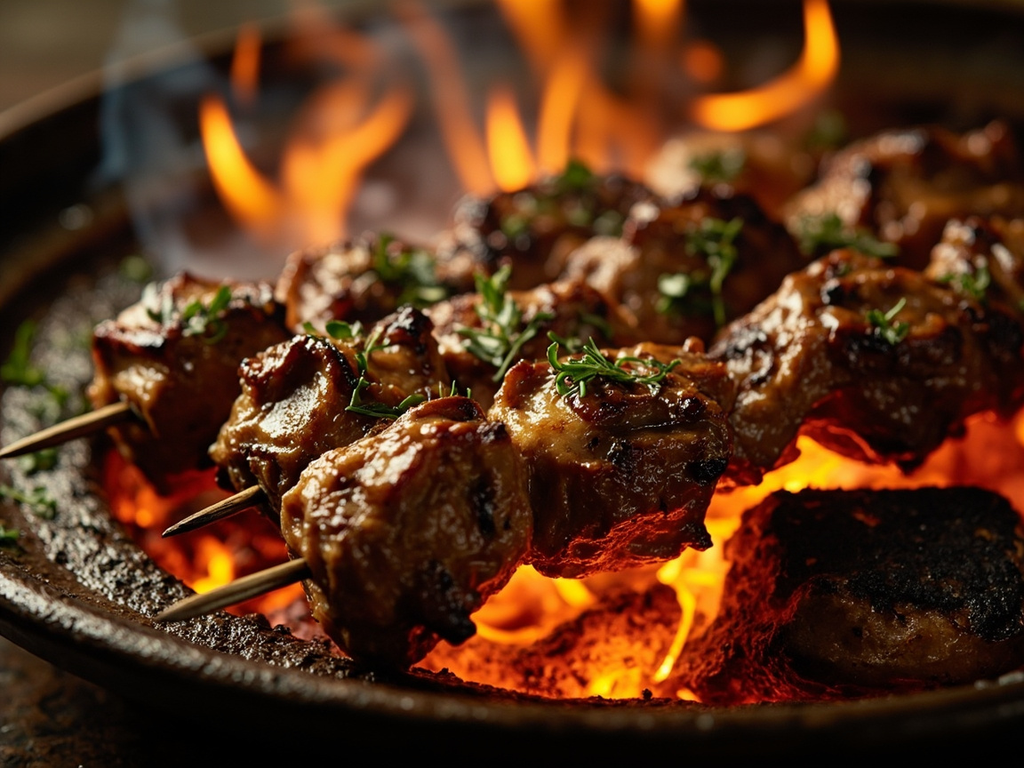 Festive
Spit-roasted lamb from Hector's banquet
Festive ópson (sacrificial meat)
🧂 🍄· 1 h 15 (incl. marinade)
View the recipe
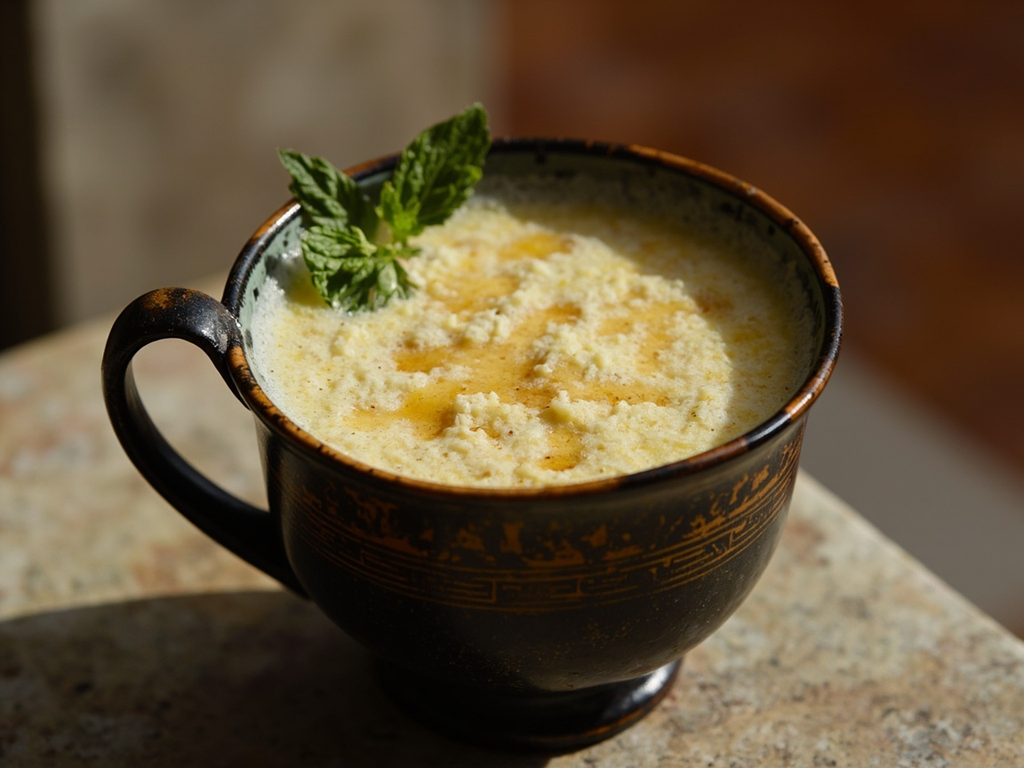 Drink
DrinkKykeon, the barley-and-cheese drink
Pôma (nourishing beverage)
🍋 🧂· 10 min
View the recipe
 Offering
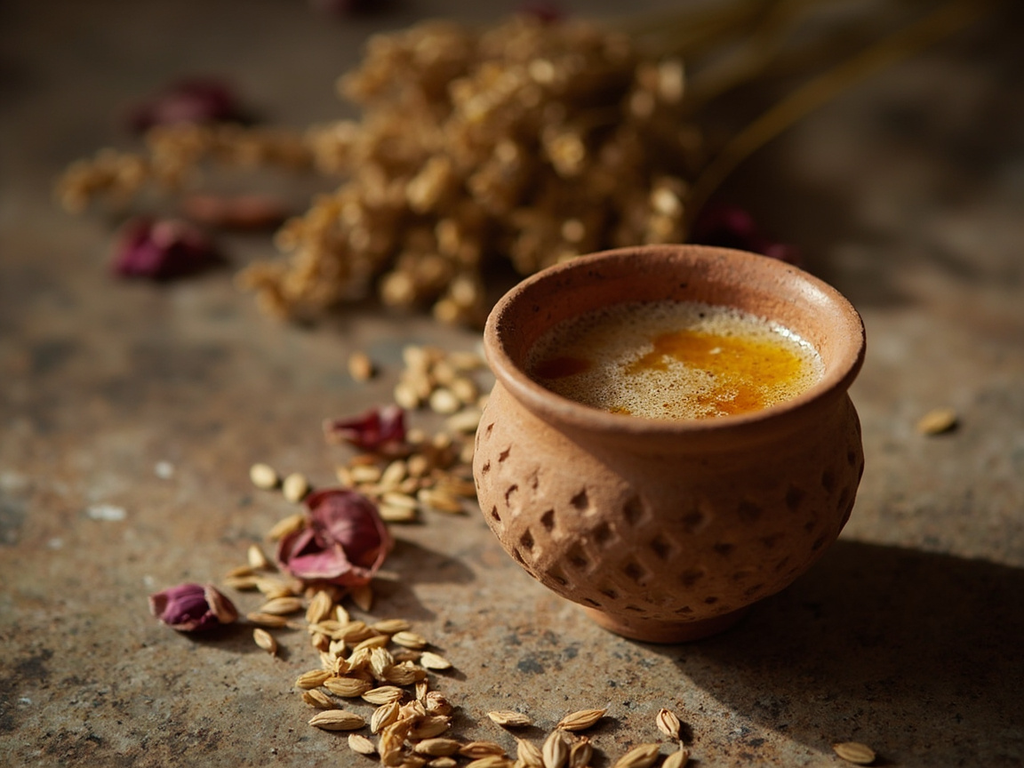
Libation of honey, milk and wine for the dead
Choaí (funerary libations)
🍯 🍋· 10 min
View the recipe
 Preserving
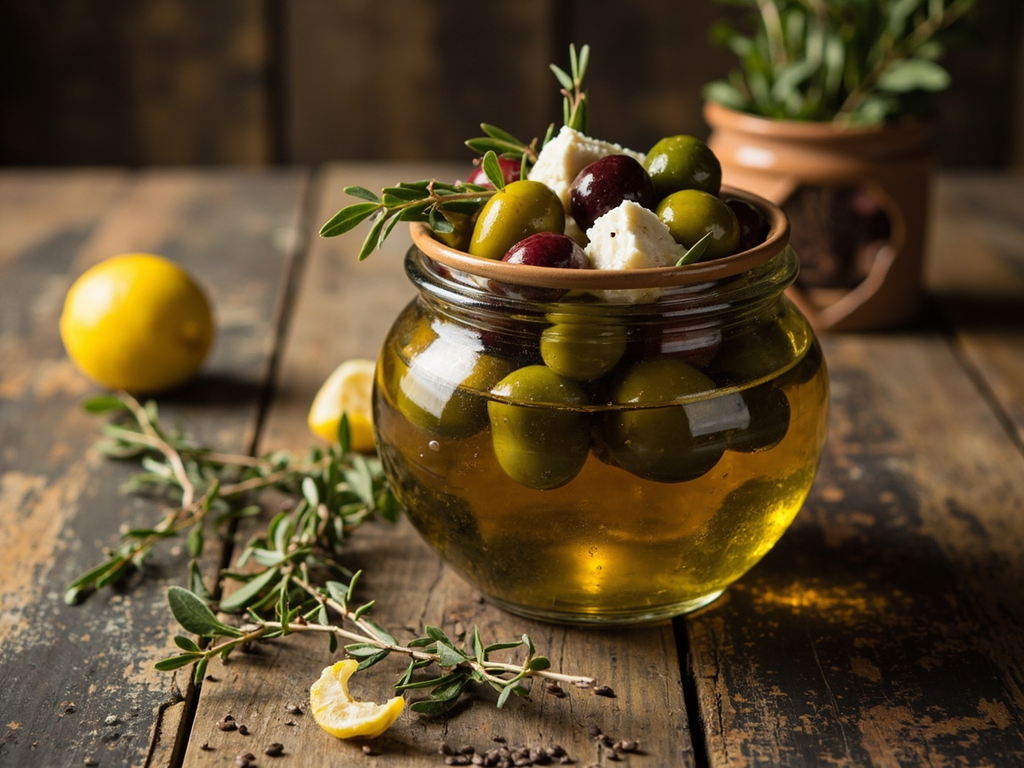
Olives and sheep cheese in brine, exile provisions
Ópson of preservation (pantry reserves)
🧂 🫙 ☕· 20 min (excluding long brining)
View the recipe