 flip
flipMâza, the everyday barley flatcake
Mâza, the everyday barley flatcake
Why this dish? Before war took everything, Andromache kept a household in Troy, under Mount Placos and then in Ilium. Mâza is the daily bread kneaded each morning, the one a wife sees baked for Hector and the child Astyanax before he leaves for the walls.
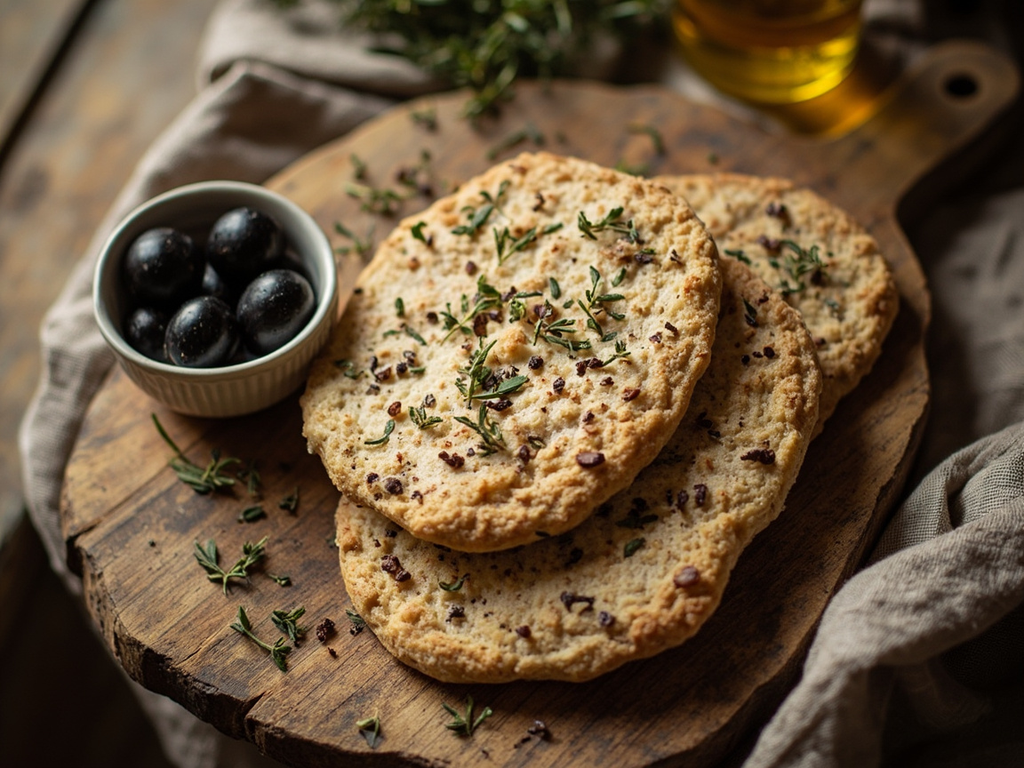
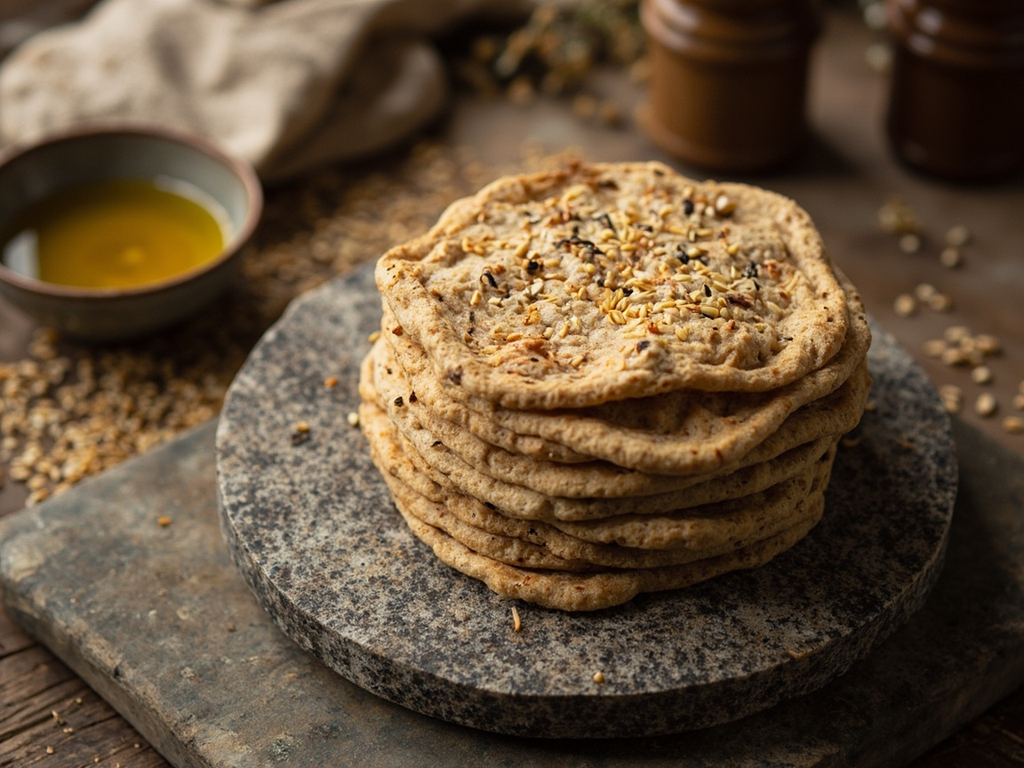
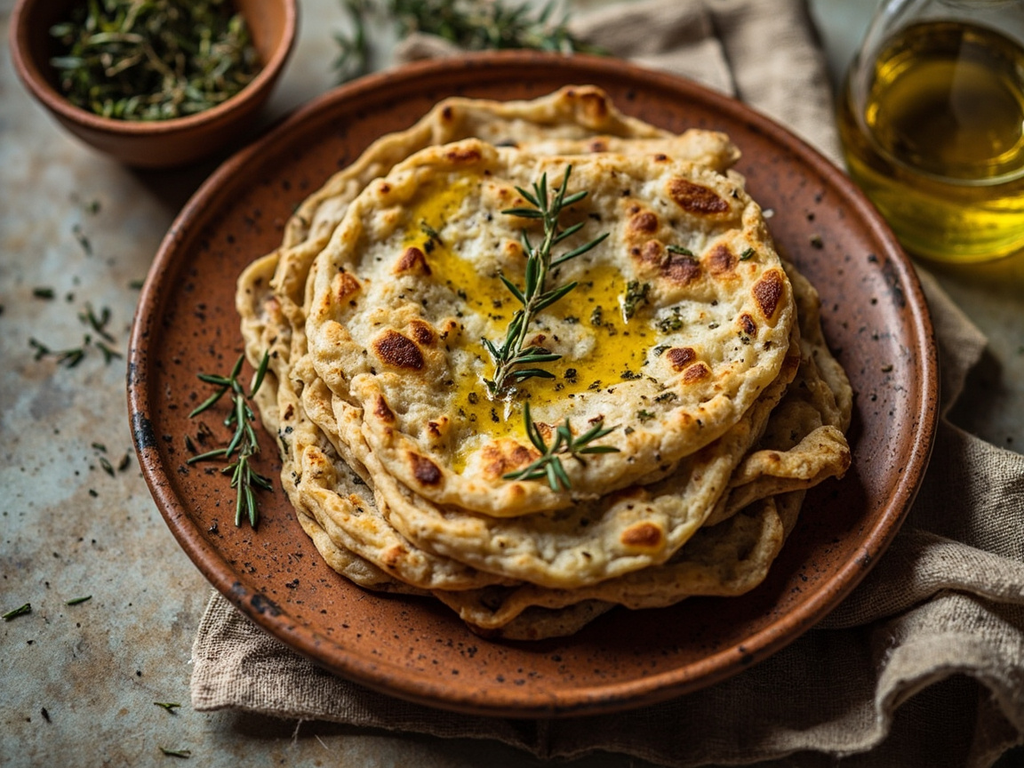
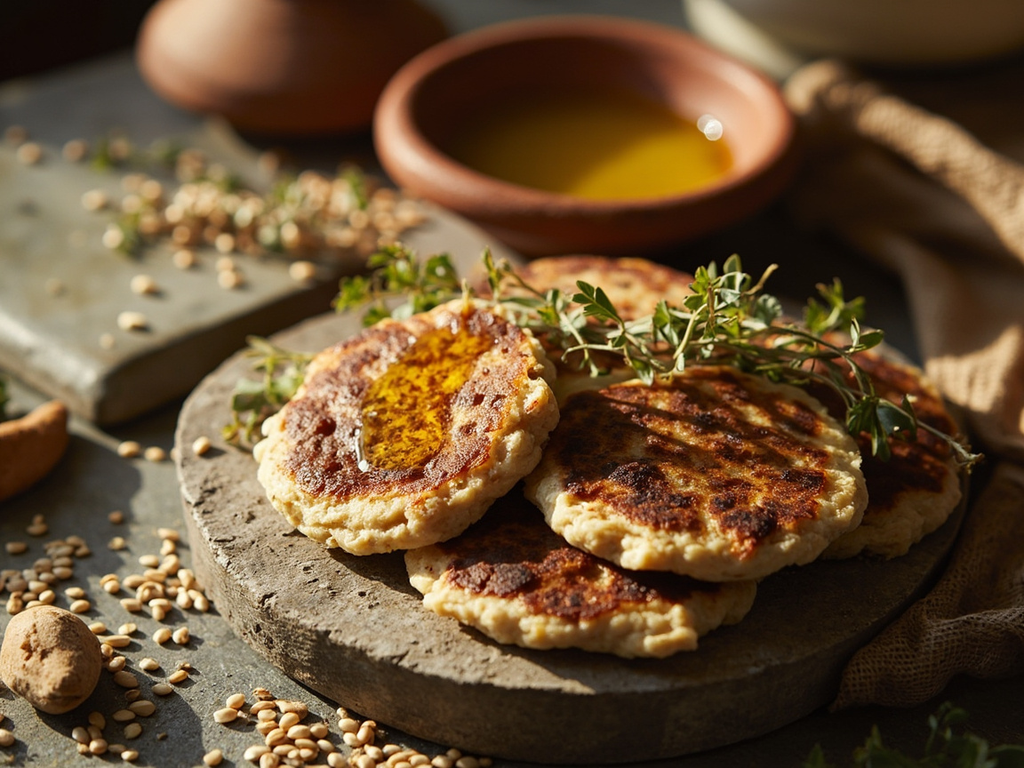
A flatcake of roasted barley, kneaded with olive oil and a little water, sometimes enhanced with honey or herbs. More rustic than wheat bread, it does not rise: it is the household's staple food, dense and nourishing.
Approach, and watch my hands in the barley flour. Before the day gilds the walls, I roast the grains on the hot stone, grind them in the mortar to fine álphita, then pour the oil pressed from our olive trees on Placos. Hector loved to break it still warm, and I always kept a piece for little Astyanax's mouth. Knead without haste, stranger: a flatcake made in haste breaks, like all that is not loved while being made.
- •Roasted barley flour (álphita) — two full handfuls (base)
- •Olive oil — a good drizzle (fat binder)
- •Spring water — as needed for kneading (binder)
- •Sea salt — a pinch (seasoning)
- •Honey — a little (optional) (sweetness)
Mâza, the everyday barley flatcake
A flatcake of roasted barley, kneaded with olive oil and a little water, sometimes enhanced with honey or herbs. More rustic than wheat bread, it does not rise: it is the household's staple food, dense and nourishing.
Why this dish? Before war took everything, Andromache kept a household in Troy, under Mount Placos and then in Ilium. Mâza is the daily bread kneaded each morning, the one a wife sees baked for Hector and the child Astyanax before he leaves for the walls.
Approach, and watch my hands in the barley flour. Before the day gilds the walls, I roast the grains on the hot stone, grind them in the mortar to fine álphita, then pour the oil pressed from our olive trees on Placos. Hector loved to break it still warm, and I always kept a piece for little Astyanax's mouth. Knead without haste, stranger: a flatcake made in haste breaks, like all that is not loved while being made.
Ingredients (period version)
- Roasted barley flour (álphita) — two full handfuls (base)
- Olive oil — a good drizzle (fat binder)
- Spring water — as needed for kneading (binder)
- Sea salt — a pinch (seasoning)
- Honey — a little (optional) (sweetness)
Ingredients
- Barley flour — 200 g (base)
- Olive oil — 3 tbsp (fat binder)
- Warm water — 100 to 130 ml (binder)
- Salt — 1 tsp (seasoning)
- Honey — 1 tsp (optional) (sweetness)
- Dried oregano or thyme — a pinch (optional) (flavor)
Method
- Lightly toast the barley flour in a dry pan for 2–3 minutes, until it smells nutty, then let cool.
- Mix the flour, salt, and oregano, then incorporate the olive oil.
- Add warm water little by little, kneading until a soft, non-sticky dough forms.
- Shape into flat cakes about 1 cm thick.
- Cook on a hot stone or dry pan for 4–5 minutes per side, until golden and firm. Serve warm, drizzled with a little oil and a touch of honey.
How it was made : Barley grew better than wheat in dry Greece: mâza was therefore the bread of the majority, mentioned from Homer to Aristophanes. Grains were often roasted before grinding (hence álphita), making the flatcake digestible without leaven or an oven.
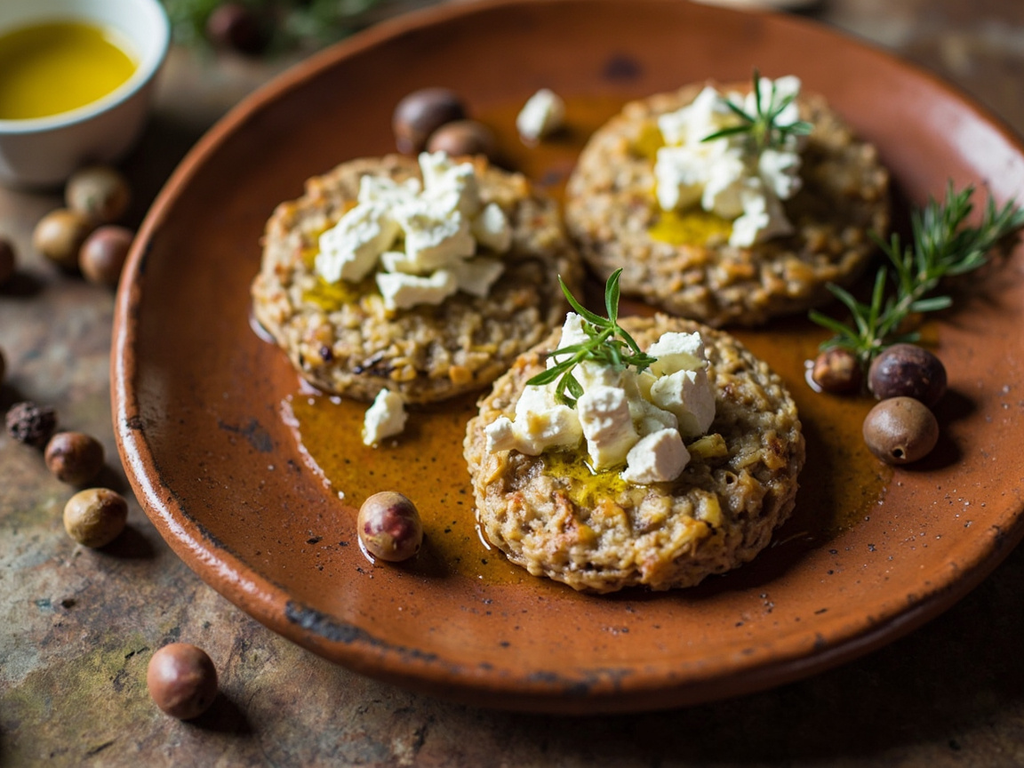
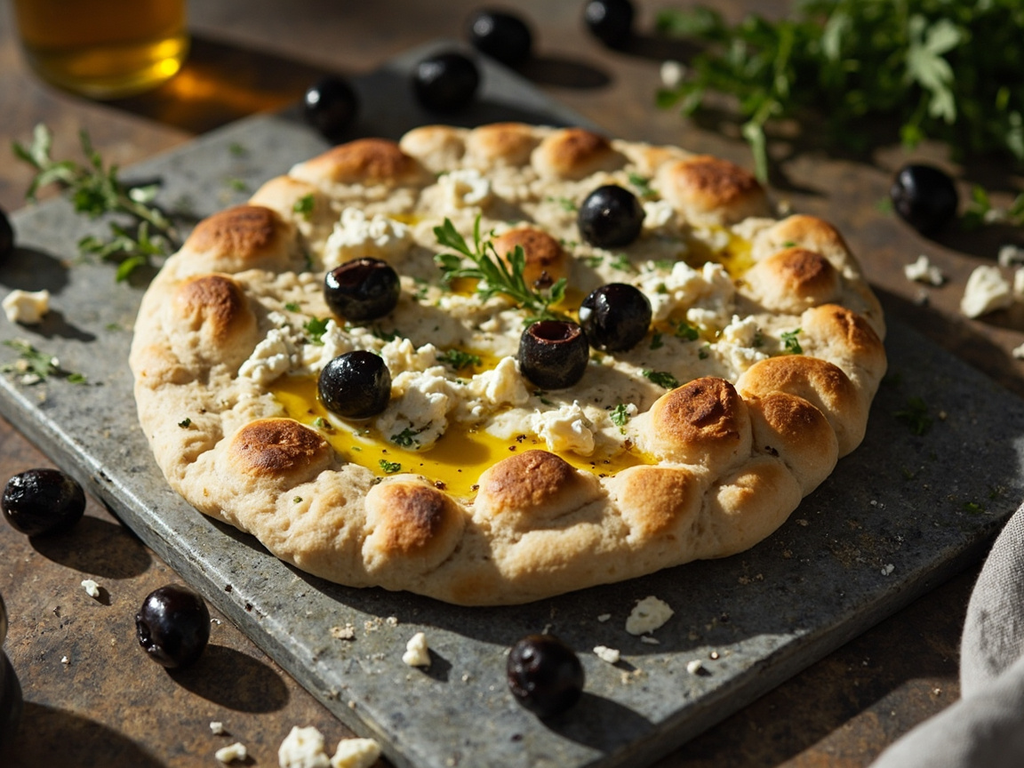
The contemporary twist : Serve as mini appetizer flatcakes, topped with an olive and a shaving of sheep's cheese, for a "Trojan pre-banquet".
Sources : Homer, Iliad · Andrew Dalby, Siren Feasts: A History of Food and Gastronomy in Greece (1996)
Andromache · Charactorium