 flip
flipOlives and sheep cheese in brine, exile provisions
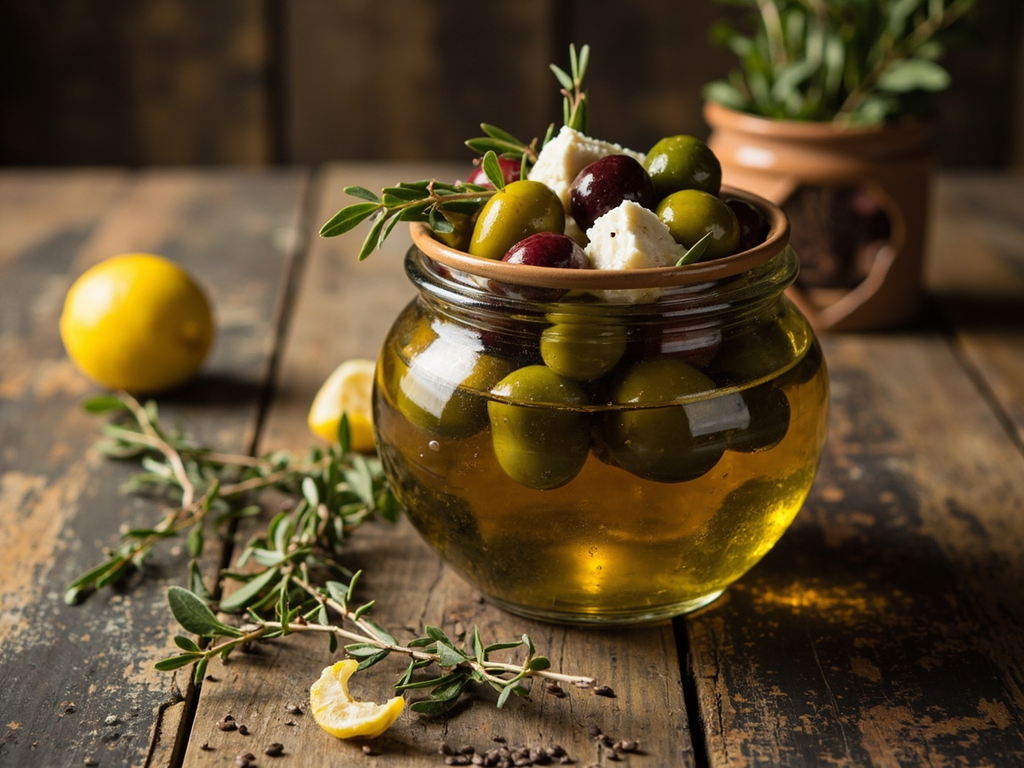
Olives and sheep cheese in brine, exile provisions
Why this dish? After the fall of Troy, Andromache is taken far from home, to Buthrotum in Epirus. Preserved foods — olives in brine, cheese kept in salt — are those of long journeys and uprooted lives: they endure, as she endures despite everything.
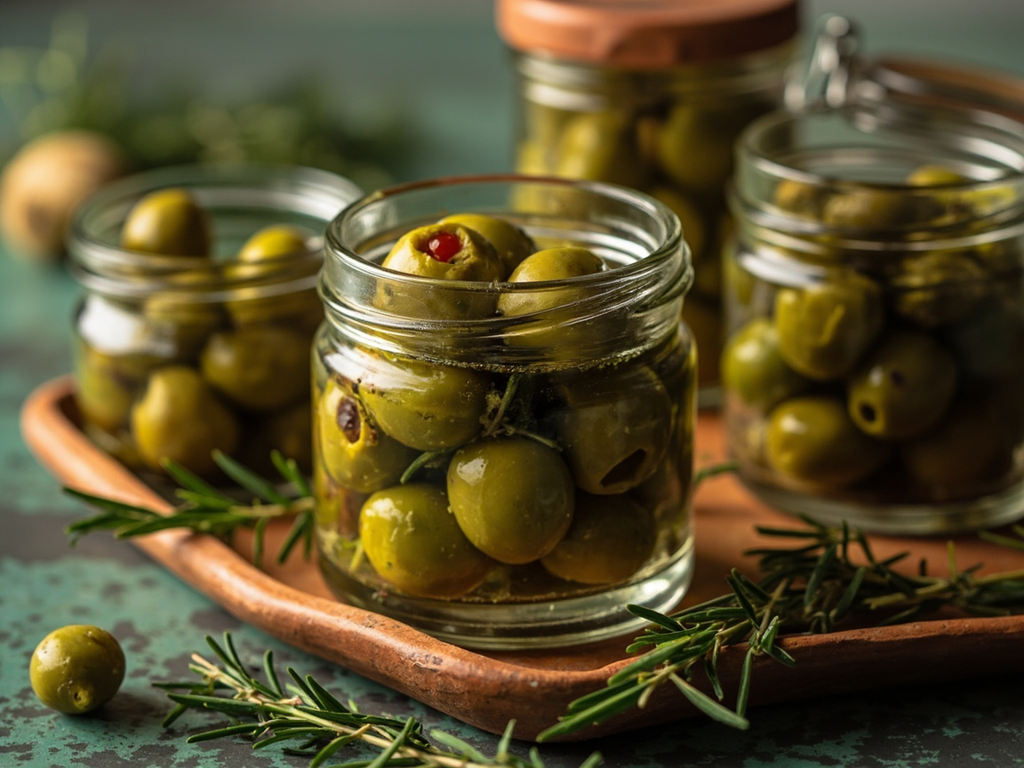
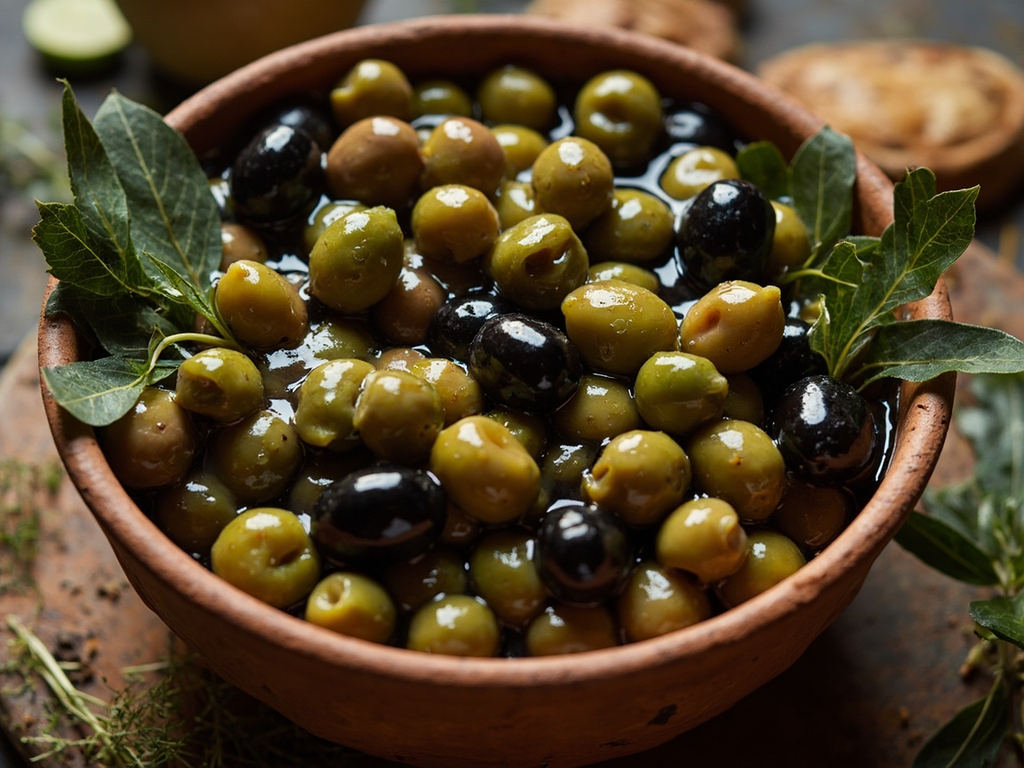
Whole olives, pricked and softened in brine, and sheep cheese preserved in salt or oil. The ópson that does not perish: the reserve carried along, accompanying bread when the table is poor.
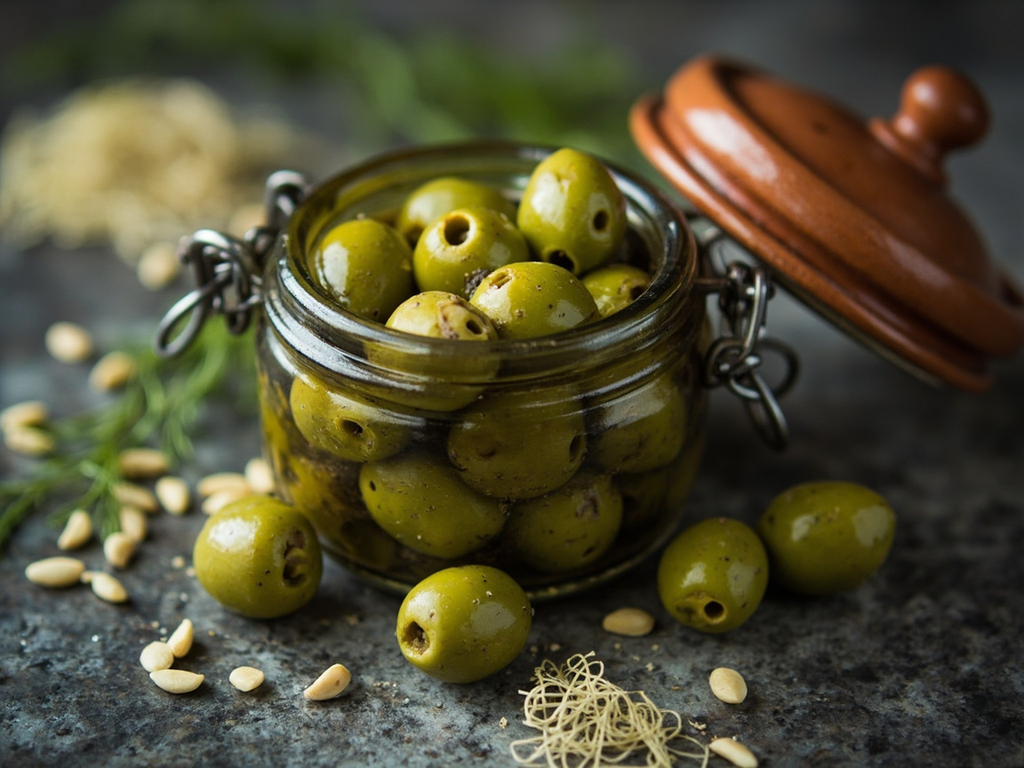
See these jars, stranger: this is what survives falling walls. The bitter olive, I prick it, drown it in salted water for weeks until it softens; the cheese I bury in salt or oil so it lasts the seasons. In Buthrotum, far from my Ilium, it is these humble things that fed me. Learn this: what keeps long is what comforts best when all else is lost.
- •Fresh olives — a full basket (base)
- •Sea salt — as needed (brine and preservation)
- •Sheep cheese — a wheel (preserved ópson)
- •Olive oil — to cover (preservation)
- •Thyme, fennel, bay leaves — a bunch (flavor)
Olives and sheep cheese in brine, exile provisions
Whole olives, pricked and softened in brine, and sheep cheese preserved in salt or oil. The ópson that does not perish: the reserve carried along, accompanying bread when the table is poor.
Why this dish? After the fall of Troy, Andromache is taken far from home, to Buthrotum in Epirus. Preserved foods — olives in brine, cheese kept in salt — are those of long journeys and uprooted lives: they endure, as she endures despite everything.
See these jars, stranger: this is what survives falling walls. The bitter olive, I prick it, drown it in salted water for weeks until it softens; the cheese I bury in salt or oil so it lasts the seasons. In Buthrotum, far from my Ilium, it is these humble things that fed me. Learn this: what keeps long is what comforts best when all else is lost.
Ingredients (period version)
- Fresh olives — a full basket (base)
- Sea salt — as needed (brine and preservation)
- Sheep cheese — a wheel (preserved ópson)
- Olive oil — to cover (preservation)
- Thyme, fennel, bay leaves — a bunch (flavor)
Ingredients
- Green or black olives (prepared) — 250 g (base)
- Feta or sheep cheese — 200 g (ópson)
- Olive oil — to cover (~150 ml) (preservation)
- Salt — 1 tbsp (brine)
- Thyme, fennel seeds, bay leaves — 1 tbsp + 2 leaves (flavor)
- Lemon zest or bitter orange peel — a few strips (optional) (flavor)
Method
- If starting from fresh olives: slit them, soak for 1–2 weeks in salted brine (changed regularly) to remove bitterness (long traditional step).
- For a quick version: rinse store-bought olives, drain.
- Cut feta into cubes, place in a jar with the olives.
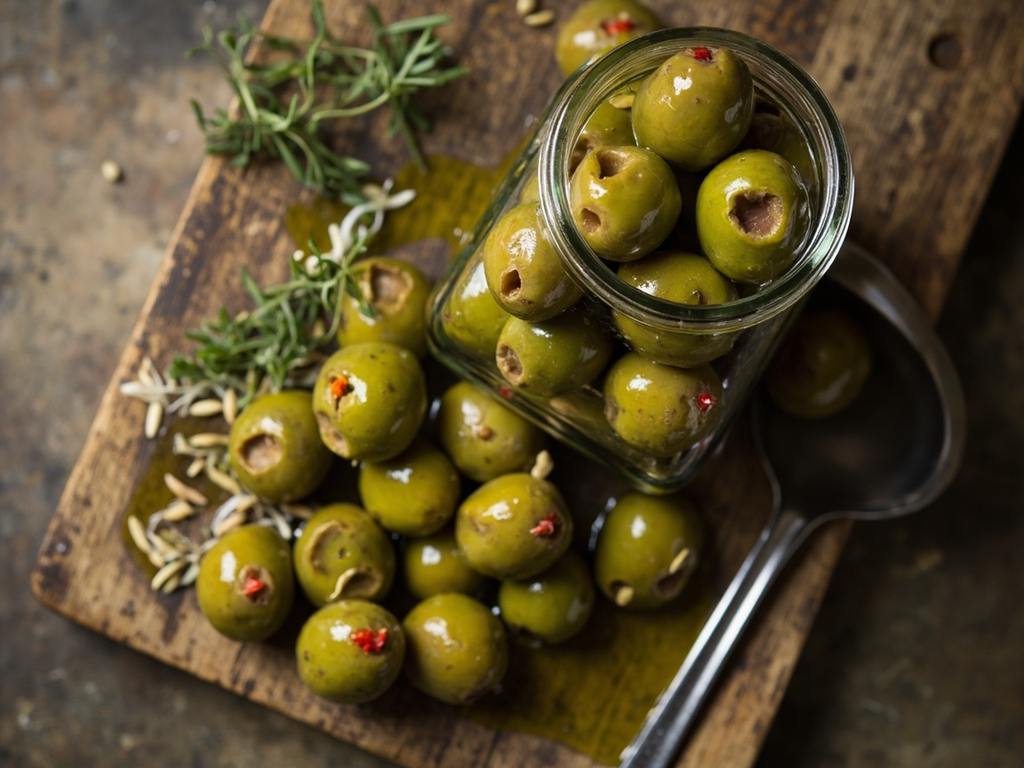
- Add thyme, fennel, bay leaves and zest, then cover completely with olive oil.
- Marinate in the fridge for at least 24 hours (up to 2 weeks). Serve with mâza for a simple and flavorful exile meal.
How it was made : Without refrigeration, the ancient Mediterranean relied on preservation: olives in brine, dried cheeses or those submerged in oil, salted fish. These reserves constituted the ordinary ópson, eaten with bread. Sheep cheese, mentioned in Homer (Polyphemus's cave abounds with it), kept long in salt.
The contemporary twist : Presented in a small jar as "Buthrotum provisions" to gift, with a label telling the story of Andromache's journey from Troy to Epirus.
Sources : Homer, Odyssey (Polyphemus's cheese) · Virgil, Aeneid (Book III, Andromache at Buthrotum) · Andrew Dalby, Food in the Ancient World from A to Z (2003)
Andromache · Charactorium