 flip
flipSpit-roasted lamb from Hector's banquet
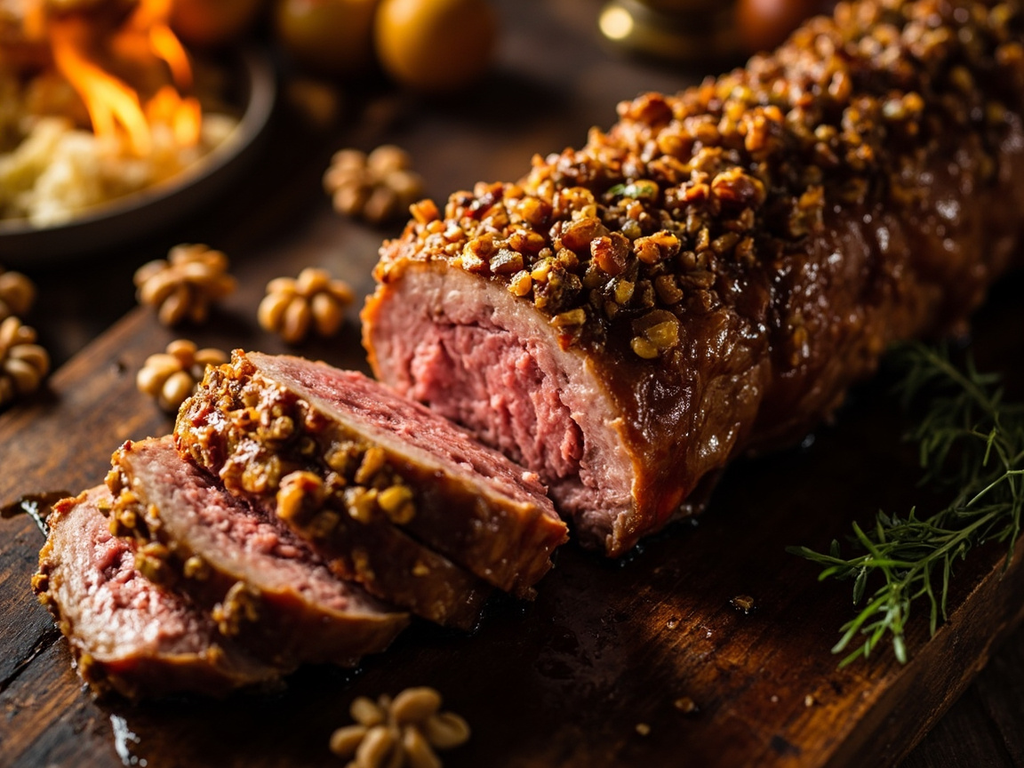
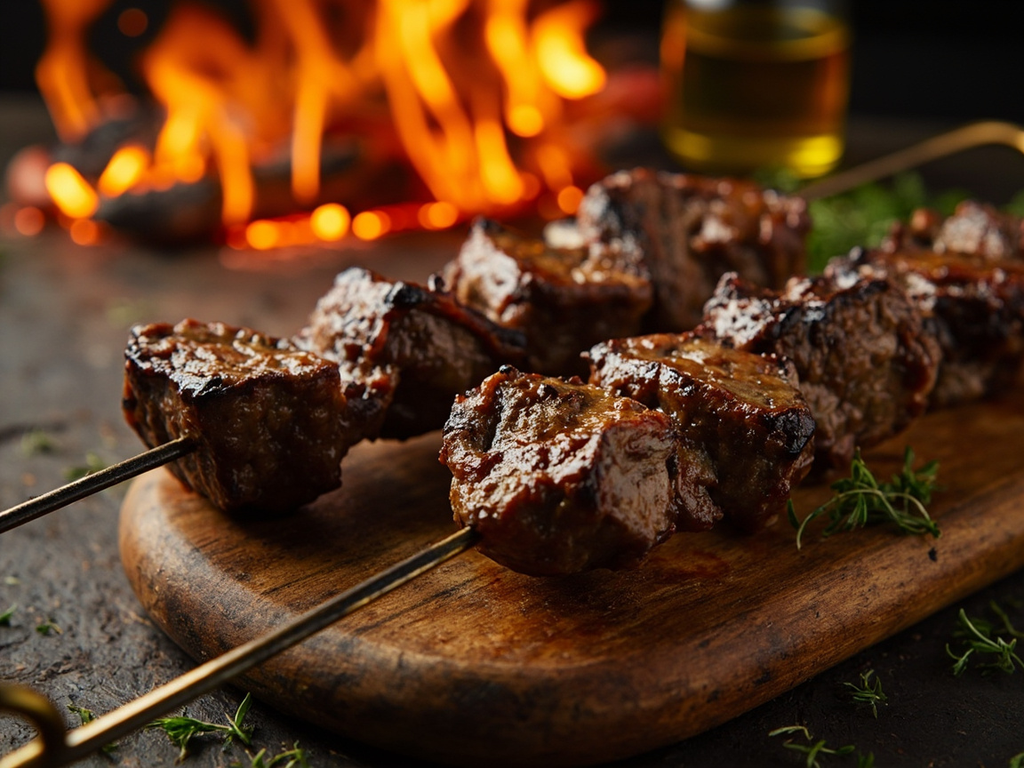
Spit-roasted lamb from Hector's banquet
Why this dish? In the Iliad, heroes offer and share roasted meat after sacrifice. At the court of Troy, Andromache presides over banquets honoring Hector and guests: spit-roasted lamb is the dish of great days, of oaths and returns from battle.
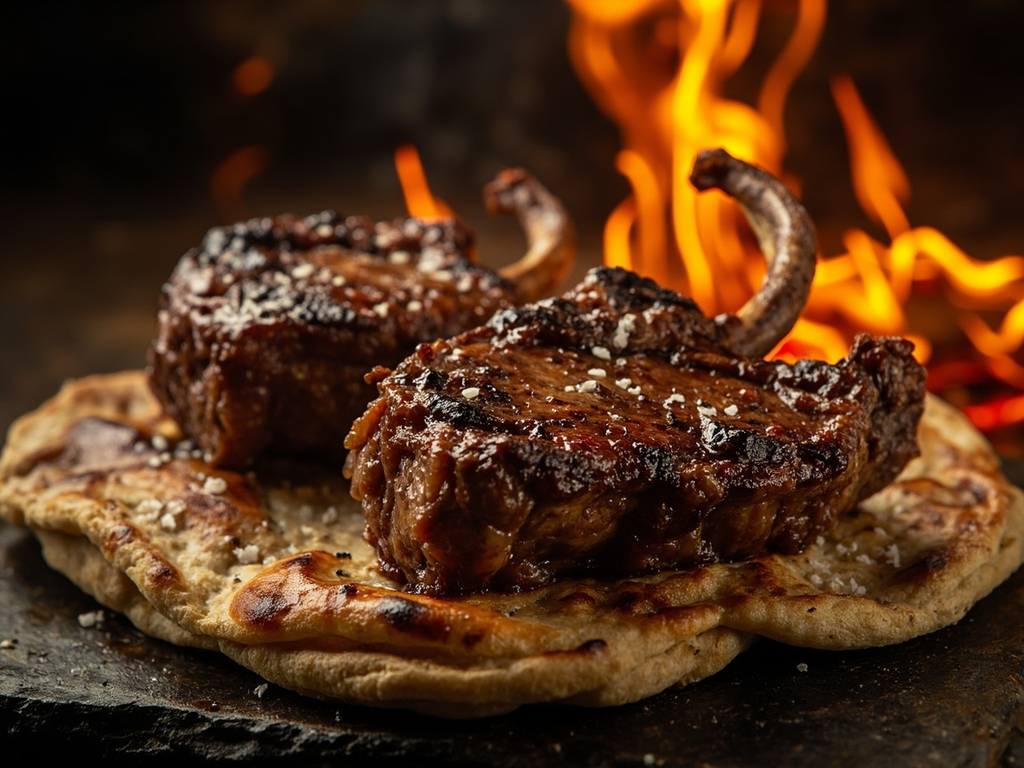
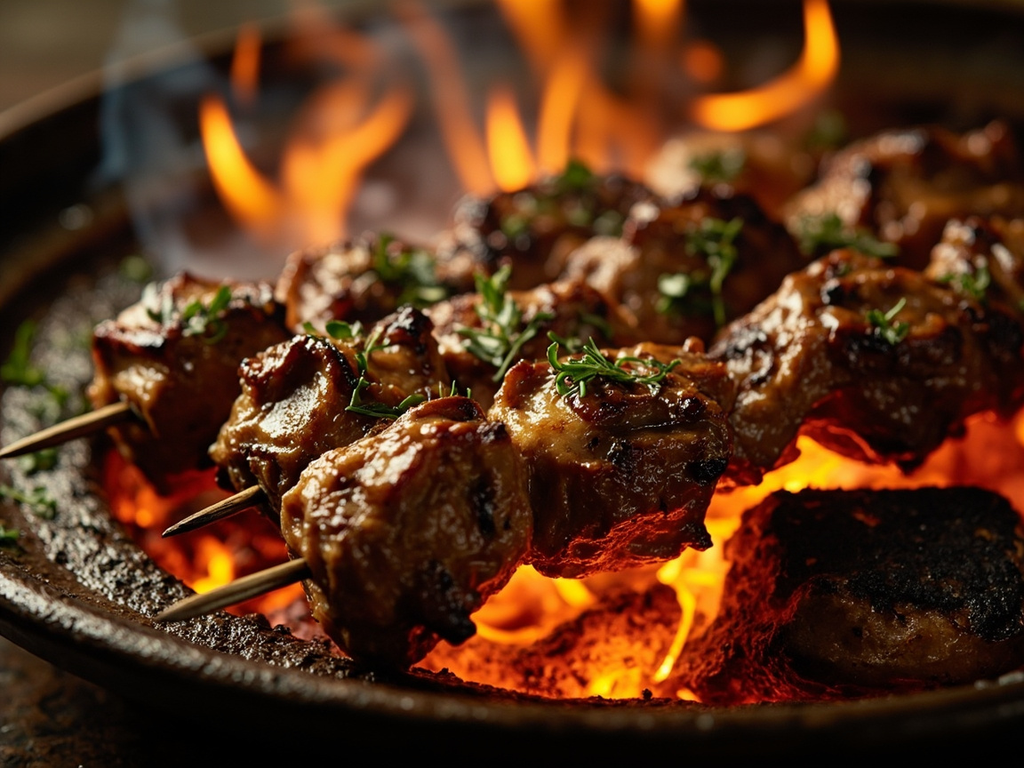
Pieces of lamb skewered and roasted over fire, salted and rubbed with herbs, basted with olive oil. A noble meat, reserved for feasts and sacrifices, eaten with the fingers around the hearth.
When Hector returned alive from the plains, I had the spit set up in the great hall. We chose the finest beast from the flock, for to gods and brave men one does not give a stingy portion. I rubbed it with salt and thyme from our hills, then the golden oil fell in rain upon the flesh that sang over the embers. Eat with your hands, stranger, and remember: a portion offered with a good heart is worth all the counted feasts.
- •Lamb (shoulder or leg) — a fine piece (meat)
- •Sea salt — by hand (seasoning)
- •Fresh thyme and oregano — a handful (flavor)
- •Olive oil — generously (basting)
- •Honey — a little (light glaze)
Spit-roasted lamb from Hector's banquet
Pieces of lamb skewered and roasted over fire, salted and rubbed with herbs, basted with olive oil. A noble meat, reserved for feasts and sacrifices, eaten with the fingers around the hearth.
Why this dish? In the Iliad, heroes offer and share roasted meat after sacrifice. At the court of Troy, Andromache presides over banquets honoring Hector and guests: spit-roasted lamb is the dish of great days, of oaths and returns from battle.
When Hector returned alive from the plains, I had the spit set up in the great hall. We chose the finest beast from the flock, for to gods and brave men one does not give a stingy portion. I rubbed it with salt and thyme from our hills, then the golden oil fell in rain upon the flesh that sang over the embers. Eat with your hands, stranger, and remember: a portion offered with a good heart is worth all the counted feasts.
Ingredients (period version)
- Lamb (shoulder or leg) — a fine piece (meat)
- Sea salt — by hand (seasoning)
- Fresh thyme and oregano — a handful (flavor)
- Olive oil — generously (basting)
- Honey — a little (light glaze)
Ingredients
- Boneless lamb shoulder — 1.2 kg (meat)
- Olive oil — 5 tbsp (marinade and basting)
- Salt — 2 tsp (seasoning)
- Fresh thyme and oregano — 2 tbsp chopped (flavor)
- Honey — 1 tbsp (glaze)
- Dry red wine — 1 glass (for deglazing) (jus)
Method
- Cut the lamb into large cubes, mix with oil, salt and herbs, marinate for 1 hour.
- Thread onto skewers (or arrange on a grill) over hot embers or under a hot broiler.
- Roast for 20–30 minutes, turning regularly and basting with oil, until golden crust and rosy center.
- Brush with honey at the end of cooking for a shiny glaze.
- Deglaze the pan juices with wine, reduce, and drizzle over the meat. Serve with mâza to soak up the juices.
How it was made : In Homer, a meat meal always follows a sacrifice: the gods' portion (fat and bones) is burned, the rest is skewered on spits (obeloí) and roasted over fire. No stewing: heroic Greek cooking is straightforward, over live fire, salted and oiled.
The contemporary twist : Serve on a sharing board with olives, sheep cheese and barley flatcakes — a "Hector's return platter" to share at the center of the table.
Sources : Homer, Iliad (songs of sacrifices and feasts) · Andrew Dalby & Sally Grainger, The Classical Cookbook (1996)
Andromache · Charactorium