 Flip the card
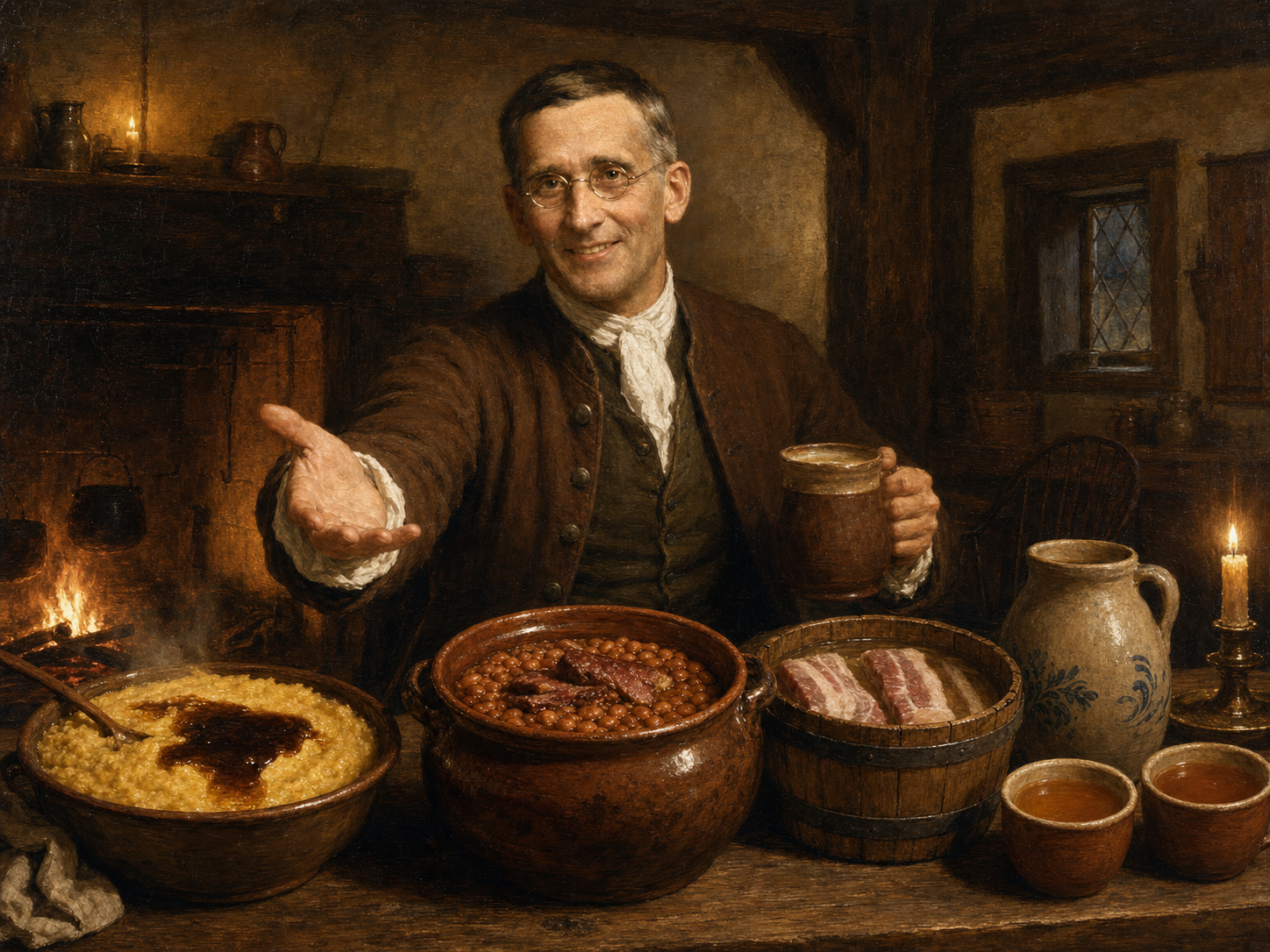
Ann Putnam at the table
1679 — 1716
On the menu
The Puritan Table of New England
In the Putnam household of Salem Village, there is no starter, main course, or dessert: austerity is a virtue and gluttony a sin. The day is ordered around three simple moments — morning porridge, the midday dinner of corn or rye mush, salt pork, and boiled root vegetables, and a light supper at dusk. Everything cooks in a single pot hung from the crane in the hearth, or under the embers of the bread oven. And because no work is permitted on the Lord's Day, Sunday's meals are prepared on Saturday evening.
Signature : Indian Corn and Molasses
Two gifts of the New World and Atlantic trade structure this entire cuisine. "Indian corn" (maize), learned from the Wampanoag, becomes the colonists' daily bread as coarse meal, often mixed with rye. Molasses, the dark syrup brought from the West Indies through the triangular trade, is the only affordable sweetener in a modest home: it sweetens the porridge, glazes the beans, and perfumes the bread. Together, they are the ground bass of the Salem table.
click to flip back
Ann Putnam at the table
1679 — 1716
5 period recipes
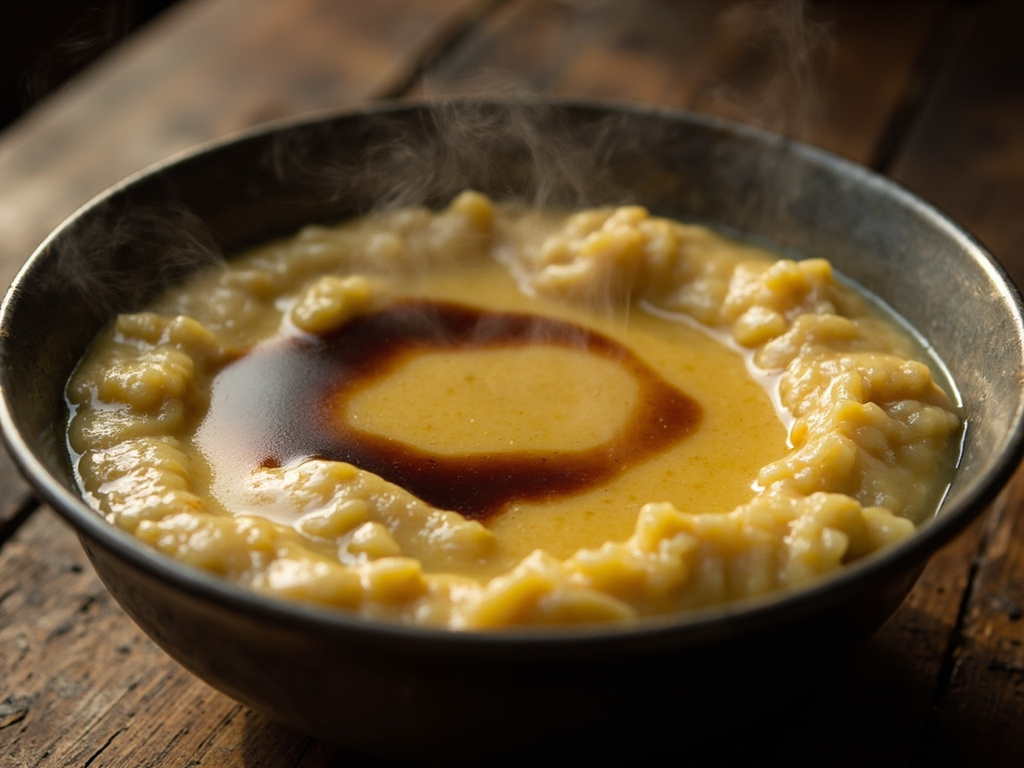 Everyday
Hasty Pudding — Cornmeal Porridge with Molasses
Morning Porridge (the dawn staple)
🍯· 25 min
View the recipe
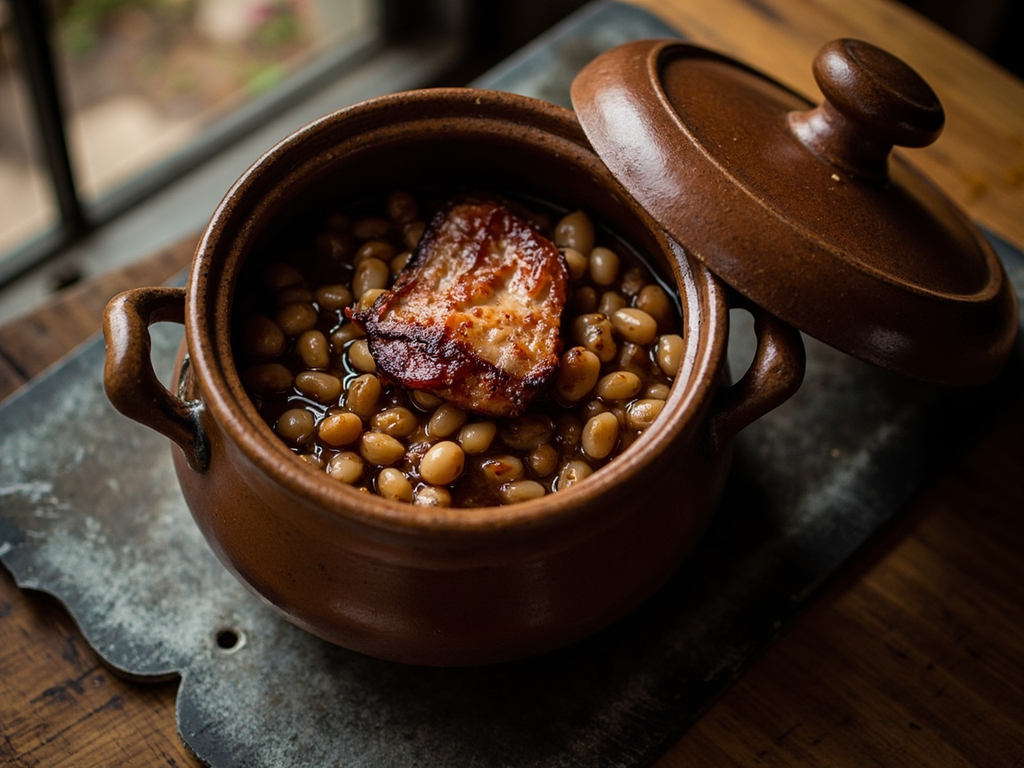 Festive
Molasses Baked Beans with Salt Pork (Sabbath Beans)
Lord's Day Dinner (the dish prepared the night before)
🍯 🧂 🍄· 6 h (+ overnight soaking)
View the recipe
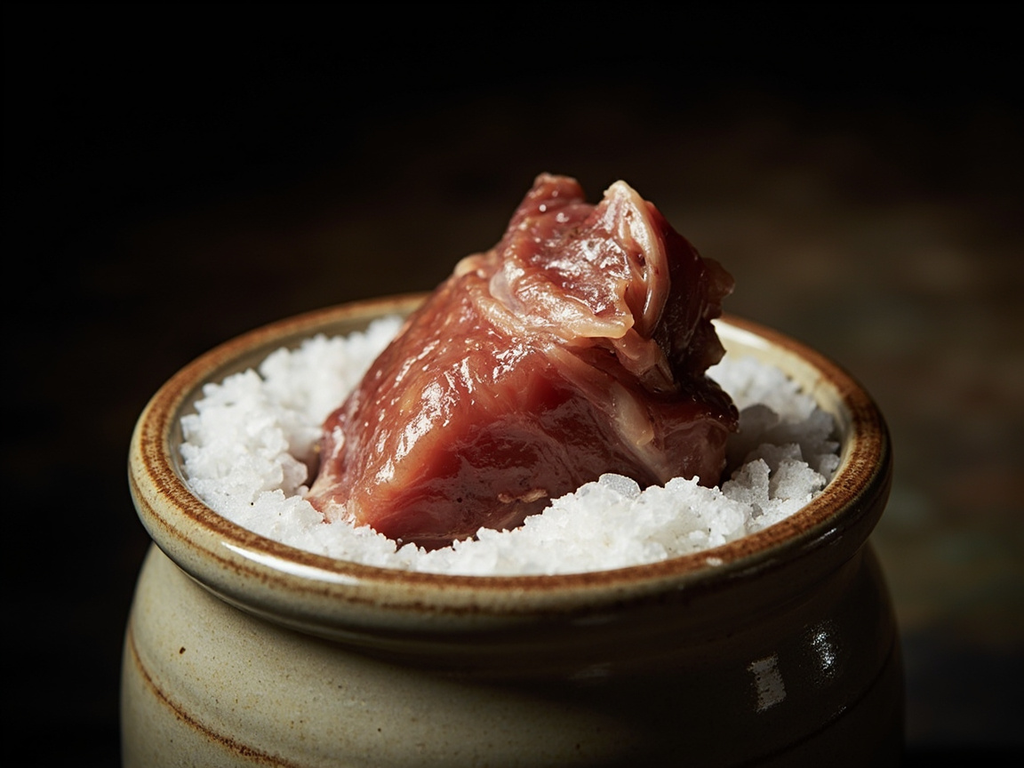 Preserving
Salt Pork in Brine (barrel salt pork)
Winter Provision (the barrel meat)
🧂 🍄· 30 min (+ 1 week to several months of salting)
View the recipe
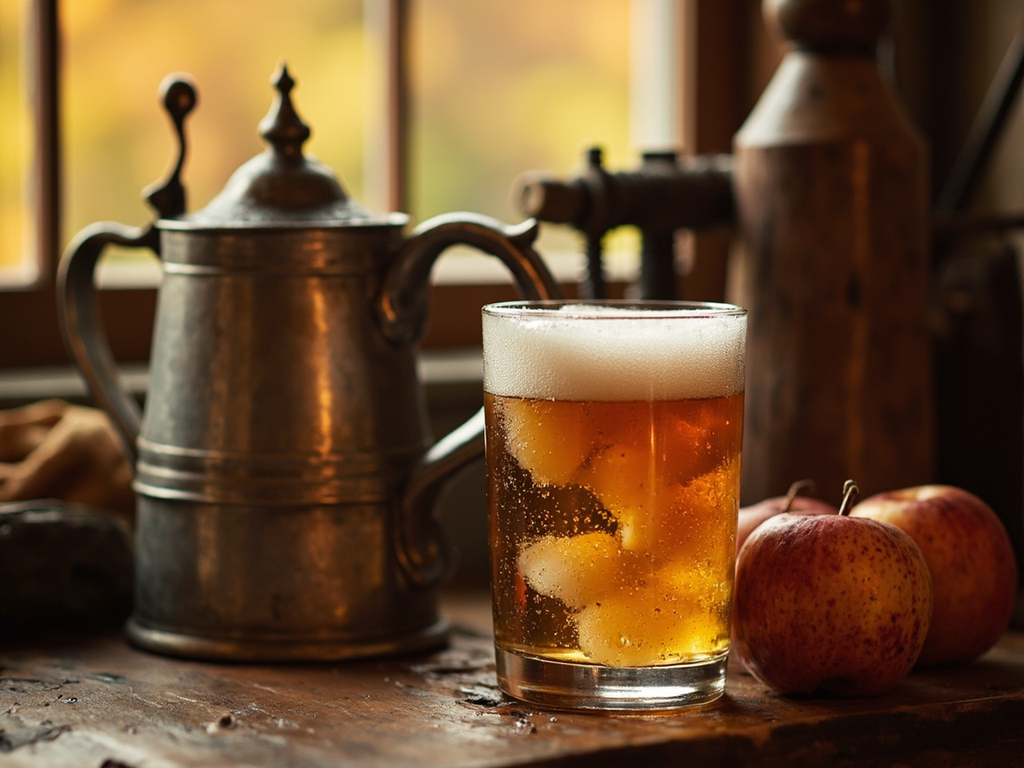 Drink
DrinkFermented New England Sweet Cider
Table Beverage (the household drink)
🍋 🫙 🍯· 15 min (+ 3 to 5 days fermentation)
View the recipe
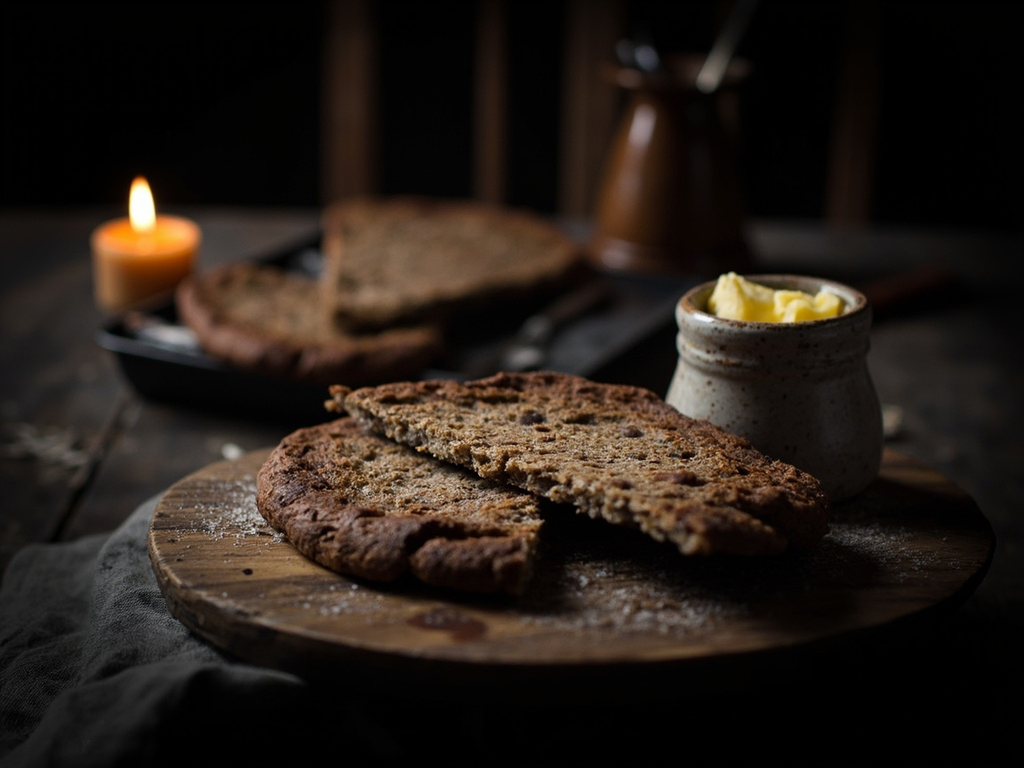 Remedy
Rye Flatbread, in Memory of the Witch Cake
Superstition Bread (the counter-spell cake)
☕· 30 min
View the recipe