 flip
flipFermented New England Sweet Cider
Fermented New England Sweet Cider
Why this dish? The water from wells and ponds was considered unwholesome, and rightly distrusted. At the Putnam table, young and old alike drank cider — the apple orchard was at the heart of every Salem Village farm. Even a twelve-year-old child drank lightly fermented cider at every meal.
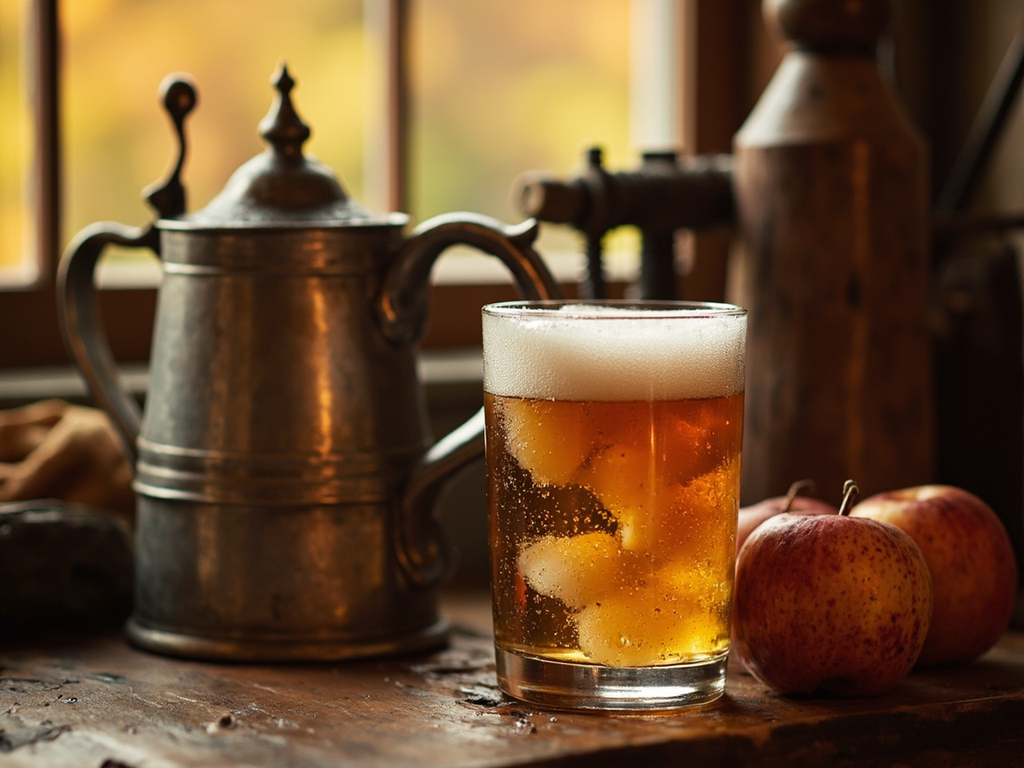
Pressed apple juice, left to ferment for a few days until it becomes lively, sparkling, and slightly alcoholic. Tart, fruity, refreshing.
Do not drink the pond water, child — it carries fever, and more than one has learned that to his cost. In autumn, we carried the apples from the orchard to the press, and the drawn juice flowed into the barrels in the cellar. There, left to itself, it took on bite and bubbles, sweet at first, then bolder and livelier as the days passed. It was our drink for all, from grandfather to the barely weaned infant — for better an honest cider than a treacherous water.
- •Orchard apples, cider varieties — a full basket (fruit to press)
Fermented New England Sweet Cider
Pressed apple juice, left to ferment for a few days until it becomes lively, sparkling, and slightly alcoholic. Tart, fruity, refreshing.
Why this dish? The water from wells and ponds was considered unwholesome, and rightly distrusted. At the Putnam table, young and old alike drank cider — the apple orchard was at the heart of every Salem Village farm. Even a twelve-year-old child drank lightly fermented cider at every meal.
Do not drink the pond water, child — it carries fever, and more than one has learned that to his cost. In autumn, we carried the apples from the orchard to the press, and the drawn juice flowed into the barrels in the cellar. There, left to itself, it took on bite and bubbles, sweet at first, then bolder and livelier as the days passed. It was our drink for all, from grandfather to the barely weaned infant — for better an honest cider than a treacherous water.
Ingredients (period version)
- Orchard apples, cider varieties — a full basket (fruit to press)
Ingredients
- Pure apple juice, preferably unpasteurized — 2 liters (must to ferment)
- Cider yeast (or natural wild yeasts from raw juice) — 1 pinch (optional) (fermentation agent)
Method
- Pour the raw apple juice into a clean jar or demijohn, not filling it completely.
- Optionally add a pinch of cider yeast; raw juice will ferment on its own thanks to wild yeasts.
- Close with an airlock (or a cloth held with a rubber band) to let gas escape.
- Leave at room temperature for 3 to 5 days, tasting daily: it progresses from sweet to tart and sparkling.
- When the balance pleases you, filter and refrigerate to slow fermentation. Drink young.
- Note: the period version became frankly alcoholic; you can stop early for a very low-alcohol cider.
How it was made : Cider was the national drink of colonial New England, consumed at all ages because it was safer than water. Every farm had its orchard and press; surplus was distilled into applejack. "Small beer" played the same role as a low-alcohol table beverage.
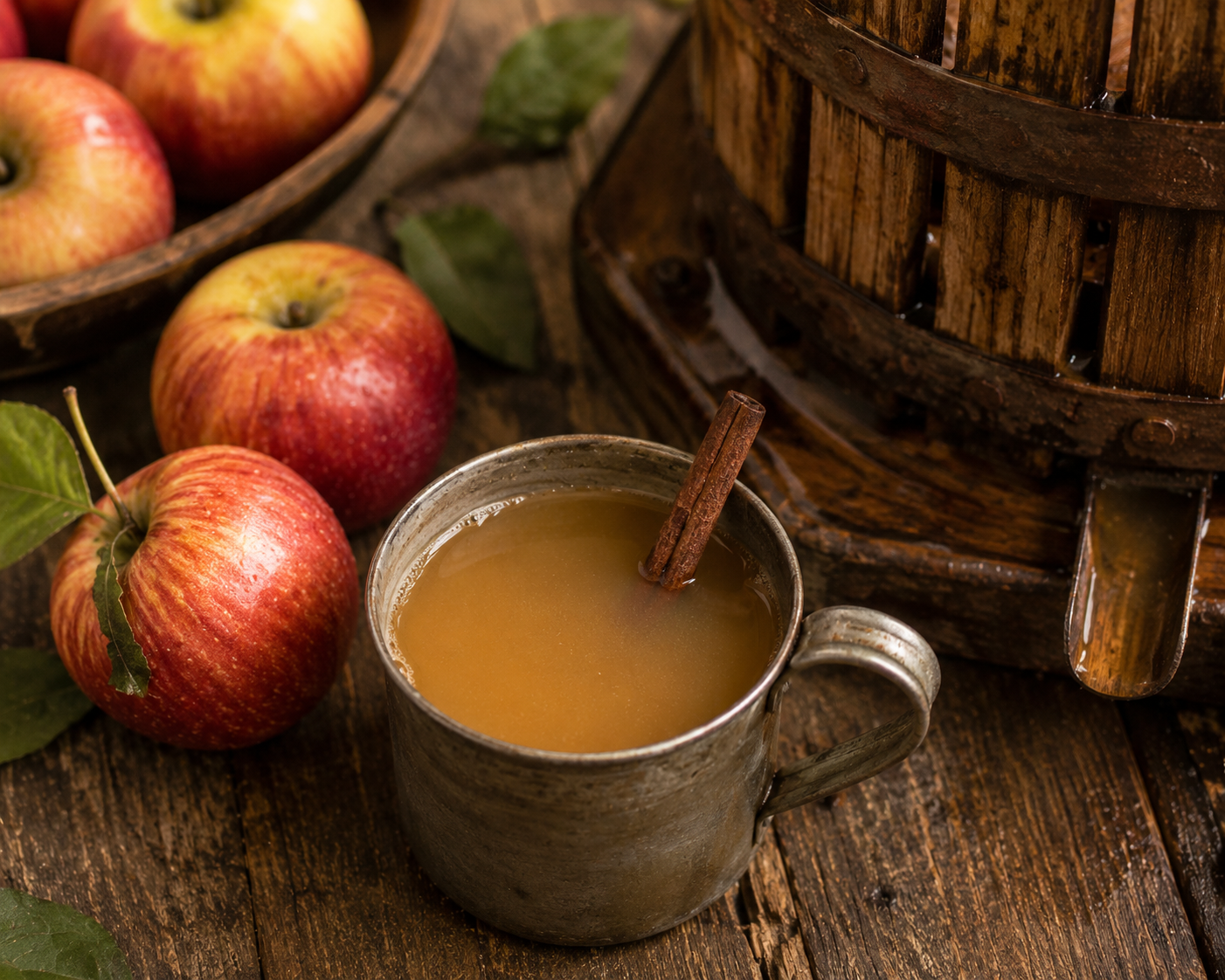
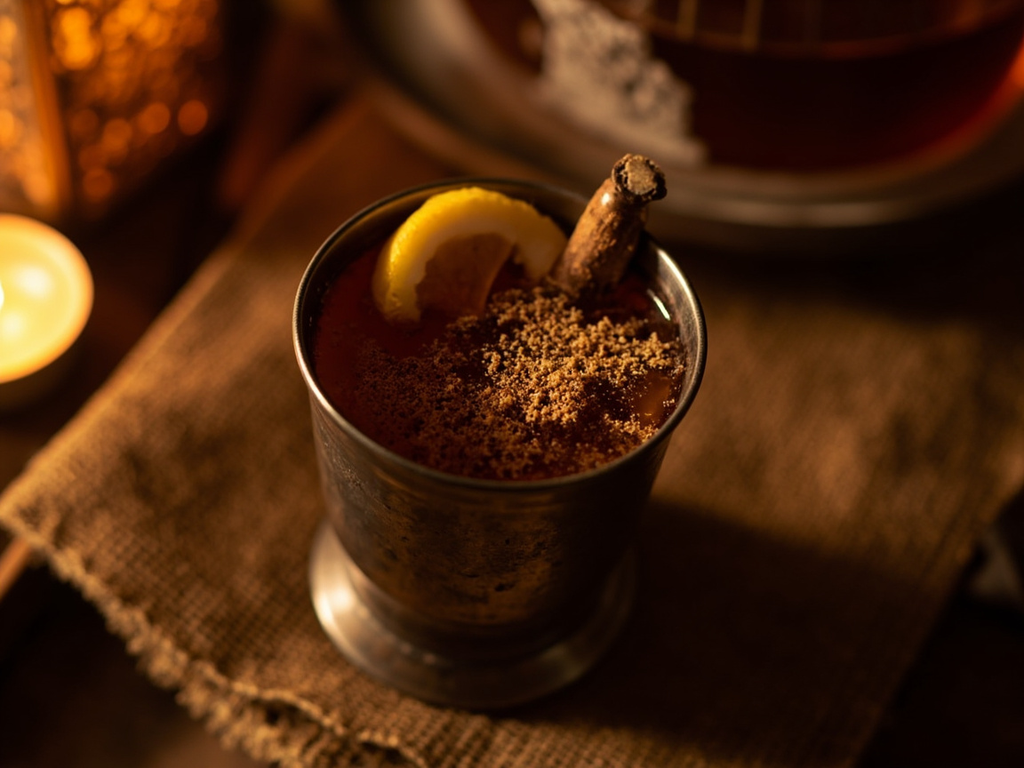
The contemporary twist : Serve chilled in a pewter tankard with a cinnamon stick: "Salem orchard cider."
Sources : Sandra L. Oliver, Food in Colonial and Federal America (2005) · Ben Watson, Cider, Hard and Sweet (1999)
Ann Putnam · Charactorium