 flip
flipSalt Pork in Brine (barrel salt pork)
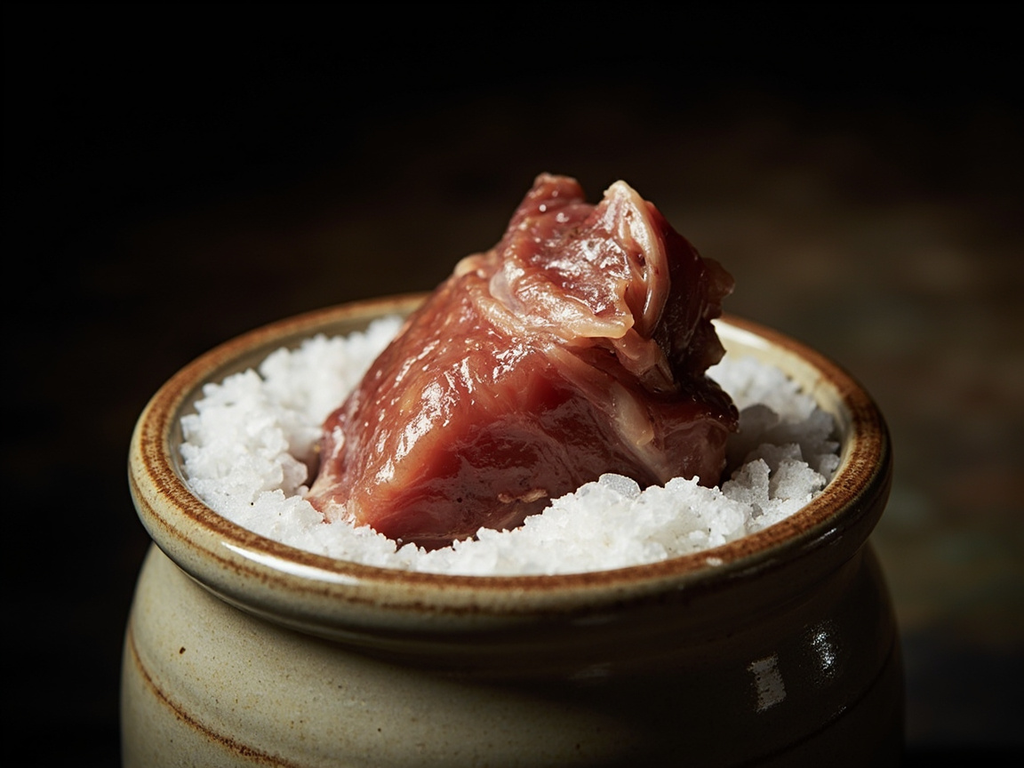
Salt Pork in Brine (barrel salt pork)
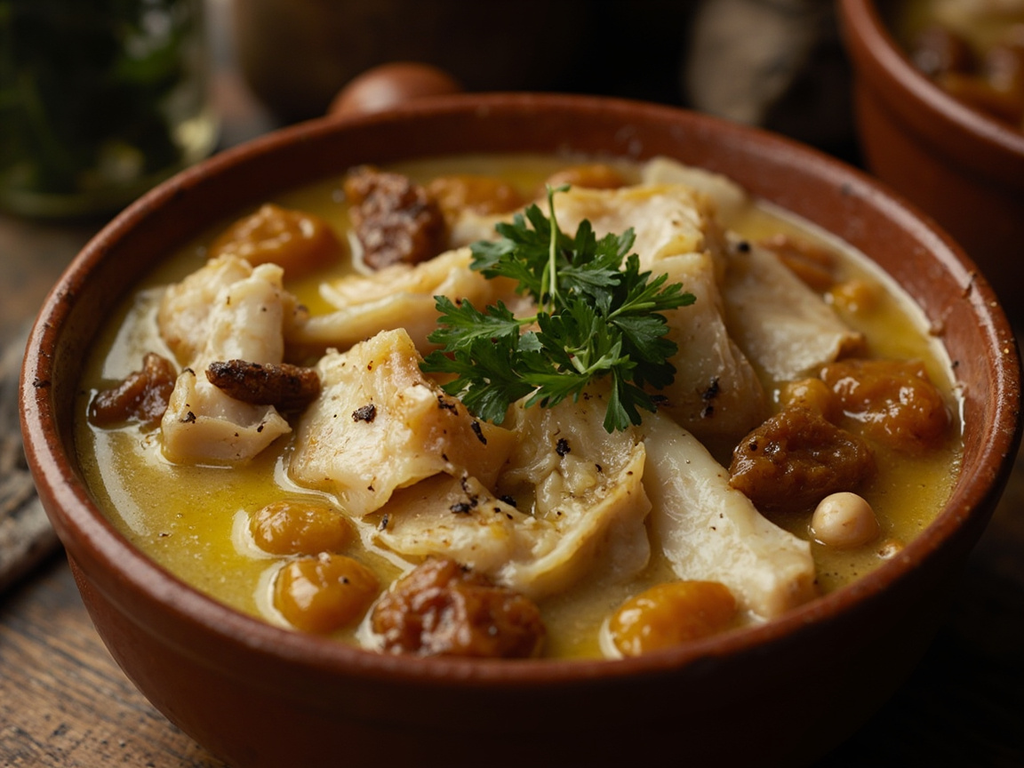
Why this dish? Without this meat, one did not survive the winter in Salem Village. In autumn, after the pig slaughter, every family filled its barrel with salt pork that would provide fat and protein until spring. It was from this barrel that Ann's mother would take the piece thrown into the daily pot.
Pieces of pork buried in coarse salt and brine, preserving for months. Firm, very salty, deeply flavorful once desalted and melted into a broth.
Listen well, for on this depends whether your people see the spring. When the cold comes and the pig is killed, no waste: you cut the flesh, rub it with coarse salt until it drinks like dry earth drinks rain, and you pack it into the barrel, layer upon layer, drowned in brine. For six months it will wait without rotting. In the morning, my mother would take out a piece, soak it to remove the excess salt, and throw it into the pot: there is no soup that this pork cannot make good.
- •Pork belly and side — the whole animal (meat to preserve)
- •Coarse sea salt — in abundance (preserving agent)
- •Spring water — for brine (brine)
Salt Pork in Brine (barrel salt pork)
Pieces of pork buried in coarse salt and brine, preserving for months. Firm, very salty, deeply flavorful once desalted and melted into a broth.
Why this dish? Without this meat, one did not survive the winter in Salem Village. In autumn, after the pig slaughter, every family filled its barrel with salt pork that would provide fat and protein until spring. It was from this barrel that Ann's mother would take the piece thrown into the daily pot.
Listen well, for on this depends whether your people see the spring. When the cold comes and the pig is killed, no waste: you cut the flesh, rub it with coarse salt until it drinks like dry earth drinks rain, and you pack it into the barrel, layer upon layer, drowned in brine. For six months it will wait without rotting. In the morning, my mother would take out a piece, soak it to remove the excess salt, and throw it into the pot: there is no soup that this pork cannot make good.
Ingredients (period version)
- Pork belly and side — the whole animal (meat to preserve)
- Coarse sea salt — in abundance (preserving agent)
- Spring water — for brine (brine)
Ingredients
- Pork belly — 1 kg (meat to preserve)
- Non-iodized coarse salt — 300 g (preserving agent)
- Water — 1 liter (brine)
- Bay leaves and peppercorns — a few (optional) (aromatics)
Method
- Cut the belly into large pieces. Rub generously with coarse salt on all sides.
- Dissolve the remaining salt in water to make a saturated brine (an egg should float in it).
- Layer the pieces in a clean stoneware crock, add bay leaves and peppercorns, cover completely with brine.
- Weigh down so the meat stays submerged, cover, and store in a cool place (cellar or refrigerator) for at least 1 week, up to several months.
- Before use, desalt the chosen piece by soaking it for 12 hours in cold water, changing the water, then use in soups, beans, or stews.
How it was made : The salt pork barrel ("the pork barrel") was so central to colonial domestic economy that the expression survived in English to mean a reserve one draws upon. Without refrigeration, salt — and smoking — were the only defenses against winter famine.
The contemporary twist : A few slices of this salt pork, pan-fried until crispy, make old-fashioned lardons to enliven a root vegetable soup.
Sources : Sandra L. Oliver, Food in Colonial and Federal America (2005) · James E. McWilliams, A Revolution in Eating: How the Quest for Food Shaped America (2005)
Ann Putnam · Charactorium