 flip
flipHasty Pudding — Cornmeal Porridge with Molasses
Hasty Pudding — Cornmeal Porridge with Molasses
Why this dish? This was the breakfast every morning on a Salem Village farm, before milking and prayer. Little Ann, barely twelve, would down a steaming bowl before heading to catechism: a poor food, quick to make (hasty), and filling on the cold Massachusetts mornings.
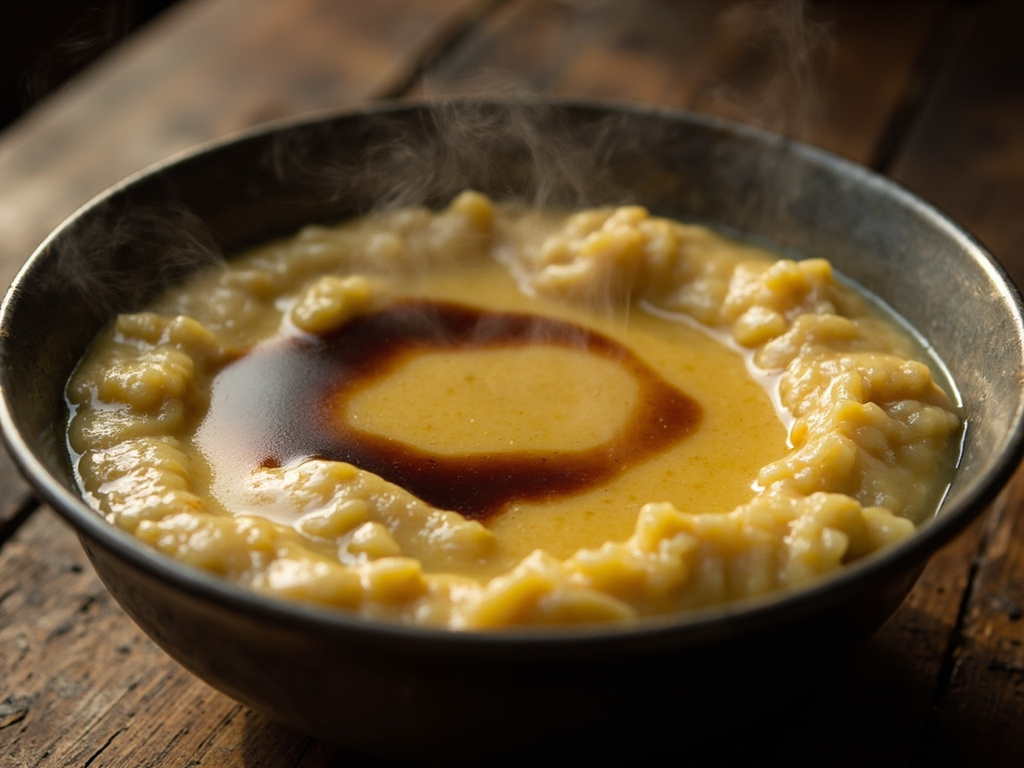
A thick, smooth porridge of cornmeal cooked in salted boiling water, topped with a drizzle of dark molasses. Sweet, comforting, the color of burnt honey.
Come close, and fear not this humble dish. My mother would rain the Indian meal from one hand into the boiling water, and with the other stir the wooden spoon without rest, for woe betide lumps — a lumpy porridge, she said, is the work of a lazy girl, and the Lord sees laziness. We let it thicken until the spoon stood upright, then a stream of West Indies molasses, and we gave thanks before tasting. On frosty mornings, that bowl kept my body warm when nothing kept my soul warm.
- •Cornmeal (Indian meal) — as much as needed (porridge grain)
- •Spring water — three times the volume of meal (cooking liquid)
- •Salt — a pinch (seasoning)
- •West Indies molasses — a drizzle (sweetness)
Hasty Pudding — Cornmeal Porridge with Molasses
A thick, smooth porridge of cornmeal cooked in salted boiling water, topped with a drizzle of dark molasses. Sweet, comforting, the color of burnt honey.
Why this dish? This was the breakfast every morning on a Salem Village farm, before milking and prayer. Little Ann, barely twelve, would down a steaming bowl before heading to catechism: a poor food, quick to make (hasty), and filling on the cold Massachusetts mornings.
Come close, and fear not this humble dish. My mother would rain the Indian meal from one hand into the boiling water, and with the other stir the wooden spoon without rest, for woe betide lumps — a lumpy porridge, she said, is the work of a lazy girl, and the Lord sees laziness. We let it thicken until the spoon stood upright, then a stream of West Indies molasses, and we gave thanks before tasting. On frosty mornings, that bowl kept my body warm when nothing kept my soul warm.
Ingredients (period version)
- Cornmeal (Indian meal) — as much as needed (porridge grain)
- Spring water — three times the volume of meal (cooking liquid)
- Salt — a pinch (seasoning)
- West Indies molasses — a drizzle (sweetness)
Ingredients
- Fine cornmeal (polenta) — 120 g (porridge grain)
- Water — 600 ml (cooking liquid)
- Salt — 1/2 tsp (seasoning)
- Molasses (or dark cane syrup) — 2 tbsp (sweetness)
- Butter — 1 knob (optional) (modern richness)
Method
- Bring salted water to a boil in a heavy-bottomed saucepan.
- Pour in the cornmeal in a thin stream with one hand while whisking constantly with the other to prevent lumps.
- Reduce heat and cook for 15-20 minutes, stirring often, until the porridge is very thick and holds on the spoon.
- Pour into a bowl, make a well, and drizzle in the molasses. Add a knob of butter if desired.
- Serve piping hot.
How it was made : Hasty pudding was the most universal dish in colonial New England households. It was cooked in the cast-iron pot over the hearth; leftover cooled porridge was sliced and fried the next day. Molasses replaced sugar, which was too expensive for a farming family.
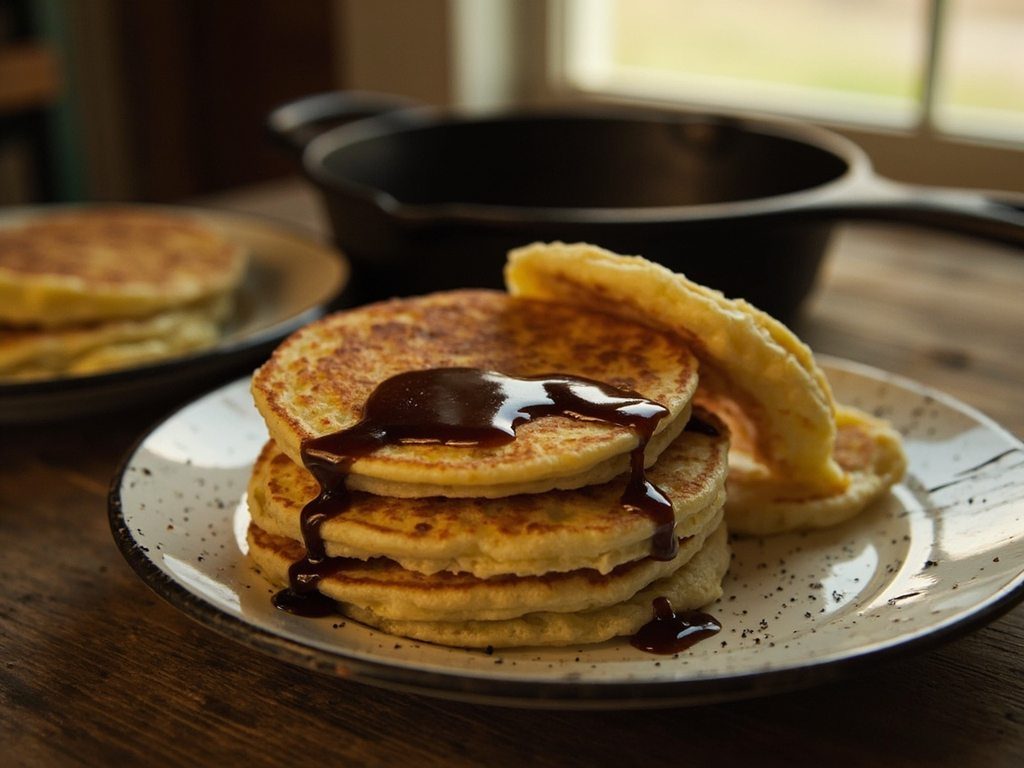
The contemporary twist : Pour the hot porridge into a mold, let it set overnight, slice, and pan-fry in butter: you get golden "fried mush," the direct ancestor of the American breakfast.
Sources : Sandra L. Oliver, Food in Colonial and Federal America (2005) · Amelia Simmons, American Cookery (1796) — recipes inherited from the colonial period
Ann Putnam · Charactorium