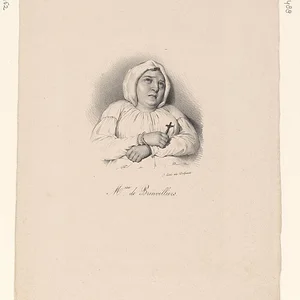

Ann Putnam Jr. was one of the principal accusers during the Salem witch trials of 1692, when she was only twelve years old. Her testimony contributed to the conviction of several people. In 1706, she made a public apology, acknowledging that she had been deceived by the devil.
Frequently asked questions
Famous Quotes
« I desire to lie in the dust, and to be humbled for it, in that I was a cause, with others, of so sad a calamity to them.»
Key Facts
- Born in 1679 in Salem Village, in the Massachusetts Bay Colony
- In 1692, at the age of 12, she became one of the most active accusers in the Salem trials
- Her testimony led to the accusation of around twenty people, several of whom were executed
- In 1706, she made a public apology before the congregation of Salem Village
- Died in 1716 in Salem, at the age of 37
Works & Achievements
Written and oral testimonies that helped condemn an elderly and respected woman who became the symbol of the trials' injustice.
Ann was among the first to denounce this church member, a key moment showing that even the pious could be targeted.
Her testimony contributed to the case against a former Salem minister, hanged in August 1692—an extraordinary event for a man of the church.
Ann is credited with accusations against some sixty people, making her the most prolific accuser of Salem.
A statement of repentance read aloud in church, unique among the accusers; a major document on memory and guilt in the aftermath of the trials.
Anecdotes
At just twelve years old, Ann Putnam Jr. was one of the most active accusers in Salem: she is credited with accusations against some sixty people. During the hearings, she would fall into convulsions and cry out that she was being pinched or bitten by invisible specters, right before the judges' eyes.
Ann accused Rebecca Nurse, a pious old woman of 71 who was highly respected in the village. Despite a petition signed by 39 neighbors in her favor, Rebecca was hanged on July 19, 1692 — a case that haunted people's memories for a long time.
Ann's grandfather and parents were at the heart of long-standing disputes over land and church matters in the village of Salem. Many historians believe that Ann's accusations often targeted families who were enemies of the Putnams, blending fear of the devil with neighborly grudges.
In 1706, now an adult and an orphan, Ann stood before the congregation of the Salem church while the minister read her apology aloud. She claimed she had been “an instrument” deceived by Satan, with no personal hatred toward her victims — she is the only known accuser to have offered such a public apology.
Left alone at nineteen after the death of both her parents in 1699, Ann raised her nine younger brothers and sisters. She never married and died at just 36 years old, in 1716.
Primary Sources
The specter of Rebecca Nurse tormented me, pinching and pricking me, and urging me to sign her book.
I desire to be humbled before God... for having been, in 1692, an instrument for accusing several people of a grievous crime, whereby their lives were taken from them, when, as I now have reason to believe, they were innocent.
Ann Putnam Jr. declared that she saw the apparition of the prisoner afflicting her, and at once fell into a fit before the court.
Several of the afflicted girls were agitated by strange movements, which the bystanders could not understand.
Key Places
Farming hamlet where the Putnam family lived and where the accusations began. Ann was born, lived, and died here.
The minister's house where the first fits broke out in his daughter and niece. The starting point of the 1692 panic.
Puritan meeting house that also served as a courtroom for the first examinations of the accused. Ann gave many of her testimonies here.
Judicial center where the Court of Oyer and Terminer sat and sentenced the accused to death.
Hill where nineteen people were hanged in 1692, including Rebecca Nurse, who was accused by Ann.
Liens externes & ressources
Références
Œuvres
Dépositions contre Rebecca Nurse
1692
Accusations contre Martha Corey
1692
Accusations contre le pasteur George Burroughs
1692
Ensemble de ses témoignages spectraux
1692
Excuses publiques de 1706
1706