 flip
flipPlakous with Honey and Fresh Cheese
Plakous with Honey and Fresh Cheese
Why this dish? When her sons Amphion and Zethus had built the seven-gated walls and Antiope regained her rank, her return must have been celebrated. At the Theban table, the honey *plakous* — the festive cake par excellence — crowned the banquet, accompanied by Amphion's lyre.
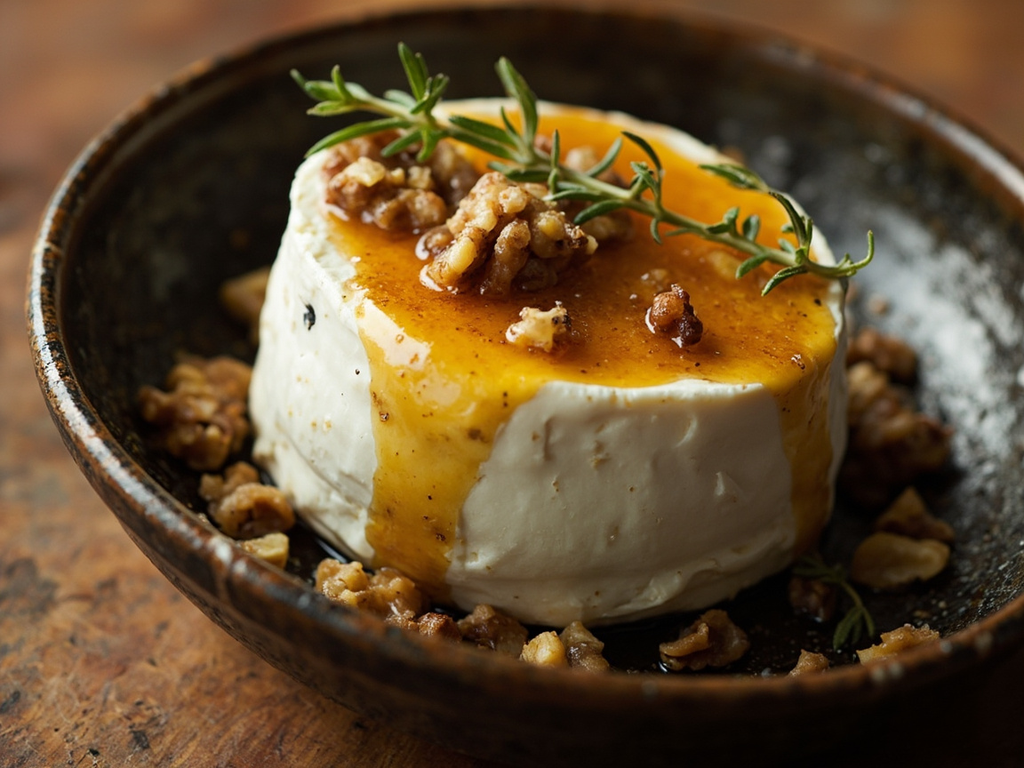
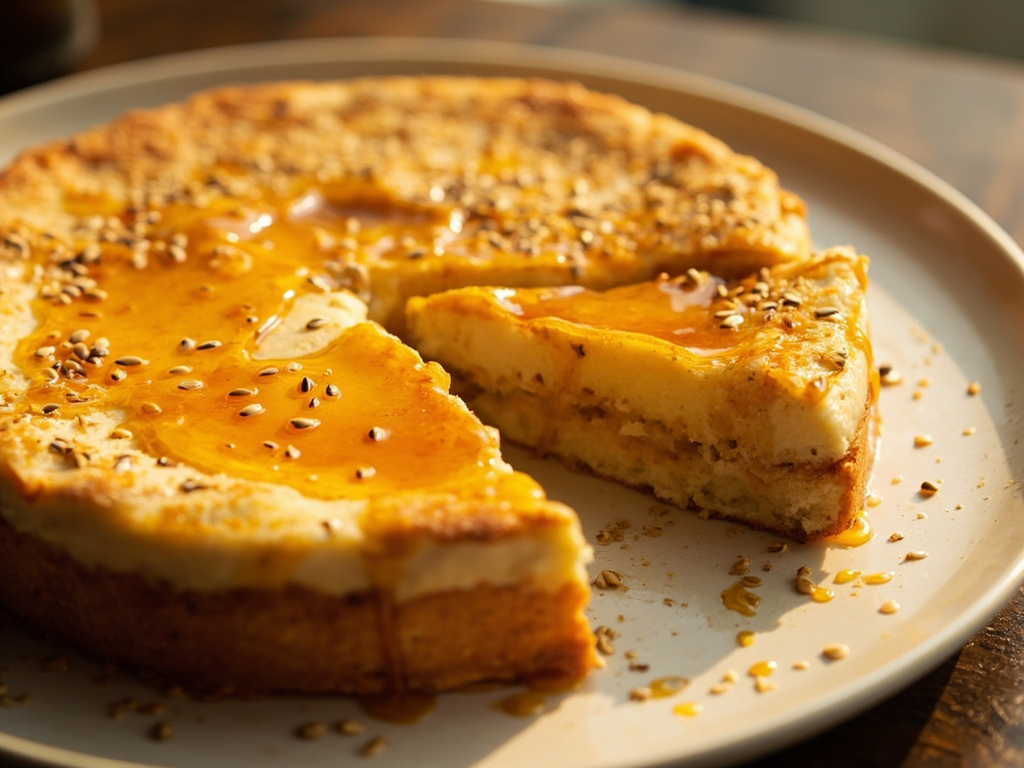
A cake of thin layers of dough enriched with fresh cheese beaten with honey, perfumed with sesame. The distant ancestor of the honeyed layered cakes of the Mediterranean.
That day, bitterness was over. My sons had raised the walls of Thebes, and they brought to the table the *plakous*, golden with honey like the dawn over Cithaeron. See how they beat the fresh goat cheese with thyme honey, how they spread it between thin leaves, how they sprinkle sesame. Taste it while the lyre sings: such a cake is not for days of chains, but for those when the gods finally smile upon us.
- •Wheat flour — for thin sheets (structure)
- •Fresh goat cheese — generous (filling)
- •Thyme honey — as desired (sweetness)
- •Sesame seeds — a handful (flavor)
- •Olive oil — for the sheets (binder)
Plakous with Honey and Fresh Cheese
A cake of thin layers of dough enriched with fresh cheese beaten with honey, perfumed with sesame. The distant ancestor of the honeyed layered cakes of the Mediterranean.
Why this dish? When her sons Amphion and Zethus had built the seven-gated walls and Antiope regained her rank, her return must have been celebrated. At the Theban table, the honey *plakous* — the festive cake par excellence — crowned the banquet, accompanied by Amphion's lyre.
That day, bitterness was over. My sons had raised the walls of Thebes, and they brought to the table the *plakous*, golden with honey like the dawn over Cithaeron. See how they beat the fresh goat cheese with thyme honey, how they spread it between thin leaves, how they sprinkle sesame. Taste it while the lyre sings: such a cake is not for days of chains, but for those when the gods finally smile upon us.
Ingredients (period version)
- Wheat flour — for thin sheets (structure)
- Fresh goat cheese — generous (filling)
- Thyme honey — as desired (sweetness)
- Sesame seeds — a handful (flavor)
- Olive oil — for the sheets (binder)
Ingredients
- Thin filo dough (or homemade wheat dough rolled thin) — 6 sheets (structure)
- Fresh goat cheese (or brousse) — 300 g (filling)
- Honey — 6 tbsp (sweetness)
- Sesame seeds — 3 tbsp (flavor)
- Olive oil — 4 tbsp (glaze)
Method
- Beat the fresh cheese with 3 tablespoons of honey until smooth.
- Brush each sheet of dough with olive oil and layer them three by three in a dish, alternating with the cheese cream.
- Finish with a layer of dough, brush with oil, and sprinkle with sesame.
- Bake at 180°C for 25–30 minutes until golden.
- Upon removal, drizzle with the remaining warmed honey and let cool slightly before cutting.
How it was made : The *plakous* ("flat thing") is described by Greek authors as a cake of layers of dough, cheese, and honey — Cato later gives a Roman recipe under the name *placenta*. It was the banquet and offering dessert, a sign of prosperity.
The contemporary twist : Serve warm with a spoonful of runny honey and a few edible petals; name it "Cake of the Seven Gates" as a nod to Amphion's walls.
Antiope · Charactorium