 flip
flipExile's Hot Chocolate
Exile's Hot Chocolate
Why this dish? A refugee in New York from 1940 to 1943, where he wrote and illustrated The Little Prince, Saint-Exupéry worked at night. The anchor notes: in New York, he "had a weakness for hot chocolate" — the comfort drink of a man far from wartime France.
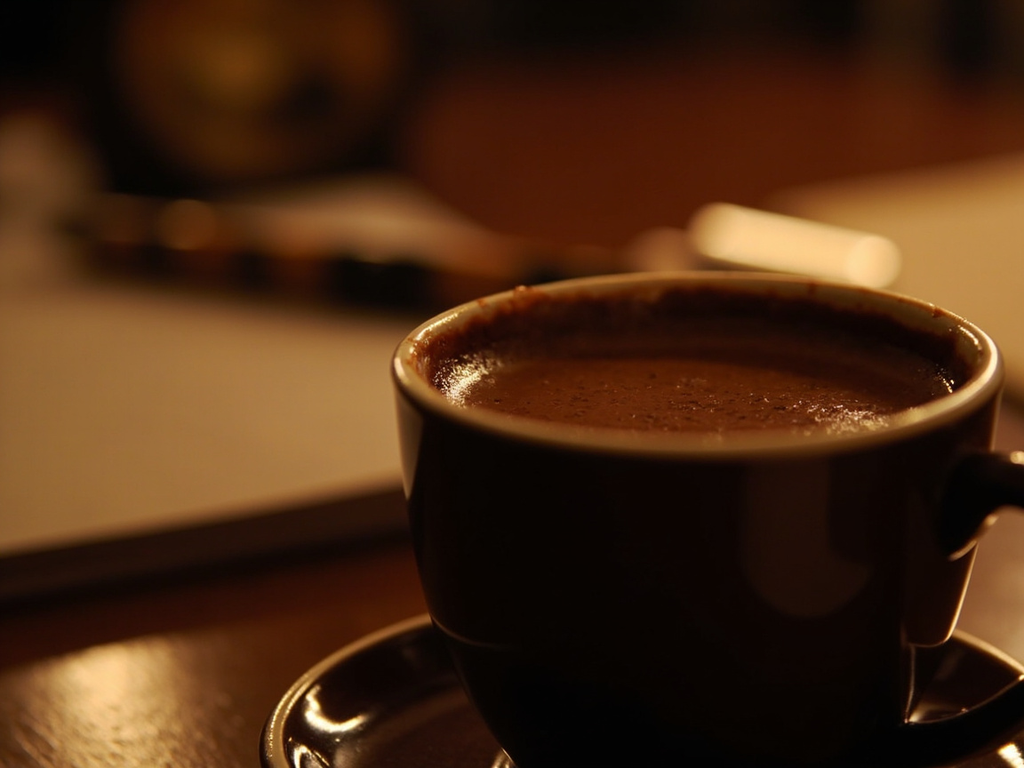
A thick hot chocolate, almost black, barely sweetened to let the bitterness of the cocoa speak. A remedy against cold and homesickness, stirred long and drunk in small sips, at night, while working.
In New York, the winter of my exile, I stayed up late blackening pages and drawing a little fellow fallen from the stars. When the night chilled my fingers, I made myself a thick chocolate, almost black, which I stirred for a long time. I dipped my lips into it as one rediscovers a childhood memory — and suddenly the room was no longer entirely foreign. You see, it takes so little to warm a man far from his country: a steaming cup, and the drawing of a flower.
- •Dark chocolate bar — a few squares (body and bitterness)
- •Whole milk — a large cup (creaminess)
- •Sugar — to taste (measured sweetness)
Exile's Hot Chocolate
A thick hot chocolate, almost black, barely sweetened to let the bitterness of the cocoa speak. A remedy against cold and homesickness, stirred long and drunk in small sips, at night, while working.
Why this dish? A refugee in New York from 1940 to 1943, where he wrote and illustrated The Little Prince, Saint-Exupéry worked at night. The anchor notes: in New York, he "had a weakness for hot chocolate" — the comfort drink of a man far from wartime France.
In New York, the winter of my exile, I stayed up late blackening pages and drawing a little fellow fallen from the stars. When the night chilled my fingers, I made myself a thick chocolate, almost black, which I stirred for a long time. I dipped my lips into it as one rediscovers a childhood memory — and suddenly the room was no longer entirely foreign. You see, it takes so little to warm a man far from his country: a steaming cup, and the drawing of a flower.
Ingredients (period version)
- Dark chocolate bar — a few squares (body and bitterness)
- Whole milk — a large cup (creaminess)
- Sugar — to taste (measured sweetness)
Ingredients
- 70% dark chocolate — 60 g (body, bitterness)
- Whole milk — 30 cl (creaminess)
- Heavy cream — 5 cl (thickness)
- Sugar — 1 tsp (optional) (sweetness)
- Pinch of fleur de sel — 1 pinch (enhance cocoa)
Method
- Finely chop the dark chocolate.
- Heat the milk and cream over low heat, without boiling.
- Off the heat, add the chocolate, let melt for 1 minute, then whisk vigorously until smooth and coating.
- Sweeten very lightly if needed, add the pinch of fleur de sel, return to low heat for 1 minute, stirring constantly to thicken.
- Pour into a warm large cup and drink in small sips, the time it takes to write a page.
How it was made : The "drinking" chocolate of the 1940s was thicker and less sweet than today's instant powders: real chocolate was melted in milk and worked with a whisk or a molinillo. In New York, cafés and drugstores served creamy versions that comforted European exiles.
The contemporary twist : Serve in a small "espresso chocolate" cup, with a star of orange zest — a nod to the asteroids of The Little Prince.
Sources : Stacy Schiff, Saint-Exupéry: A Life (1994) · Antoine de Saint-Exupéry, The Little Prince (New York, 1943)
Antoine de Saint-Exupéry · Charactorium