 flip
flipHoneyed wine of Dionysus
Honeyed wine of Dionysus
Why this dish? Ariadne becomes the wife of Dionysus, god of wine: no character is more intimately linked to the sacred beverage. Wine cut with water and sweetened with honey and herbs was the soul of the Greek symposion and all libations. The drink that seals her divine destiny.
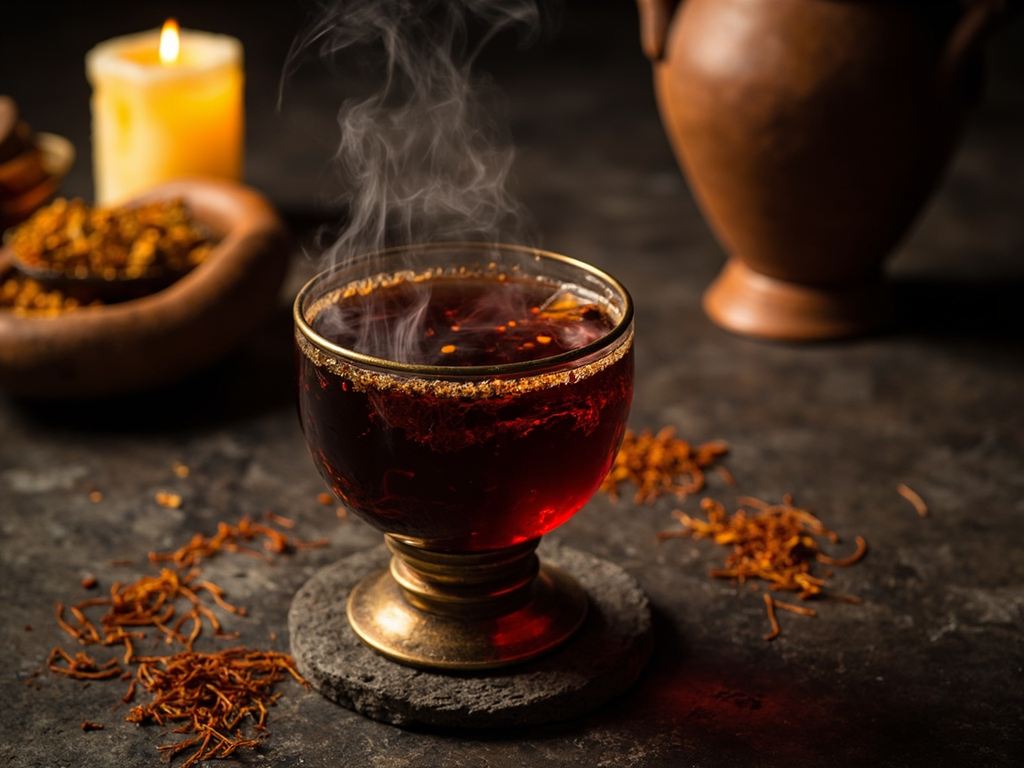
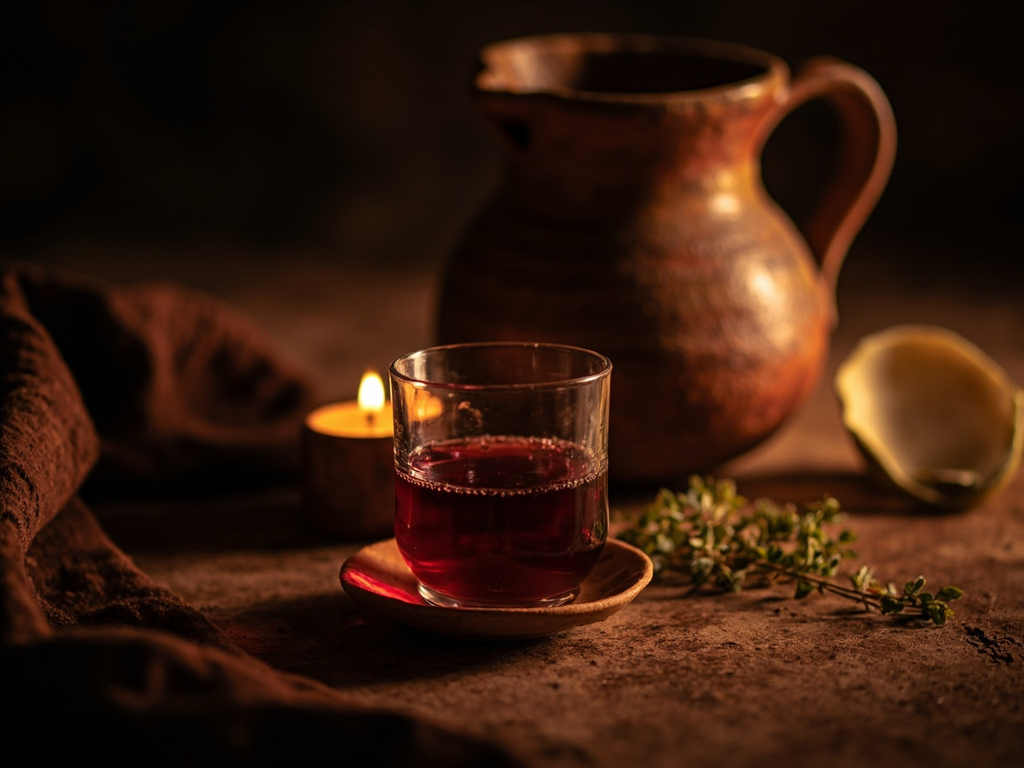
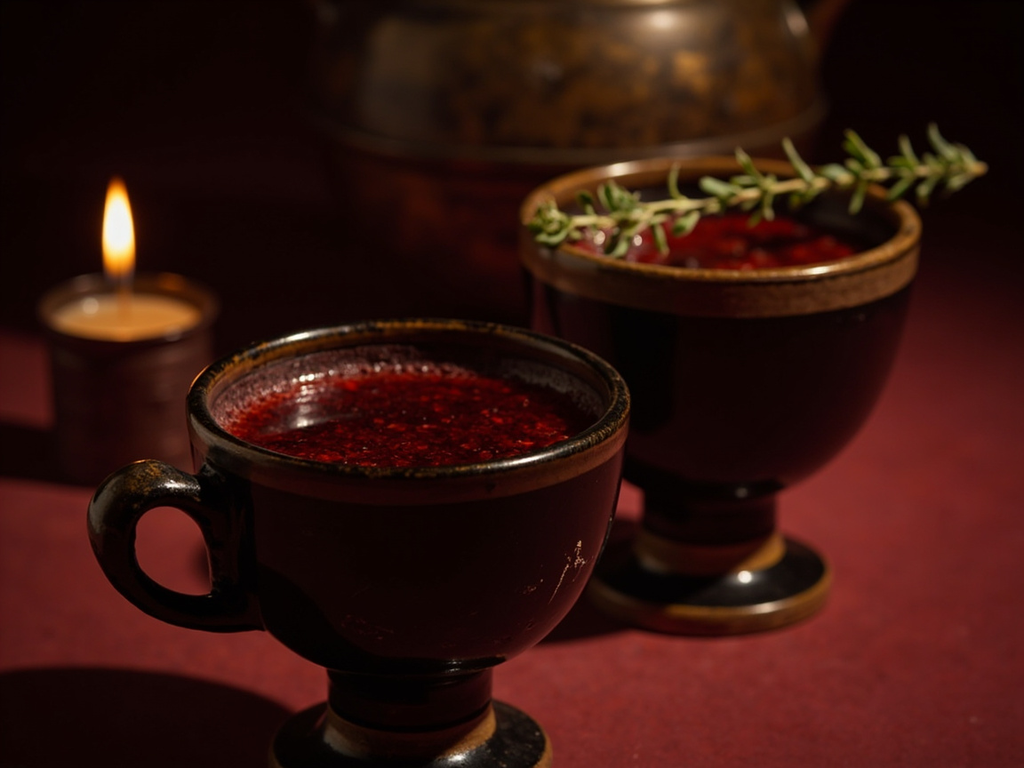
Red wine lengthened with water, gently warmed with honey, thyme, and a hint of pine resin (or simply herbs), served warm or cool. The beverage of banquets and offerings — always diluted, as Greek moderation demanded.
Never drink wine pure like a barbarian from the mountains: that is how one loses reason and honor. Cut it with spring water — three parts to two of wine — warm it barely, and sweeten it with honey from our hives and a sprig of thyme. My husband Dionysus, who drew me from the grief of Naxos, taught me that wine is a gift to share, not a fury to drink alone. First pour a few drops on the earth for the gods, then raise your cup: to life, which always renews itself.
- •Red wine — two parts (base)
- •Spring water — three parts (ritual dilution)
- •Thyme honey — to taste (sweetness)
- •Thyme and a little pine resin — one sprig, a pinch (aroma)
Honeyed wine of Dionysus
Red wine lengthened with water, gently warmed with honey, thyme, and a hint of pine resin (or simply herbs), served warm or cool. The beverage of banquets and offerings — always diluted, as Greek moderation demanded.
Why this dish? Ariadne becomes the wife of Dionysus, god of wine: no character is more intimately linked to the sacred beverage. Wine cut with water and sweetened with honey and herbs was the soul of the Greek symposion and all libations. The drink that seals her divine destiny.
Never drink wine pure like a barbarian from the mountains: that is how one loses reason and honor. Cut it with spring water — three parts to two of wine — warm it barely, and sweeten it with honey from our hives and a sprig of thyme. My husband Dionysus, who drew me from the grief of Naxos, taught me that wine is a gift to share, not a fury to drink alone. First pour a few drops on the earth for the gods, then raise your cup: to life, which always renews itself.
Ingredients (period version)
- Red wine — two parts (base)
- Spring water — three parts (ritual dilution)
- Thyme honey — to taste (sweetness)
- Thyme and a little pine resin — one sprig, a pinch (aroma)
Ingredients
- Full-bodied red wine — 200 ml (base)
- Spring water — 150 ml (dilution)
- Thyme honey — 2 tbsp (sweetness)
- Fresh thyme sprig — 1 (aroma)
- Retsina (resinated wine) as touch, or nothing — 1 tbsp (optional) (authentic resinous note)
Method
- Pour the wine and water into a saucepan; add the honey and thyme sprig.
- Heat very gently without boiling, stirring to dissolve the honey, for 5 minutes.
- For the ancient note, add the retsina off the heat.
- Strain, let infuse 5 minutes, remove the thyme.
- Serve warm in winter, or chilled in summer, in a cup — and do not forget the libation to the earth.
How it was made : The Greeks almost always drank wine cut with water (drinking it pure was considered barbaric and dangerous), often sweetened with honey, perfumed with herbs, pine resin, or spices, and sometimes warmed. The krater was used for this mixing during the symposion. Resin, which protected wine in amphorae, gave rise to modern retsina.
The contemporary twist : Serve it hot as an 'Aegean mulled wine' with thyme and honey for winter, or iced as an ancient kir for summer — always with the first drop poured for the gods.
Sources : Plutarch, Table Talk (Quaestiones convivales) · Andrew Dalby, Siren Feasts: A History of Food and Gastronomy in Greece (1996)
Ariadne · Charactorium