Bhojana and the Principle of ṣaḍrasa (the Six Tastes)
In classical Gupta India, a well-composed meal (bhojana) is not divided into starter-main-dessert but conceived as a balance of the six tastes (ṣaḍrasa) theorized by Ayurvedic medicine: sweet (madhura), sour (amla), salty (lavaṇa), pungent (kaṭu), bitter (tikta), and astringent (kaṣāya). Rice or flatbreads are served together on a large banana leaf or a copper plate, surrounded by small portions: legumes, vegetables, yogurt, condiments, and a sweet. For a scholar like Aryabhata, the meal is simple, vegetarian, and governed by the seasons and the stars he observed.
Signature : Ghṛta (clarified butter, ghee) and Hiṅgu (asafoetida)
Ghee, melted and purified butter, is at once cooking fat, remedy, and sacred offering: it binds the whole meal. Asafoetida (hiṅgu), a powerfully scented resin imported from the western highlands, replaces onion and garlic often avoided by Brahmins and scholars, and defines the cuisine of ancient northern India.
Aryabhata at the table
476 — 550
5 period recipes
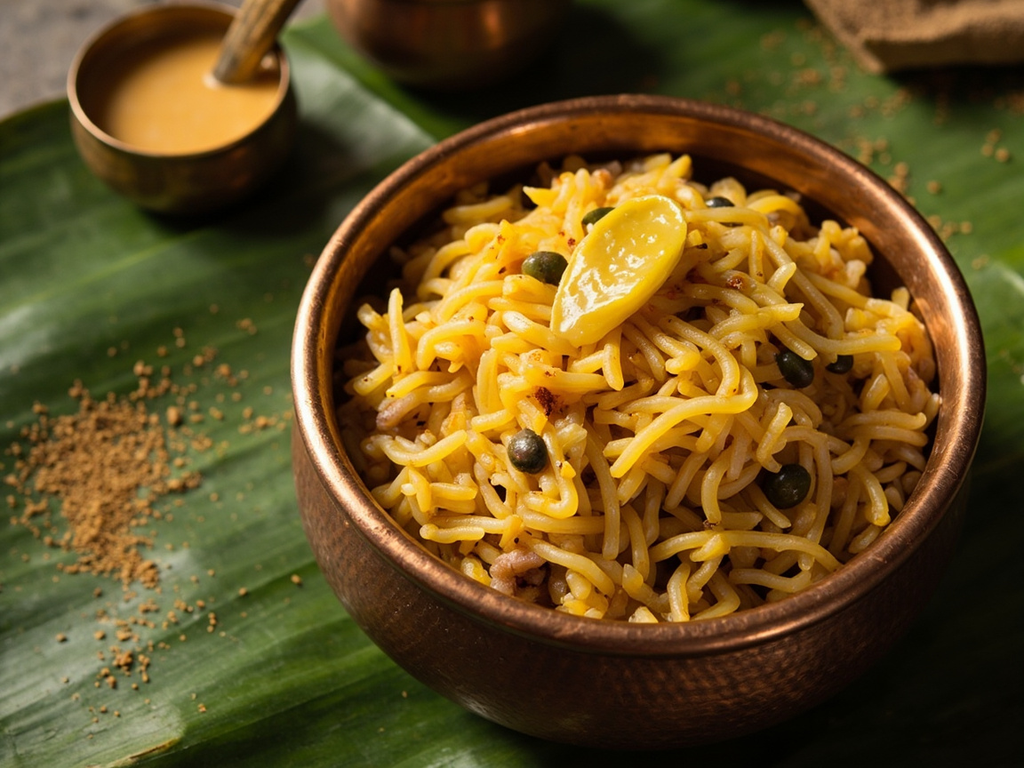 Everyday
Mudga-odana — Rice and Mung Lentils with Ghee and Cumin
Anna-vyañjana: rice (anna) accompanied by its vegetable-condiment (vyañjana), the heart of every daily meal
🧂 🍄· 35 min
View the recipe
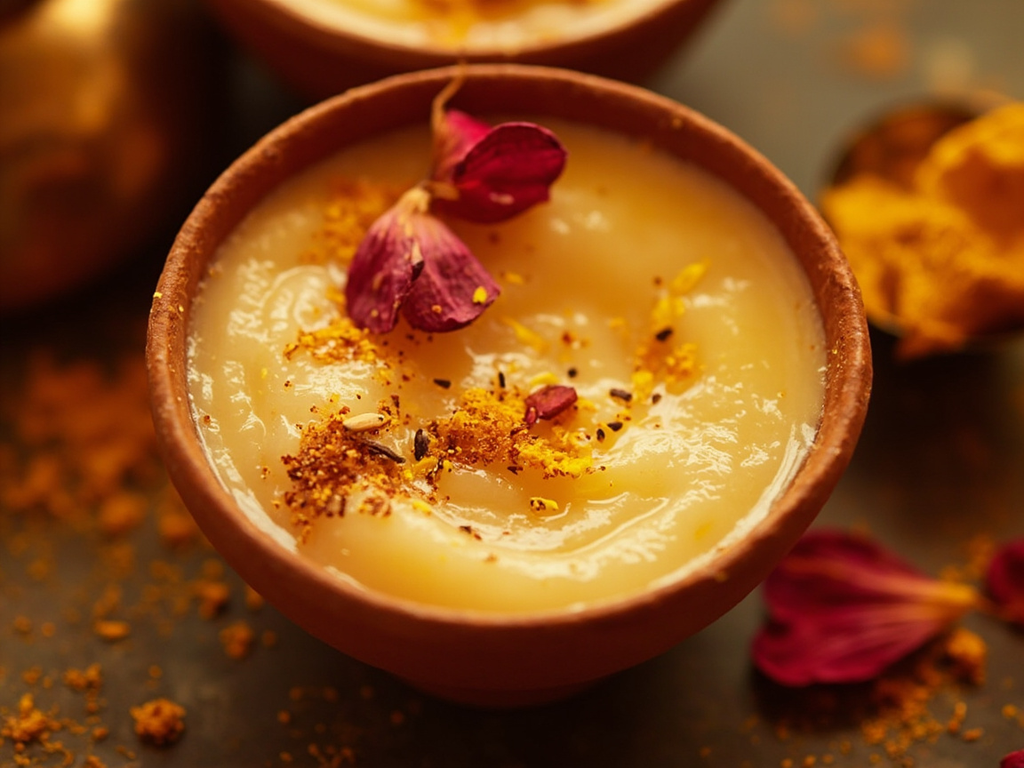 Festive
Pāyasa — Rice Pudding Sweetened with Jaggery and Cardamom
Madhura: the "sweet" part of bhojana, served at festivals and offerings
🍯· 1 h
View the recipe
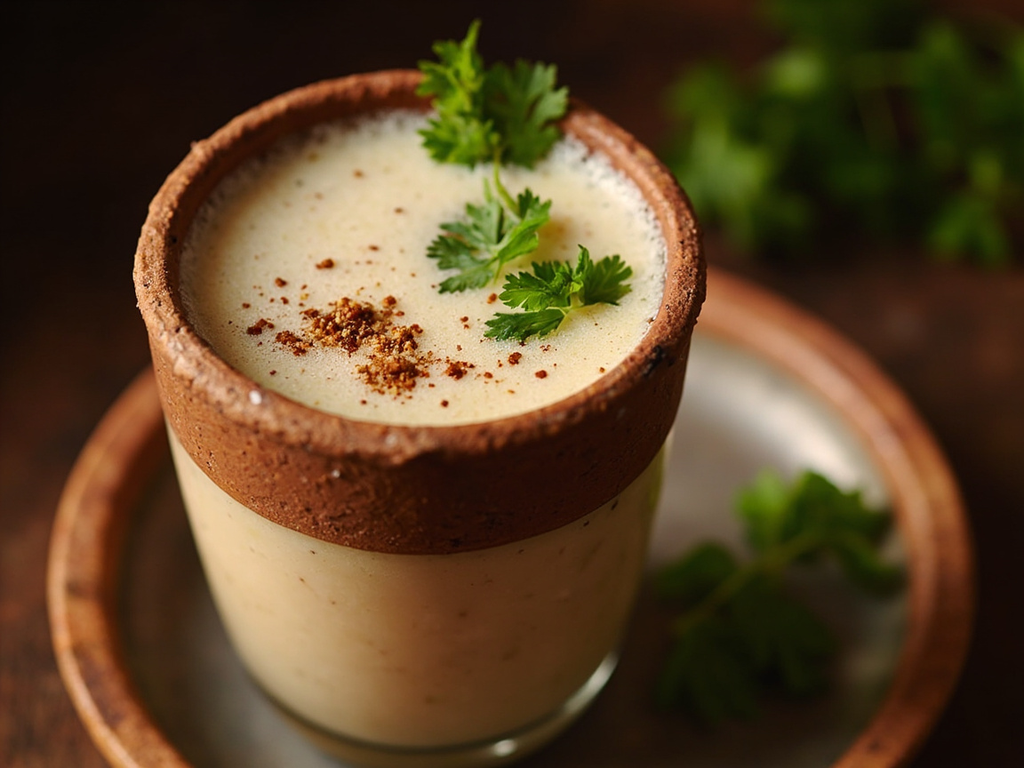 Drink
DrinkTakra masālā — Spiced Buttermilk with Ginger and Cumin
Pāna: the meal's beverage, served to accompany and digest rice
🍋 🫙 🧂· 10 min
View the recipe
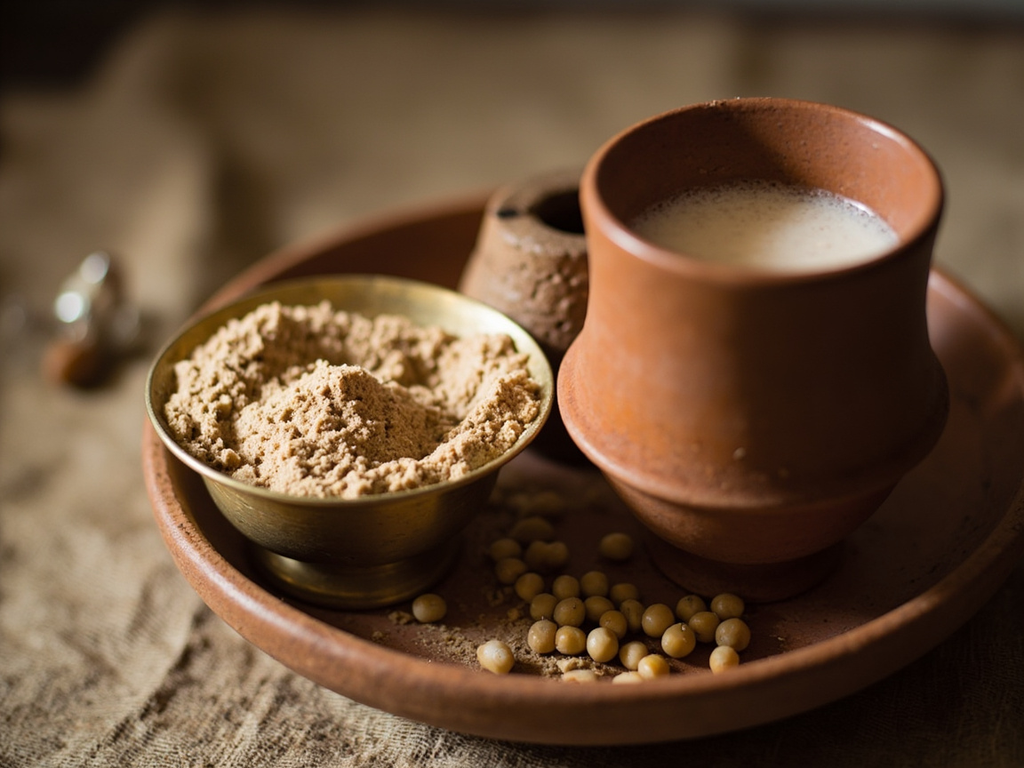 Travel
Saktu — Roasted Barley Flour, Traveler's Snack
Pātheya: road provisions, dry food carried and reconstituted with water
🍄 🍯· 10 min
View the recipe
 Remedy
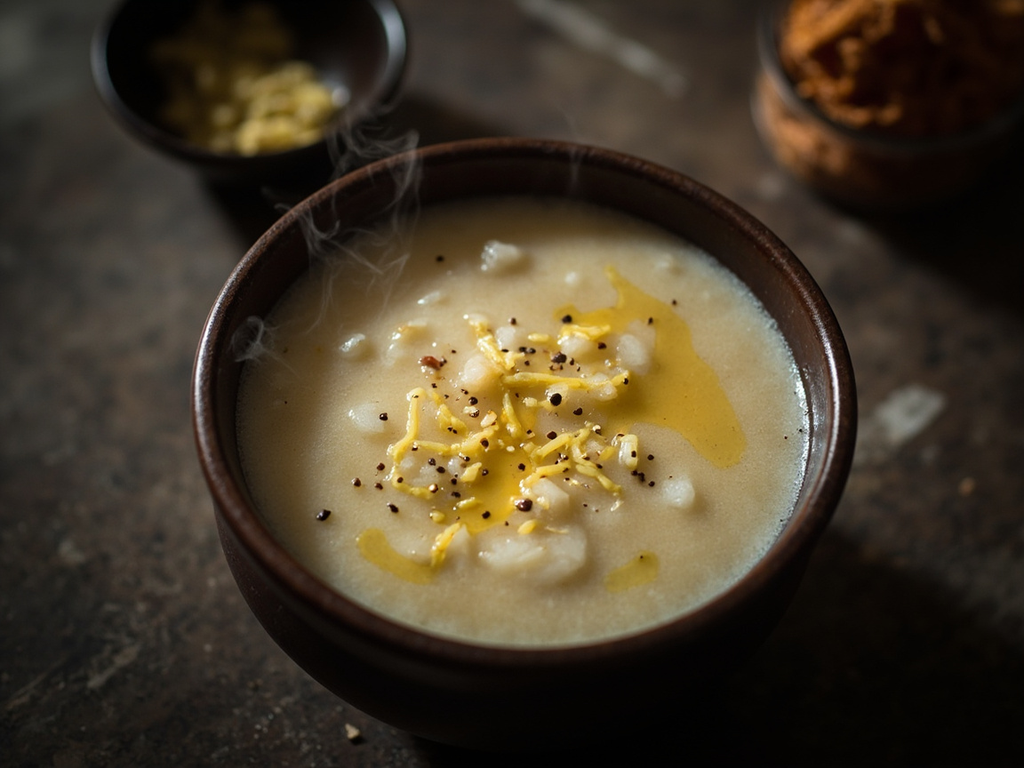
Peyā — Thin Rice Gruel with Ginger, Remedy for Weak Days
Pathya / āhāra-bheṣaja: food-medicine, light gruel prescribed to restore and soothe
🧂· 45 min
View the recipe