 flip
flipPāyasa — Rice Pudding Sweetened with Jaggery and Cardamom
Pāyasa — Rice Pudding Sweetened with Jaggery and Cardamom
Why this dish? Pāyasa (payasam/kheer) has been the sweet of auspicious days in India since antiquity: it was offered to gods, teachers, and honored guests. A scholar honored at the court of Ujjain or Nalanda would have been regaled with such a dish during a ceremony.
Rice slowly simmered in milk until creamy, sweetened with jaggery (unrefined cane sugar) and perfumed with cardamom and long pepper. An ancient, rich, and comforting sweet at the heart of Indian festivities.
Here is the dish of joyful days, the one we also set before the gods. The secret is not in haste but in patience: let the milk thicken over a gentle fire, stirring it as the sky turns, until the grain melts into it. When it has body, I mix in the cane sugar and the fragrant cardamom—never before, for the sugar would keep the grain hard. Serve it warm: its sweetness is as much offering as delight.
- •Rice (śāli) — a handful (base)
- •Cow's milk (kṣīra) — in abundance (cooking liquid)
- •Jaggery / cane sugar (guḍa) — to taste (sweetness)
- •Cardamom (elā) — a few capsules (fragrance)
- •Long pepper (pippalī) — a pinch (subtle heat)
- •Ghee (ghṛta) — a little (richness)
Pāyasa — Rice Pudding Sweetened with Jaggery and Cardamom
Rice slowly simmered in milk until creamy, sweetened with jaggery (unrefined cane sugar) and perfumed with cardamom and long pepper. An ancient, rich, and comforting sweet at the heart of Indian festivities.
Why this dish? Pāyasa (payasam/kheer) has been the sweet of auspicious days in India since antiquity: it was offered to gods, teachers, and honored guests. A scholar honored at the court of Ujjain or Nalanda would have been regaled with such a dish during a ceremony.
Here is the dish of joyful days, the one we also set before the gods. The secret is not in haste but in patience: let the milk thicken over a gentle fire, stirring it as the sky turns, until the grain melts into it. When it has body, I mix in the cane sugar and the fragrant cardamom—never before, for the sugar would keep the grain hard. Serve it warm: its sweetness is as much offering as delight.
Ingredients (period version)
- Rice (śāli) — a handful (base)
- Cow's milk (kṣīra) — in abundance (cooking liquid)
- Jaggery / cane sugar (guḍa) — to taste (sweetness)
- Cardamom (elā) — a few capsules (fragrance)
- Long pepper (pippalī) — a pinch (subtle heat)
- Ghee (ghṛta) — a little (richness)
Ingredients
- Short-grain or basmati rice — 80 g (base)
- Whole milk — 1 liter (cooking liquid)
- Jaggery (gur) or rapadura — 100 g (sweetness)
- Green cardamom (seeds) — 4 pods (fragrance)
- Long pepper or black pepper (optional) — 1 pinch (heat)
- Ghee — 1 tsp (richness)
Method
- Rinse the rice and sauté in ghee for 1 minute.
- Add the milk, bring to a simmer then lower the heat.
- Simmer for 40 to 50 minutes, stirring often to prevent sticking, until creamy.
- Off the heat (or on very low heat), stir in the grated jaggery until dissolved.
- Add crushed cardamom and, if desired, a pinch of long pepper.
- Serve warm or chilled; pāyasa thickens as it cools.
How it was made : India is the birthplace of sugarcane: guḍa (jaggery) and even crystallized sugar (śarkarā, source of the word "sugar") were produced well before our era. Since milk, ghee, and rice are all sacred, pāyasa was the ritual dessert par excellence, offered in temples and at great ceremonies.
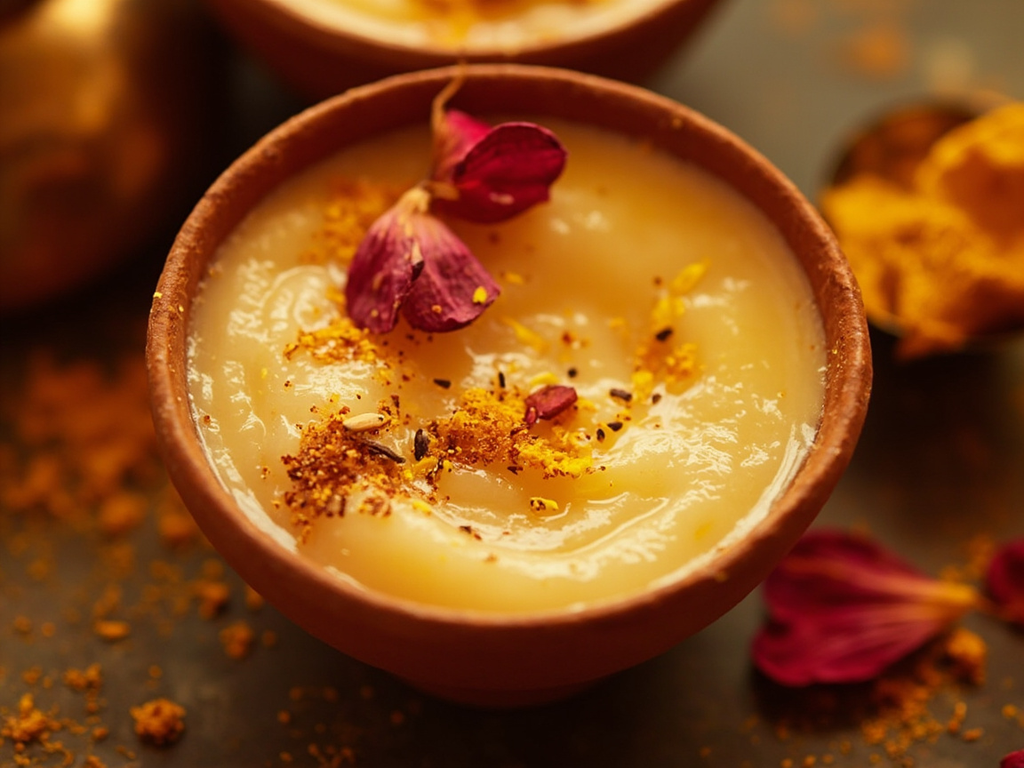
The contemporary twist : Sprinkle with dried rose petals and a pinch of saffron; serve in a small earthenware cup, kulhad-style, for a clay aroma.
Sources : K. T. Achaya, Indian Food: A Historical Companion, Oxford University Press, 1994 · Susruta Saṃhitā (mentions of pāyasa and sweet milk preparations)
Aryabhata · Charactorium