 flip
flipMudga-odana — Rice and Mung Lentils with Ghee and Cumin
Mudga-odana — Rice and Mung Lentils with Ghee and Cumin
Why this dish? Daily dish of the Magadha scholar: nourishing, simple, quickly prepared between two sky observations. Rice and mung dal grew abundantly in the Ganges plain around Kusumapura where Aryabhata taught.
A soft rice cooked with hulled mung lentils, perfumed with ghee, cumin, ginger, and a hint of asafoetida. Direct ancestor of khichuri, it is the comforting and complete daily meal, balanced and easy to digest.
Approach and share my bowl. As I count the steps of the Sun and the Moon, here I measure one part lentils to two parts rice—no scale is truer than habit. First I make the cumin sing in the clarified butter until its fragrance rises, then I pour in the grain and water, and let it simmer for the time it takes a clepsydra to empty. Eat it warm, drizzled with ghee: a mind that watches the stars needs a calm belly.
- •White rice (śāli) — two parts (grain base)
- •Hulled mung lentils (mudga) — one part (legume, protein)
- •Ghee (ghṛta) — a good spoonful (fat and binder)
- •Cumin (jīraka) — a pinch (head spice)
- •Fresh ginger (ārdraka) — a piece (heat, digestion)
- •Asafoetida (hiṅgu) — a suspicion (aroma, replaces garlic/onion)
- •Turmeric (haridrā) — a pinch (color, virtue)
- •Rock salt (saindhava) — to taste (seasoning)
Mudga-odana — Rice and Mung Lentils with Ghee and Cumin
A soft rice cooked with hulled mung lentils, perfumed with ghee, cumin, ginger, and a hint of asafoetida. Direct ancestor of khichuri, it is the comforting and complete daily meal, balanced and easy to digest.
Why this dish? Daily dish of the Magadha scholar: nourishing, simple, quickly prepared between two sky observations. Rice and mung dal grew abundantly in the Ganges plain around Kusumapura where Aryabhata taught.
Approach and share my bowl. As I count the steps of the Sun and the Moon, here I measure one part lentils to two parts rice—no scale is truer than habit. First I make the cumin sing in the clarified butter until its fragrance rises, then I pour in the grain and water, and let it simmer for the time it takes a clepsydra to empty. Eat it warm, drizzled with ghee: a mind that watches the stars needs a calm belly.
Ingredients (period version)
- White rice (śāli) — two parts (grain base)
- Hulled mung lentils (mudga) — one part (legume, protein)
- Ghee (ghṛta) — a good spoonful (fat and binder)
- Cumin (jīraka) — a pinch (head spice)
- Fresh ginger (ārdraka) — a piece (heat, digestion)
- Asafoetida (hiṅgu) — a suspicion (aroma, replaces garlic/onion)
- Turmeric (haridrā) — a pinch (color, virtue)
- Rock salt (saindhava) — to taste (seasoning)
Ingredients
- White rice (basmati) — 200 g (grain base)
- Hulled mung lentils (yellow moong dal) — 100 g (legume)
- Ghee — 2 tbsp (cooking and binder)
- Cumin seeds — 1 tsp (head spice)
- Fresh grated ginger — 1 tsp (heat)
- Asafoetida (hing) — 1 pinch (aroma)
- Turmeric powder — 1/2 tsp (color)
- Salt — 1 tsp (seasoning)
- Water — 750 ml (cooking)
Method
- Rinse rice and mung lentils together until the water runs clear.
- In a pot, heat ghee and add cumin seeds; let them sizzle for a few seconds.
- Add ginger, asafoetida, and turmeric, stir for about ten seconds.
- Add drained rice and lentils, coat with the perfumed ghee.
- Add water and salt, bring to a boil then lower the heat.
- Cover and cook for 20 to 25 minutes, until fully absorbed and soft.
- Let rest 5 minutes, fluff with a fork, and serve warm with a drizzle of ghee.
How it was made : Cooking was done in earthen pots over a fire of dried cow dung or wood, with no precise heat control: skill lay in timing, often measured by a clepsydra (ghaṭī). Mung dal, considered light and digestible by Ayurveda, was the legume of choice for studious minds and convalescents.
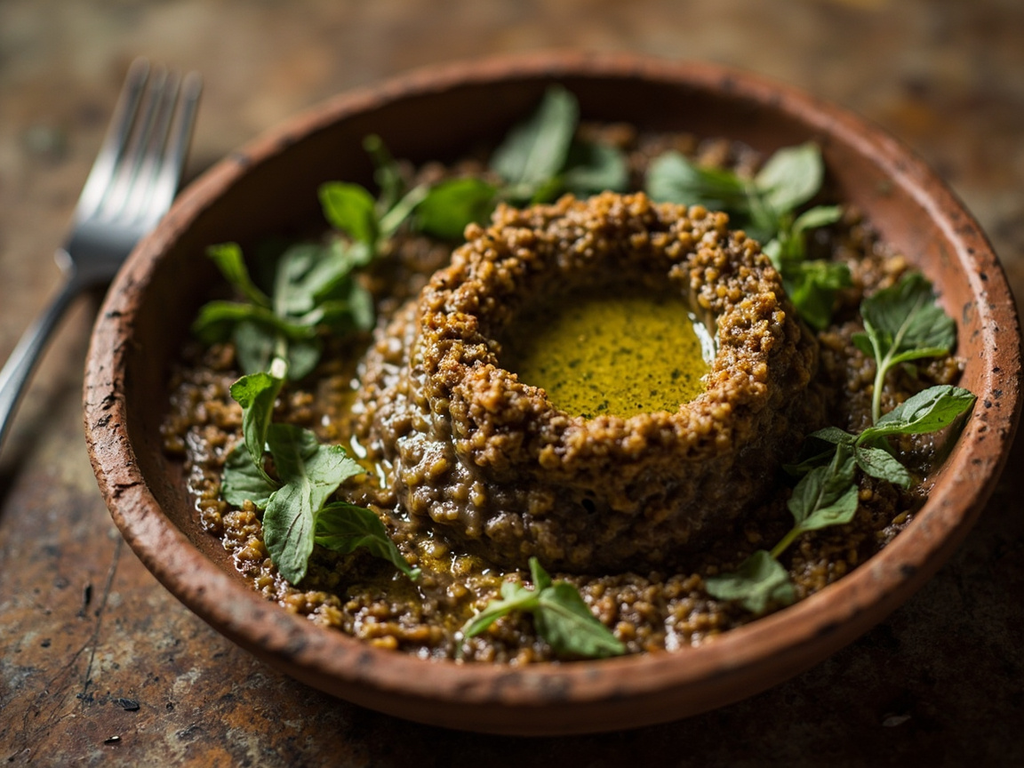
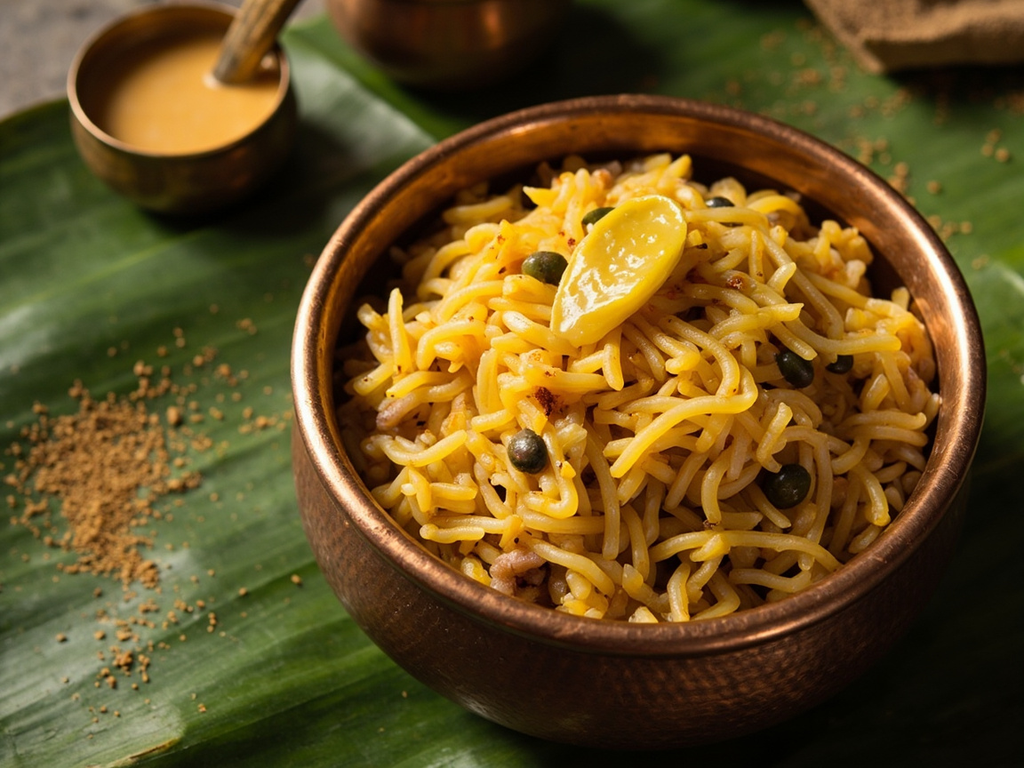
The contemporary twist : Serve mounded in a copper bowl, crowned with a disc of melted ghee and a star of toasted cumin—a nod to the gnomon and the stars Aryabhata calculated.
Sources : K. T. Achaya, Indian Food: A Historical Companion, Oxford University Press, 1994 · Charaka Saṃhitā, Sūtrasthāna (on the virtues of mudga and rice)
Aryabhata · Charactorium