 flip
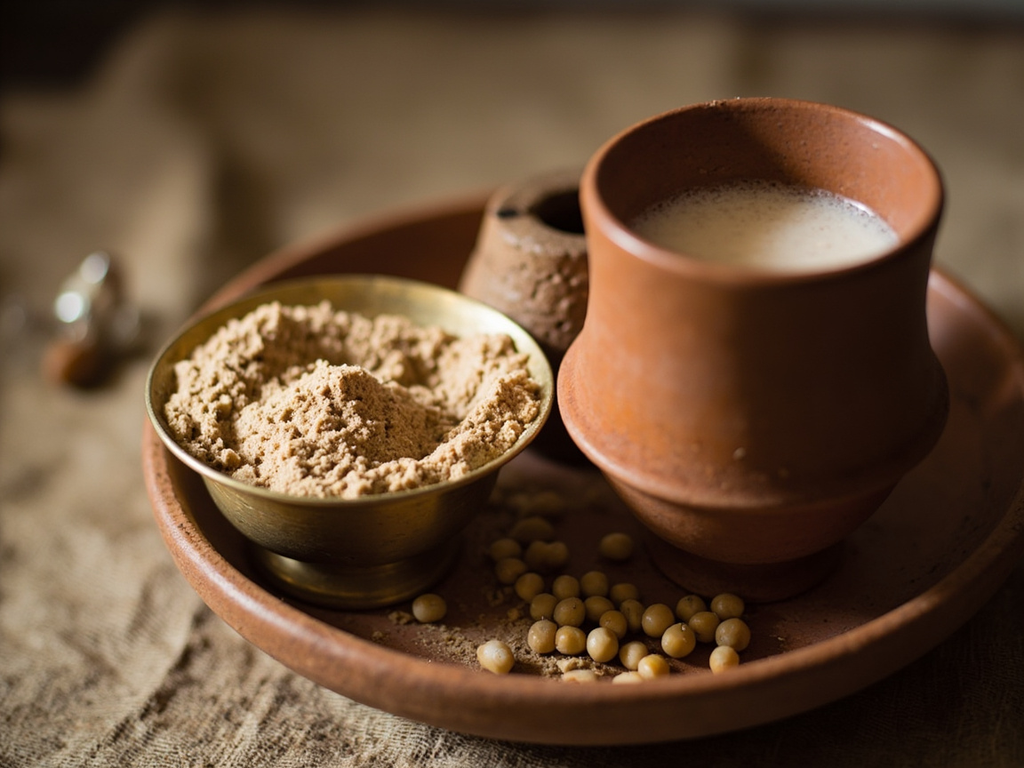
flipSaktu — Roasted Barley Flour, Traveler's Snack
Saktu — Roasted Barley Flour, Traveler's Snack
Why this dish? Saktu (sattu), roasted grain flour, is the travel food par excellence of ancient India—light, non-perishable, instant. Aryabhata, who traveled between Kusumapura, Nalanda, and the astronomy centers of Ujjain, would have carried it to sustain his journeys.
Barley (or chickpeas) roasted then ground into flour, mixed on the road with water, a little salt or jaggery. A toasted, nutty flavor; made into a paste or a nourishing drink in an instant, without fire.
The wise traveler carries no pot: he carries saktu. First roast the barley until it smells fragrant and turns brown, then grind it fine under the millstone; thus treated, it does not spoil, even after many moons. On the road, you need only a handful stirred into water from a well—salty if you struggle, sweetened with jaggery if your heart fails. I have carried it from Kusumapura to the western observatories, and hunger never delayed me.
- •Barley (yava) — as needed (roasted grain base)
- •Water — to mix (reconstitution)
- •Rock salt (saindhava) or jaggery (guḍa) — to taste (savory or sweet version)
- •Dried ginger / pepper (optional) — a pinch (heat, preservation)
Saktu — Roasted Barley Flour, Traveler's Snack
Barley (or chickpeas) roasted then ground into flour, mixed on the road with water, a little salt or jaggery. A toasted, nutty flavor; made into a paste or a nourishing drink in an instant, without fire.
Why this dish? Saktu (sattu), roasted grain flour, is the travel food par excellence of ancient India—light, non-perishable, instant. Aryabhata, who traveled between Kusumapura, Nalanda, and the astronomy centers of Ujjain, would have carried it to sustain his journeys.
The wise traveler carries no pot: he carries saktu. First roast the barley until it smells fragrant and turns brown, then grind it fine under the millstone; thus treated, it does not spoil, even after many moons. On the road, you need only a handful stirred into water from a well—salty if you struggle, sweetened with jaggery if your heart fails. I have carried it from Kusumapura to the western observatories, and hunger never delayed me.
Ingredients (period version)
- Barley (yava) — as needed (roasted grain base)
- Water — to mix (reconstitution)
- Rock salt (saindhava) or jaggery (guḍa) — to taste (savory or sweet version)
- Dried ginger / pepper (optional) — a pinch (heat, preservation)
Ingredients
- Sattu flour (roasted barley or chickpea) — 4 tbsp (base)
- Cold water — 200 ml (drink)
- Salt or grated jaggery — to taste (savory or sweet version)
- Roasted ground cumin and ginger (savory version) — 1 pinch (seasoning)
- Lime juice (savory version, modern touch) — a few drops (acidity)
Method
- If starting from grains: dry-roast barley (or chickpeas) until golden and nutty-smelling, then grind finely. Otherwise use ready-made sattu.
- For savory drink: mix flour with water, add salt, cumin, and ginger, whisk.
- For sweet version: mix with water (or milk) and grated jaggery.
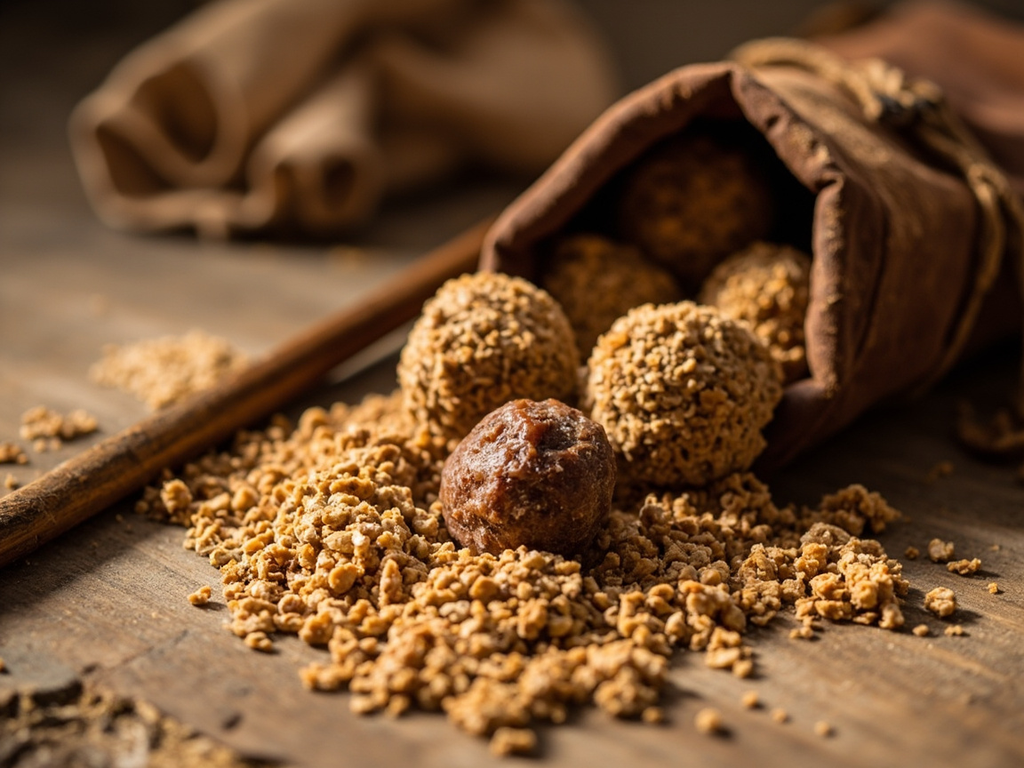
- For a travel paste: add just enough water to form a compact ball to nibble.
- Drink or eat immediately; no cooking needed.
How it was made : Saktu is mentioned as early as the Vedic texts and remained, for centuries, the "instant bread" of pilgrims, soldiers, and merchants across India. Roasted, it keeps for months without molding and requires no fire to prepare—a decisive advantage on the long roads of the subcontinent.
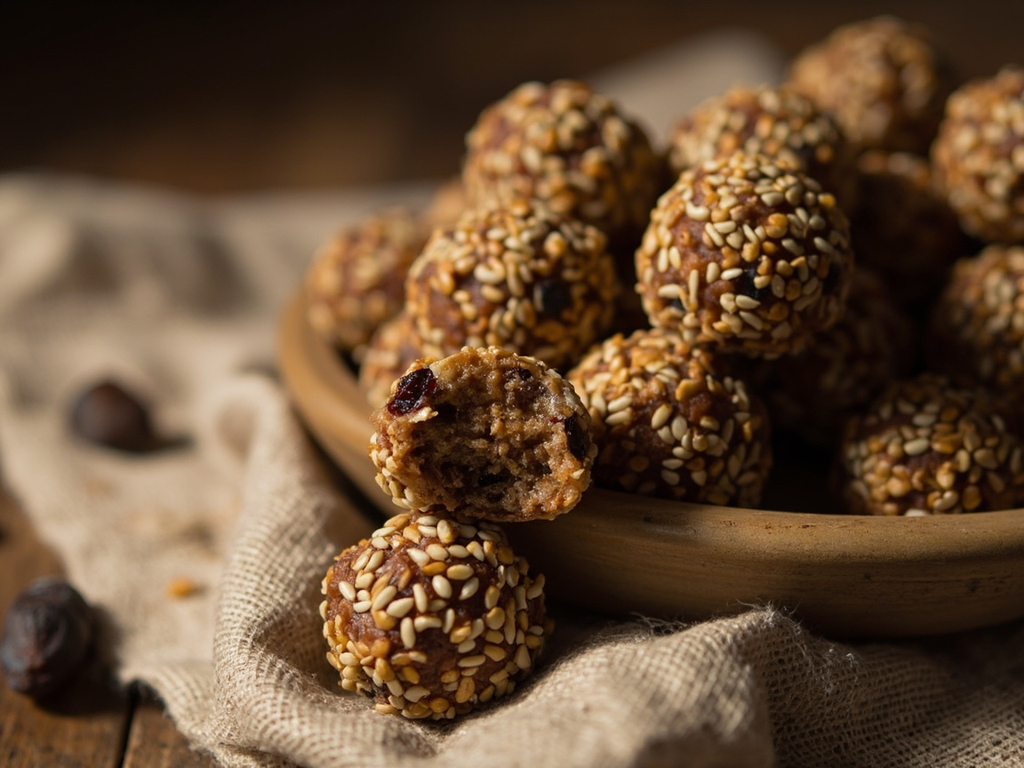
The contemporary twist : Contemporary "energy" version: blend savory sattu with ice water, lime, and mint for a refreshing sattu sharbat, or roll sweetened balls like hiking laddus.
Sources : K. T. Achaya, Indian Food: A Historical Companion, Oxford University Press, 1994 · Vedic and epic mentions of saktu as road provisions (pātheya)
Aryabhata · Charactorium