 flip
flipPeyā — Thin Rice Gruel with Ginger, Remedy for Weak Days
Peyā — Thin Rice Gruel with Ginger, Remedy for Weak Days
Why this dish? Peyā, a very liquid rice gruel, is the therapeutic food codified by Ayurvedic medicine for convalescents, feverish patients, and tired stomachs. For a scholar who stayed up nights observing the sky and spent long days seated, this restorative gruel was the comfort of days without strength.
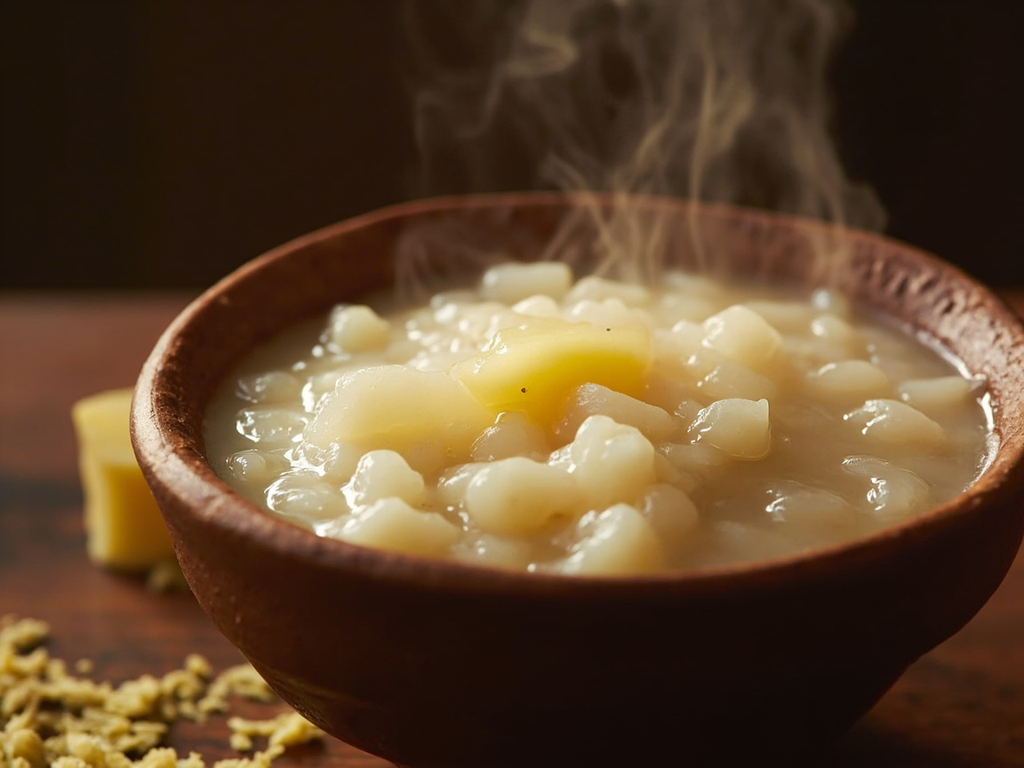
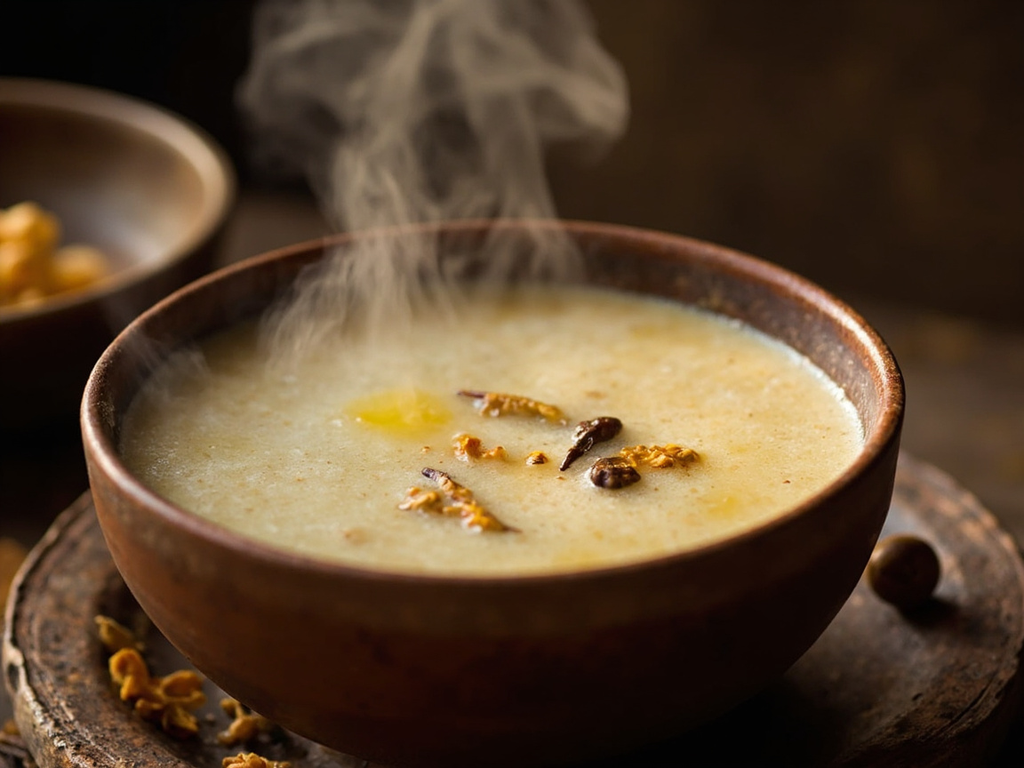
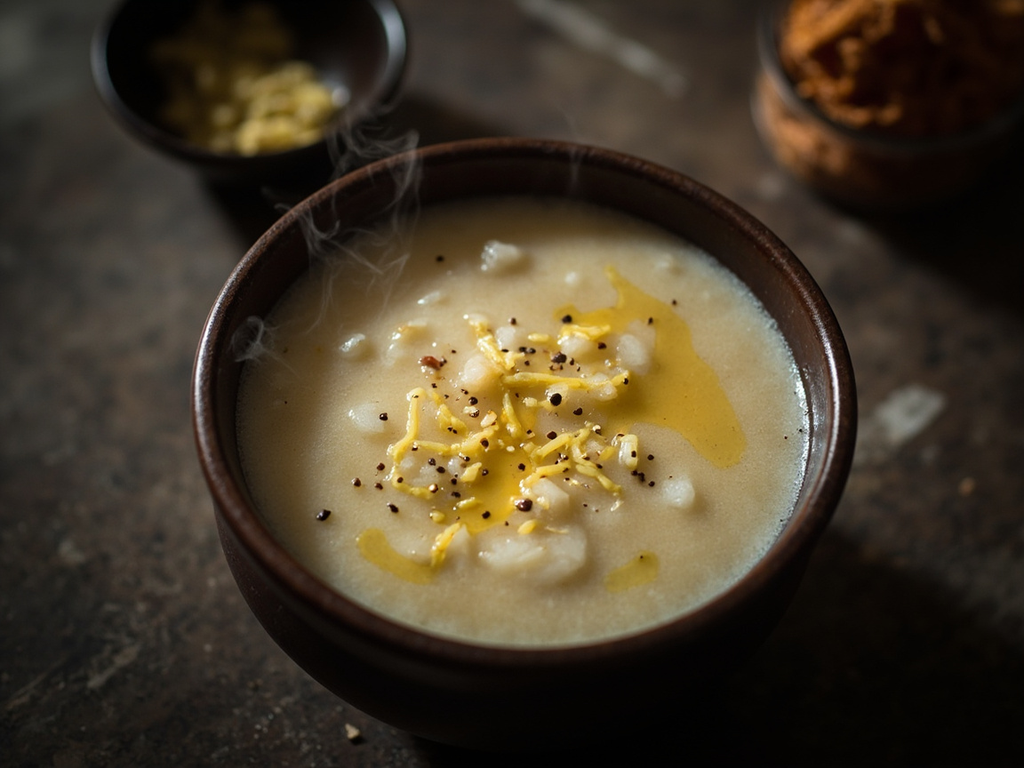
Rice cooked in plenty of water until it becomes a clear, silky gruel, lightly salted, perfumed with ginger and a hint of ghee and long pepper. Gentle on the stomach, warm and comforting: less a dish than a care.
When the body weakens or fever lurks, do not force it: feed it gently. I cook a small measure of rice in many times its volume of water, for a long time, until there is almost only a milky broth with grains floating. A little ginger to revive the inner fire, a tear of ghee, a pinch of salt—nothing more. The physicians of Magadha rank this gruel among remedies; drink it warm, in small sips, and let your strength return.
- •Rice (śāli) — a small measure (base)
- •Water — fourteen times the rice (per treatises) (liquid, clear texture)
- •Ginger (ārdraka / śuṇṭhī) — a little (digestion, heat)
- •Long pepper (pippalī) — a pinch (medicinal virtue)
- •Ghee (ghṛta) — a few drops (gentleness)
- •Rock salt (saindhava) — a pinch (light seasoning)
Peyā — Thin Rice Gruel with Ginger, Remedy for Weak Days
Rice cooked in plenty of water until it becomes a clear, silky gruel, lightly salted, perfumed with ginger and a hint of ghee and long pepper. Gentle on the stomach, warm and comforting: less a dish than a care.
Why this dish? Peyā, a very liquid rice gruel, is the therapeutic food codified by Ayurvedic medicine for convalescents, feverish patients, and tired stomachs. For a scholar who stayed up nights observing the sky and spent long days seated, this restorative gruel was the comfort of days without strength.
When the body weakens or fever lurks, do not force it: feed it gently. I cook a small measure of rice in many times its volume of water, for a long time, until there is almost only a milky broth with grains floating. A little ginger to revive the inner fire, a tear of ghee, a pinch of salt—nothing more. The physicians of Magadha rank this gruel among remedies; drink it warm, in small sips, and let your strength return.
Ingredients (period version)
- Rice (śāli) — a small measure (base)
- Water — fourteen times the rice (per treatises) (liquid, clear texture)
- Ginger (ārdraka / śuṇṭhī) — a little (digestion, heat)
- Long pepper (pippalī) — a pinch (medicinal virtue)
- Ghee (ghṛta) — a few drops (gentleness)
- Rock salt (saindhava) — a pinch (light seasoning)
Ingredients
- White rice — 50 g (base)
- Water — 700 ml (liquid)
- Fresh grated ginger — 1/2 tsp (digestion)
- Long pepper or black pepper — 1 small pinch (heat)
- Ghee — 1/2 tsp (gentleness)
- Salt — 1 pinch (seasoning)
Method
- Rinse the rice and place in a large pot with all the water.
- Add grated ginger and bring to a simmer.
- Cook over low heat for 35 to 45 minutes, stirring occasionally, until a clear, silky gruel with open grains.
- Season very lightly with salt and a pinch of pepper.
- Off the heat, stir in the ghee.
- Serve warm, almost drinkable, in small sips.
How it was made : Ayurvedic treatises (Charaka) classify rice preparations by water content: peyā (very liquid), vilepī (thick), and odana (drained rice). Peyā, the lightest, opens the convalescent diet; it "kindles the digestive fire" without overloading it. It was a true dietary prescription, measured to the drop of water.
The contemporary twist : Serve as an evening congee in a deep bowl, with a drizzle of ghee and a turn of freshly cracked long pepper—minimalist comfort after a busy day.
Sources : Charaka Saṃhitā, Sūtrasthāna (classification peyā / vilepī / odana and indications for peyā) · K. T. Achaya, Indian Food: A Historical Companion, Oxford University Press, 1994
Aryabhata · Charactorium