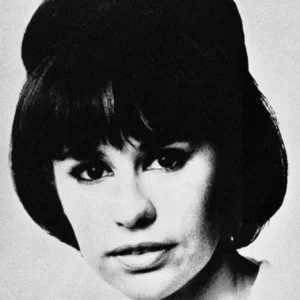

Brazilian-American singer born in 1940 and died in 2023, iconic figure of bossa nova. Her soft, understated voice on "The Girl from Ipanema" (1964) introduced this Brazilian style to the world.
Astrud Gilberto(1940 — 2023)
Astrud Gilberto
Brésil
6 min read
Frequently asked questions
Key Facts
- Born in 1940 in Salvador de Bahia (Brazil), she grew up in Rio de Janeiro.
- In 1964, she recorded "The Girl from Ipanema" on the album *Getz/Gilberto*, alongside Stan Getz and João Gilberto.
- The album *Getz/Gilberto* won several Grammy Awards in 1965, including Album of the Year, launching her international career.
- Settled in the United States, she pursued a singing career and became an ambassador of bossa nova worldwide.
- She died in 2023, after a career spanning more than fifty years.
Works & Achievements
Legendary album merging jazz and bossa nova; won Album of the Year at the 1965 Grammys.
Her voice on this track makes it one of the most recorded songs in history; Grammy for Record of the Year.
Her first album as a lead artist, confirming her solo career.
Album with orchestral arrangements by Gil Evans, expanding her repertoire.
Record blending bossa nova and pop, reflecting her musical openness.
Collaboration with saxophonist Stanley Turrentine, between jazz and bossa nova.
Anecdotes
Astrud Gilberto was not a professional singer. In March 1963, in New York, she simply accompanied her husband João Gilberto to the recording session for the album "Getz/Gilberto." Since she was the only one in the group who spoke English well, she was asked to sing the English verses of "The Girl from Ipanema": an improvisation that would change her life.
The full version of the song lasted over five minutes, with a verse in Portuguese sung by João Gilberto. For the 45 RPM single intended for radio, producers cut the Portuguese part and kept mainly Astrud's soft voice in English: it was this shortened version that became a global hit.
In 1965, "The Girl from Ipanema" won the Grammy Award for Record of the Year. Overnight, this unknown 24-year-old woman became one of the most famous voices in the world, a symbol of bossa nova for the American public.
Astrud often recounted that she received only a modest session fee for this recording, with no percentage of the album's massive sales — a common situation at the time for artists with little contractual protection.
In the last part of her life, retired from the stage, Astrud Gilberto devoted herself to painting and became an committed activist for animal rights, publishing texts on her personal website to defend animal rights.
Primary Sources
Studio recording featuring Stan Getz, João Gilberto, Antônio Carlos Jobim, and guest vocalist Astrud Gilberto, who sings the English lyrics of "The Girl from Ipanema."
Astrud describes the recording session where, though not a professional singer, she was invited to sing in English because she was the only one in the group who was fluent in the language.
The single credits Astrud Gilberto on vocals, accompanied on saxophone by Stan Getz, in an edited version for radio broadcast.
Key Places
City in northeastern Brazil where Astrud Evangelina Weinert was born in 1940.
City where she grew up; Ipanema Beach inspired the song that made her famous.
In a New York studio in 1963, she recorded her vocals for *Getz/Gilberto*.
American region where she settled and spent the last part of her life, until her death in 2023.
Typical Objects

Instrument of her fame: it was in front of a New York studio microphone that she improvised the English lyrics of "The Girl from Ipanema."

Format of the album *Getz/Gilberto* (1964) that carried her voice around the world.

The shortened version of "The Girl from Ipanema" pressed on a 45 RPM record was the object broadcast on radio that became the hit.

Central instrument of the style: João Gilberto's, with its muted syncopated playing, accompanied his soft voice.

Stan Getz's instrument, whose warm breath dialogues with Astrud's voice on the 1964 recording.

The trophy for Record of the Year 1965, symbol of the sudden international recognition of her voice.

In her retirement, Astrud devoted herself to painting, which became one of her daily passions.
School Curriculum
Vocabulary & Tags
Key Vocabulary
Tags
Daily Life
Morning
During her American career, her touring mornings often start late, after concerts that end late at night. She has coffee, reviews scores, and prepares for rehearsals or recording sessions.
Afternoon
Afternoons are devoted to rehearsals with musicians, sound checks in the studio, or interviews with the press, which is interested in this voice from Brazil. Between engagements, she also takes care of her family.
Evening
Evening is the heart of her profession: she takes the stage in jazz clubs and concert halls, performing bossa nova before a captivated American audience in an intimate, dimly lit atmosphere.
Food
Raised in Brazil, she retains a taste for simple cuisine blending Brazilian and North American influences. Later an animal rights activist, she advocates a lifestyle respectful of living beings.
Clothing
On stage as on album covers, she adopts the understated elegance of the 1960s: simple, chic dresses, natural hairstyle, without excess, reflecting her stripped-down voice.
Housing
After her success, she leaves Brazil to settle in the United States, where she will spend most of her adult life, dividing her time among music, painting, and activism.
Historical Timeline
Period Vocabulary
Visual Style
Une esthétique bossa nova du début des années 1960, entre la lumière dorée des plages de Rio et l'élégance feutrée des clubs de jazz, avec un graphisme moderniste épuré.
Sound Ambience
L'ambiance feutrée d'un studio de jazz new-yorkais des années 1960, où la guitare syncopée et le saxophone de la bossa nova rencontrent une voix douce et presque parlée.