The Canaanite Temple Meal (akl qudšu)
In Ugarit and the Phoenician cities, the meal revolves around the hearth and the altar: barley or wheat bread forms the basis of every bite, dipped in olive oil and accompanied by legumes, olives, and dried fruits. On feast days, the sacrificial meat — especially the bull, noble animal of Baal — is shared during a communal banquet (marzeaḥ). Wine flows as a libation to the god before being drunk by the guests. There is no service in successive courses: everything is placed together on mats or low tables, and the bread is broken by hand.
Signature : Olive Oil and the Hearth of Embers
Virgin olive oil from the Canaanite hills is the common thread of this cuisine: bread is dipped in it, vegetables are drizzled with it, offerings are anointed with it. Along with the ember fire where sacrificial meat is grilled, it embodies the opulence that Baal, master of the rain that makes the olive tree grow, is supposed to grant to the faithful.
Baal at the table
5 period recipes
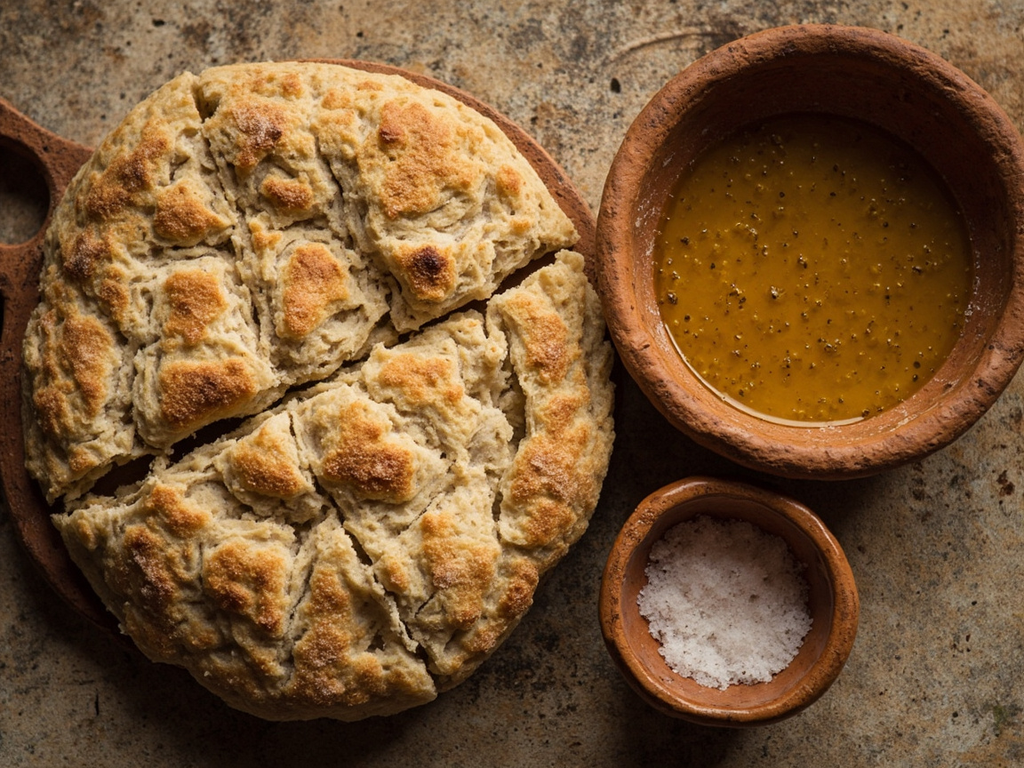 Everyday
Sourdough Barley Bread with Fresh Oil
leḥem — the foundation of the daily meal
🧂 🫙· 6 h (including rising) + 15 min cooking
View the recipe
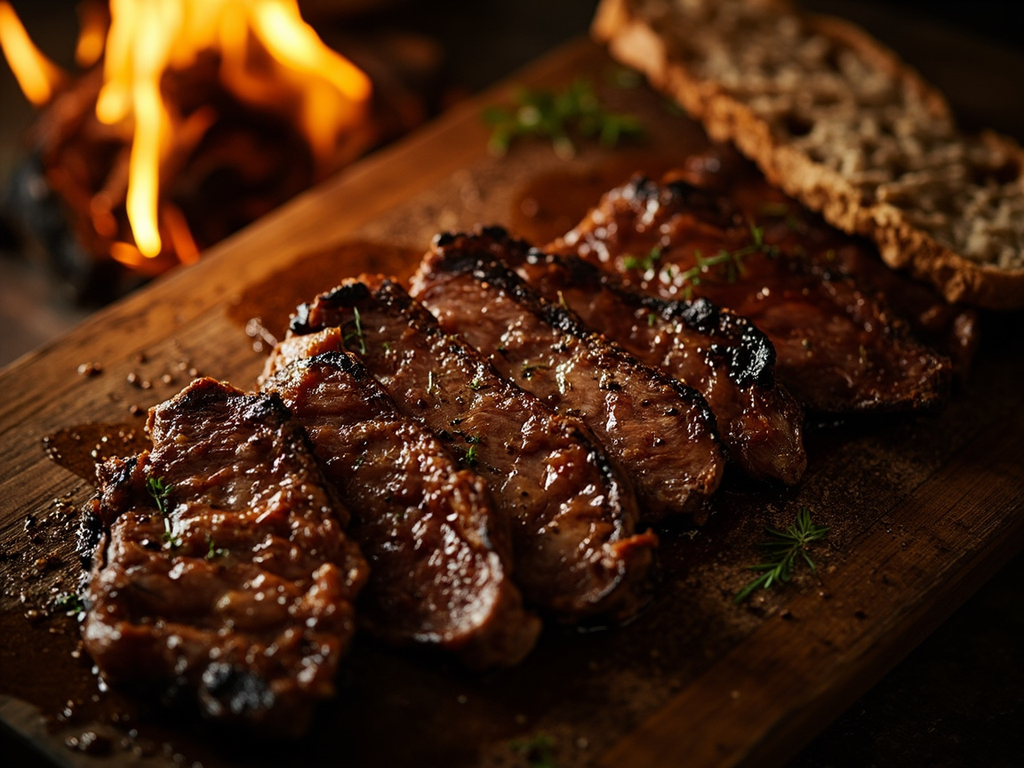 Festive
Ember-Grilled Bull for the Banquet of Baal
marzeaḥ — the shared sacrificial feast
🧂 🍄· 2 h 30 (including marinating)
View the recipe
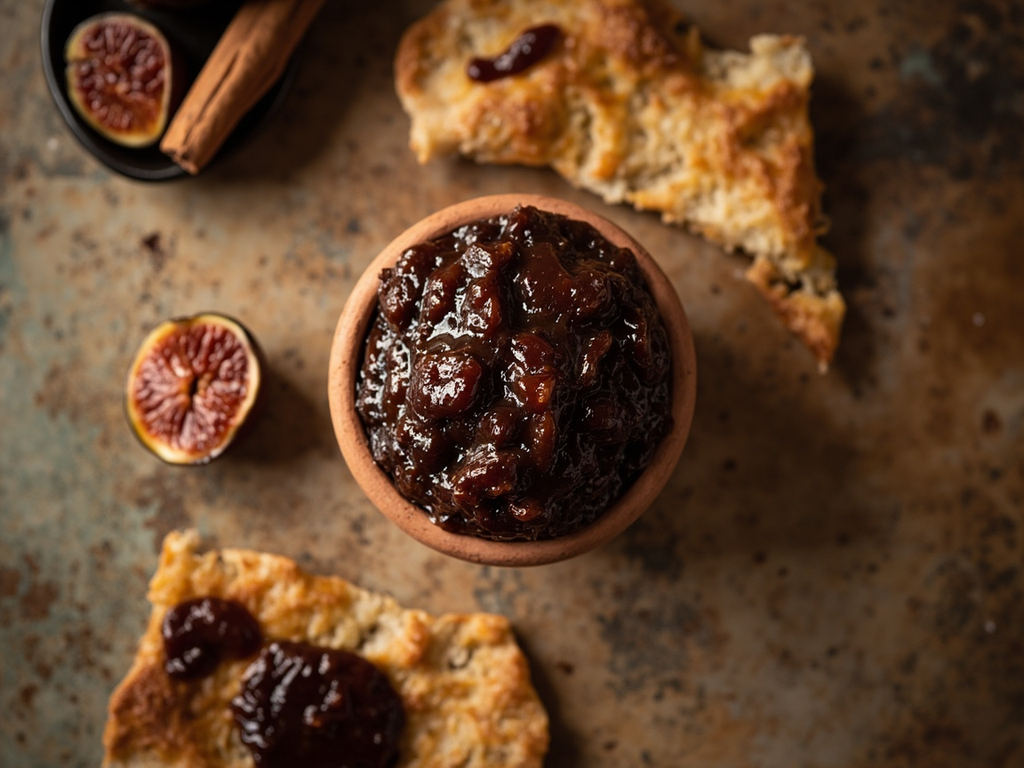 Preserving
Fig and Date Compote with Wine
matoq — the sweet delight of the hearth
🍯 🍋· 40 min
View the recipe
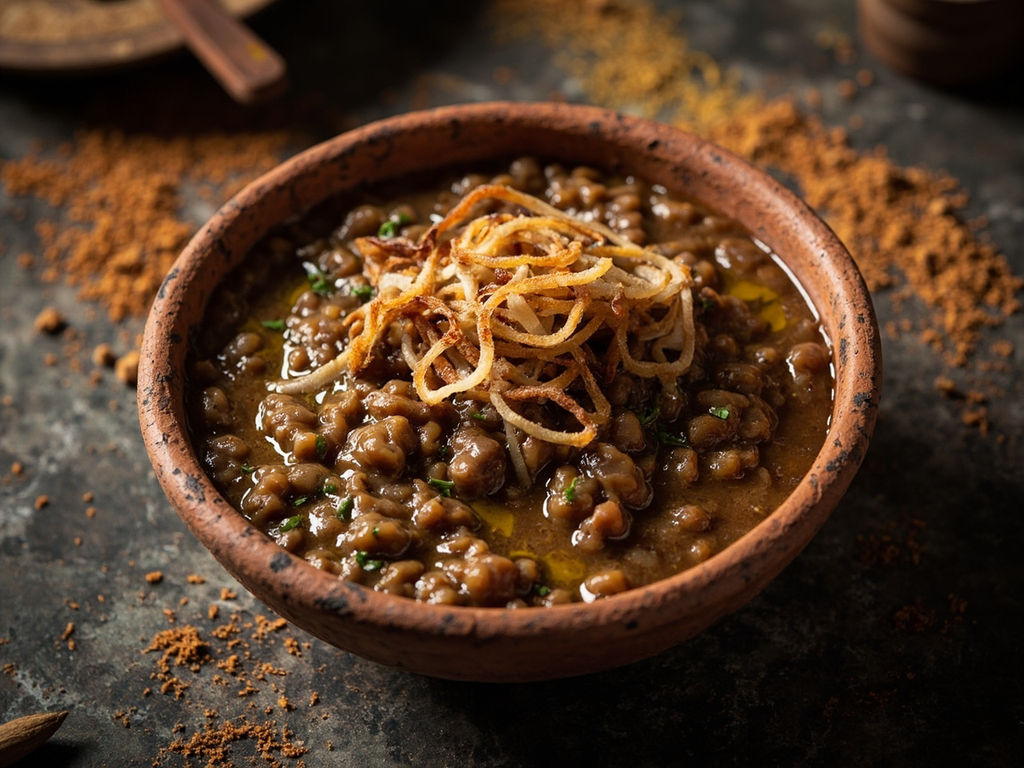 Everyday
Lentil Stew with Oil and Cumin
nazid — the nourishing daily pot
🧂 🍄· 50 min
View the recipe
 Drink
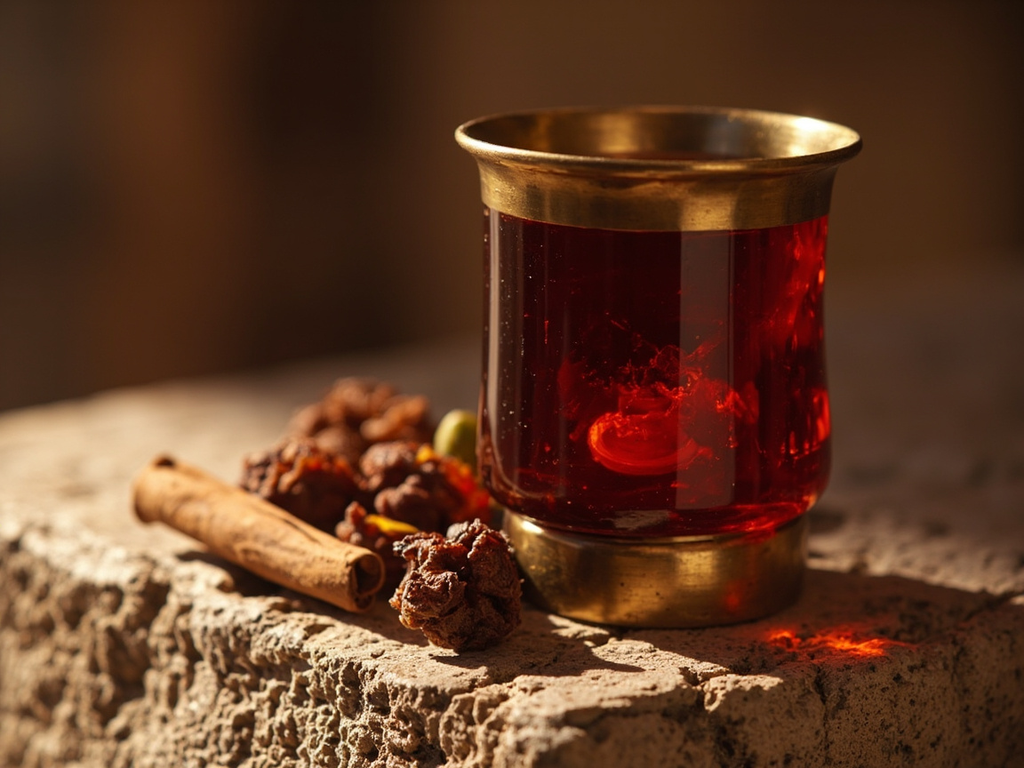
DrinkCup of Wine Mixed with Water for Libation
yn — the cup poured then drunk
🫙 🍋 🍯· 20 min
View the recipe