 flip
flipSourdough Barley Bread with Fresh Oil
Sourdough Barley Bread with Fresh Oil
Why this dish? Baal is the god of rain and storm who makes barley sprout in the Canaanite fields. Barley bread was the staple food of every household in Ugarit, from peasant to priest: it is the most direct gift from the god of fertility, eaten morning and evening, dipped in the oil of the olive trees watered by his rain.
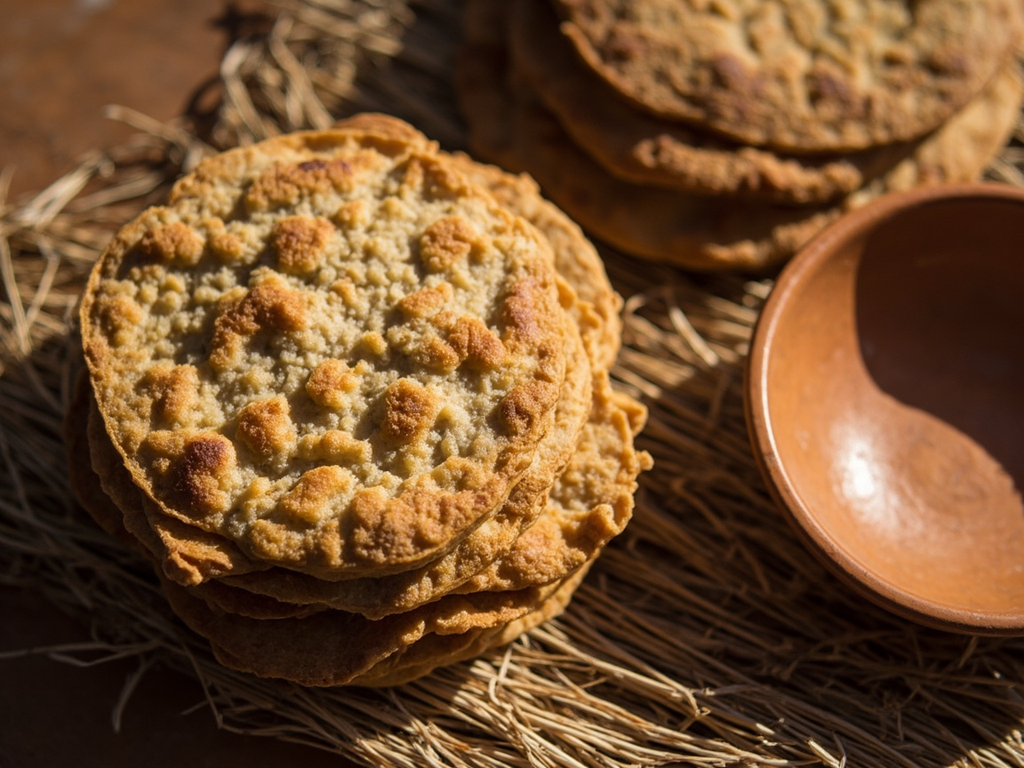
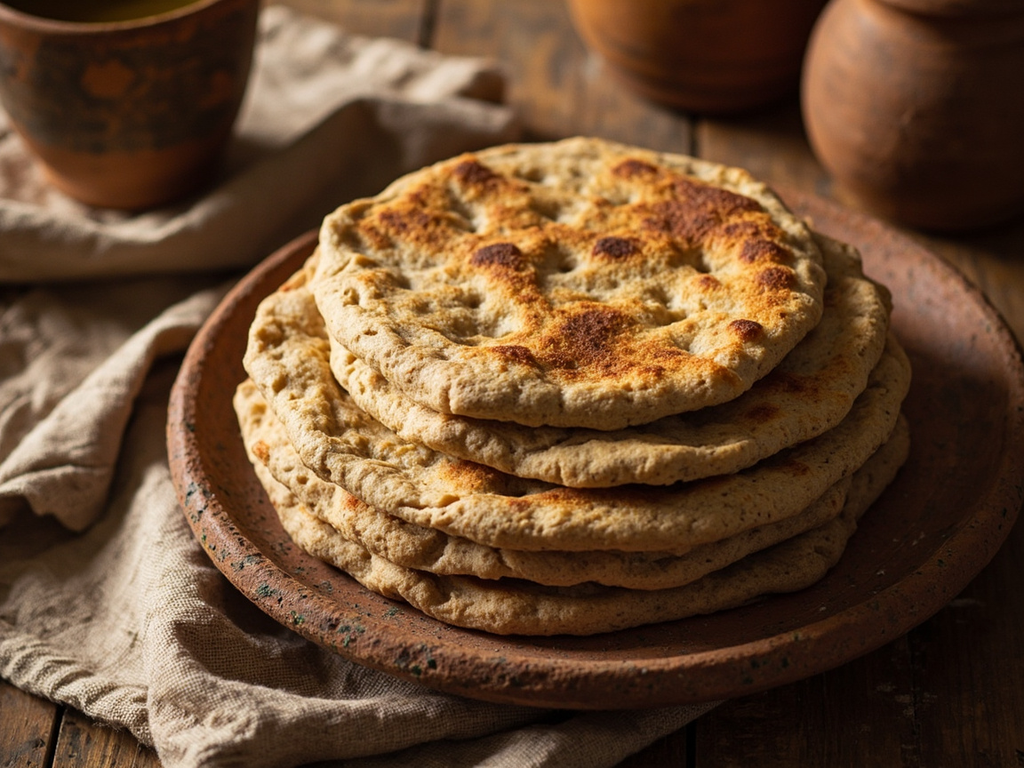
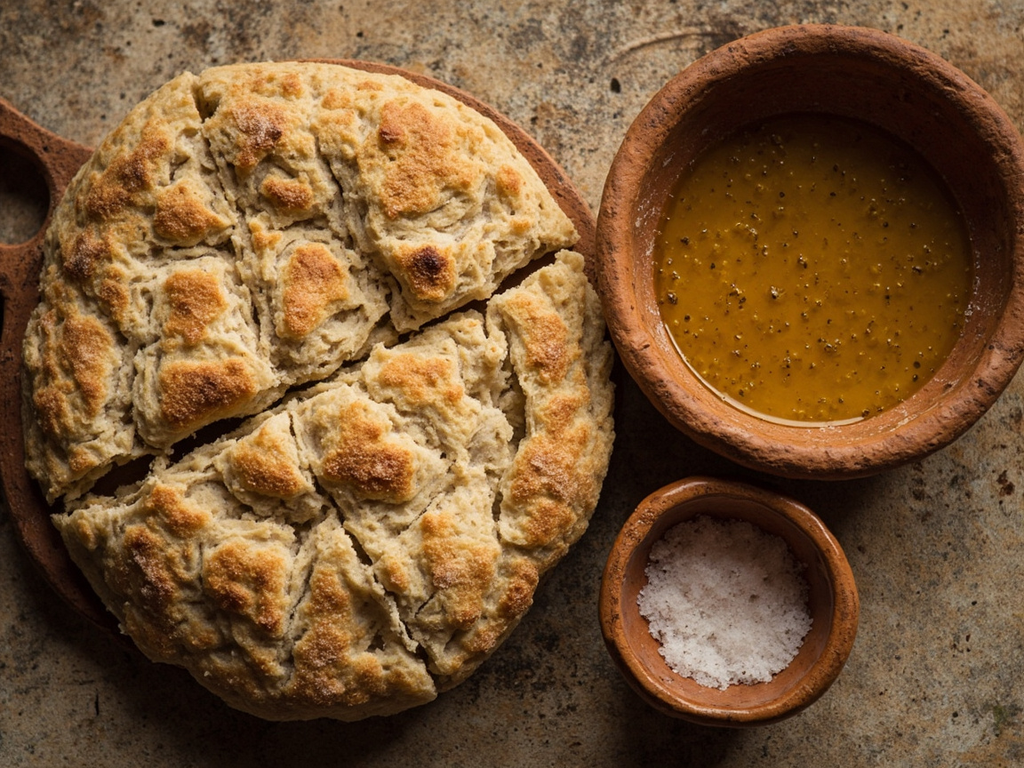
A thick, dense barley flatbread, leavened with natural sourdough, baked on a hot stone or against the wall of a clay oven. It is broken by hand and dipped in a bowl of fresh olive oil, lightly salted. This is the humblest and most universal gesture of the Canaanite table.
Listen to me, mortal: it is my rain that swells the ear of barley, it is my storm that awakens the sleeping earth. Let your servant grind the flour between two stones, let him keep a little sourdough from yesterday to leaven today's, and let him bake the flatbread on the hot stone. Break it with your fingers, dip it in the oil that my hills give, and know that without me your jar would remain empty.
- •Stone-ground barley flour — two full measures (base of the bread)
- •Sourdough kept from the previous day — a handful (leavening and flavor)
- •Spring water — as needed for consistency (hydration)
- •Sea salt — a pinch (seasoning)
- •Fresh olive oil — one cup (dipping)
Sourdough Barley Bread with Fresh Oil
A thick, dense barley flatbread, leavened with natural sourdough, baked on a hot stone or against the wall of a clay oven. It is broken by hand and dipped in a bowl of fresh olive oil, lightly salted. This is the humblest and most universal gesture of the Canaanite table.
Why this dish? Baal is the god of rain and storm who makes barley sprout in the Canaanite fields. Barley bread was the staple food of every household in Ugarit, from peasant to priest: it is the most direct gift from the god of fertility, eaten morning and evening, dipped in the oil of the olive trees watered by his rain.
Listen to me, mortal: it is my rain that swells the ear of barley, it is my storm that awakens the sleeping earth. Let your servant grind the flour between two stones, let him keep a little sourdough from yesterday to leaven today's, and let him bake the flatbread on the hot stone. Break it with your fingers, dip it in the oil that my hills give, and know that without me your jar would remain empty.
Ingredients (period version)
- Stone-ground barley flour — two full measures (base of the bread)
- Sourdough kept from the previous day — a handful (leavening and flavor)
- Spring water — as needed for consistency (hydration)
- Sea salt — a pinch (seasoning)
- Fresh olive oil — one cup (dipping)
Ingredients
- Barley flour — 300 g (base of the bread)
- Whole wheat flour — 100 g (helps structure)
- Active sourdough starter — 100 g (leavening)
- Warm water — 240 ml (hydration)
- Salt — 8 g (seasoning)
- Extra virgin olive oil — 6 tablespoons for serving (dipping)
Method
- Mix the flours, sourdough, water, and salt until you get a soft, slightly sticky dough.
- Knead for 10 minutes, cover with a damp cloth, and let rise for 4 to 6 hours at room temperature (barley rises slowly).
- Divide into thick flatbreads the size of a hand, flatten to 2 cm.
- Cook on a very hot stone or cast-iron skillet, about 5 minutes on each side, until the crust is golden and sounds hollow when tapped.
- Serve warm, to be broken by hand, with a bowl of salted olive oil for dipping.
How it was made : In Ugarit, barley was the grain of the people, more rustic and cheaper than wheat. The dough was leavened with a piece of fermented dough kept from one batch to the next — sourdough was not a science but a transmitted gesture. Baking was done in a clay oven (tannur) or on a stone slab placed on the embers.
The contemporary twist : Sprinkle the flatbread with toasted sesame seeds and a few sea salt crystals before baking, as a shareable appetizer board.
Baal · Charactorium