 flip
flipFig and Date Compote with Wine
Fig and Date Compote with Wine
Why this dish? Baal's rain nourishes the fig trees and date palms of the Canaanite oases and orchards. To get through the dry season, fruits were dried and preserved in wine and honey — a sweet reserve that recalled, even in high summer, the abundance that the god of fertility granted to the land.
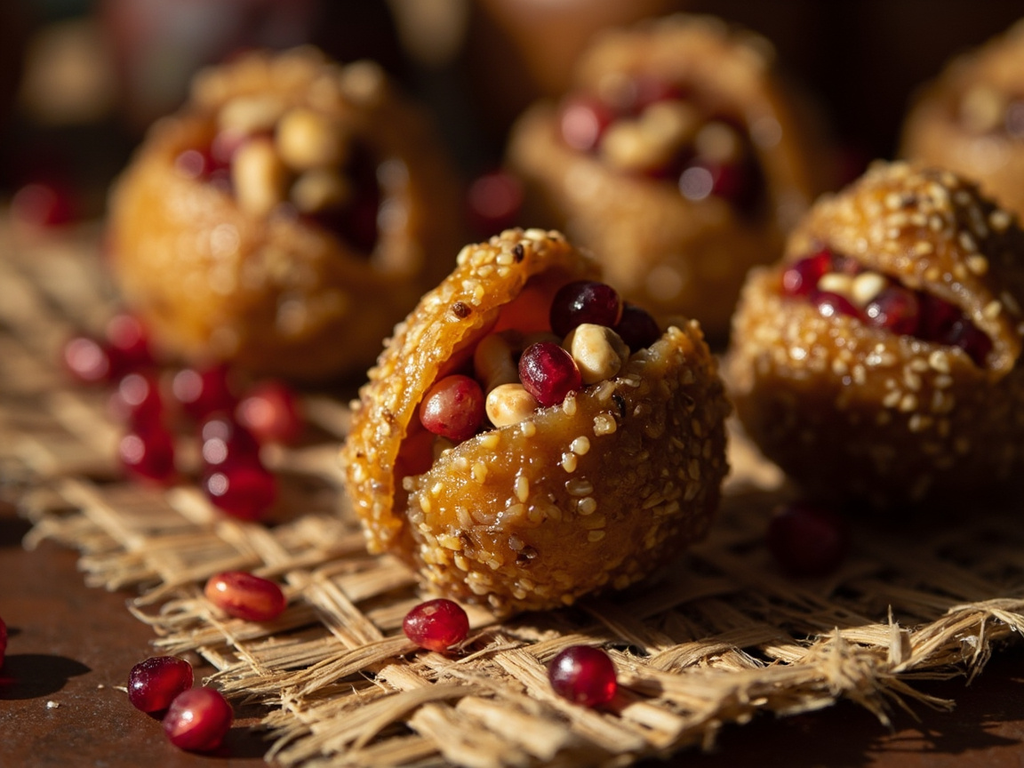
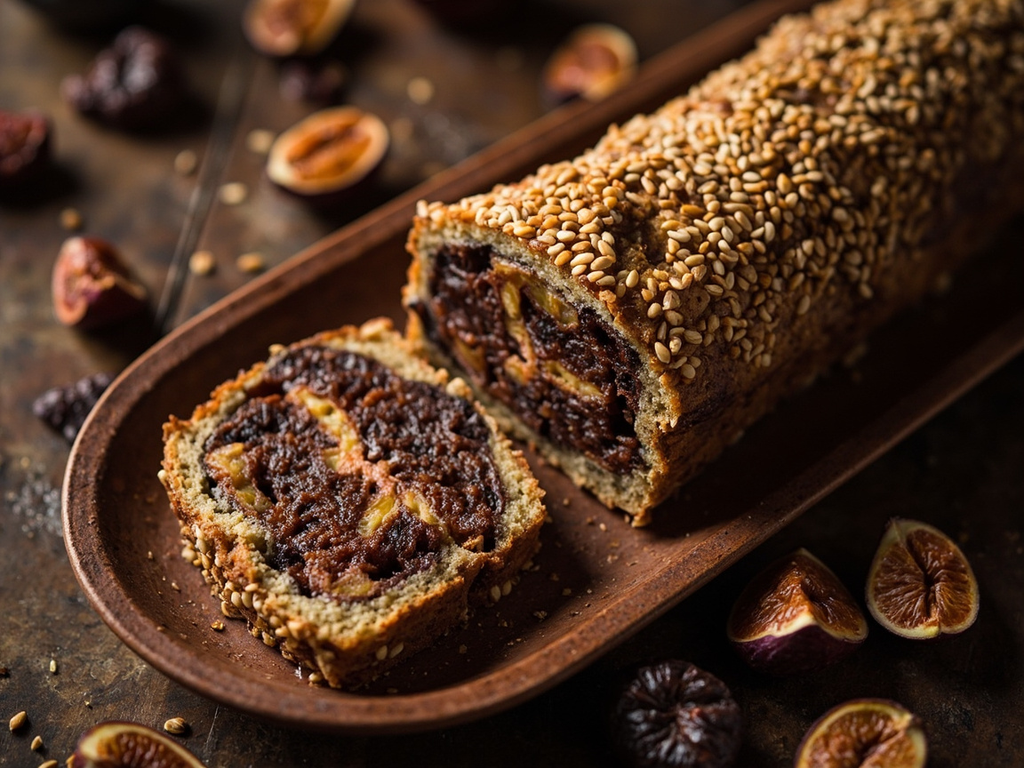
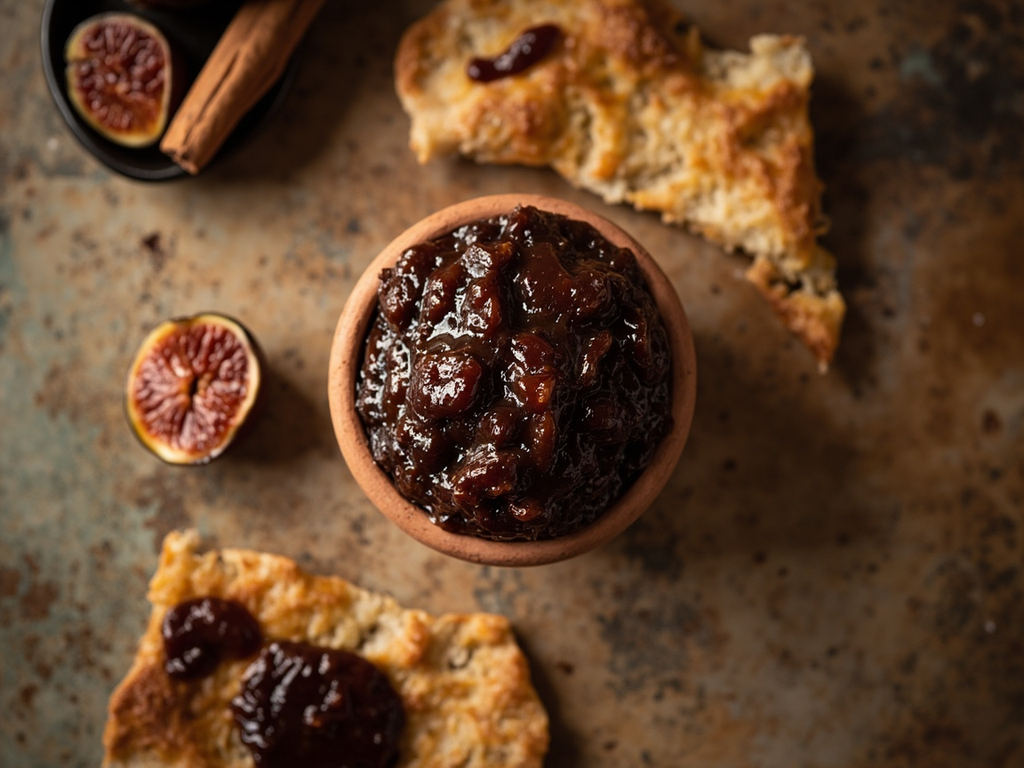
A thick, glossy paste of figs and dates simmered in reduced wine and honey, scented with Oriental cinnamon. It is stored in a pot and spread on bread or eaten by the spoonful like a confection. Sweetness, wine's acidity, and the depth of dried fruits respond to each other.
When the dry season comes, my rain is slow to come, but the wise man prepares his stores when the tree is generous. Take the ripe figs and the dates of the palm, let them melt in wine and honey until the mass thickens and shines like amber. Keep it in a sealed jar: thus, even when the earth is thirsty, your mouth will still know the taste of my abundance.
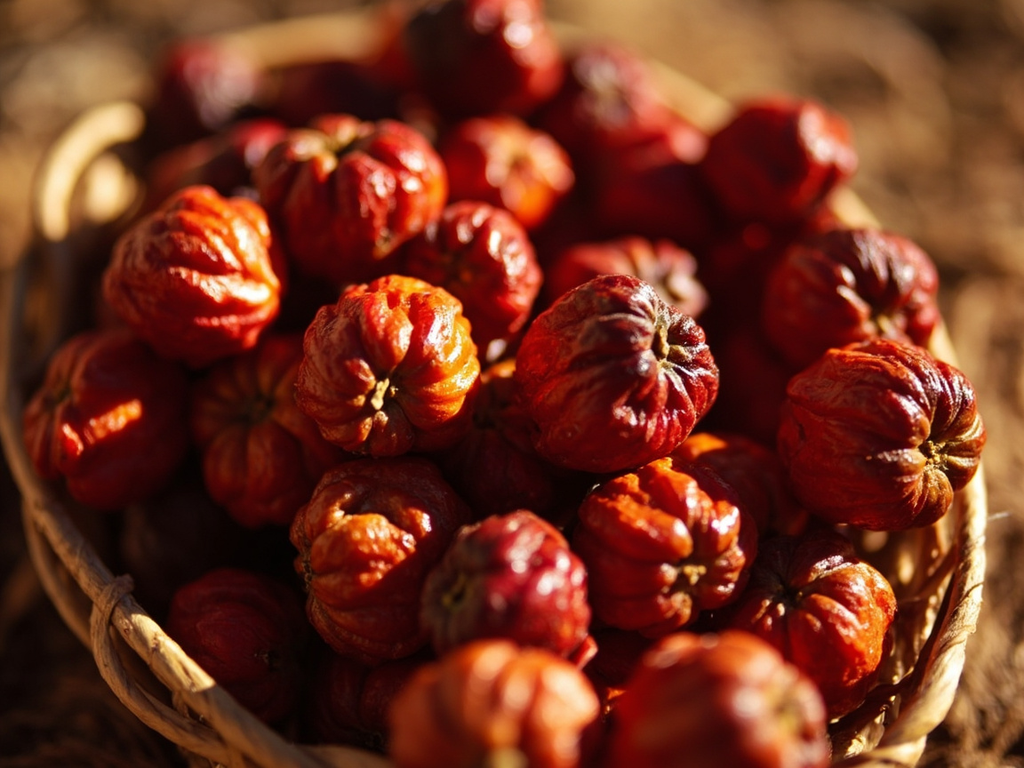
- •Dried figs — a good measure (main fruit)
- •Pitted dates — one measure (sweetness)
- •Wine — enough to cover (cooking and acidity)
- •Honey — to taste (sweet binder)
- •Cinnamon (bark) — a fragment (flavor)
Fig and Date Compote with Wine
A thick, glossy paste of figs and dates simmered in reduced wine and honey, scented with Oriental cinnamon. It is stored in a pot and spread on bread or eaten by the spoonful like a confection. Sweetness, wine's acidity, and the depth of dried fruits respond to each other.
Why this dish? Baal's rain nourishes the fig trees and date palms of the Canaanite oases and orchards. To get through the dry season, fruits were dried and preserved in wine and honey — a sweet reserve that recalled, even in high summer, the abundance that the god of fertility granted to the land.
When the dry season comes, my rain is slow to come, but the wise man prepares his stores when the tree is generous. Take the ripe figs and the dates of the palm, let them melt in wine and honey until the mass thickens and shines like amber. Keep it in a sealed jar: thus, even when the earth is thirsty, your mouth will still know the taste of my abundance.
Ingredients (period version)
- Dried figs — a good measure (main fruit)
- Pitted dates — one measure (sweetness)
- Wine — enough to cover (cooking and acidity)
- Honey — to taste (sweet binder)
- Cinnamon (bark) — a fragment (flavor)
Ingredients
- Dried figs — 250 g (main fruit)
- Pitted dates — 150 g (sweetness)
- Red wine — 250 ml (cooking and acidity)
- Honey — 3 tablespoons (sweet binder)
- Cinnamon stick — 1 piece (flavor)
- Water — 100 ml (adjustment)
Method
- Cut figs and dates into pieces and place in a saucepan with the wine, water, and cinnamon.
- Bring to a simmer and cook over low heat for 25 to 30 minutes, stirring, until the fruits break down.
- Remove the cinnamon, add the honey, and mash with a spoon to obtain a thick paste.
- Continue cooking for a few minutes until the mass is glossy and no longer sticks.
- Pour into a clean jar, let cool, and store in a cool place; spread on bread or enjoy by the spoonful.
How it was made : Figs and dates, rich in sugar, were essential preserved foods in the ancient Near East: dried in the sun then preserved in honey or reduced wine, they kept for months. Cane sugar being unknown, honey and dried fruits were the only true sweets. Cinnamon, imported via trade routes, signaled a prestige dish.
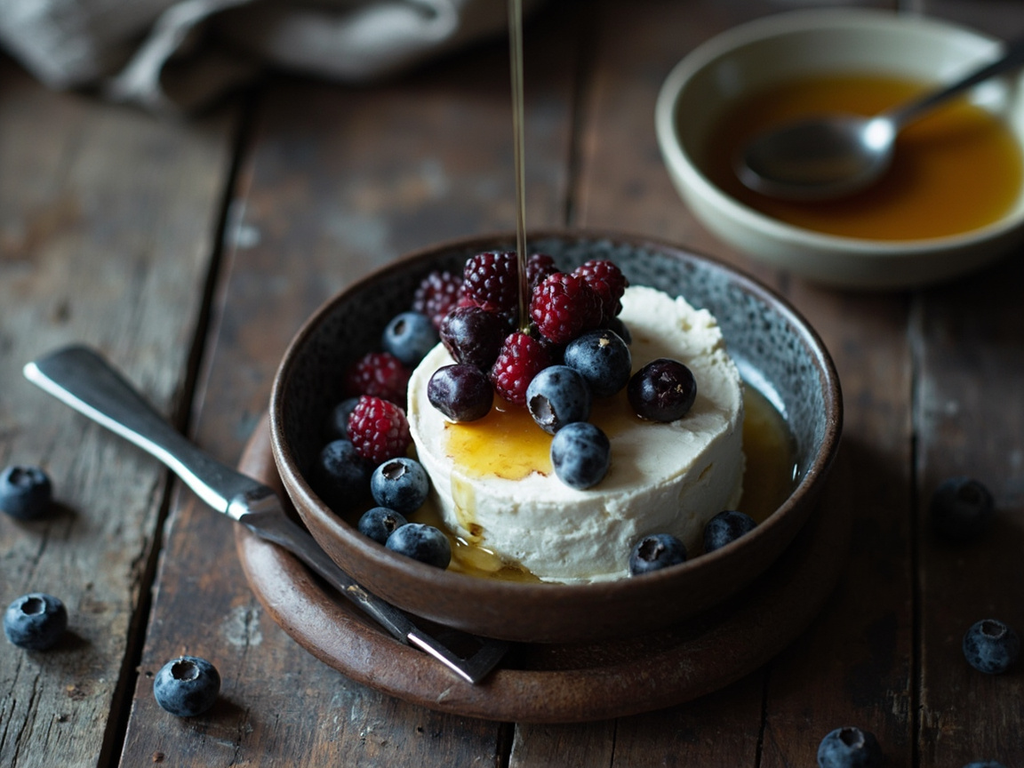
The contemporary twist : Serve a quenelle of this compote on fresh sheep's milk cheese, with a few toasted sesame seeds — a sweet-savory pairing with Phoenician inspiration.
Baal · Charactorium