 flip
flipEmber-Grilled Bull for the Banquet of Baal
Ember-Grilled Bull for the Banquet of Baal
Why this dish? The bull is the sacrificial animal par excellence in the cult of Baal, the storm god often depicted as a powerful bull. During the great seasonal fertility festivals, the beast was slaughtered and its meat shared among the faithful during the marzeaḥ, a ritual banquet washed down with wine. This dish evokes — without reproducing the sacred rite — that portion of noble meat reserved for feast days.
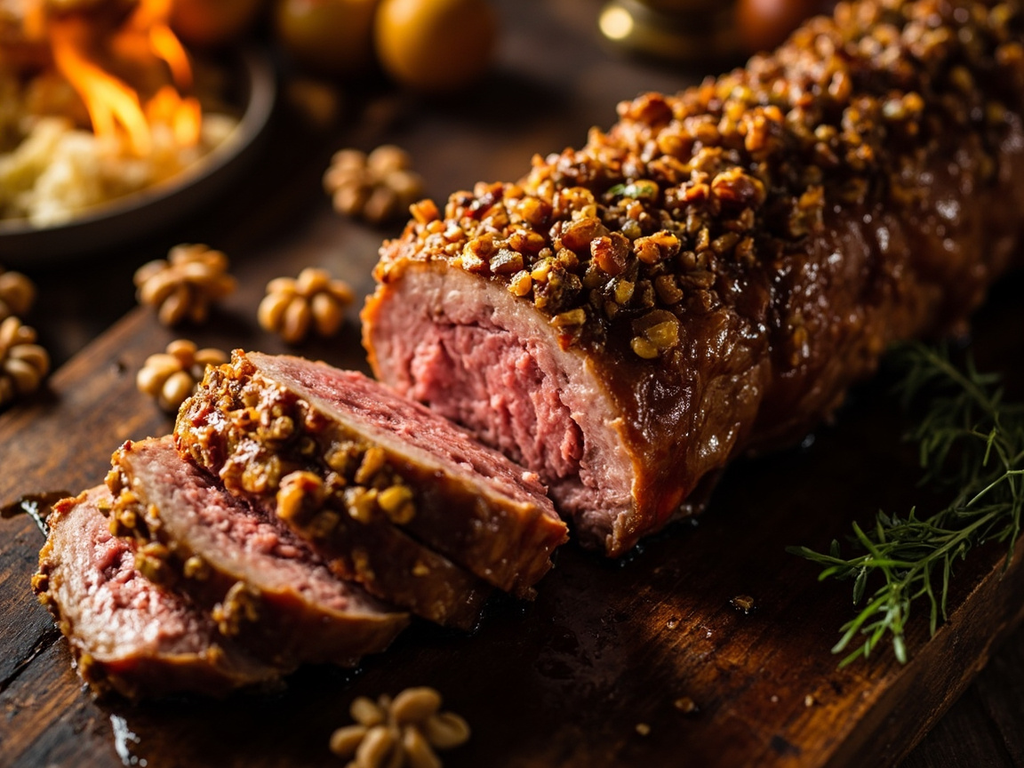
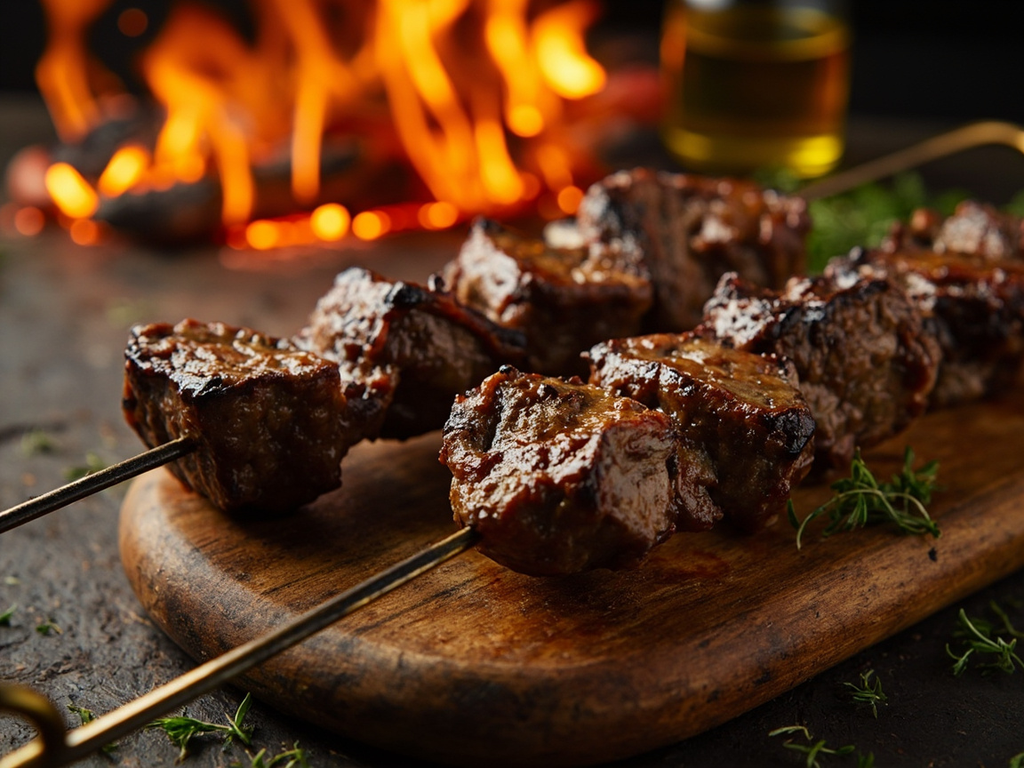
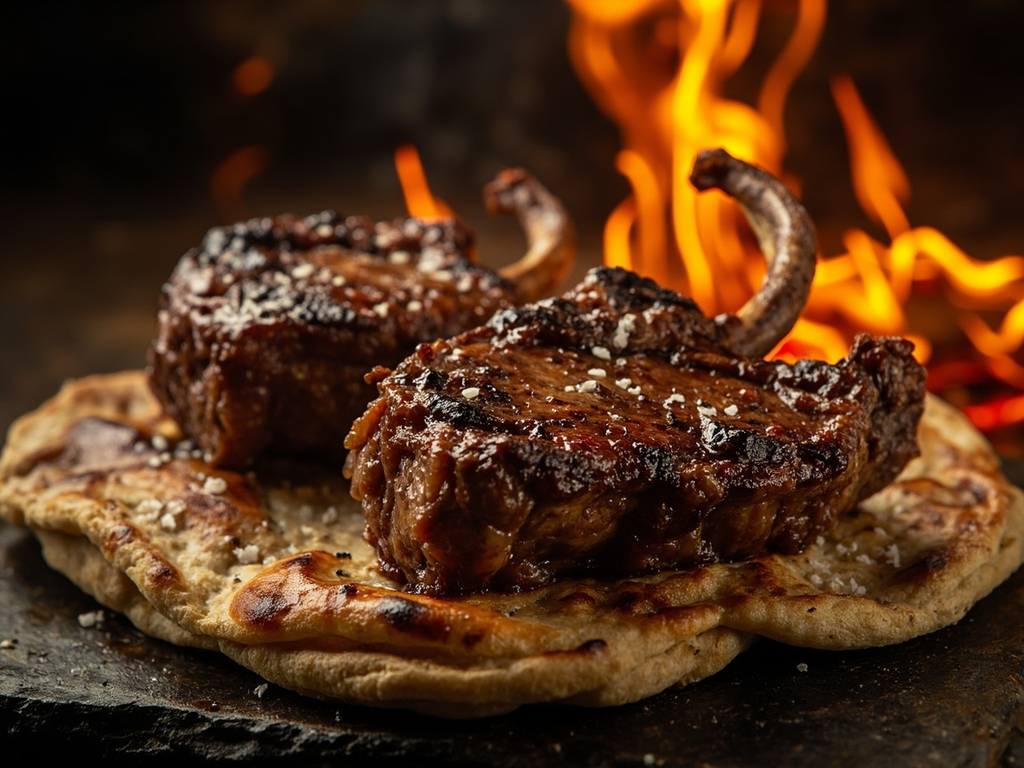
Pieces of beef marinated in olive oil, wild garlic, and cumin, grilled over embers until the fat sizzles. Served with barley bread to soak up the juices, it was the ultimate luxury on a table where meat remained rare in daily life.
When the feast of the returned rain comes, the bull is led to the hearth, for it is the beast that resembles me: strong as the storm, broad as the plain. Let your hand rub the flesh with oil, with wild garlic, and with that eastern seed that stings the nose — cumin. Then place it on the live embers, listen to the fat sing, and share each portion with your neighbor: at my table, no one eats alone.
- •Piece of bull (beef) — according to the number of guests (feast meat)
- •Olive oil — generous (marinade)
- •Crushed wild garlic — several cloves (flavor)
- •Ground cumin — a pinch (spice)
- •Coriander seeds — a pinch (spice)
- •Sea salt — to taste (seasoning)
Ember-Grilled Bull for the Banquet of Baal
Pieces of beef marinated in olive oil, wild garlic, and cumin, grilled over embers until the fat sizzles. Served with barley bread to soak up the juices, it was the ultimate luxury on a table where meat remained rare in daily life.
Why this dish? The bull is the sacrificial animal par excellence in the cult of Baal, the storm god often depicted as a powerful bull. During the great seasonal fertility festivals, the beast was slaughtered and its meat shared among the faithful during the marzeaḥ, a ritual banquet washed down with wine. This dish evokes — without reproducing the sacred rite — that portion of noble meat reserved for feast days.
When the feast of the returned rain comes, the bull is led to the hearth, for it is the beast that resembles me: strong as the storm, broad as the plain. Let your hand rub the flesh with oil, with wild garlic, and with that eastern seed that stings the nose — cumin. Then place it on the live embers, listen to the fat sing, and share each portion with your neighbor: at my table, no one eats alone.
Ingredients (period version)
- Piece of bull (beef) — according to the number of guests (feast meat)
- Olive oil — generous (marinade)
- Crushed wild garlic — several cloves (flavor)
- Ground cumin — a pinch (spice)
- Coriander seeds — a pinch (spice)
- Sea salt — to taste (seasoning)
Ingredients
- Beef for grilling (flank or hanger steak) — 800 g (feast meat)
- Extra virgin olive oil — 4 tablespoons (marinade)
- Garlic — 4 cloves, crushed (flavor)
- Ground cumin — 1 teaspoon (spice)
- Crushed coriander seeds — 1 teaspoon (spice)
- Salt and black pepper — to taste (seasoning)
Method
- Mix oil, garlic, cumin, and coriander; coat the meat and marinate for 2 hours.
- Prepare a fire of very red embers (or a very hot cast-iron grill).
- Salt the meat, then sear 3 to 4 minutes on each side for a pink finish.
- Let rest 5 minutes under a cloth before slicing against the grain.
- Serve with barley bread to catch the juices and a drizzle of olive oil.
How it was made : The texts of Ugarit describe banquets (marzeaḥ) where the meat of sacrificed animals was consumed and wine was drunk abundantly. The bull, an expensive beast, was slaughtered only for great occasions; cooking was done on embers or on a spit. Spices such as cumin and coriander, attested in the ancient Near East, seasoned the meats.
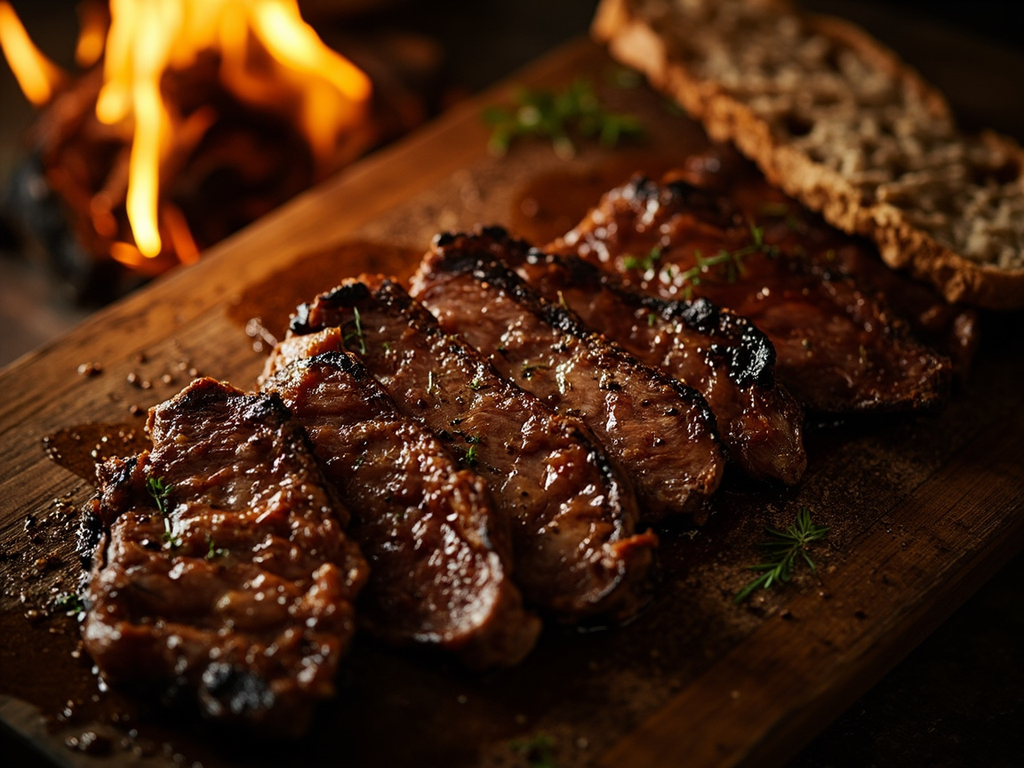
The contemporary twist : Slice thinly and arrange in a fan on a raw wooden board, with cooking juices and smoked olive oil on the side, like a Levantine-inspired tasting platter.
Baal · Charactorium