Tuwo da miya — the Hausa foundation
At the court of Zazzau, the meal is built around a firm cereal paste (tuwo of millet or sorghum) which is broken by hand and dipped into a thick soup (miya). Fermented millet drinks (fura) are added, and during audiences, the ritual offering of kola nuts. There is no starter, main course, or dessert: everything is shared from large communal bowls, from the humblest home to the royal throne.
Signature : Dawadawa (fermented locust bean seeds)
These black cakes of African locust bean (Parkia biglobosa), long fermented, are the umami soul of Sahelian cuisine. They give soups a smoky, salty depth long before sea salt arrived via trans-Saharan caravans. They are the continuous bass note of the entire Zazzau table.
Bakwa Turunku at the table
1468 — 1566
5 period recipes
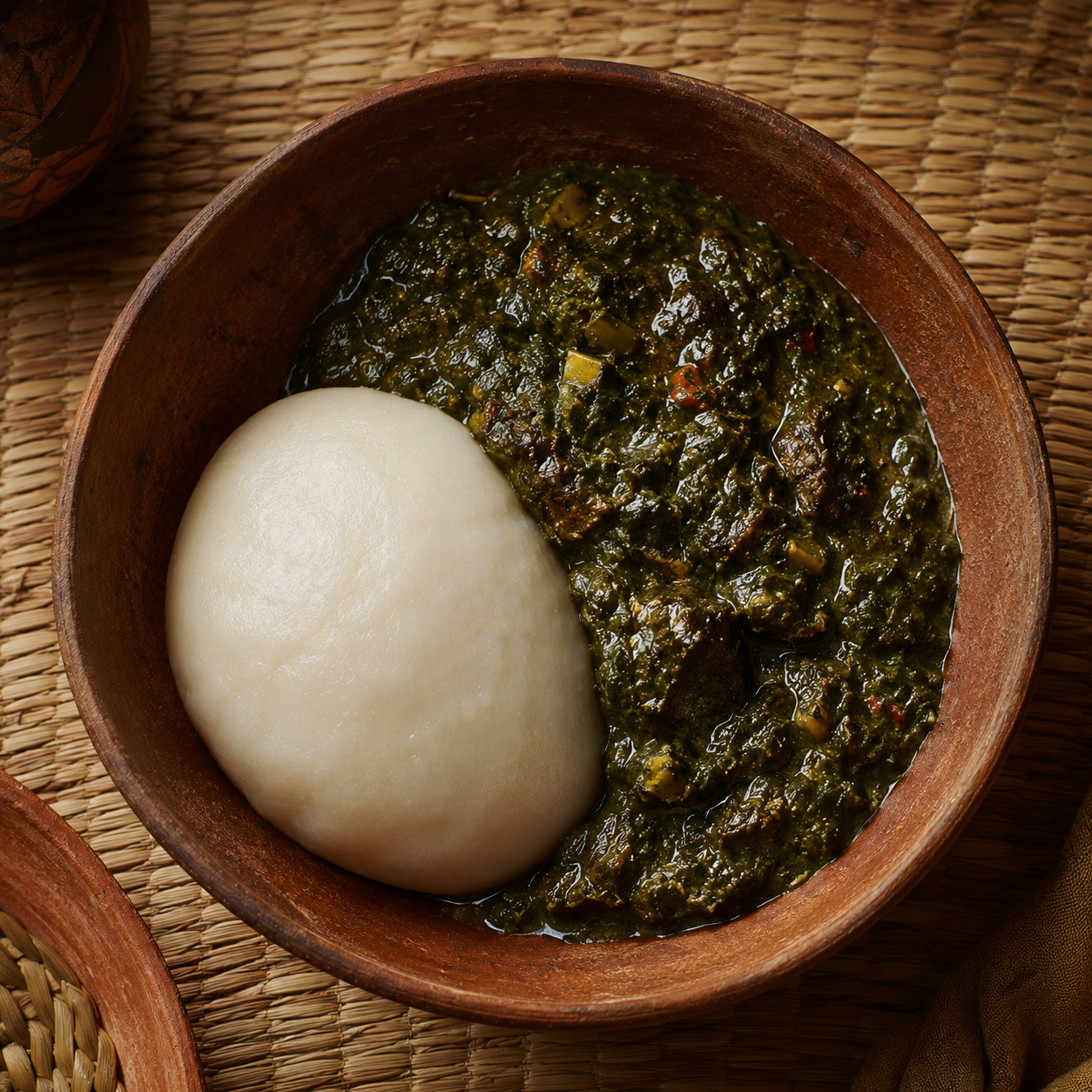 Everyday
Tuwon dawa da miyar kuka — sorghum paste and baobab soup
Tuwo da miya (foundation paste and daily soup)
🍄 🫙 🧂· 50 min
View the recipe
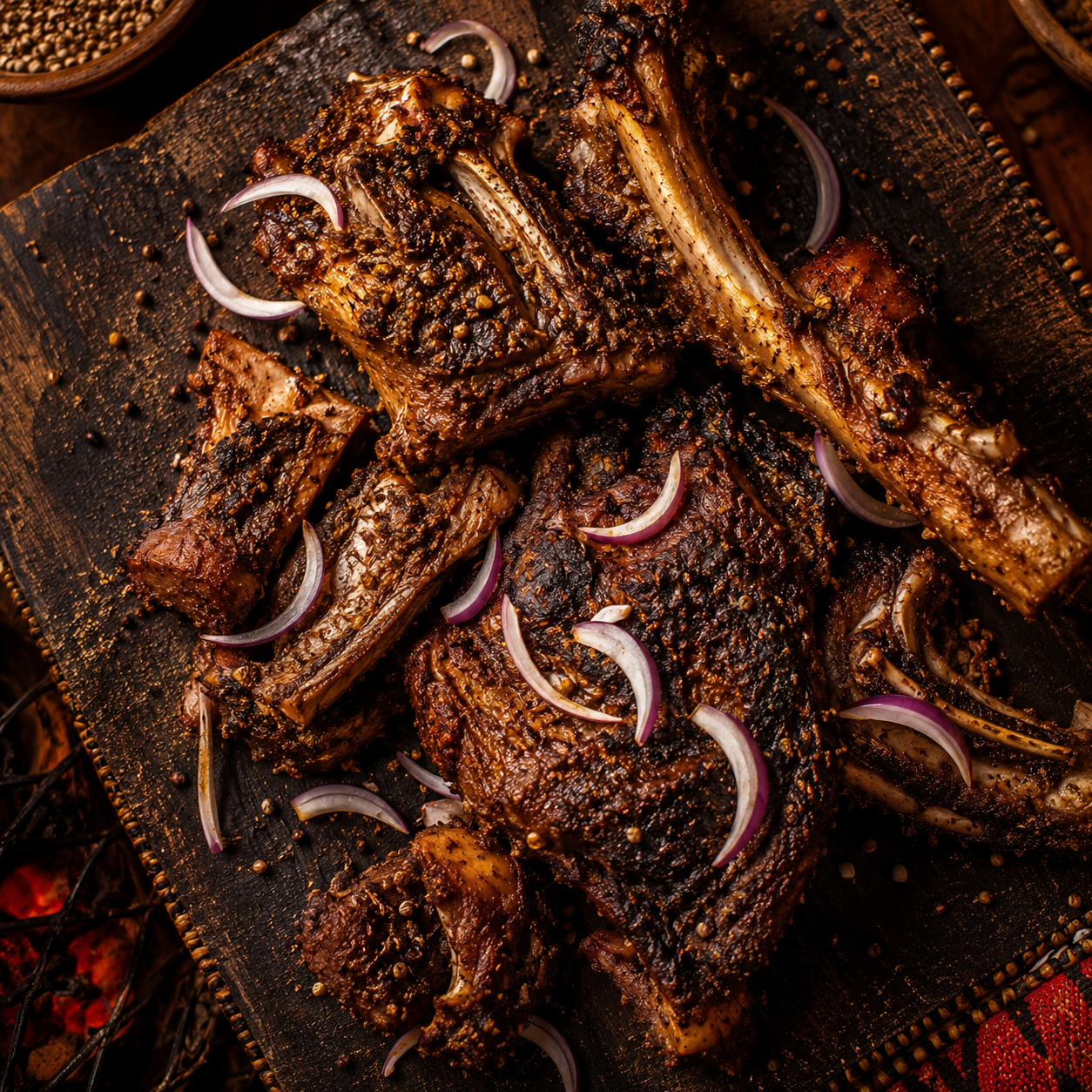 Festive
Naman gashi — roast mutton with grains of paradise
Naman gashi (celebratory grilled meat)
🧂 🌶️· 1 h 15 (excluding marinade)
View the recipe
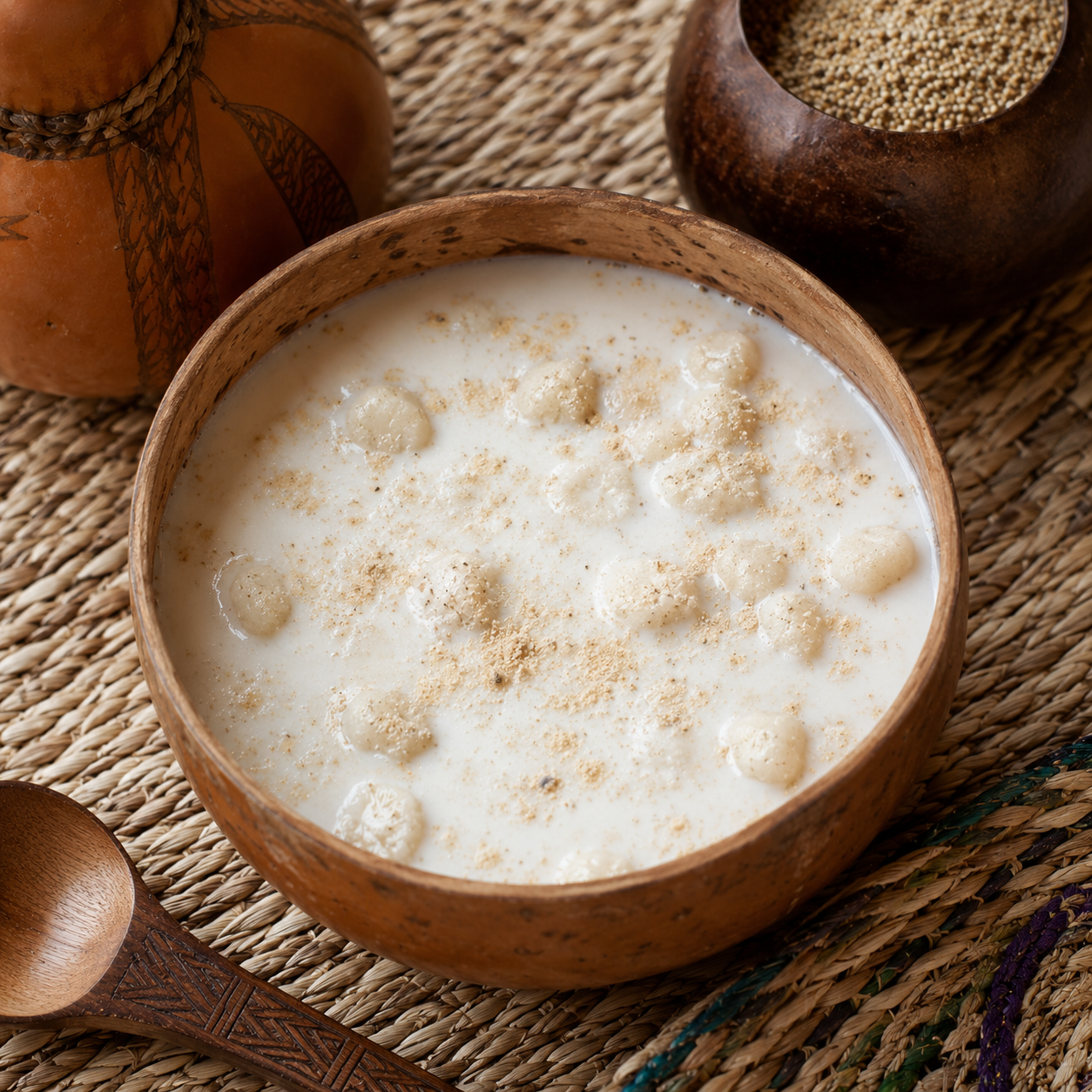 Drink
DrinkFura da nono — millet dumplings in fermented milk
Abinci mai ruwa (beaten millet drink-meal)
🍋 🫙· 35 min
View the recipe
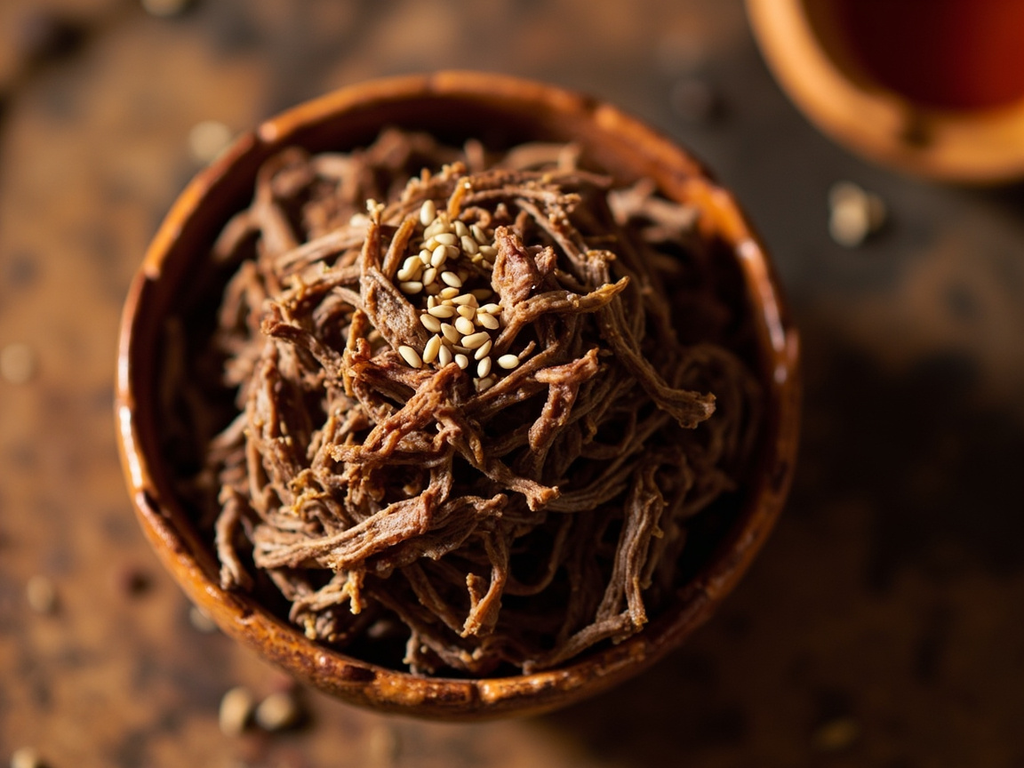 Preserving
Dambun nama — traveler's shredded dried meat
Guzuri (travel and storage provisions)
🧂 🍄 🌶️· 5 h (including drying)
View the recipe
 Offering
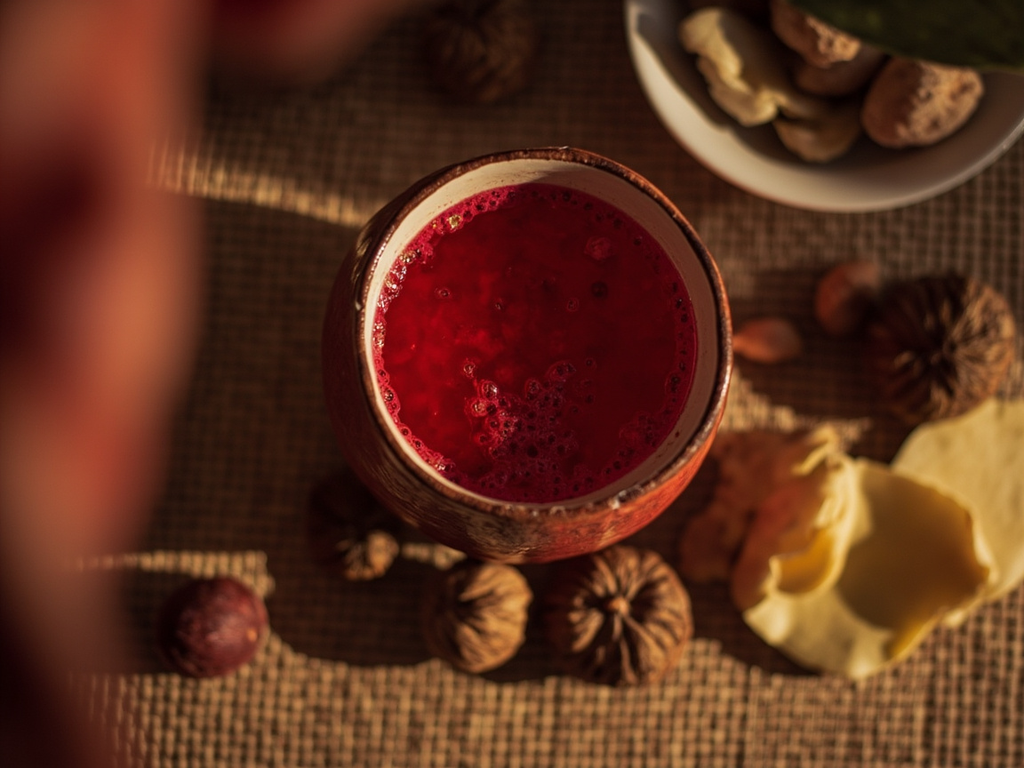
Ruwan tsamiya da zuma — Guinea sorrel infusion with honey, for welcome
Goro da abin sha (welcome offering: kola and welcome drink)
🍋 🍯· 30 min
View the recipe