 flip
flipDambun nama — traveler's shredded dried meat
Dambun nama — traveler's shredded dried meat
Why this dish? The source mentions dried meat and the long distances from Zaria to Kano, Agadez, and Timbuktu. For the horsemen and caravaners of Bakwa's kingdom, spiced meat was dried and shredded: a light guzuri (provision) that defied the heat of the savannah.
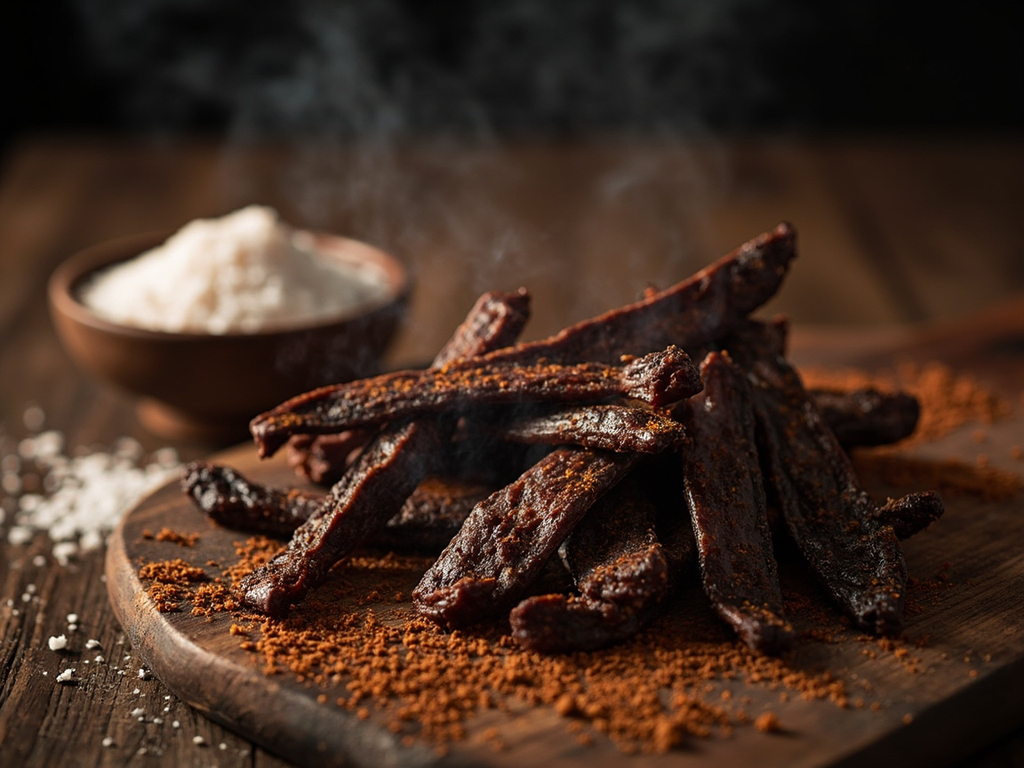
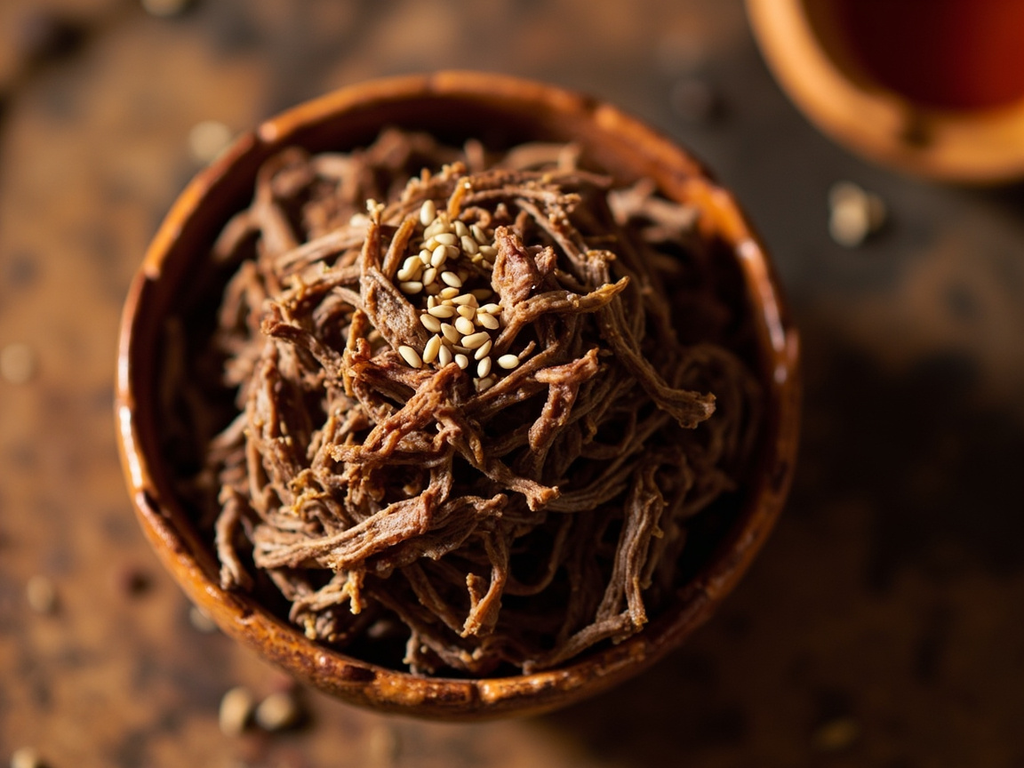
Strips of beef dried then shredded, rubbed with ginger, grains of paradise, and toasted sesame, which keep well and are nibbled on the road. Salty, deep, slightly pungent.
The road to Kano is long, and that to Agadez even longer. Do you think my horsemen stop to boil a pot in the full sun? No — they carry dambun nama in a cloth. Dry the meat in the wind and fire until it snaps, rub it with spices and toasted sesame, shred it fine as cotton. A handful in the hollow of the hand, and the belly holds until the next town. That is how a kingdom covers its distances.
- •Lean beef — according to the beast (base for drying)
- •Crushed grains of paradise, ginger — to taste (preserving spices)
- •Toasted sesame seeds — a handful (fatty binder, roasted flavor)
- •Dawadawa, salt — to taste (umami and preservation)
Dambun nama — traveler's shredded dried meat
Strips of beef dried then shredded, rubbed with ginger, grains of paradise, and toasted sesame, which keep well and are nibbled on the road. Salty, deep, slightly pungent.
Why this dish? The source mentions dried meat and the long distances from Zaria to Kano, Agadez, and Timbuktu. For the horsemen and caravaners of Bakwa's kingdom, spiced meat was dried and shredded: a light guzuri (provision) that defied the heat of the savannah.
The road to Kano is long, and that to Agadez even longer. Do you think my horsemen stop to boil a pot in the full sun? No — they carry dambun nama in a cloth. Dry the meat in the wind and fire until it snaps, rub it with spices and toasted sesame, shred it fine as cotton. A handful in the hollow of the hand, and the belly holds until the next town. That is how a kingdom covers its distances.
Ingredients (period version)
- Lean beef — according to the beast (base for drying)
- Crushed grains of paradise, ginger — to taste (preserving spices)
- Toasted sesame seeds — a handful (fatty binder, roasted flavor)
- Dawadawa, salt — to taste (umami and preservation)
Ingredients
- Lean beef (shin, slice) — 500 g (base for drying)
- Grains of paradise (or black pepper) — 1 tsp, ground (spice)
- Ground ginger — 1/2 tsp (spice)
- Toasted sesame seeds, ground — 3 tbsp (toasted binder (replaces peanut))
- Dawadawa / iru — 1 tsp (umami)
- Salt — to taste (seasoning and preservation)
Method
- Cut the beef into very thin strips along the grain.
- Arrange on a rack and dry in an oven with the door ajar at 70-80°C (or in a dehydrator) for 4 to 6 hours until brittle.
- Pound or crumble the dried meat into fine shreds.
- Mix with ground toasted sesame, grains of paradise, ginger, dawadawa, and salt.
- Store in an airtight container in a dry place; eat as is or rehydrate in a soup.
How it was made : Drying is the great Sahelian preservation technique against the heat. Traditional modern kilishi/dambun nama is bound with peanut paste, a New World ingredient that arrived later: before the 16th-17th century, sesame (bene), long cultivated in Africa, provided the fatty binder and roasted flavor.
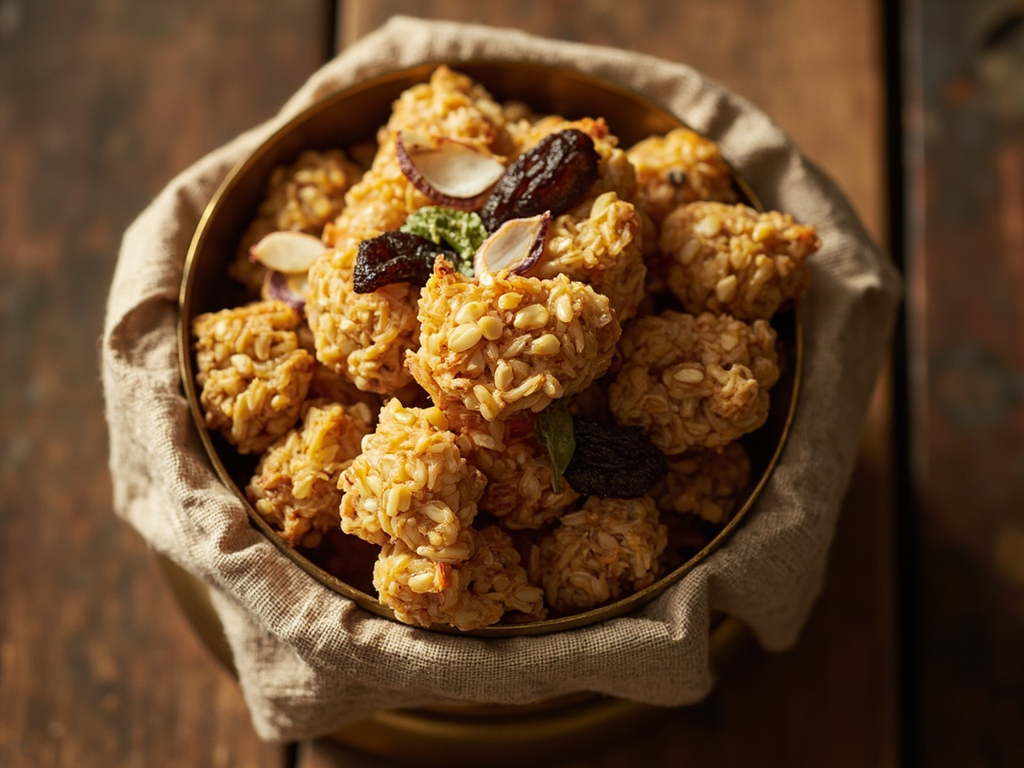
The contemporary twist : Present as a small shredded mound in a bowl of tanned Zazzau leather (a nod to typical objects), sprinkled with whole sesame seeds: a caravan snack revisited.
Bakwa Turunku · Charactorium