 flip
flipNaman gashi — roast mutton with grains of paradise
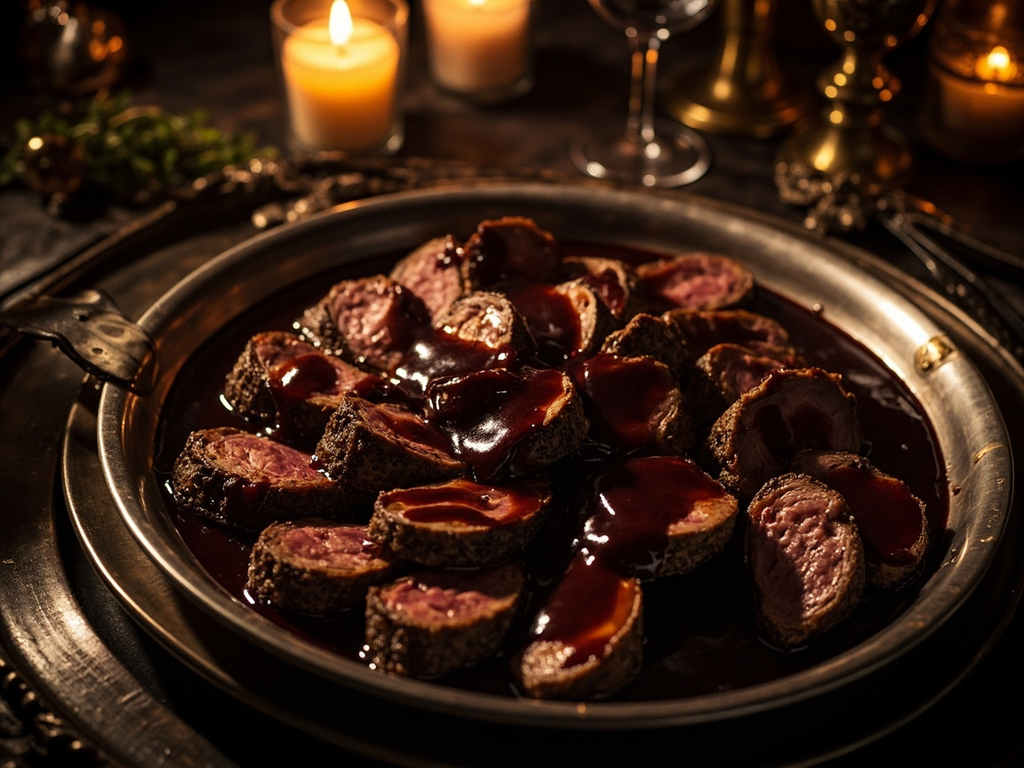
Naman gashi — roast mutton with grains of paradise
Why this dish? To celebrate the founding of Zaria and the throne audiences (kujera), a fat sheep is slaughtered and roasted over embers before the court. Grains of paradise (Aframomum melegueta), a native West African pepper, perfume the meat without owing anything to overseas chili.
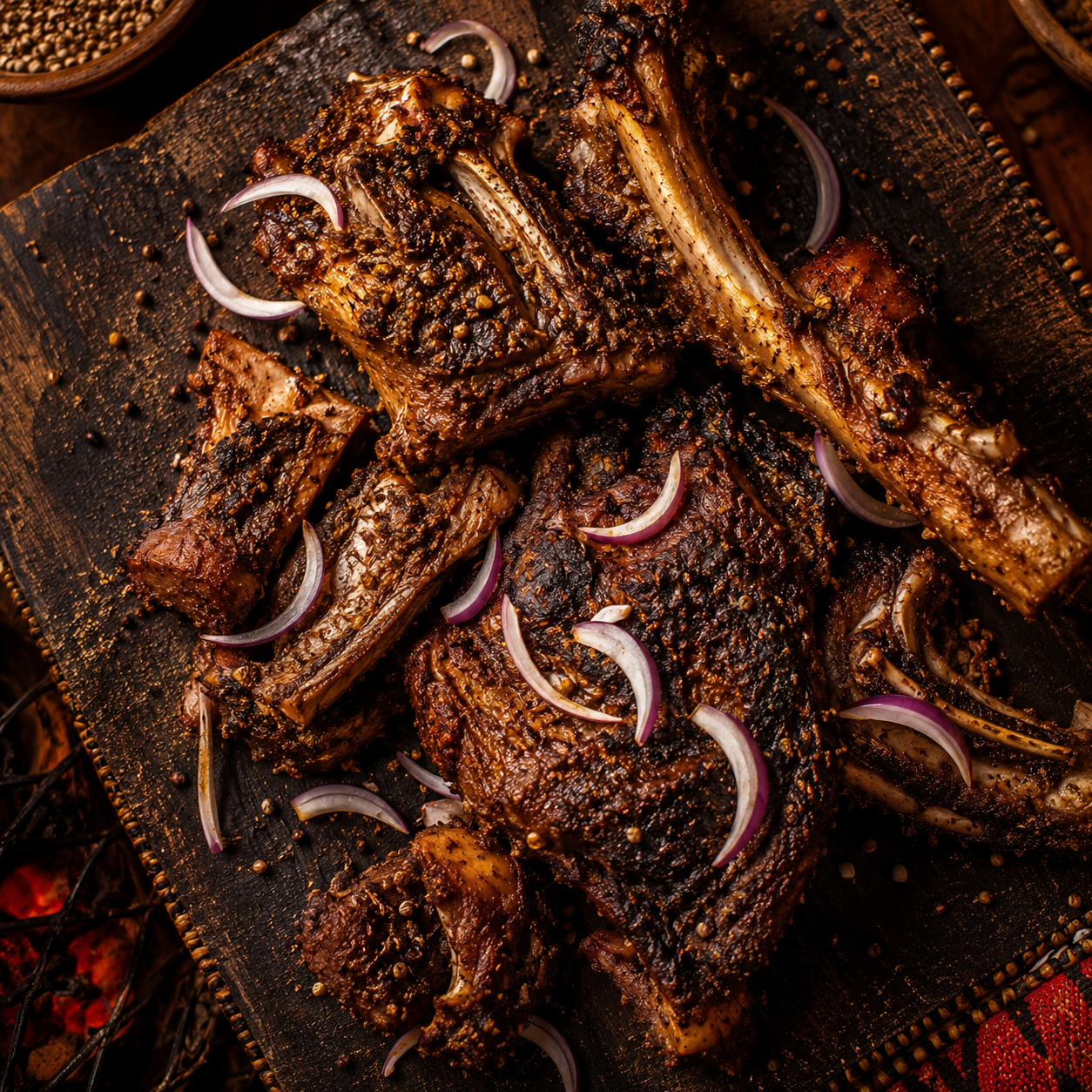
Large pieces of mutton rubbed with ginger, onion, and crushed grains of paradise, slowly roasted over embers until a fragrant, smoky crust forms. The meat of glorious days.
When the tambari resound and the chiefs come to kneel before my throne, I do not serve them porridge: I serve them fire and meat. Rub the mutton with ginger and those grains of paradise that bite the mouth like a live ember, then let the coals do their slow work. The fat that falls and sizzles — that is the song of Zazzau in celebration. Eat, and remember who fed you.
- •Mutton (shoulder, leg) — a quarter (centerpiece)
- •Crushed grains of paradise (Guinea pepper) — to taste (pungent native spice)
- •Fresh ginger, onion — generously (aromatic marinade)
- •Diluted dawadawa — a little (umami in marinade)
- •Shea butter or suet — for basting (roasting fat)
Naman gashi — roast mutton with grains of paradise
Large pieces of mutton rubbed with ginger, onion, and crushed grains of paradise, slowly roasted over embers until a fragrant, smoky crust forms. The meat of glorious days.
Why this dish? To celebrate the founding of Zaria and the throne audiences (kujera), a fat sheep is slaughtered and roasted over embers before the court. Grains of paradise (Aframomum melegueta), a native West African pepper, perfume the meat without owing anything to overseas chili.
When the tambari resound and the chiefs come to kneel before my throne, I do not serve them porridge: I serve them fire and meat. Rub the mutton with ginger and those grains of paradise that bite the mouth like a live ember, then let the coals do their slow work. The fat that falls and sizzles — that is the song of Zazzau in celebration. Eat, and remember who fed you.
Ingredients (period version)
- Mutton (shoulder, leg) — a quarter (centerpiece)
- Crushed grains of paradise (Guinea pepper) — to taste (pungent native spice)
- Fresh ginger, onion — generously (aromatic marinade)
- Diluted dawadawa — a little (umami in marinade)
- Shea butter or suet — for basting (roasting fat)
Ingredients
- Shoulder or leg of mutton, cut into large pieces — 1.2 kg (centerpiece)
- Grains of paradise (or black pepper + a pinch of ginger) — 2 tsp, ground (pungent spice)
- Fresh grated ginger — 1 tbsp (marinade)
- Onion — 1, pureed (marinade)
- Dawadawa / iru — 1 tsp, diluted (umami)
- Shea butter (or clarified butter) — 2 tbsp (basting)
- Salt — to taste (seasoning)
Method
- Mix ginger, onion puree, ground grains of paradise, diluted dawadawa, and salt into a marinade paste.
- Coat the mutton pieces and let rest at least 2 hours (overnight is better).
- Roast over moderate embers (or in an oven at 180°C), turning and basting with melted shea butter, for 40 to 60 minutes depending on thickness.
- Increase the heat at the end to sear a fragrant crust; let rest for 10 minutes.
- Slice and serve on a board or large calabash, sprinkled with raw onion.
How it was made : Grilled meat remained a luxury for feasts and courts: it was spiced with local aromatics and caravan trade goods (ginger, grains of paradise), long before American chili became the heart of modern yaji. Shea butter served as fat where palm oil was scarce north of the forest zone.
The contemporary twist : Serve on a charred wooden board, crushed grains of paradise as a final touch and a few onion petals: a 'royal ember' that pops in photos.
Bakwa Turunku · Charactorium