 flip
flipTuwon dawa da miyar kuka — sorghum paste and baobab soup
Tuwon dawa da miyar kuka — sorghum paste and baobab soup
Why this dish? This is the everyday meal in the city that Bakwa founded around 1536: dried baobab leaf (kuka) grows throughout the Zazzau savannah, and sorghum is the queen cereal of the plateau. The queen shared this nourishing foundation with her household just like the humblest of her subjects.
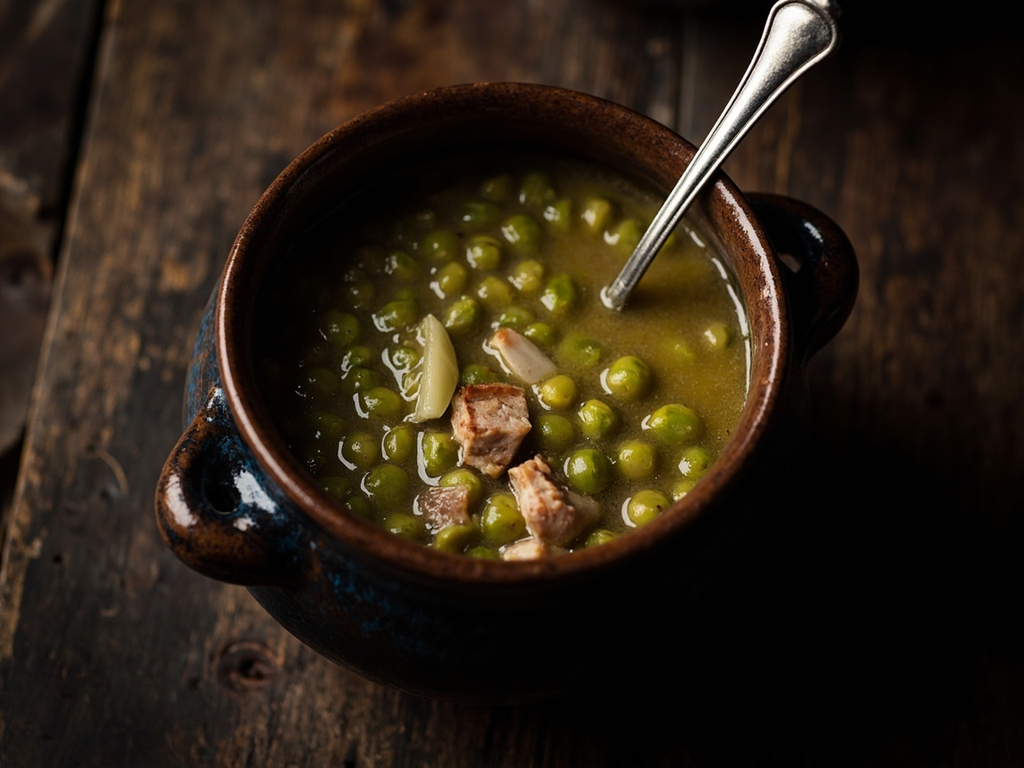
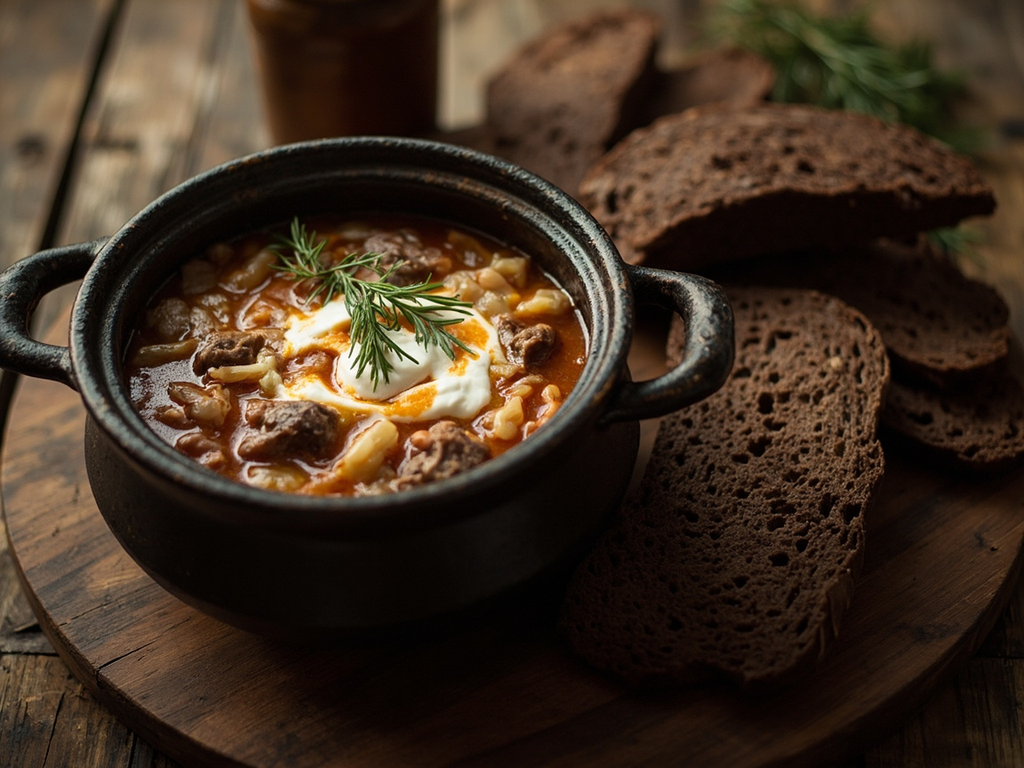
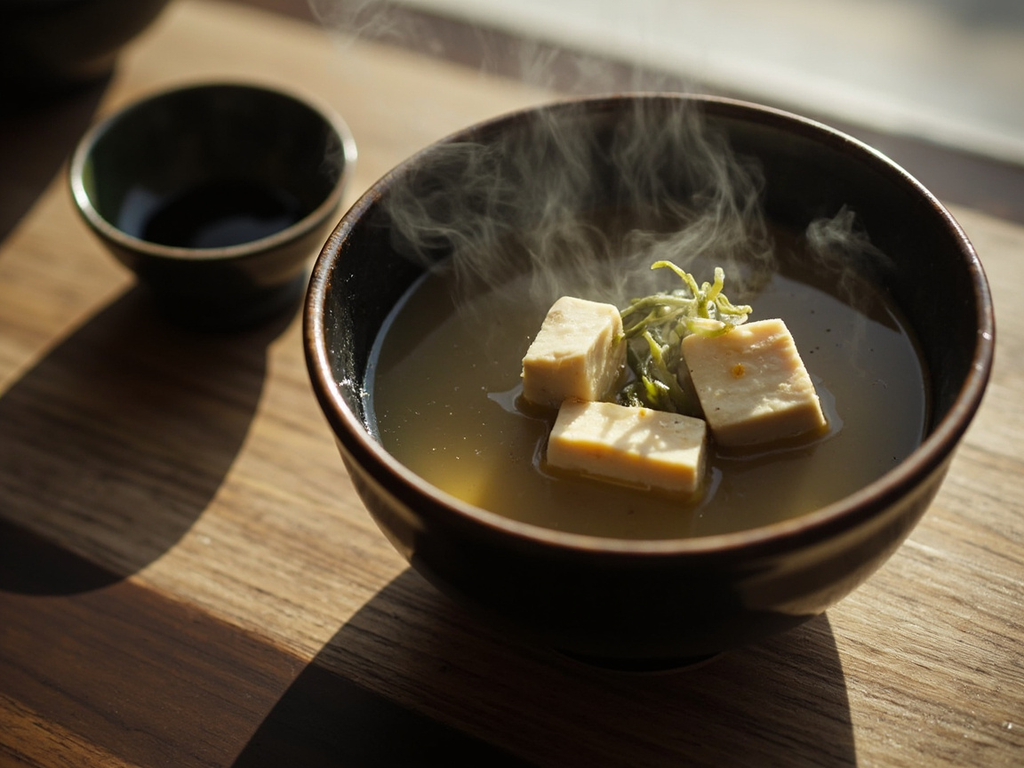
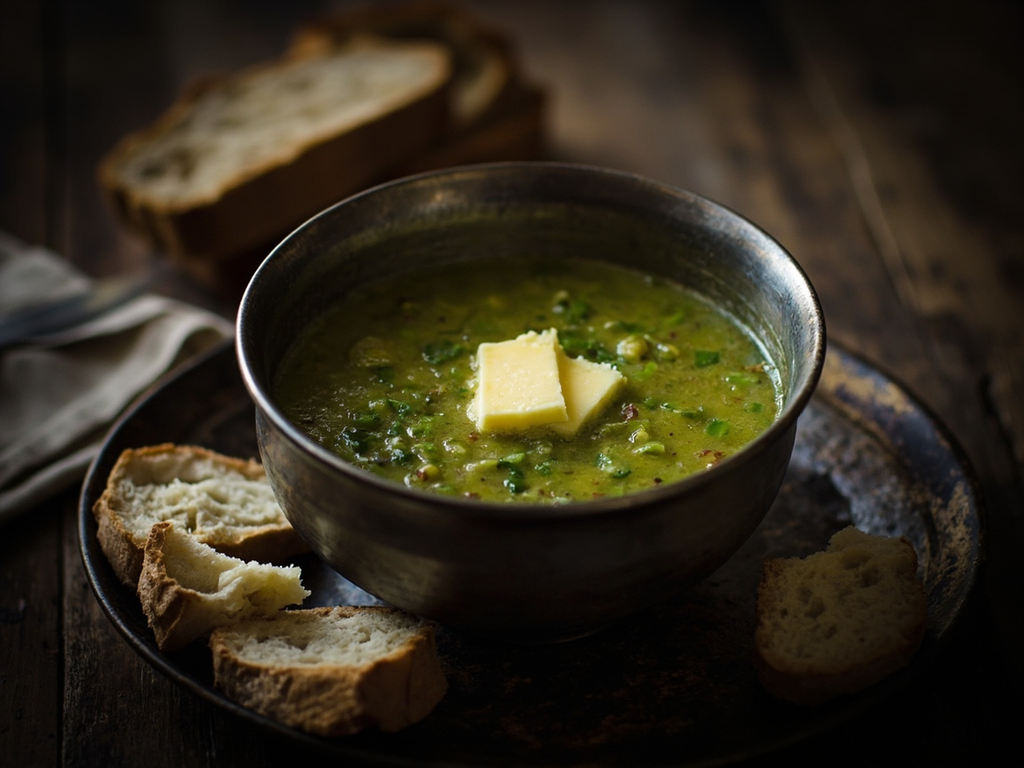
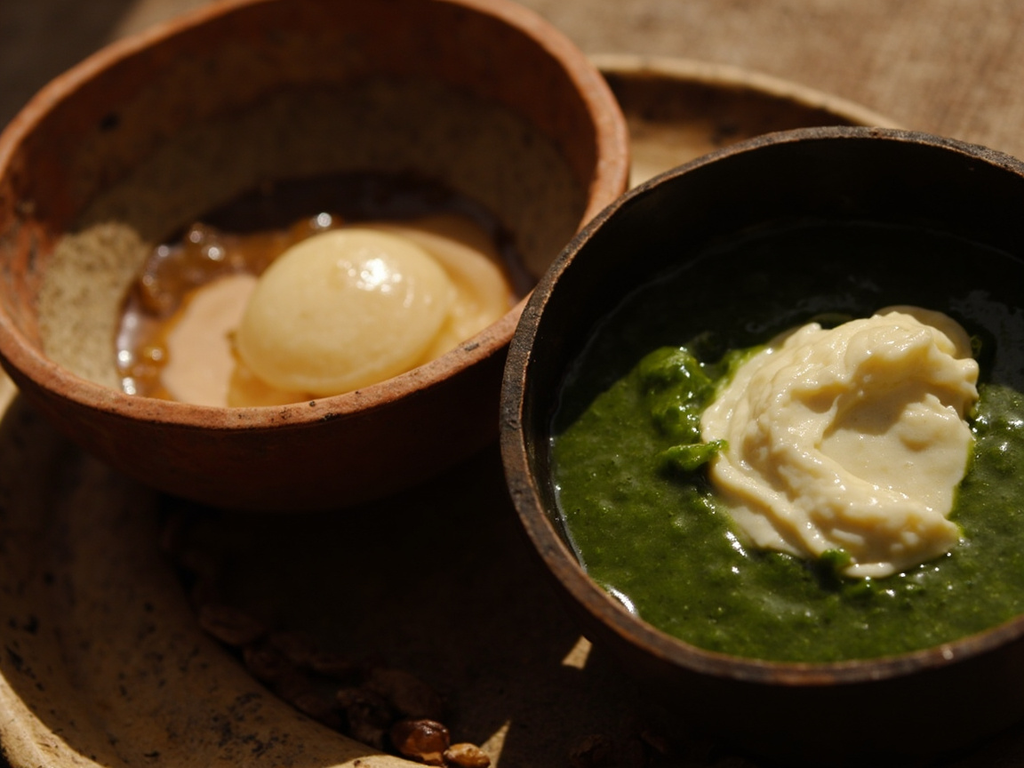
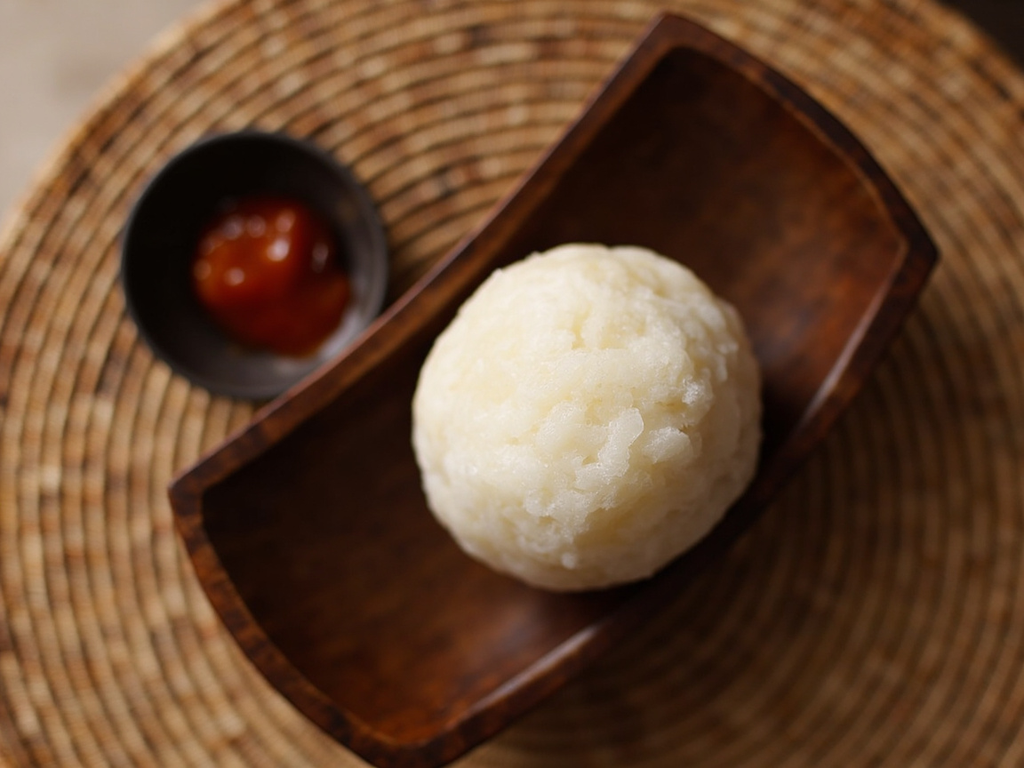
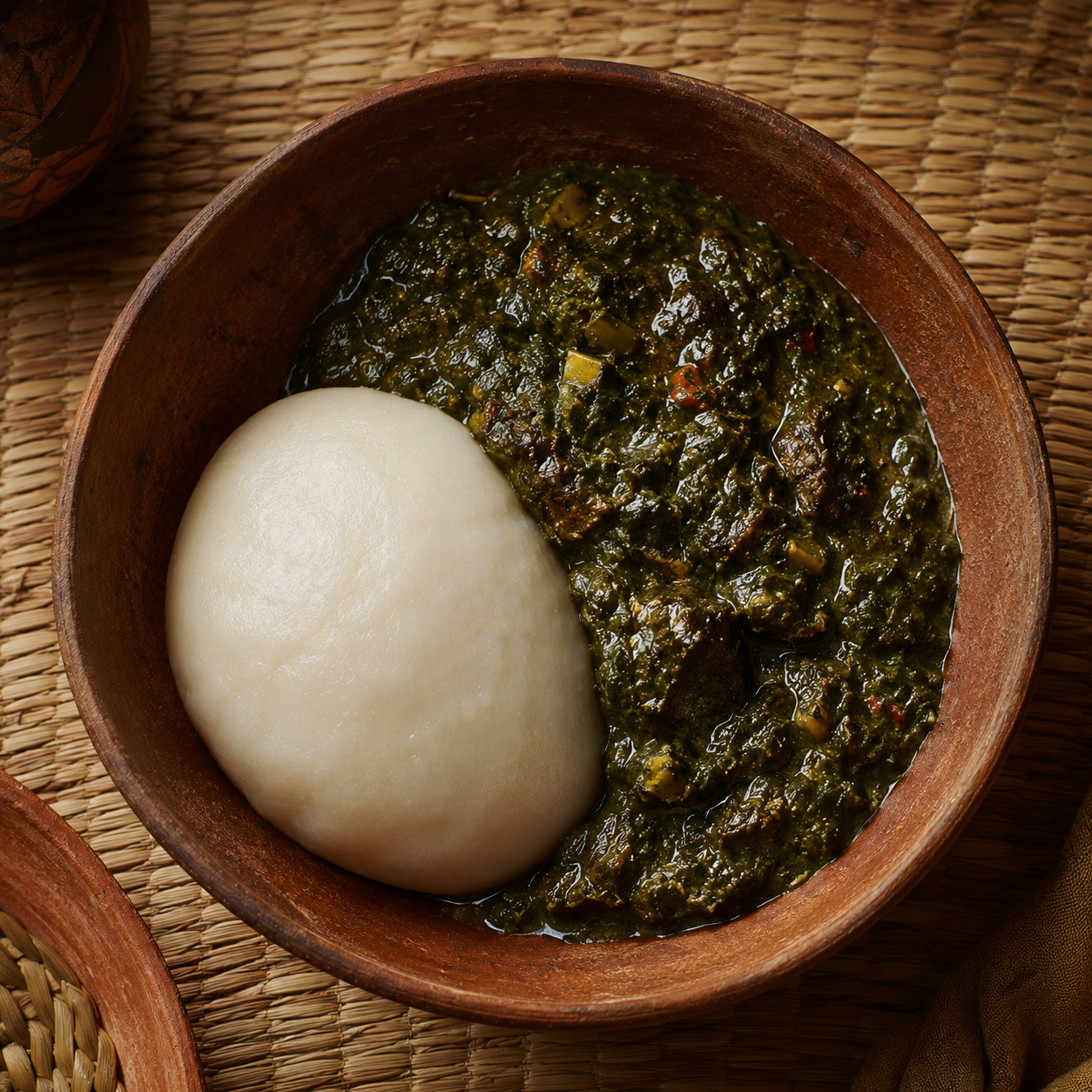
A smooth, firm paste of sorghum flour, broken by hand and dipped into a green, slippery soup of baobab leaves bound with dawadawa and dried fish. Comforting, deep, earthy.
I, Bakwa, who planted the walls of Zaria in the red earth, tell you: a kingdom stands on its sorghum before it stands on its spears. See how my maidservant beats the paste until it no longer sticks to the calabash — it is in this silence of the stick that you know it is ready. Dip it in the kuka, smell the fermented locust bean that awakens the tongue, and eat with the right hand, as is proper. Whoever has eaten at my table has never left Zazzau with an empty belly.
- •Sorghum flour (dawa) — as needed (cereal for tuwo)
- •Dried baobab leaves, ground (kuka) — two handfuls (thickener and body of soup)
- •Dawadawa (fermented locust bean) — a few crumbled cakes (umami, vegetable salt)
- •Dried river fish — according to catch (protein, depth)
- •Onion, Saharan rock salt — to taste (seasoning)
Tuwon dawa da miyar kuka — sorghum paste and baobab soup
A smooth, firm paste of sorghum flour, broken by hand and dipped into a green, slippery soup of baobab leaves bound with dawadawa and dried fish. Comforting, deep, earthy.
Why this dish? This is the everyday meal in the city that Bakwa founded around 1536: dried baobab leaf (kuka) grows throughout the Zazzau savannah, and sorghum is the queen cereal of the plateau. The queen shared this nourishing foundation with her household just like the humblest of her subjects.
I, Bakwa, who planted the walls of Zaria in the red earth, tell you: a kingdom stands on its sorghum before it stands on its spears. See how my maidservant beats the paste until it no longer sticks to the calabash — it is in this silence of the stick that you know it is ready. Dip it in the kuka, smell the fermented locust bean that awakens the tongue, and eat with the right hand, as is proper. Whoever has eaten at my table has never left Zazzau with an empty belly.
Ingredients (period version)
- Sorghum flour (dawa) — as needed (cereal for tuwo)
- Dried baobab leaves, ground (kuka) — two handfuls (thickener and body of soup)
- Dawadawa (fermented locust bean) — a few crumbled cakes (umami, vegetable salt)
- Dried river fish — according to catch (protein, depth)
- Onion, Saharan rock salt — to taste (seasoning)
Ingredients
- Sorghum flour (or millet flour) — 300 g (cereal for tuwo)
- Baobab leaf powder (kuka) — 3 tbsp (thickening binder)
- Dawadawa / iru (fermented locust bean) — 2 tbsp, crumbled (fermented umami)
- Dried or smoked fish — 100 g, rehydrated (protein)
- Onion — 1 small (aromatic base)
- Salt — to taste (seasoning)
- Water — about 1 L (cooking)
Method
- Bring 700 ml of water to a boil. Dilute a portion with a little sorghum flour to form a slurry, then gradually add the remaining flour while stirring.
- Work the paste vigorously with a sturdy spatula over low heat until a smooth, firm mass that pulls away from the sides; cover and keep warm.
- For the soup: bring 400 ml of water to a simmer with the chopped onion, rehydrated fish, and crumbled dawadawa for 10 minutes.
- Dissolve the baobab powder in a little cold water, add to the soup and stir until it thickens and becomes slippery; season with salt.
- Shape the tuwo into a ball, serve alongside the soup; break off pieces by hand and dip.
How it was made : Before New World grains, tuwo was made exclusively from millet and sorghum, pounded in a mortar and sifted. Leaf soups (kuka from baobab, but also Guinea sorrel) were the everyday greens of the savannah; dawadawa provided salt and umami where sea salt remained precious as it was imported by caravan.
The contemporary twist : Serve the tuwo as a smooth quenelle in the center of a dark plate, with the miyar kuka poured as a mirror around it: the white/deep green contrast honors the royal table.
Bakwa Turunku · Charactorium