 Flip the card
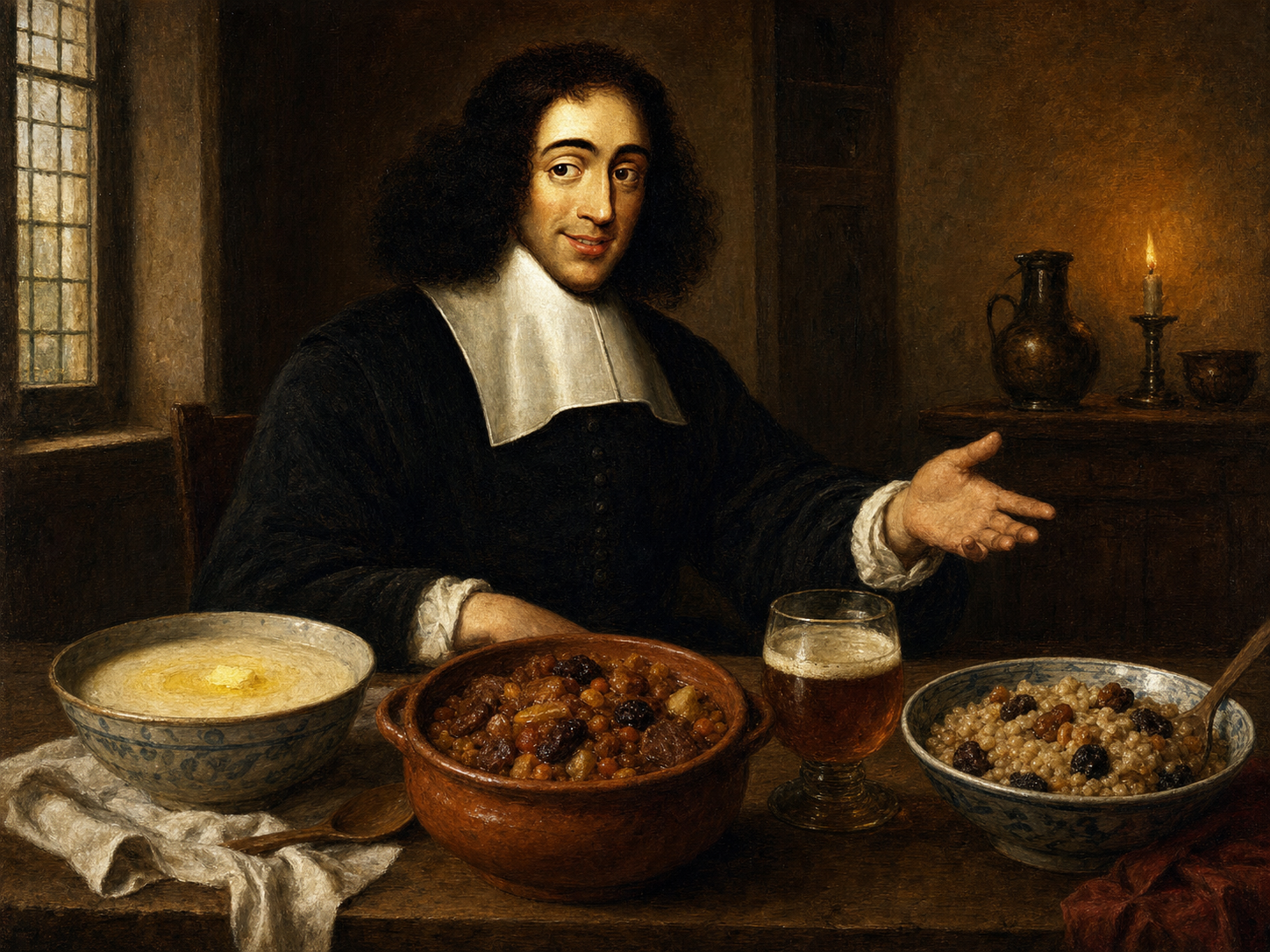
Baruch Spinoza at the table
1632 — 1677
On the menu
The hot pot and the bread meal (de warme pot en de broodmaaltijd)
In the Dutch Golden Age Provinces-Unies, meals were not structured as starter-main course-dessert. The day revolved around a single hot meal cooked in the large cast-iron pot (de pot) — often a one-pot dish combining roots and broth — flanked by broodmaaltijden: bread meals of rye bread, butter, cheese, curdled milk, and herring, eaten standing or at the corner of the table. Sweet and sour came in the form of cereal porridges (pap, gruwel). For a man as frugal as Spinoza, this structure was reduced to the essentials: the pot, the bread, the jug of small beer.
Signature : Melted butter and Dutch sobriety
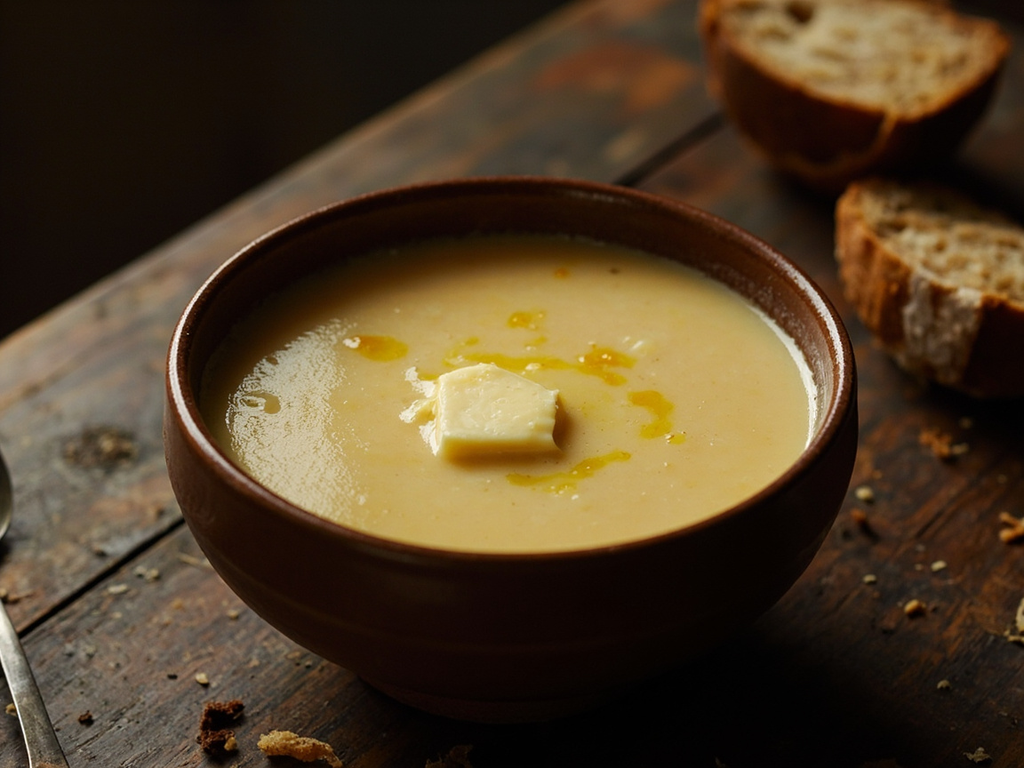
Seventeenth-century Batavian cuisine revolved around butter, milk, and grains from a land of polders and cows. The knob of butter melting into milk soup — the very soup Spinoza ate — is the emblematic touch: a modest, accessible richness that transforms water and grain into comforting nourishment without ostentation.
click to flip back
Baruch Spinoza at the table
1632 — 1677
5 period recipes
 Everyday
Melksoep — Spinoza's buttered milk soup
Evening hot pot, everyday Batavian one-pot meal
🍯 🧂· 15 min
View the recipe
 Festive
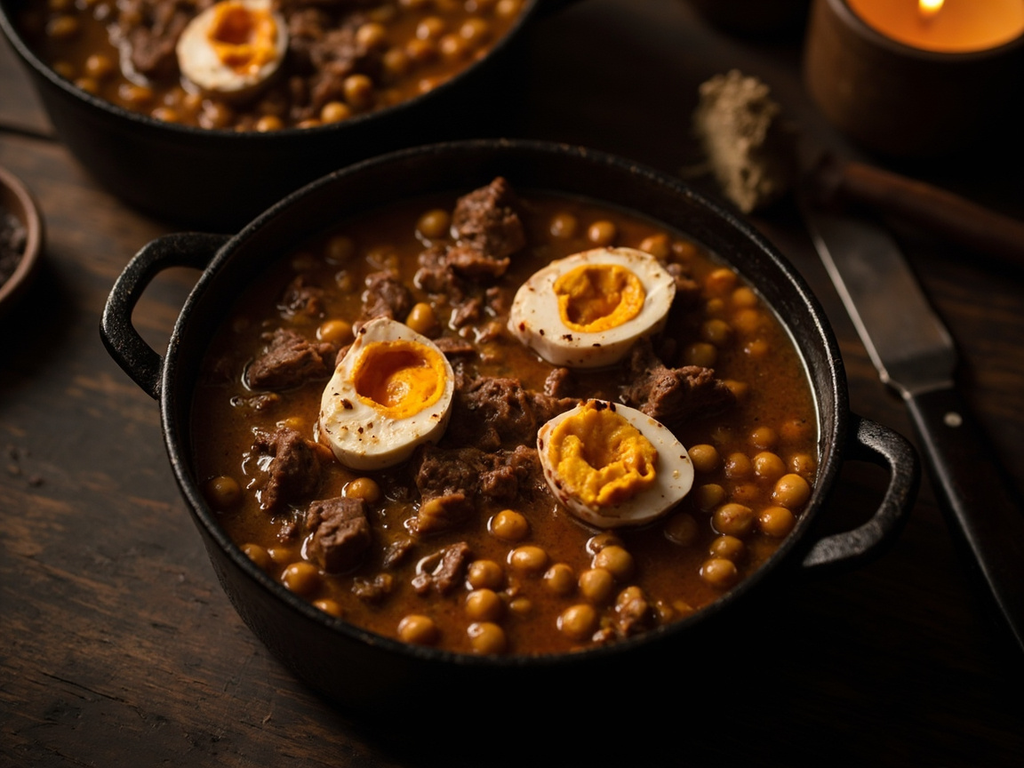
Adafina — the Sephardic Sabbath pot (inspired by)
Festive dish from the Amsterdam Judeo-Portuguese table, cooked the day before the day of rest
🍄 🧂 🌶️· 7 h (slow cooking)
View the recipe
 Drink
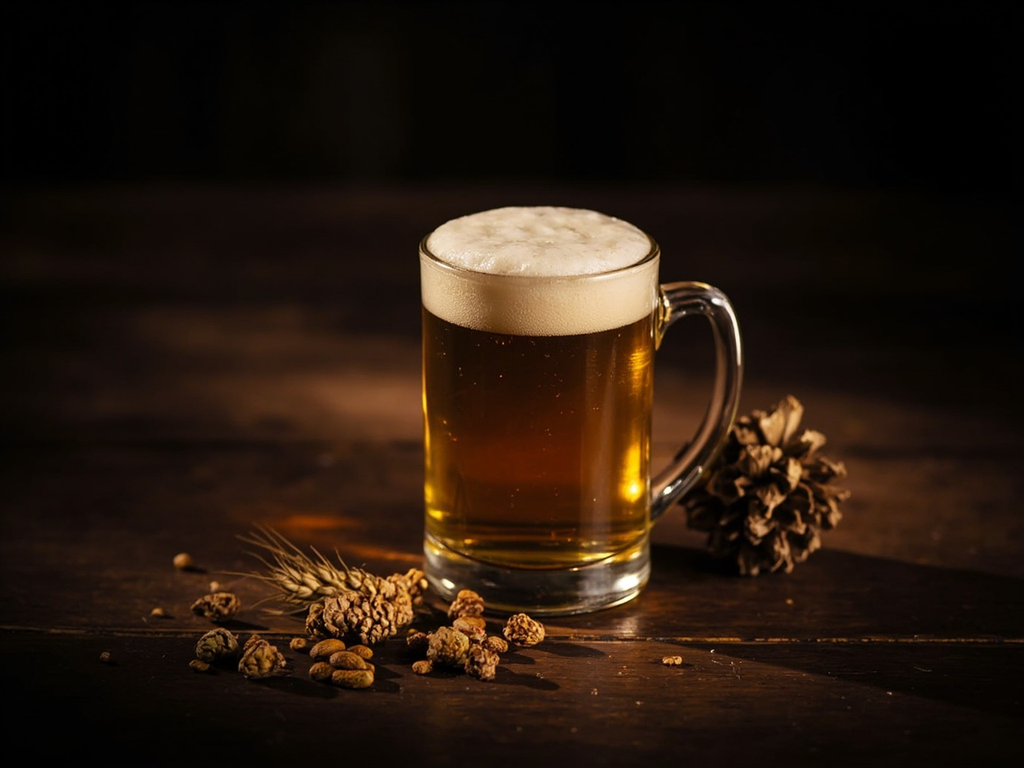
DrinkKlein bier — small table beer
Batavian table beverage, drunk throughout the bread meal
☕ 🫙· 1 h (brewing) + 1 to 2 weeks (fermentation)
View the recipe
 Remedy
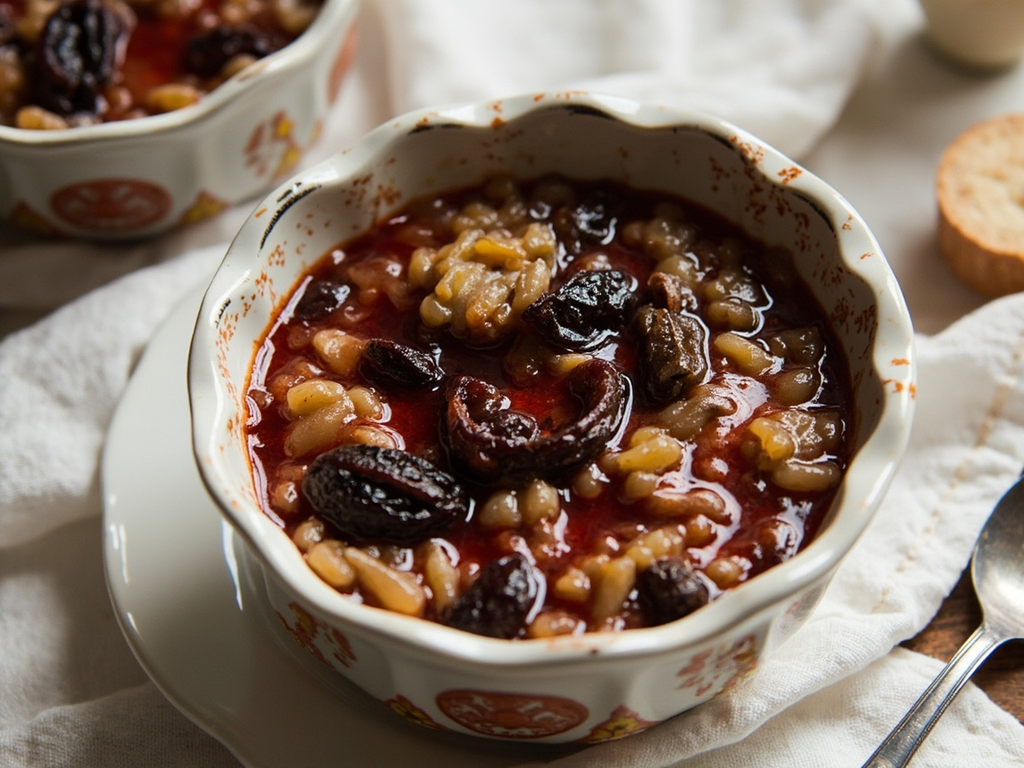
Watergruwel — dried fruit gruel for the convalescent
Medicinal and comforting porridge, eaten in bed or on days of weakness
🍯 🍋· 50 min
View the recipe
 Preserving
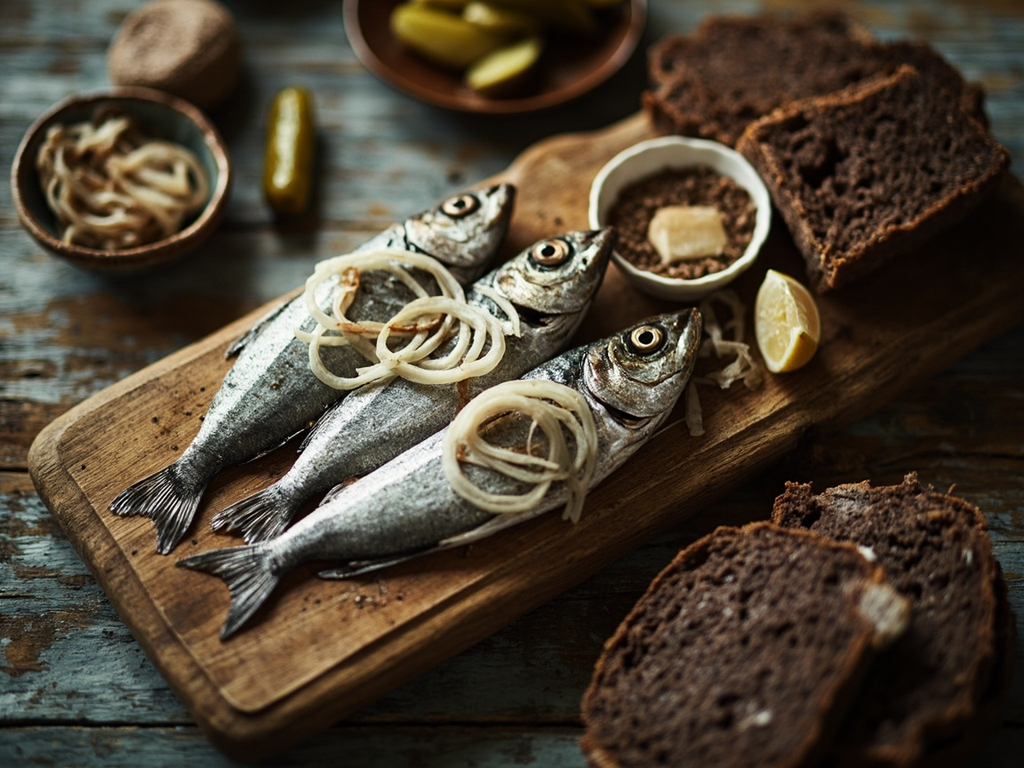
Maatjesharing — salted herring with onion
Salted provision for the bread meal, preserved and eaten all year
🧂 🍄· 20 min (excluding salting)
View the recipe