 flip
flipMelksoep — Spinoza's buttered milk soup
Melksoep — Spinoza's buttered milk soup
Why this dish? His biographers report that Spinoza often made do with a milk soup enriched with butter as his entire meal. This humble dish became the very image of his philosophical frugality, in his rented room in Rijnsburg and later The Hague, between sessions of lens grinding.
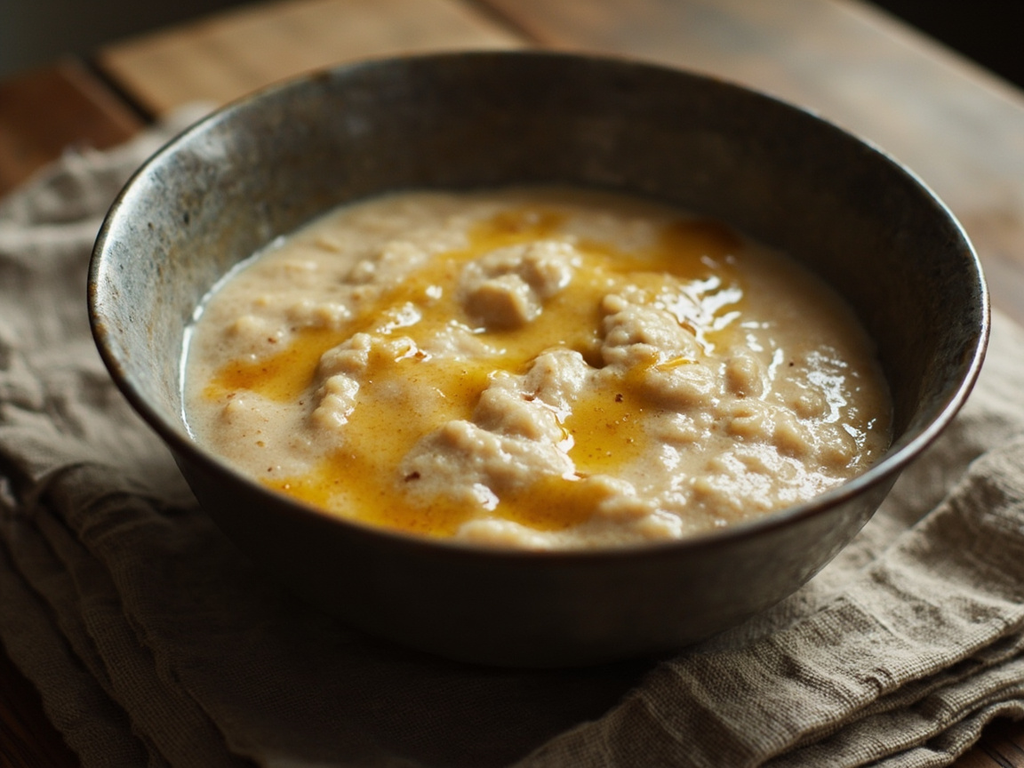
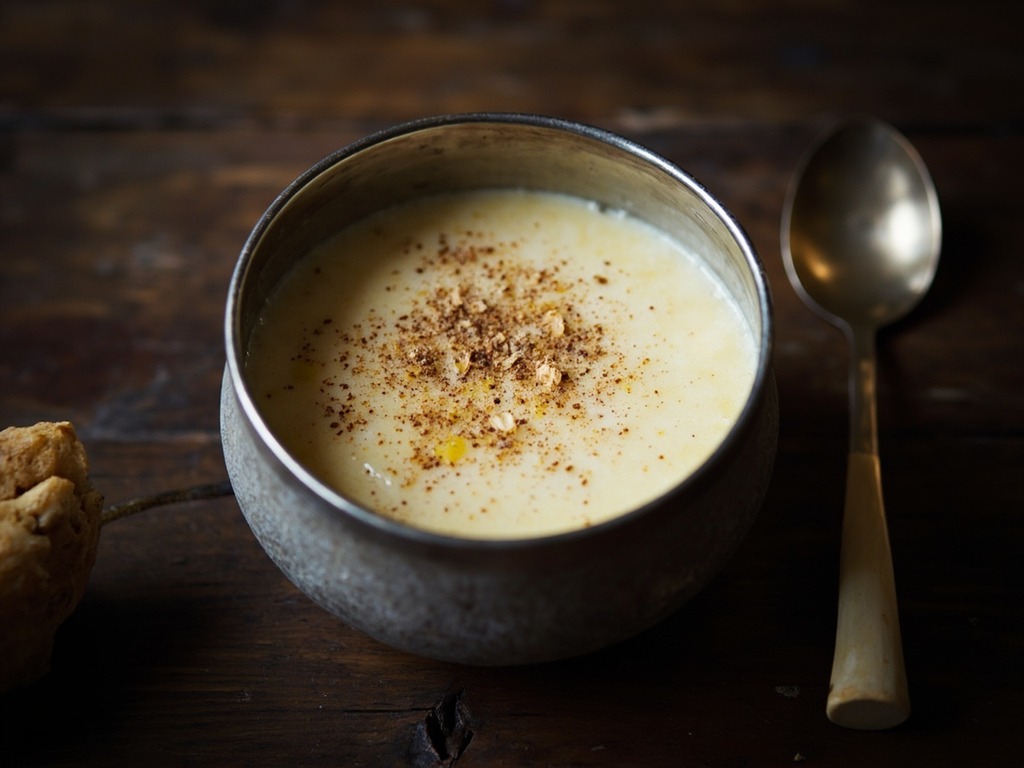
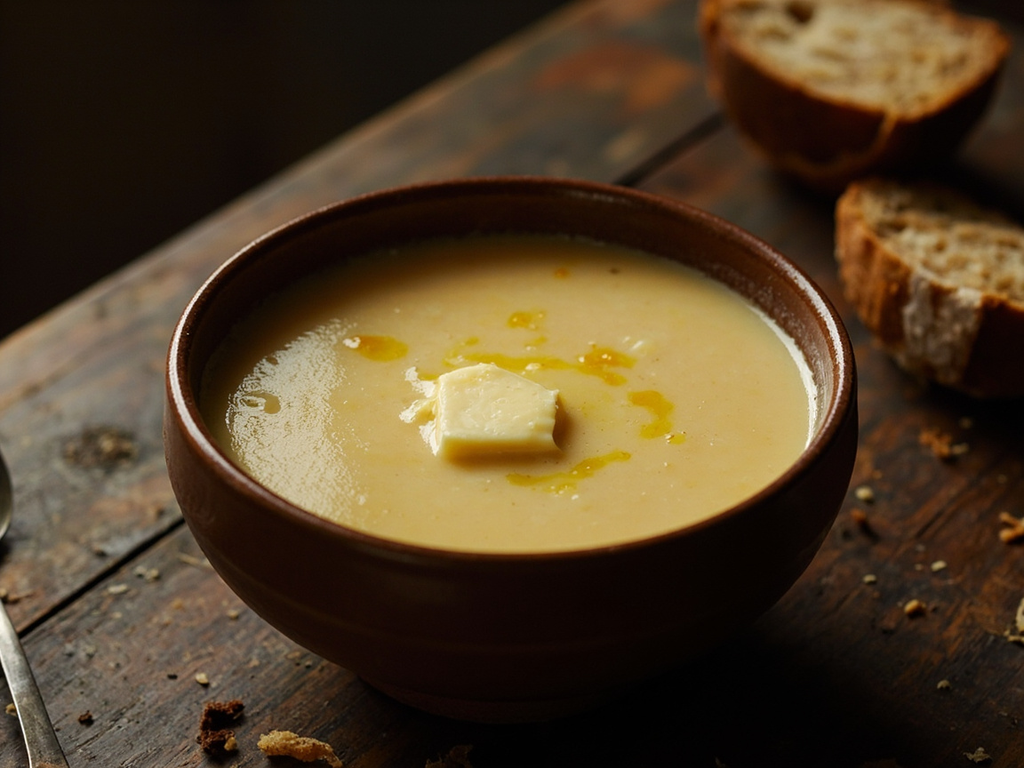
A milk soup thickened with stale bread or a little barley flour, scented with a knob of butter and a pinch of sugar. Warm, soft, nourishing: the meal of a man who wants to sustain the body without enslaving the mind.
I confess to you without pretense: my table has nothing to seduce the palate of the rich, and I am all the better for it. When evening comes, I heat a little milk, crumble in yesterday's bread, and let a knob of butter melt into it — no more. Nature requires little to keep a man healthy; all excess is but a servitude that the soul pays for in turmoil and humors. Eat with measure, and you will find your understanding clearer than any spice could make it.
- •Whole cow's milk — a large bowlful (base)
- •Stale rye bread — a few slices (thickener)
- •Butter — a generous knob (signature, richness)
- •Sugar — a pinch (sweetness, optional)
- •Salt — a pinch (seasoning)
Melksoep — Spinoza's buttered milk soup
A milk soup thickened with stale bread or a little barley flour, scented with a knob of butter and a pinch of sugar. Warm, soft, nourishing: the meal of a man who wants to sustain the body without enslaving the mind.
Why this dish? His biographers report that Spinoza often made do with a milk soup enriched with butter as his entire meal. This humble dish became the very image of his philosophical frugality, in his rented room in Rijnsburg and later The Hague, between sessions of lens grinding.
I confess to you without pretense: my table has nothing to seduce the palate of the rich, and I am all the better for it. When evening comes, I heat a little milk, crumble in yesterday's bread, and let a knob of butter melt into it — no more. Nature requires little to keep a man healthy; all excess is but a servitude that the soul pays for in turmoil and humors. Eat with measure, and you will find your understanding clearer than any spice could make it.
Ingredients (period version)
- Whole cow's milk — a large bowlful (base)
- Stale rye bread — a few slices (thickener)
- Butter — a generous knob (signature, richness)
- Sugar — a pinch (sweetness, optional)
- Salt — a pinch (seasoning)
Ingredients
- Whole milk — 500 ml (base)
- Stale country or rye bread — 2 slices (≈80 g) (thickener)
- Salted butter — 20 g (signature)
- Sugar — 1 tsp (optional) (sweetness)
- Salt — 1 pinch (seasoning)
Method
- Cut the stale bread into small pieces and place them at the bottom of a bowl.
- Heat the milk over low heat with a pinch of salt, without letting it boil vigorously.
- Pour the hot milk over the bread and let it swell for 3 to 4 minutes, until softened.
- Mash roughly with a spoon for a thick soup texture.
- Place the knob of butter in the center, add sugar if desired, and eat warm.
How it was made : In modest 17th-century Batavian households, melksoep or broodpap was a common evening meal: milk was plentiful, stale bread was never wasted, and butter was the national fat. It was given to children and the elderly alike. Spinoza, who rented rooms with locals, made it his daily fare.
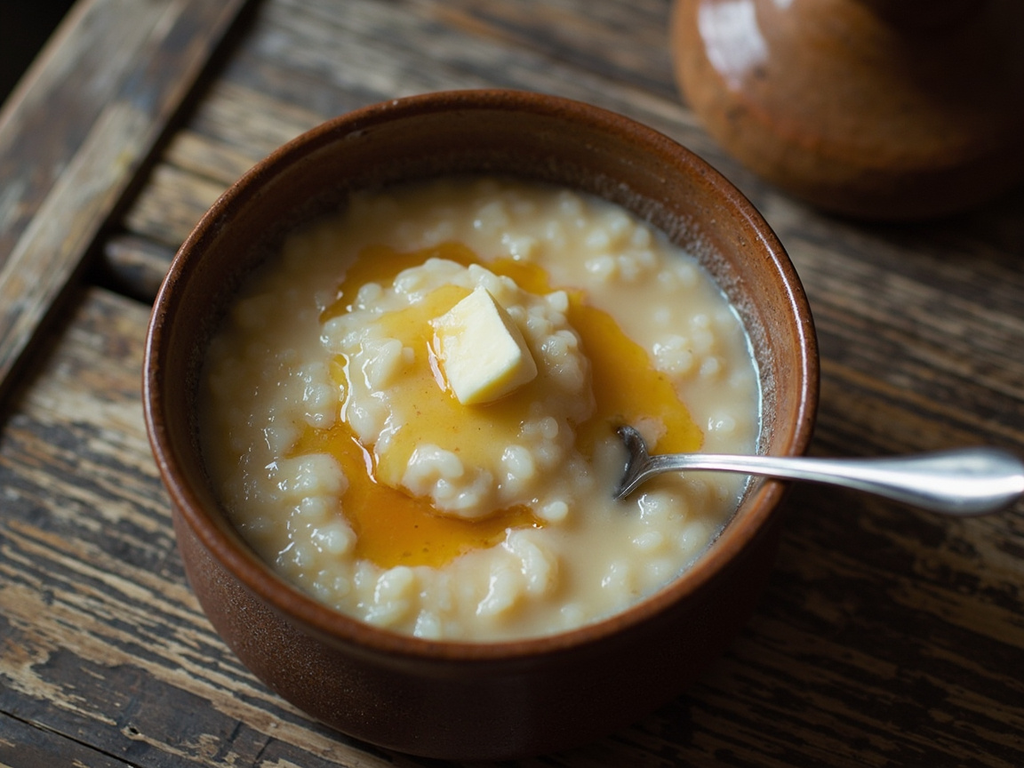
The contemporary twist : Serve in a brown earthenware bowl with a drizzle of honey and a grating of lemon zest: the 'philosopher's soup,' a milky comfort on a winter evening.
Baruch Spinoza · Charactorium