 flip
flipKlein bier — small table beer
Klein bier — small table beer
Why this dish? His contemporaries report that Spinoza drank a light beer to accompany his frugal meals. In a country where canal water was suspect, low-alcohol 'small beer' was the daily drink of everyone, from scholar to craftsman.
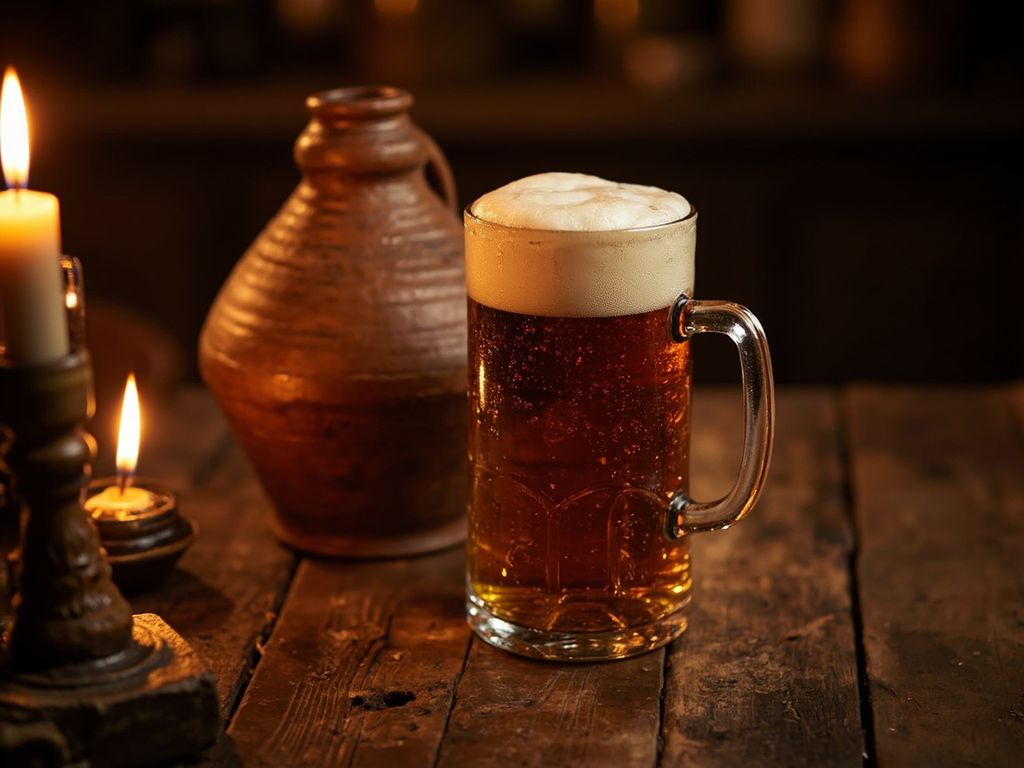
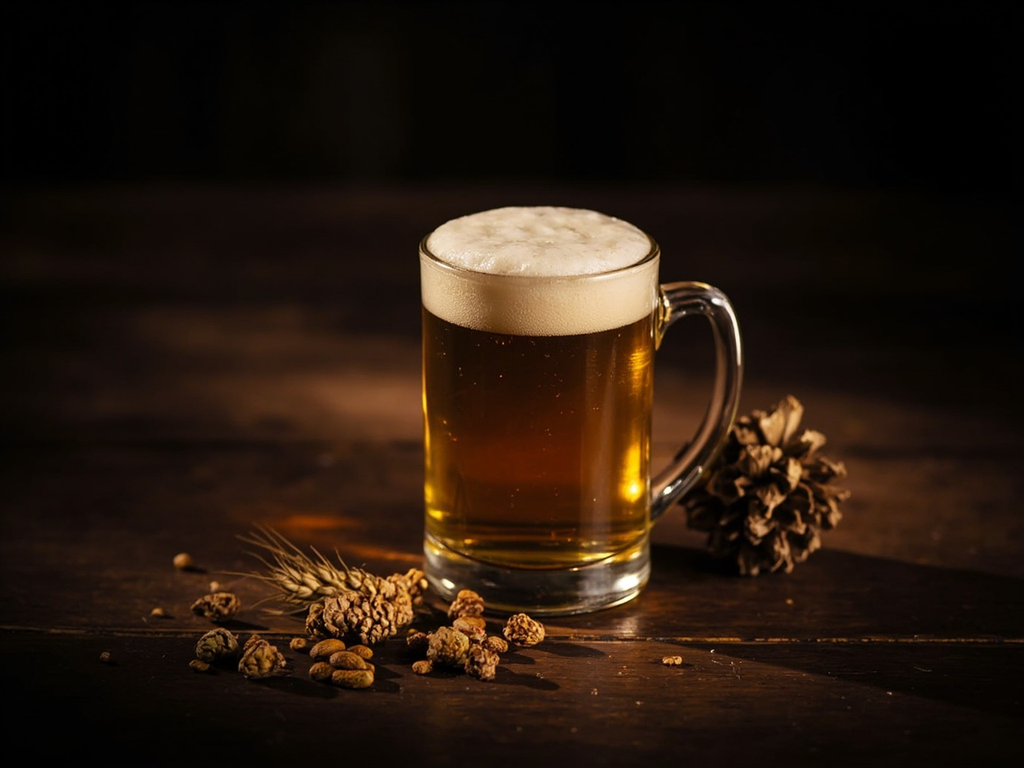
A mild, low-alcohol beer brewed from malted barley and a little hops: refreshing, slightly bitter, safe to drink. It is the jug of beer that kept the philosopher company at the corner of his table.
The water from our canals, I strongly advise against it: it troubles the belly and the humor. So, like everyone here, I drink a weak beer, barely fermented, which quenches thirst without weighing down the head — for I wish to keep my mind clear for my demonstrations. Half a pot suffices for my meal; drunkenness, which deprives man of the use of reason, is in my view the very opposite of freedom. Drink little, but drink healthily.
- •Malted barley — a good measure (fermentable sugars)
- •Hops — a handful (bitterness, preservation)
- •Spring or rainwater — as needed for the batch (base)
- •Yeast (from previous batch) — a little (fermentation)
Klein bier — small table beer
A mild, low-alcohol beer brewed from malted barley and a little hops: refreshing, slightly bitter, safe to drink. It is the jug of beer that kept the philosopher company at the corner of his table.
Why this dish? His contemporaries report that Spinoza drank a light beer to accompany his frugal meals. In a country where canal water was suspect, low-alcohol 'small beer' was the daily drink of everyone, from scholar to craftsman.
The water from our canals, I strongly advise against it: it troubles the belly and the humor. So, like everyone here, I drink a weak beer, barely fermented, which quenches thirst without weighing down the head — for I wish to keep my mind clear for my demonstrations. Half a pot suffices for my meal; drunkenness, which deprives man of the use of reason, is in my view the very opposite of freedom. Drink little, but drink healthily.
Ingredients (period version)
- Malted barley — a good measure (fermentable sugars)
- Hops — a handful (bitterness, preservation)
- Spring or rainwater — as needed for the batch (base)
- Yeast (from previous batch) — a little (fermentation)
Ingredients
- Light barley malt extract — 500 g (for ≈4 L) (sugars)
- Hop cones (Saaz type) — 10 g (bitterness)
- Water — 4 L (base)
- Lager yeast — 1 packet (fermentation)
Method
- Bring the water to a simmer and dissolve the malt extract, stirring to prevent sticking.
- Add the hops and boil gently for 45 minutes (the wort).
- Quickly cool the wort to 20 °C, transfer to a clean fermenter, and pitch the yeast.
- Let ferment for 4 to 6 days in the dark, until bubbling stops.
- Bottle with a teaspoon of sugar per liter for carbonation, and wait a week before drinking well chilled.
- (Adults only; in school, explain the process without tasting.)
How it was made : In the 17th century, 'klein bier' or 'scheepsbier' (ship's beer) had barely 1-2% ABV: it was given even to children, for lack of reliable drinking water. Every Dutch city had dozens of breweries, and Haarlem, Delft, and Gouda traded it widely. It was as much a food as a festive drink.
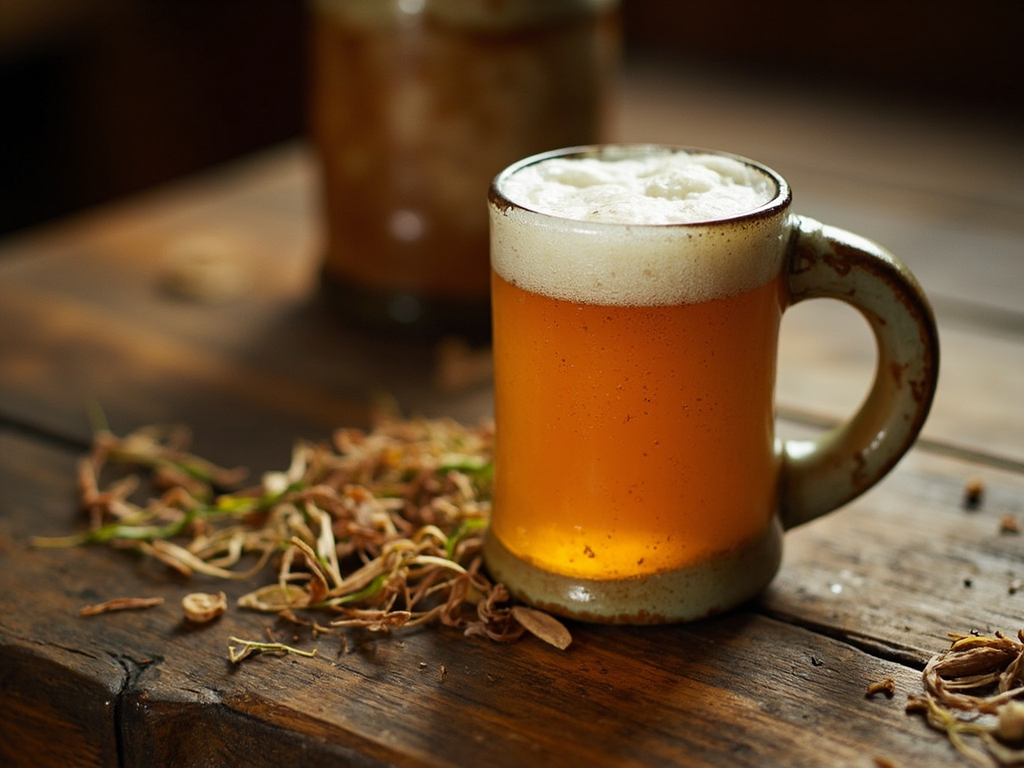
The contemporary twist : Serve in a glazed blue Delft stoneware mug, fine foam and white head: the 'philosopher's beer,' sober by principle.
Baruch Spinoza · Charactorium