 flip
flipAdafina — the Sephardic Sabbath pot (inspired by)
Adafina — the Sephardic Sabbath pot (inspired by)
Why this dish? Before his herem (excommunication) from the Portuguese synagogue in 1656, young Baruch grew up at the heart of Amsterdam's Sephardic community, fled from Spain and Portugal. The adafina — the ancestor of Iberian cholent — simmered on Friday night to be eaten on Saturday, without relighting the fire. It is the taste of the childhood he left behind.
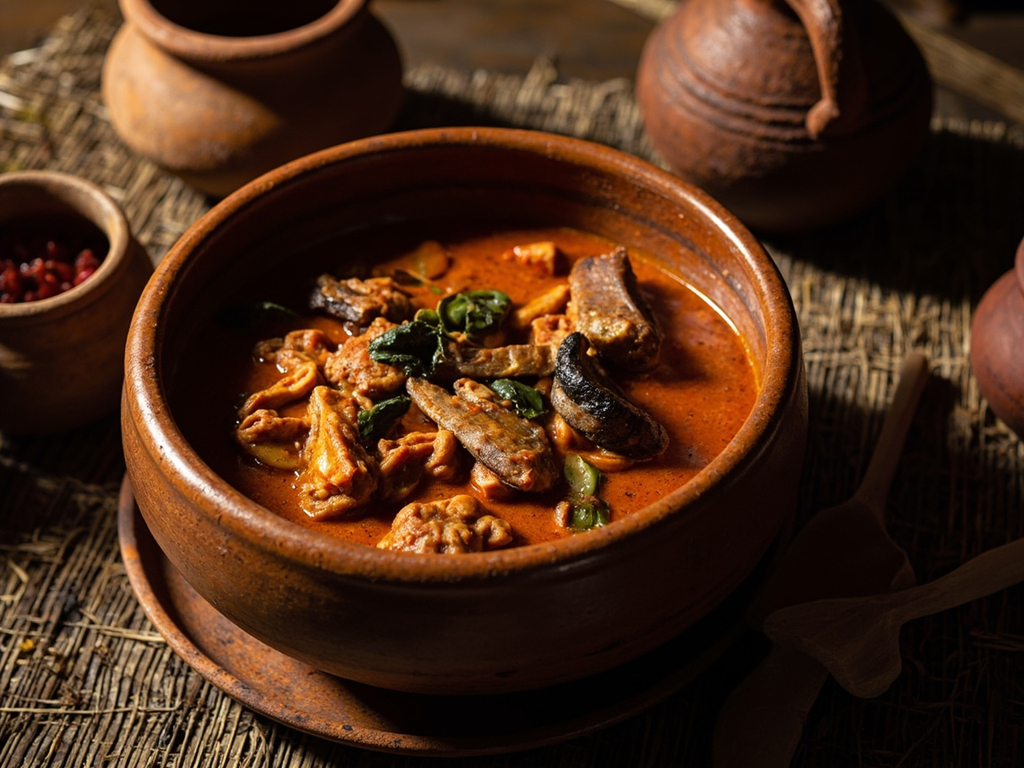
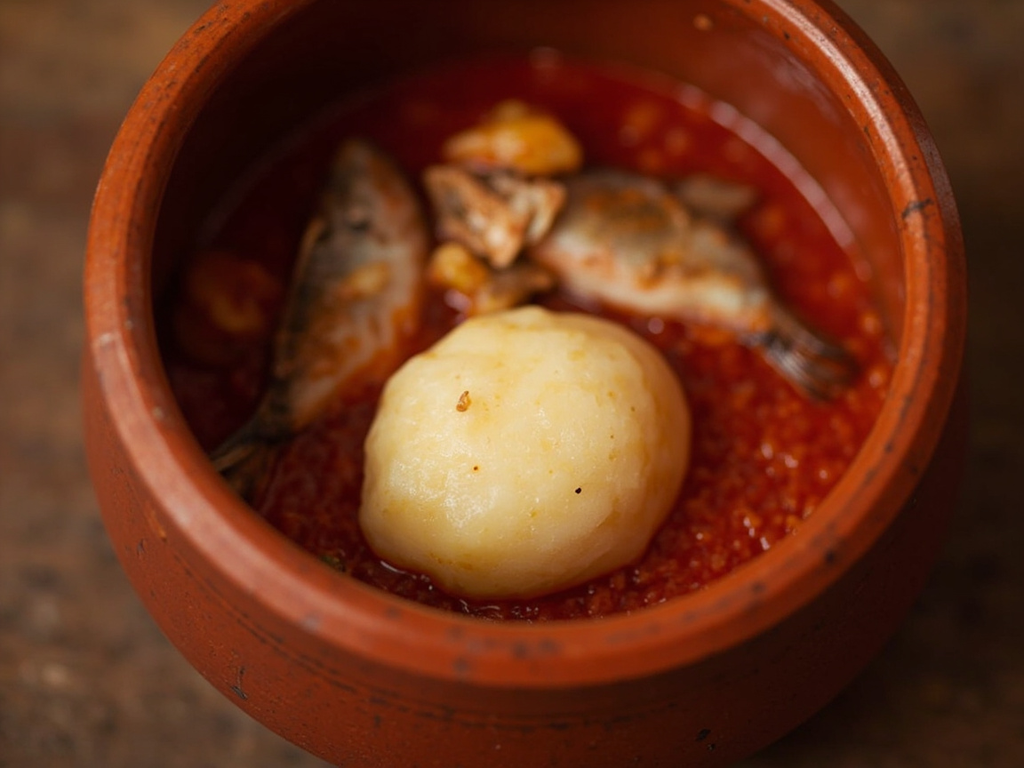
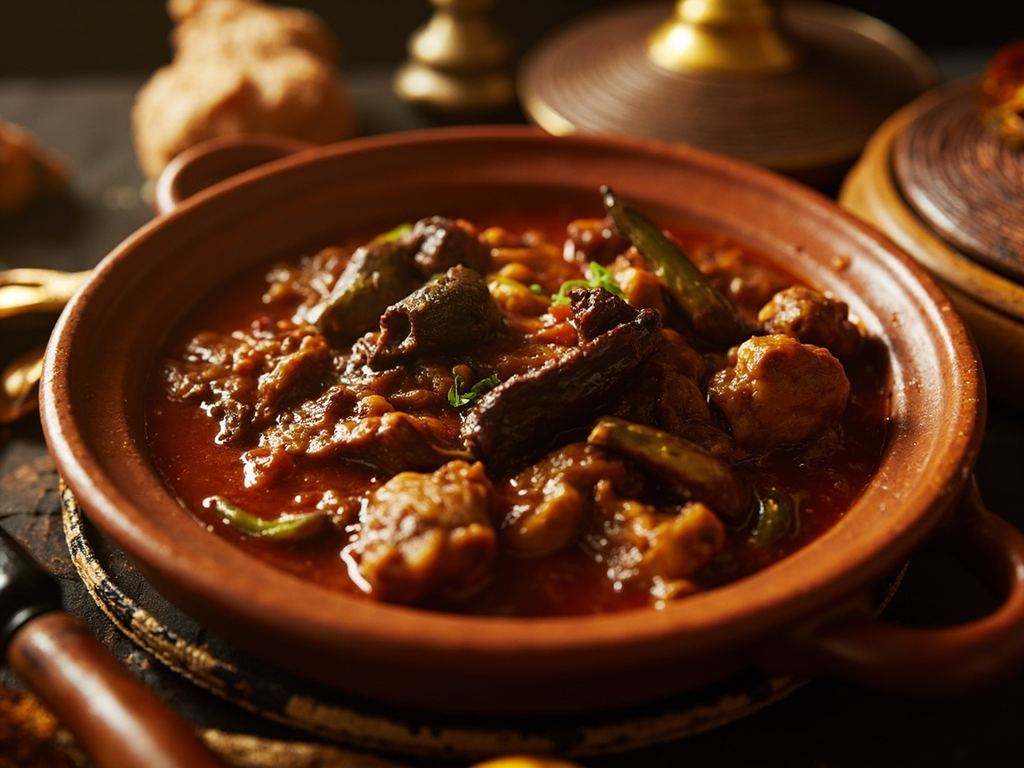
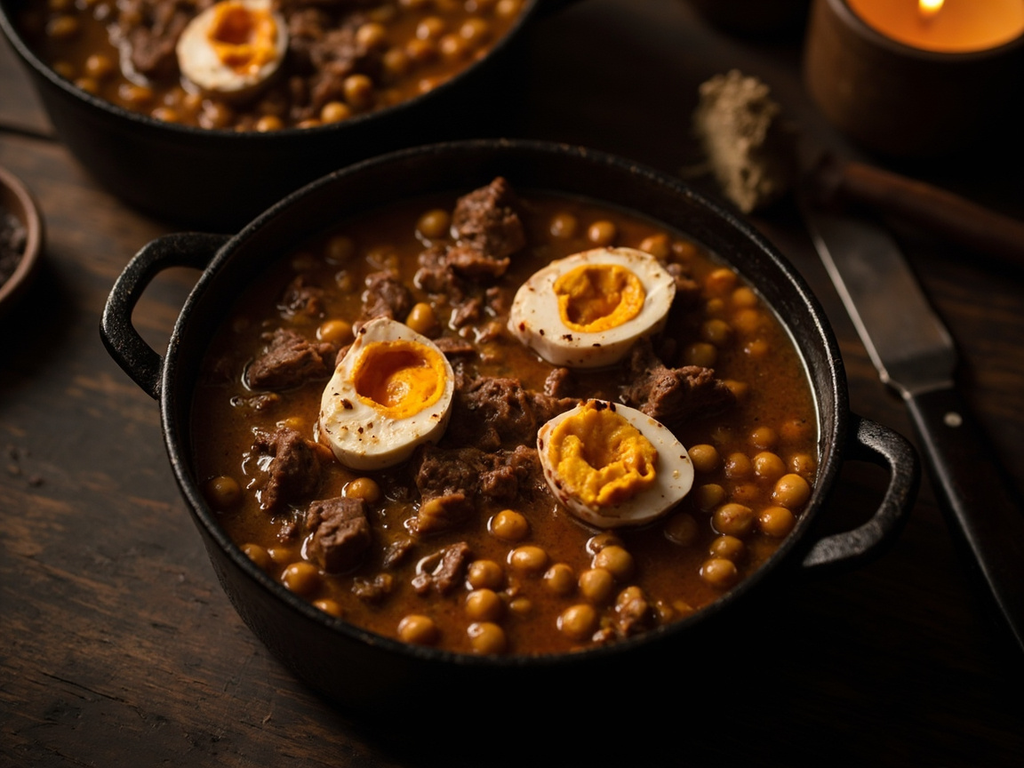
A slow stew of chickpeas, meat, and eggs cooked in their shells, scented with cumin and cinnamon, long-simmered over very low heat. Inspired by the Sabbath dish of Amsterdam's Portuguese Jews, without claiming to reproduce a sacred rite.
I am sometimes asked from which table I come, I whom the synagogue has cut off. As a child, in my father's house, a fruit merchant from the Levant, the pot of chickpeas and mutton cooked all Friday night, for no one lit a fire on the day of rest; in the morning, the eggs were brown and tender. I am no longer of that congregation, but I do not deny the wisdom of these patient dishes, where time itself does the work instead of the flame. Remember that custom, even when left behind, still holds its reason.
- •Chickpeas — two handfuls, soaked (base)
- •Mutton or beef for stewing — one piece (richness)
- •Whole eggs (in shell) — a few (symbolic garnish)
- •Onions — two (base)
- •Cumin, cinnamon — to taste (Sephardic spices)
- •Cracked wheat or barley — a handful (thickener, optional)
- •Salt — to taste (seasoning)
Adafina — the Sephardic Sabbath pot (inspired by)
A slow stew of chickpeas, meat, and eggs cooked in their shells, scented with cumin and cinnamon, long-simmered over very low heat. Inspired by the Sabbath dish of Amsterdam's Portuguese Jews, without claiming to reproduce a sacred rite.
Why this dish? Before his herem (excommunication) from the Portuguese synagogue in 1656, young Baruch grew up at the heart of Amsterdam's Sephardic community, fled from Spain and Portugal. The adafina — the ancestor of Iberian cholent — simmered on Friday night to be eaten on Saturday, without relighting the fire. It is the taste of the childhood he left behind.
I am sometimes asked from which table I come, I whom the synagogue has cut off. As a child, in my father's house, a fruit merchant from the Levant, the pot of chickpeas and mutton cooked all Friday night, for no one lit a fire on the day of rest; in the morning, the eggs were brown and tender. I am no longer of that congregation, but I do not deny the wisdom of these patient dishes, where time itself does the work instead of the flame. Remember that custom, even when left behind, still holds its reason.
Ingredients (period version)
- Chickpeas — two handfuls, soaked (base)
- Mutton or beef for stewing — one piece (richness)
- Whole eggs (in shell) — a few (symbolic garnish)
- Onions — two (base)
- Cumin, cinnamon — to taste (Sephardic spices)
- Cracked wheat or barley — a handful (thickener, optional)
- Salt — to taste (seasoning)
Ingredients
- Dried chickpeas (soaked 12 h) — 250 g (base)
- Beef chuck or lamb shoulder — 500 g (richness)
- Eggs — 4 whole, washed (symbolic garnish)
- Onions — 2 large, sliced (base)
- Ground cumin — 1 tsp (spice)
- Cinnamon — 1/2 tsp (spice)
- Pearl barley — 60 g (optional) (thickener)
- Salt, pepper — to taste (seasoning)
Method
- Sauté the sliced onions in a little fat in a cast-iron pot.
- Add the meat, sear on all sides, then stir in the drained chickpeas, barley, cumin, and cinnamon.
- Cover generously with water, season lightly with salt, and slide the whole eggs (washed, in their shells) between the ingredients.
- Bring to a simmer, cover, then place in the oven at 110 °C (or on the smallest flame) for 6 to 8 hours, without stirring.
- When serving, shell the eggs (now brown and creamy) and present them in the center of the stew.
How it was made : Iberian Jews carried the adafina (from Arabic 'what is buried') through exile; in Amsterdam, the wealthy 'Portuguese' community cooked it from Friday evening to observe the prohibition of lighting fire on Saturday. The eggs, cooked for hours in the broth, took on an amber color and a melting texture characteristic of the dish.
The contemporary twist : Present each brown egg halved on top of the stew like a little amber sun, with a drizzle of olive oil and a pinch of toasted cumin.
Baruch Spinoza · Charactorium