 flip
flipMorning Oat Porridge
Morning Oat Porridge
Why this dish? Montgomery led a life of iron sobriety: simple, regular meals, no alcohol or tobacco. Porridge — morning oatmeal, a pillar of the British breakfast and food of camps and colleges alike — perfectly embodies this dietary discipline that set him apart from the bon vivant officers of his time.
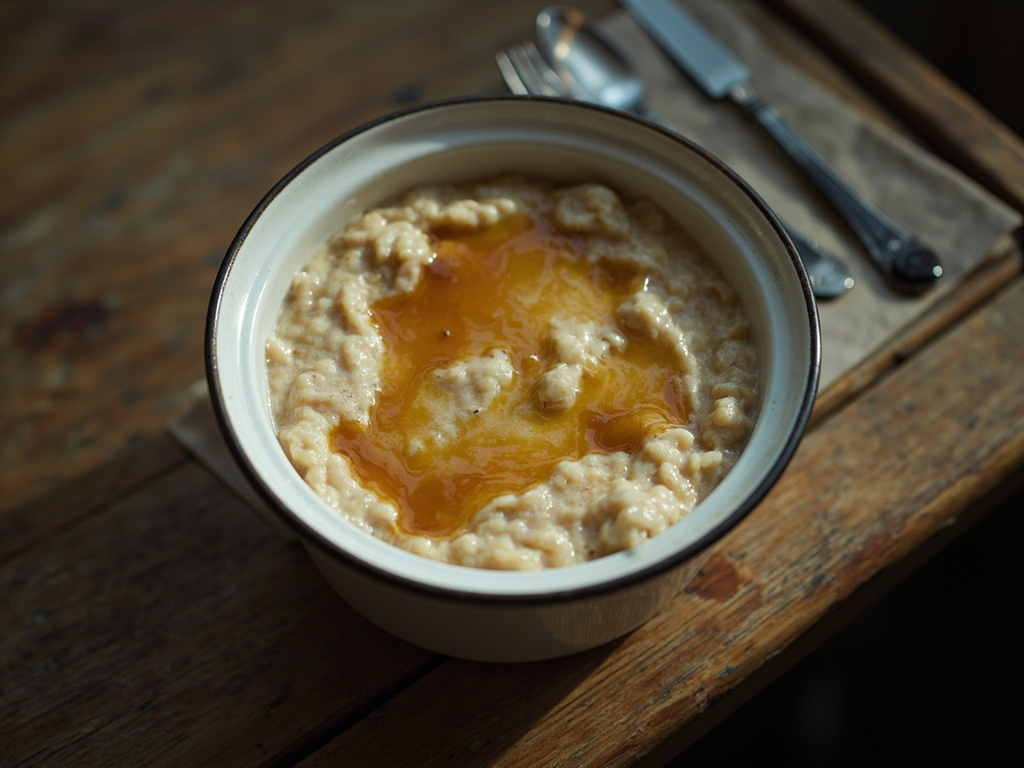
A warm, smooth oatmeal, moistened with a little milk and brightened with a pinch of sugar. Restorative, cheap, quick to prepare: the austere breakfast of a man who rose early and insisted on order in all things.
I never understood an officer starting his day on an empty stomach or with a head heavy from the night before. At my table, it's porridge at six o'clock, no more, no less: oats, water, a pinch of salt, and you stir without pause until the thing holds to the spoon. No alcohol, no tobacco, nothing that softens the mind — a disciplined man feeds himself with the same rigour with which he commands. Hold the spoon straight and eat: you don't win a battle on an empty stomach.
- •Rolled oats — a good handful per person (base)
- •Water — to cover generously (cooking)
- •Salt — a pinch (seasoning)
- •Milk — a splash (binding)
- •Sugar or golden syrup — to taste (sweetness)
Morning Oat Porridge
A warm, smooth oatmeal, moistened with a little milk and brightened with a pinch of sugar. Restorative, cheap, quick to prepare: the austere breakfast of a man who rose early and insisted on order in all things.
Why this dish? Montgomery led a life of iron sobriety: simple, regular meals, no alcohol or tobacco. Porridge — morning oatmeal, a pillar of the British breakfast and food of camps and colleges alike — perfectly embodies this dietary discipline that set him apart from the bon vivant officers of his time.
I never understood an officer starting his day on an empty stomach or with a head heavy from the night before. At my table, it's porridge at six o'clock, no more, no less: oats, water, a pinch of salt, and you stir without pause until the thing holds to the spoon. No alcohol, no tobacco, nothing that softens the mind — a disciplined man feeds himself with the same rigour with which he commands. Hold the spoon straight and eat: you don't win a battle on an empty stomach.
Ingredients (period version)
- Rolled oats — a good handful per person (base)
- Water — to cover generously (cooking)
- Salt — a pinch (seasoning)
- Milk — a splash (binding)
- Sugar or golden syrup — to taste (sweetness)
Ingredients
- Rolled oats — 60 g (base)
- Water — 300 ml (cooking)
- Milk — 100 ml (binding)
- Salt — 1 pinch (seasoning)
- Brown sugar or golden syrup — 1 teaspoon (sweetness)
Method
- Pour the oats, water, and pinch of salt into a saucepan.
- Bring to a simmer, stirring constantly to avoid lumps.
- Cook for 5 to 8 minutes until creamy.
- Add the milk, stir, then pour into a bowl.
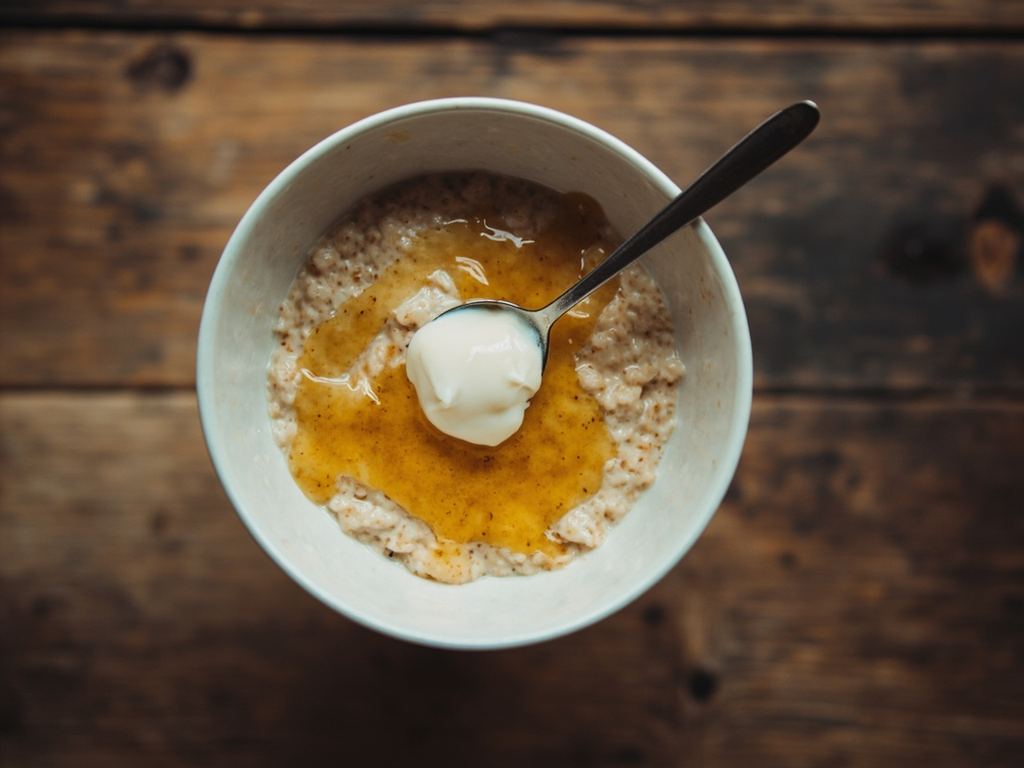
- Sweeten with a drizzle of golden syrup or a spoonful of brown sugar and serve piping hot.
How it was made : Porridge was a universal food in pre-war and wartime Britain: cheap, filling, and oats were not rationed like white bread. It was cooked slowly over low heat, traditionally salted in Scotland, sweetened or topped with golden syrup in England.
The contemporary twist : Serve it 'Field Marshal style': perfectly smoothed surface, a groove of syrup traced straight down the centre — order even in the bowl.
Sources : Norman Longmate, *How We Lived Then: A History of Everyday Life During the Second World War* (1971)
Bernard Montgomery · Charactorium