 Flip the card
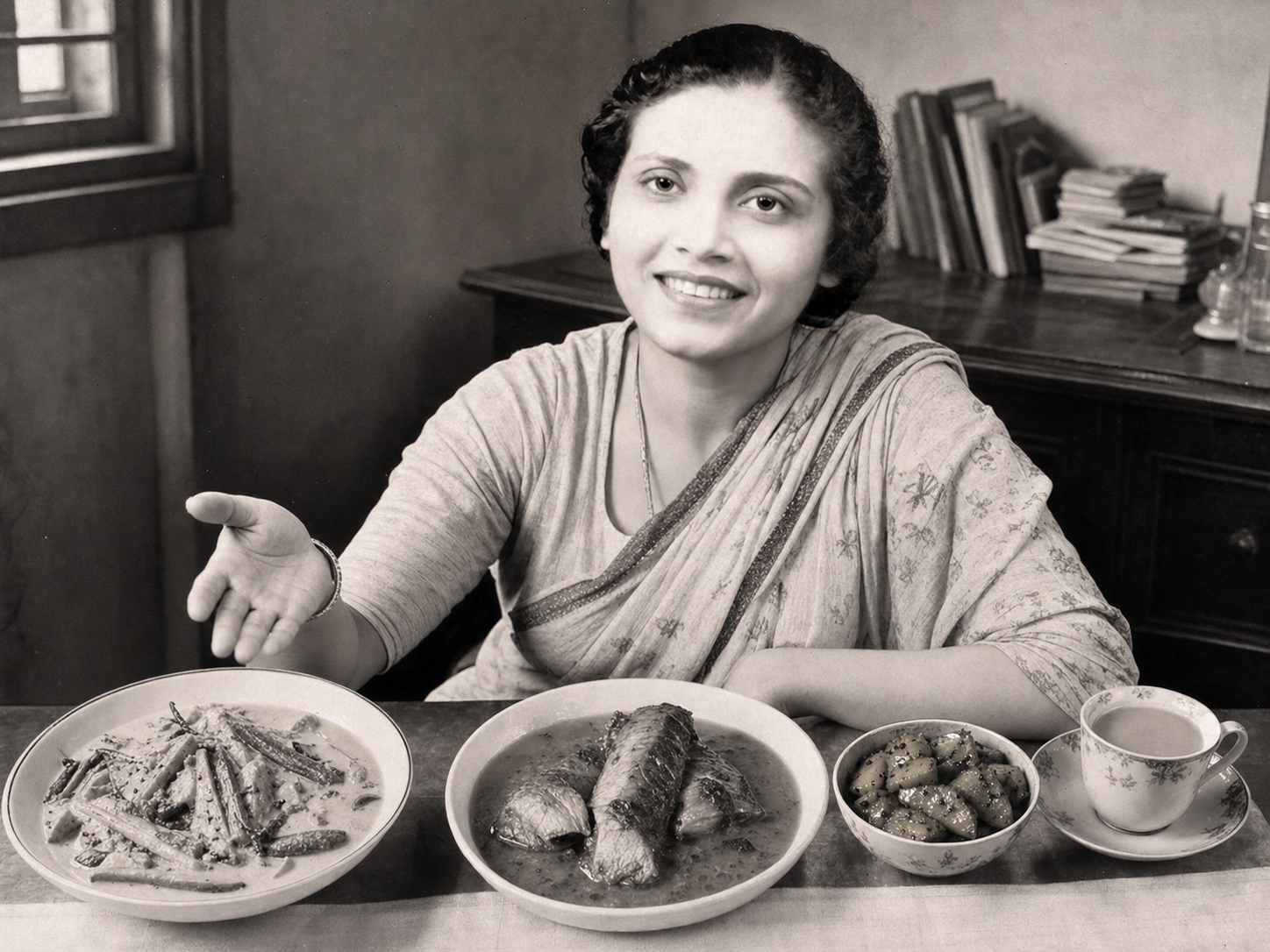
Bibha Chowdhuri at the table
1913 — 1991
On the menu
Bangali bhat — the Bengali meal served in sequence
The Bengali meal is not organized as starter-main-dessert but as a succession of small services arranged around a large mound of rice on a bronze plate (kansa) or a banana leaf. One always begins with the bitter (shukto) to awaken the palate, then come the dal, sautéed vegetables and fritters, river fish in sauce, and one finishes with the sourness of chutney followed by sweets (mishti, payesh). Tea accompanies the morning and the end of the day. This bitter-sweet-sour-sweet grammar structured the daily table of an affluent Bengali family like the one where Bibha Chowdhuri grew up.
Signature : Panch phoron and mustard oil (sorser tel)
Two inseparable signatures of Bengali cuisine: pungent mustard oil, heated until it loses its harshness, and panch phoron — a blend of five whole seeds (cumin, nigella, fennel, fenugreek, black mustard) thrown into hot oil to release a warm, slightly bitter aroma that perfumes vegetables and fish.
click to flip back
Bibha Chowdhuri at the table
1913 — 1991
5 period recipes
 Everyday
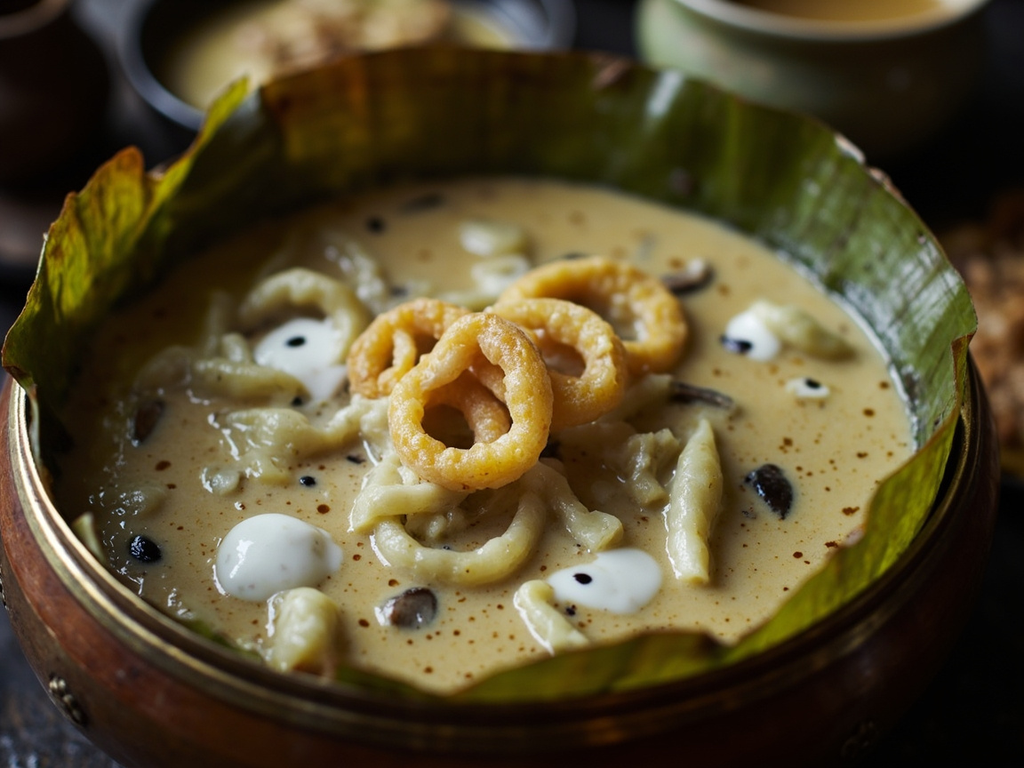
Shukto — the bitter sautéed opening
First service of bangali bhat (the bitter that opens the meal)
☕· 45 min
View the recipe
 Everyday
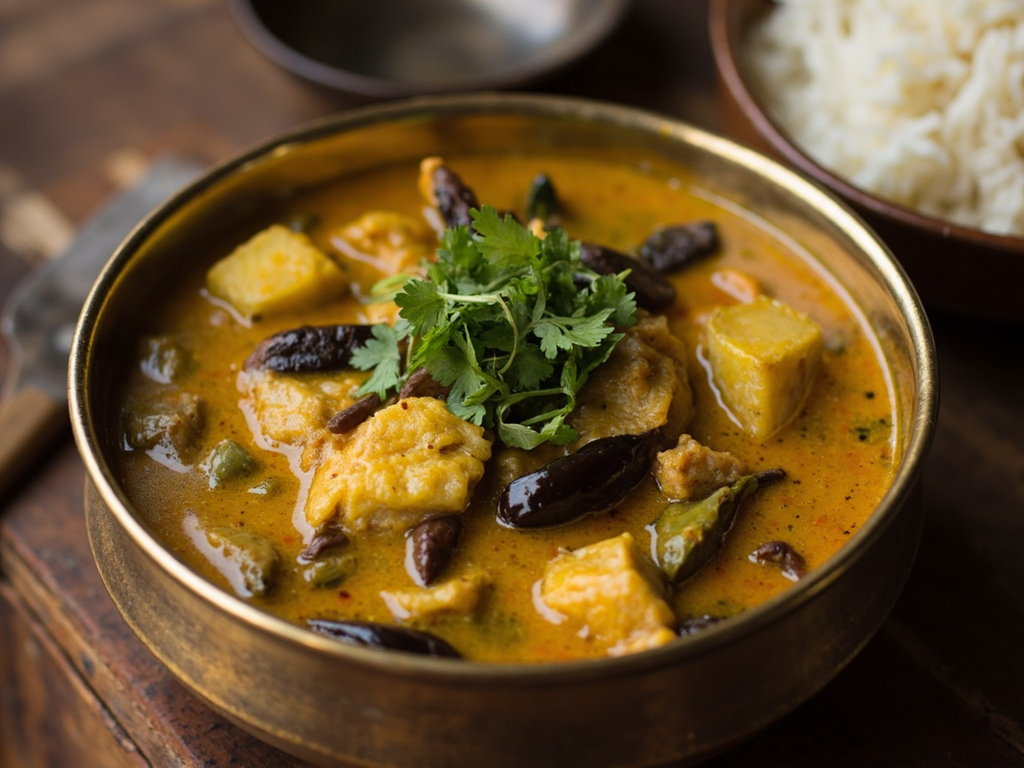
Macher jhol — the river fish broth
Main service of bangali bhat (fish, heart of the meal)
🧂 🍄· 40 min
View the recipe
 Preserving
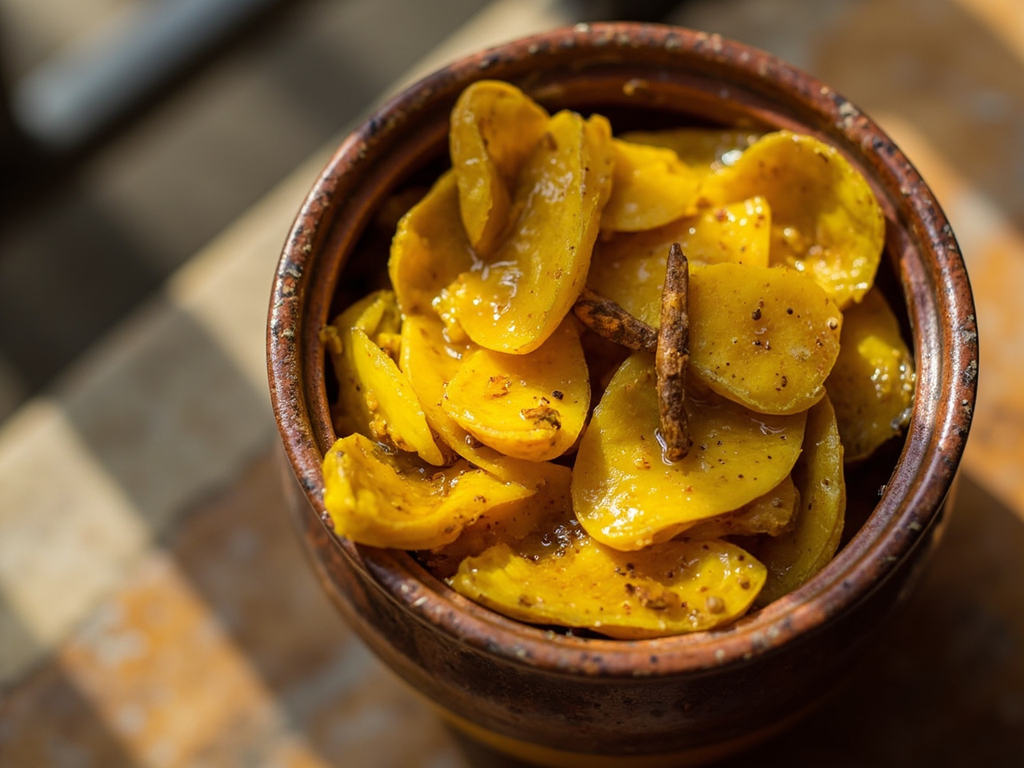
Aamer achar — green mango pickle with panch phoron
Achar / preserving condiment (keeps for months, served in small touches)
🍋 🌶️· 30 min + 2 days drying
View the recipe
 Drink
DrinkCha — the Bengali laboratory tea
Daily beverage (morning and end of day, accompanied by biscuits)
🍯 🌶️· 10 min
View the recipe
 Festive
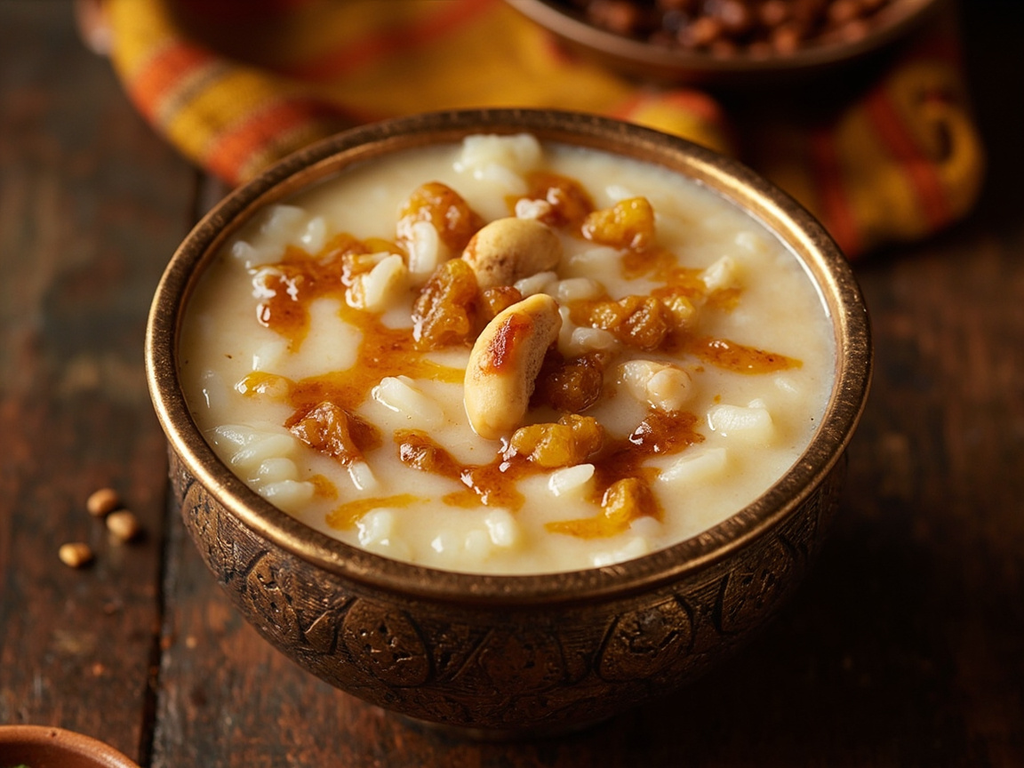
Payesh — the rice pudding of happy days
Mishti final / festive sweet (sweet closure of birthdays and achievements)
🍯· 1 h
View the recipe