 flip
flipShukto — the bitter sautéed opening
Shukto — the bitter sautéed opening
Why this dish? In every Bengali family, the meal opens with the bitterness of shukto, meant to stimulate the appetite and cleanse the palate. Bibha Chowdhuri, raised in Calcutta in a cultured Bengali milieu, experienced this ritual first service every day before rice and fish.
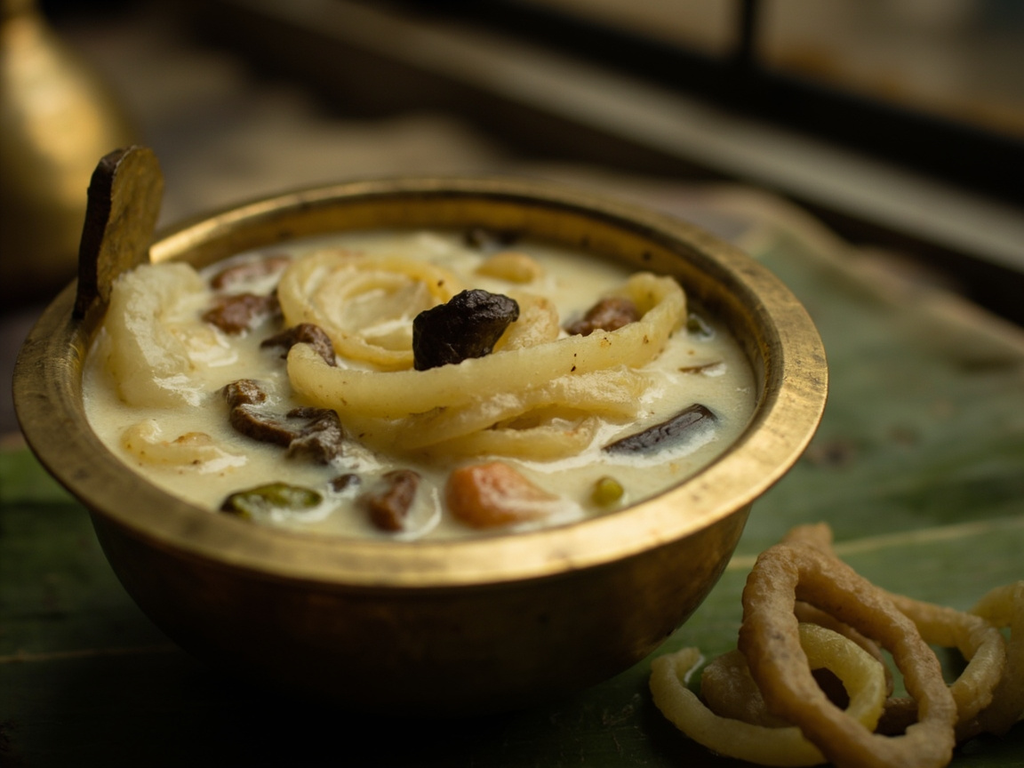
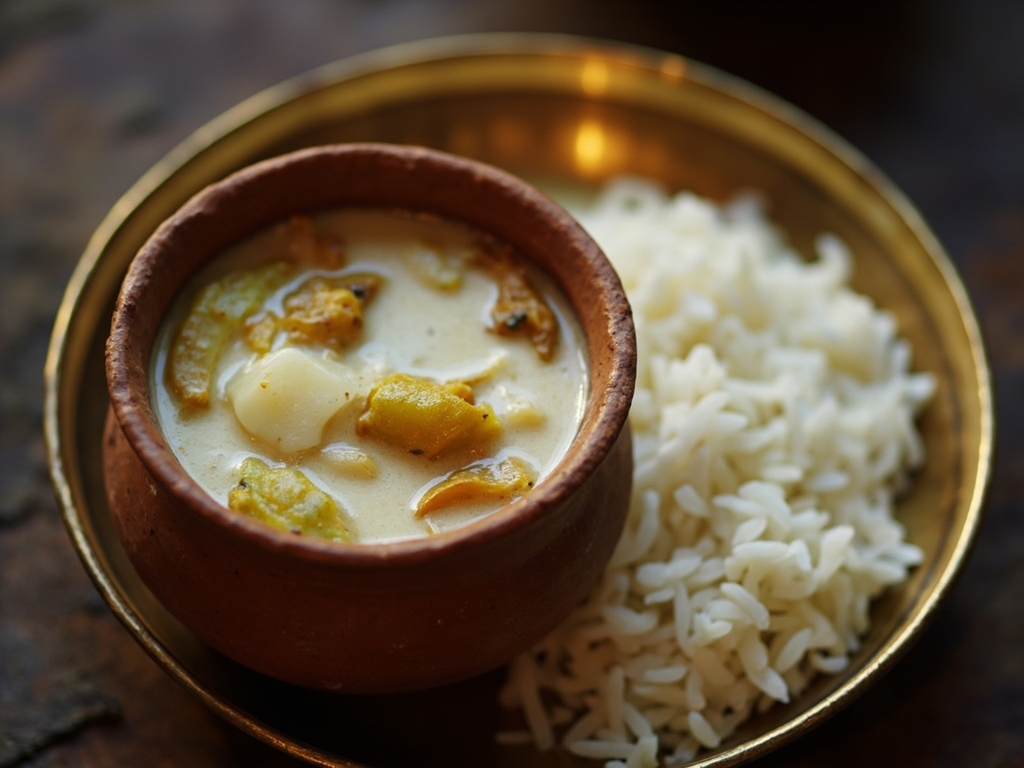
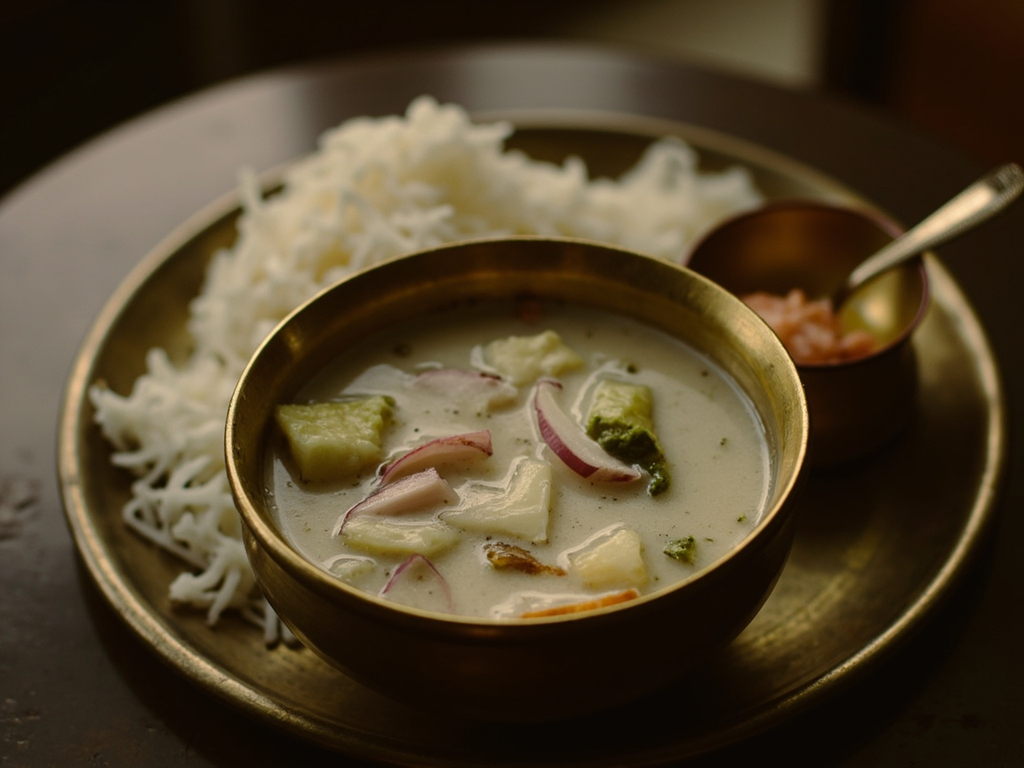
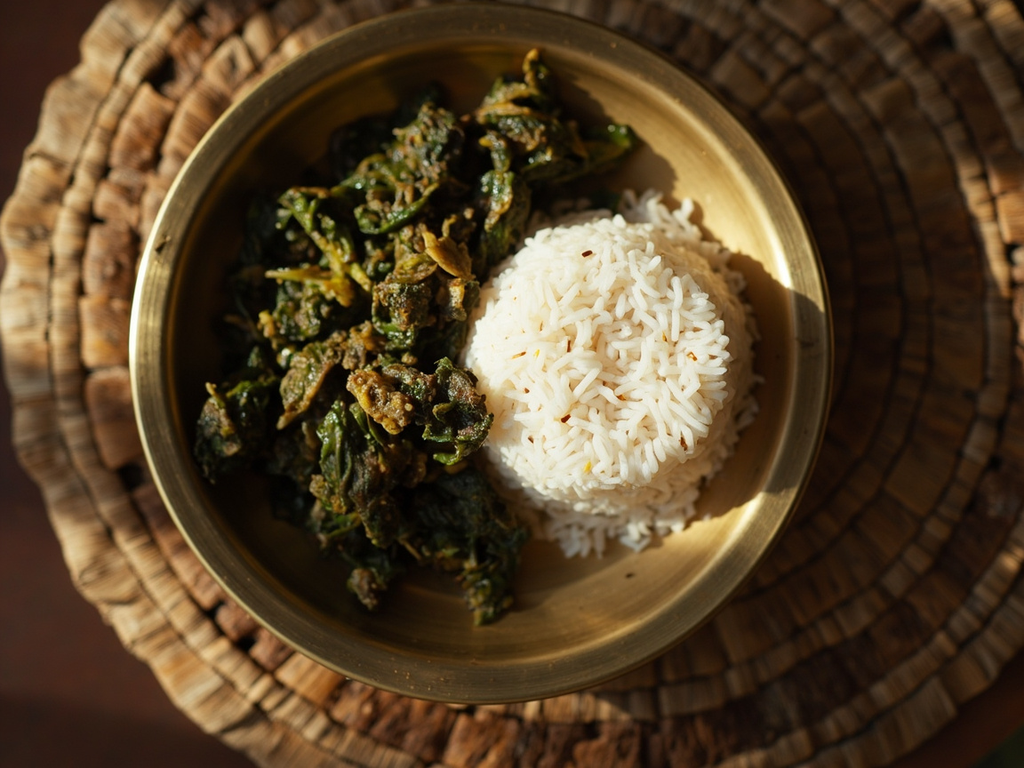
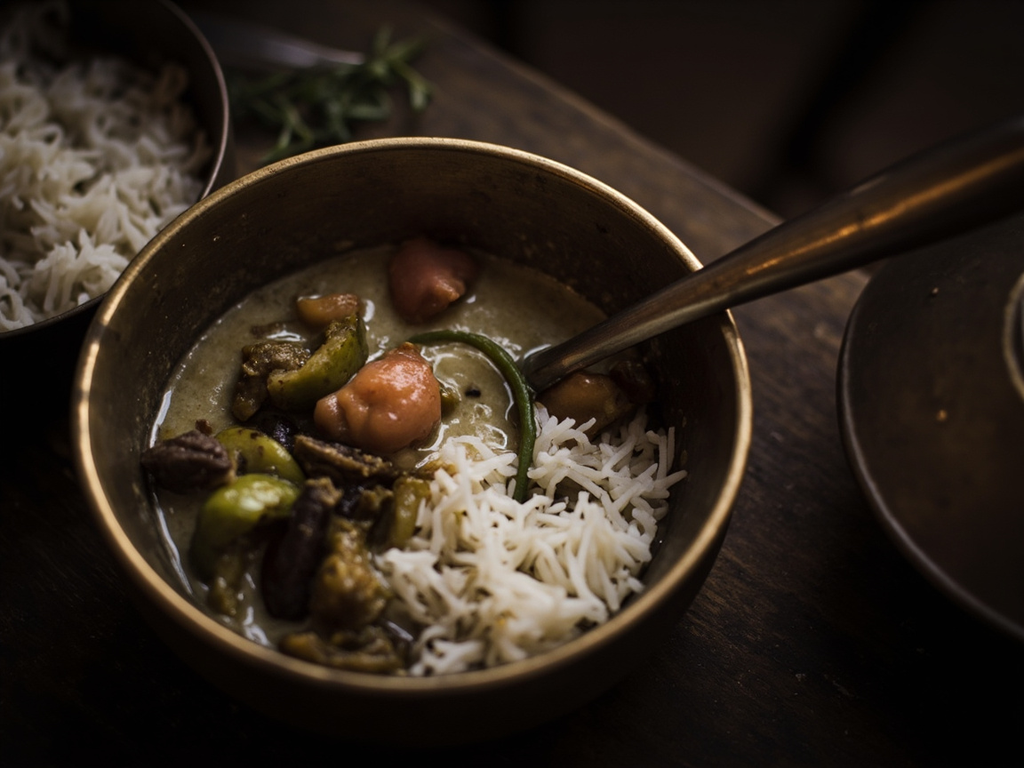
A mixture of vegetables — including the essential bitter gourd (korola) — gently simmered in a white sauce of milk, lightly thickened with mustard and poppy seed paste, perfumed with ginger and radhuni. The bitterness is tamed but never erased: it is the service that awakens the mouth.
You see, at home the meal could not begin otherwise than with the bitter. My mother said you must first awaken the tongue before satisfying it. We chose the greenest korola, sautéed it in mustard oil until the harshness left, then covered it with milk and waited, without rushing — patience, there as in the laboratory, does everything. One spoonful, and the rice that follows is all the more tender.
- •Bitter gourd (korola/uchche) — a few, sliced into rounds (central bitterness)
- •Eggplant, green plantain, white radish — equal parts (sauté vegetables)
- •Mustard oil — a generous drizzle (signature fat)
- •Mustard and poppy seed paste — one spoonful (thickener and flavor)
- •Fresh ginger — a piece, grated (aromatic)
- •Radhuni or celery seeds, panch phoron — a pinch (whole spices)
- •Milk — one bowl (mild sauce)
- •Ghee — a knob (finishing)
Shukto — the bitter sautéed opening
A mixture of vegetables — including the essential bitter gourd (korola) — gently simmered in a white sauce of milk, lightly thickened with mustard and poppy seed paste, perfumed with ginger and radhuni. The bitterness is tamed but never erased: it is the service that awakens the mouth.
Why this dish? In every Bengali family, the meal opens with the bitterness of shukto, meant to stimulate the appetite and cleanse the palate. Bibha Chowdhuri, raised in Calcutta in a cultured Bengali milieu, experienced this ritual first service every day before rice and fish.
You see, at home the meal could not begin otherwise than with the bitter. My mother said you must first awaken the tongue before satisfying it. We chose the greenest korola, sautéed it in mustard oil until the harshness left, then covered it with milk and waited, without rushing — patience, there as in the laboratory, does everything. One spoonful, and the rice that follows is all the more tender.
Ingredients (period version)
- Bitter gourd (korola/uchche) — a few, sliced into rounds (central bitterness)
- Eggplant, green plantain, white radish — equal parts (sauté vegetables)
- Mustard oil — a generous drizzle (signature fat)
- Mustard and poppy seed paste — one spoonful (thickener and flavor)
- Fresh ginger — a piece, grated (aromatic)
- Radhuni or celery seeds, panch phoron — a pinch (whole spices)
- Milk — one bowl (mild sauce)
- Ghee — a knob (finishing)
Ingredients
- Bitter gourd (korola) — 2 small (central bitterness)
- Eggplant — 1 small (vegetable)
- Green plantain — 1/2 (vegetable)
- White radish (daikon) — 1 section (vegetable)
- Mustard oil — 3 tbsp (fat)
- Mustard seeds + white poppy seeds — 1 tbsp each, made into paste (thickener)
- Grated ginger — 1 tsp (aromatic)
- Panch phoron — 1/2 tsp (whole spices)
- Whole milk — 250 ml (sauce)
- Ghee — 1 tsp (finishing)
- Salt — to taste (seasoning)
Method
- Cut all vegetables into uniform sticks. Salt the bitter gourd and let it sit for 10 minutes to reduce bitterness, then rinse.
- Heat mustard oil until it lightly smokes, fry the bitter gourd until golden; set aside.
- In the same oil, sauté panch phoron and then the other vegetables for a few minutes.
- Add ginger, the mustard-poppy paste diluted in a little water, and cook covered.
- Pour in milk, salt, and simmer gently until vegetables are tender and the sauce coats.
- Return the bitter gourd, finish with a knob of ghee and a pinch of toasted panch phoron. Serve warm, first.
How it was made : Shukto was prepared without tomato or hot chili: its bitterness came from the vegetables themselves, and its thickener from mustard and poppy seeds ground on the sil-nora (stone mortar). Milk replaced any cream, and homemade ghee marked the finish.
The contemporary twist : Serve in warm shot glasses as an appetizer as a nod to 'bitter-wellness', playing on the milk-mustard contrast that modern plant-based cuisine is rediscovering.
Sources : Chitrita Banerji, 'Life and Food in Bengal' (1991) · Bunny Gupta & Jaya Chaliha, traditional Bengali cuisine
Bibha Chowdhuri · Charactorium