 flip
flipPayesh — the rice pudding of happy days
Payesh — the rice pudding of happy days
Why this dish? In Bengal, no birthday, no achievement is celebrated without payesh: it is prepared for births, passed exams, auspicious days. In an affluent Bengali family like Bibha Chowdhuri's, this fragrant rice pudding crowned great occasions — perhaps also the day the young woman earned her master's degree in physics in 1936.
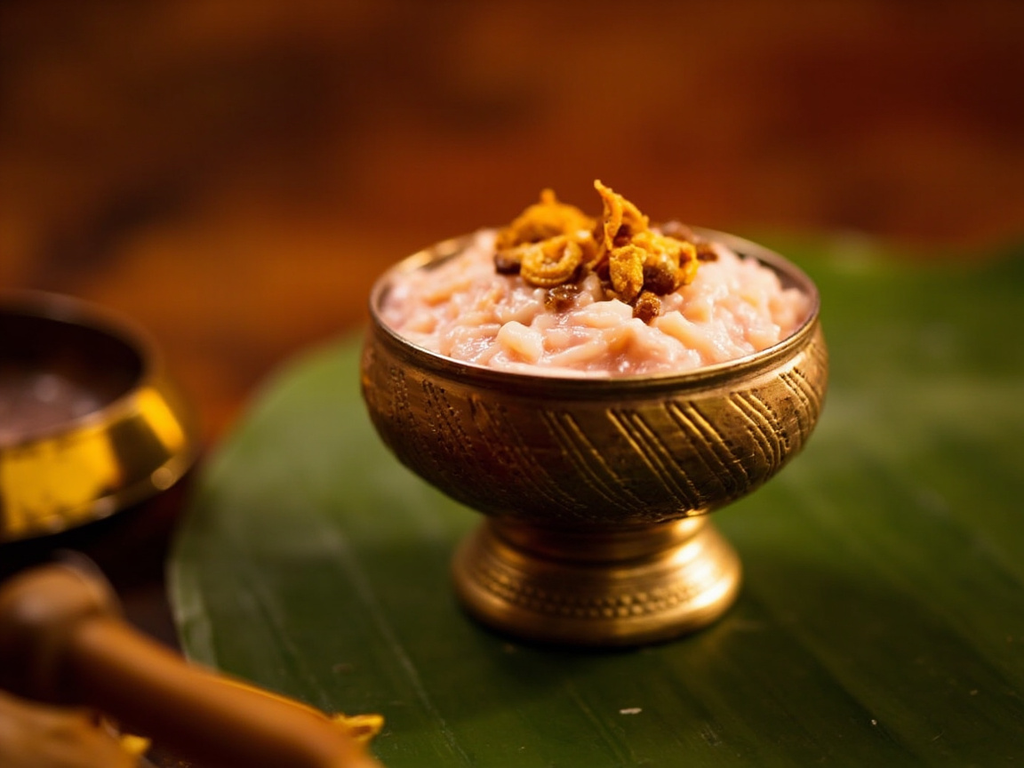
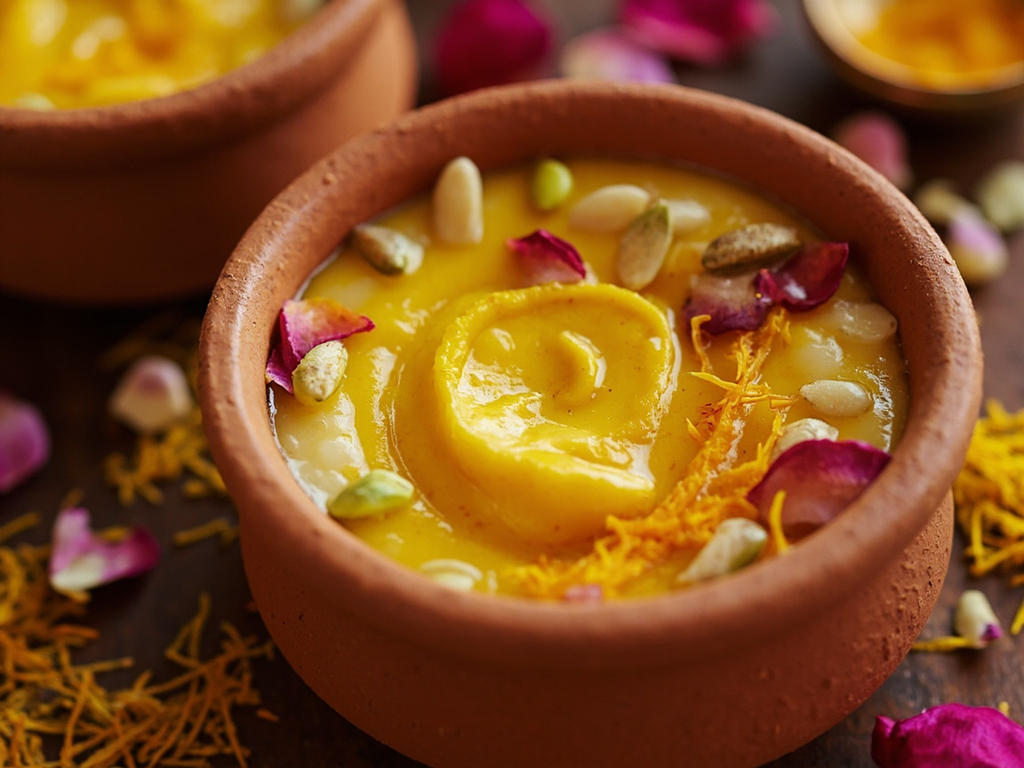
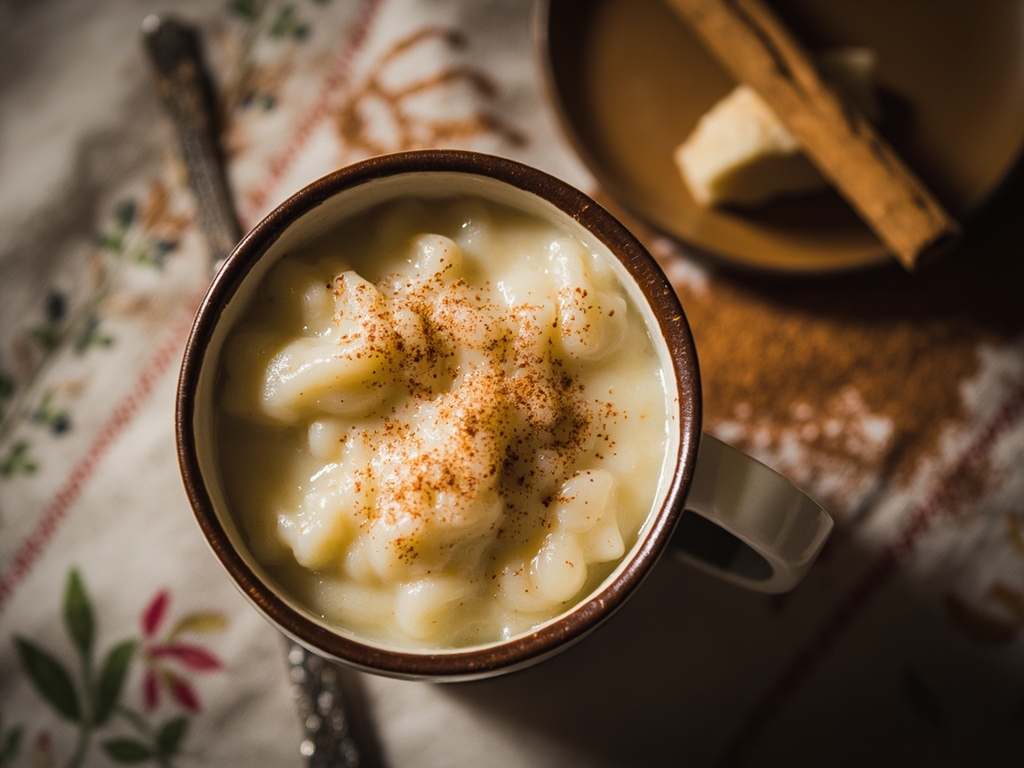
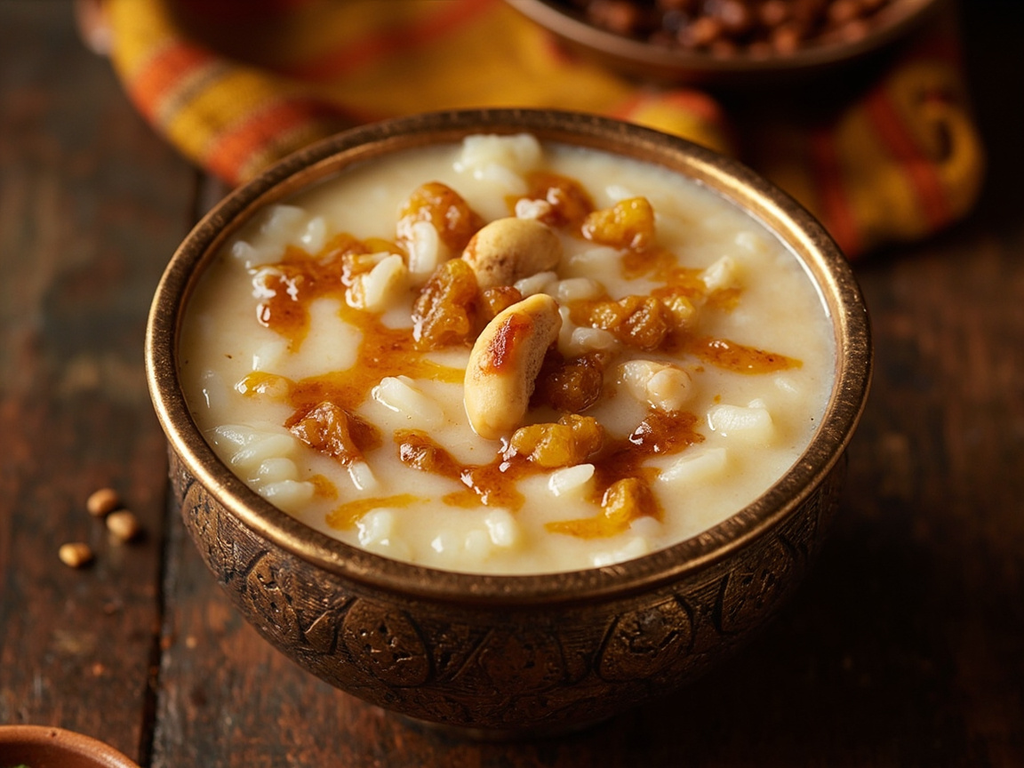
A long, patient rice pudding: fragrant rice melted into milk slowly reduced, sweetened with palm sugar (nolen gur) or sugar, sprinkled with cardamom, raisins, and cashews. Creamy, golden, deeply comforting.
Payesh, you see, cannot be rushed. You must stir the milk over a low flame for a long, long time, until it thickens and takes on that ivory hue. My family prepared it for every happy day — a birthday, a passed exam. When I earned my degree, I was served a bowl perfumed with palm gur, and I assure you no solved equation ever tasted sweeter.
- •Fragrant rice (gobindobhog) — a handful (base)
- •Whole milk — in large quantity (creamy body)
- •Palm sugar (nolen gur) or sugar — to taste (sweetness)
- •Cardamom, bay leaf — a touch (flavor)
- •Raisins, cashews — a handful (garnish)
Payesh — the rice pudding of happy days
A long, patient rice pudding: fragrant rice melted into milk slowly reduced, sweetened with palm sugar (nolen gur) or sugar, sprinkled with cardamom, raisins, and cashews. Creamy, golden, deeply comforting.
Why this dish? In Bengal, no birthday, no achievement is celebrated without payesh: it is prepared for births, passed exams, auspicious days. In an affluent Bengali family like Bibha Chowdhuri's, this fragrant rice pudding crowned great occasions — perhaps also the day the young woman earned her master's degree in physics in 1936.
Payesh, you see, cannot be rushed. You must stir the milk over a low flame for a long, long time, until it thickens and takes on that ivory hue. My family prepared it for every happy day — a birthday, a passed exam. When I earned my degree, I was served a bowl perfumed with palm gur, and I assure you no solved equation ever tasted sweeter.
Ingredients (period version)
- Fragrant rice (gobindobhog) — a handful (base)
- Whole milk — in large quantity (creamy body)
- Palm sugar (nolen gur) or sugar — to taste (sweetness)
- Cardamom, bay leaf — a touch (flavor)
- Raisins, cashews — a handful (garnish)
Ingredients
- Short-grain fragrant rice (gobindobhog or broken basmati) — 60 g (base)
- Whole milk — 1 liter (body)
- Palm sugar (gur) or sugar — 80 g (sweetness)
- Green cardamom — 3 pods (flavor)
- Bay leaf — 1 (flavor)
- Raisins — 1 tbsp (garnish)
- Cashews — 1 tbsp (garnish)
- Ghee — 1 tsp (flavor)
Method
- Rinse the rice and soak for 20 min; drain and rub with a little ghee.
- Bring milk to a boil with cardamom and bay leaf, then lower the heat.
- Add rice and cook on low heat, stirring often, until milk reduces and rice is soft (40-50 min).
- Fry raisins and cashews in a little ghee, then add them.
- Off heat (to prevent curdling), stir in palm sugar and mix well.
- Let cool slightly: payesh thickens as it cools. Serve warm or chilled, in bowls, on festive days.
How it was made : Payesh was cooked in wide bronze karai over a charcoal fire, stirred tirelessly for hours. Nolen gur, winter palm sugar harvested from the date palm sap, gave it an amber color and a fragrance found nowhere else.
The contemporary twist : Serve in individual verrines with a drizzle of warm nolen gur and a few toasted cashews — a Bengali rice pudding for a contemporary festive table.
Sources : Chitrita Banerji, 'Life and Food in Bengal' (1991) · Bengali sweet traditions (mishti, nolen gur)
Bibha Chowdhuri · Charactorium