 flip
flipMacher jhol — the river fish broth
Macher jhol — the river fish broth
Why this dish? Bengal is a land of rivers, and its people define themselves as machhe-bhate Bangali — 'Bengali made of fish and rice'. Bibha Chowdhuri's file mentions abundant river fish at her table: macher jhol was the daily dish around which the family meal in Calcutta was organized.
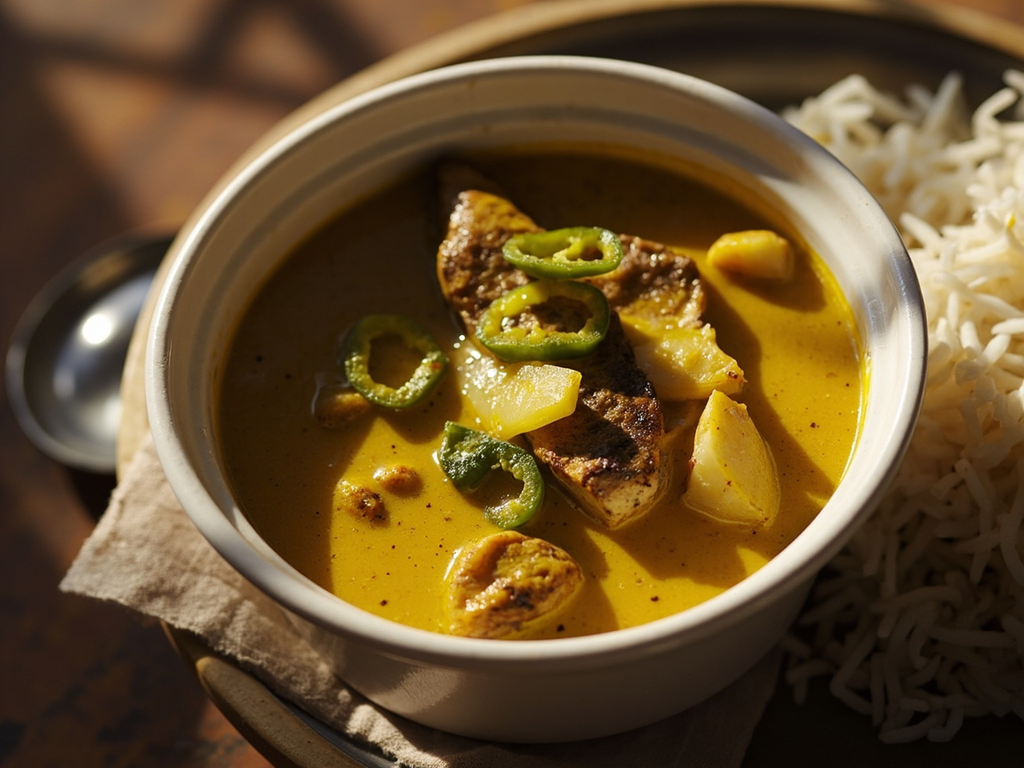
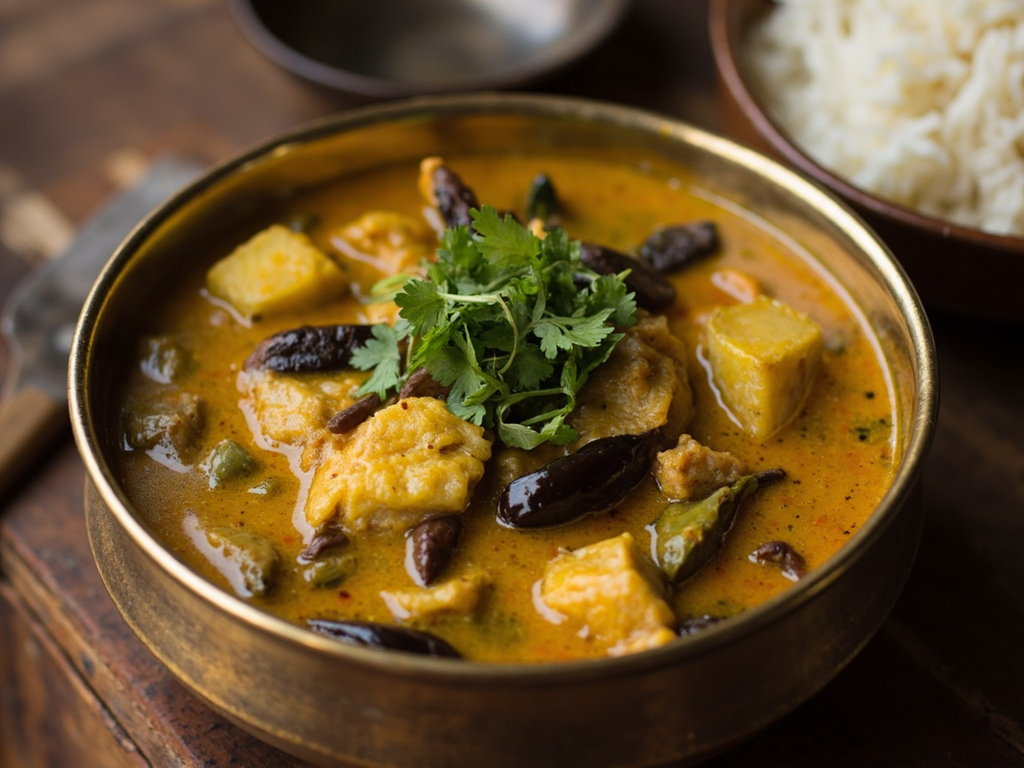
A light, golden curry-broth of river fish (rohu or catla), the pieces fried in mustard oil then simmered in a clear turmeric and ginger sauce with a few vegetables. More liquid than a North Indian curry, it is a juice poured over hot rice.
At home, we said a Bengali without fish is like a river without water. In the morning, we chose the still-wriggling rohu at the market, rubbed it with salt and turmeric, and fried it in mustard oil — the smell filled the whole house. The secret, you see, is to keep the broth clear and light, just perfumed, so it embraces the rice without overwhelming it. It is an everyday dish, yet I never tired of it.
- •River fish (rohu or catla) — a few steaks (central ingredient)
- •Turmeric — a good pinch (color and flavor)
- •Mustard oil — for frying (signature fat)
- •Ginger, cumin — in paste form (aromatic base)
- •Potato (20th c.), eggplant — in chunks (broth vegetables)
- •Green chili — 1 or 2 (liveliness)
- •Fresh coriander — a bunch (finishing)
Macher jhol — the river fish broth
A light, golden curry-broth of river fish (rohu or catla), the pieces fried in mustard oil then simmered in a clear turmeric and ginger sauce with a few vegetables. More liquid than a North Indian curry, it is a juice poured over hot rice.
Why this dish? Bengal is a land of rivers, and its people define themselves as machhe-bhate Bangali — 'Bengali made of fish and rice'. Bibha Chowdhuri's file mentions abundant river fish at her table: macher jhol was the daily dish around which the family meal in Calcutta was organized.
At home, we said a Bengali without fish is like a river without water. In the morning, we chose the still-wriggling rohu at the market, rubbed it with salt and turmeric, and fried it in mustard oil — the smell filled the whole house. The secret, you see, is to keep the broth clear and light, just perfumed, so it embraces the rice without overwhelming it. It is an everyday dish, yet I never tired of it.
Ingredients (period version)
- River fish (rohu or catla) — a few steaks (central ingredient)
- Turmeric — a good pinch (color and flavor)
- Mustard oil — for frying (signature fat)
- Ginger, cumin — in paste form (aromatic base)
- Potato (20th c.), eggplant — in chunks (broth vegetables)
- Green chili — 1 or 2 (liveliness)
- Fresh coriander — a bunch (finishing)
Ingredients
- Firm fish steaks (rohu, or else carp/tilapia) — 4 pieces (central ingredient)
- Turmeric powder — 1 tsp (color and flavor)
- Mustard oil — 4 tbsp (frying and sauce)
- Ginger paste — 1 tbsp (base)
- Cumin powder — 1 tsp (spice)
- Potato — 1, quartered (vegetable)
- Eggplant — 1/2, cubed (vegetable)
- Green chili — 2 (heat)
- Fresh coriander — a few sprigs (finishing)
- Salt — to taste (seasoning)
Method
- Rub fish steaks with salt and turmeric, let rest 10 min.
- Heat mustard oil and fry fish pieces until golden; gently set aside.
- In the same oil, sauté potato and eggplant, then add ginger paste, cumin, and remaining turmeric.
- Add hot water for a clear broth, salt, add slit chilies, and cook until vegetables are tender.
- Return fish to the pot, simmer 5 min without breaking the pieces.
- Sprinkle with coriander. Serve hot, broth poured over a large mound of steamed rice.
How it was made : Before refrigerators, fish was bought live each morning at the bazaar; only what could be cooked that day was used. The sauce was deliberately light, without cream or heavy fried onions, unlike North Indian curries.
The contemporary twist : Serve macher jhol in a deep bowl with a separate dome of rice and the broth poured at the table — minimalist theatrics faithful to the dish's lightness.
Sources : Chitrita Banerji, 'Life and Food in Bengal' (1991) · Pranati Sen Gupta, 'The Art of Indian Cuisine'
Bibha Chowdhuri · Charactorium