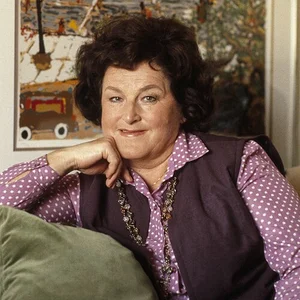

Swedish dramatic soprano (1918–2005), considered the greatest Wagnerian interpreter of the 20th century. Her voice, exceptional in both power and clarity, brought her triumphs at Bayreuth, the Metropolitan Opera in New York, and the world's most prestigious concert halls.
Birgit Nilsson(1918 — 2005)
Birgit Nilsson
Suède
8 min read
Frequently asked questions
Famous Quotes
« I always wear a fur coat when singing with Karajan — he lowers the temperature to get better acoustics.»
Key Facts
- Born on 17 May 1918 in Västra Karup, Sweden
- Debut at the Royal Opera in Stockholm in 1946
- Triumphs at Bayreuth from 1954, notably in Tristan und Isolde and Der Ring des Nibelungen
- International career at the Metropolitan Opera in New York from 1959 to 1984
- Died on 25 December 2005; the Birgit Nilsson Foundation perpetuates her legacy through a prize worth one million euros
Works & Achievements
Her signature role, performed in Wagner's tetralogy (Die Walküre, Siegfried, Götterdämmerung). Her interpretations at Bayreuth and the Met are unanimously regarded as the absolute pinnacle of this repertoire in the twentieth century.
One of the most demanding roles in the operatic repertoire, requiring a voice capable of carrying over an orchestra of a hundred musicians for nearly five hours. The 1963 Decca recording with Georg Solti is universally recognized as the definitive discographic reference in the world.
A role of extreme dramatic intensity that Nilsson approached with the same mastery as her Wagnerian parts. The 1967 Decca recording with Georg Solti won the Grand Prix du disque and ranks among the greatest operatic recordings of the century.
Beyond the German repertoire, Nilsson distinguished herself particularly in this Puccinian role of a cruel princess demanding spectacular vocal power. Her Turandot at the Metropolitan Opera was one of the defining musical events of the 1960s.
A dramatically and vocally demanding role that Nilsson approached with singular intensity. Her interpretation of the final monologue remains unforgettable in the annals of opera in the second half of the twentieth century.
Anecdotes
Birgit Nilsson was famous for her caustic wit, particularly in her dealings with Metropolitan Opera director Rudolf Bing. When he asked why she had avoided the Met for several years, she replied that she feared the American tax authorities. Bing then offered to reduce her fee, which she could declare as a charitable donation — she accepted with a laugh.
Her voice was of such exceptional power that conductor Georg Solti, with whom she recorded the complete Ring cycle for Decca in the 1960s, once wore earplugs during a rehearsal. Far from taking offense, Nilsson found the scene hilarious and joked about it throughout her career.
Nilsson grew up on a farm in Scania and performed heavy agricultural work from childhood. She attributed her extraordinary vocal endurance to this rural upbringing: she could sing the role of Brünnhilde on three consecutive evenings of the Ring within just a few days without showing the slightest sign of vocal fatigue — a feat her colleagues described as ‘superhuman’.
At the Bayreuth Festival, Wieland Wagner — the composer’s grandson and the festival’s artistic director — once asked Nilsson to tone down her vocal power to better blend with the orchestral ensemble. She simply replied: “Wieland, if you want less voice, hire a lesser soprano.” This retort became legendary in opera circles.
At her triumphant return to the Metropolitan Opera in 1984, Nilsson sang Brünnhilde at age 65 with a voice that remained completely intact. The audience gave her a standing ovation lasting several minutes. She told the press that the secret of her longevity was simple: “I never sing when I am tired, and I go to bed early.”
Primary Sources
My voice was always naturally large. I never needed to force it — it simply came out that way. What I had to learn was how to control it, how to modulate that power in service of the music and the drama.
Wagner is not a composer you can approach halfway. He demands the totality of one's being — voice, body, intellect, soul. Every performance is a new conquest, never something to be taken for granted.
Bayreuth was for me like a second homeland. Despite Wieland's demands, despite the Bavarian nights, I knew that was where Wagner's music truly lived. Nowhere else did the orchestra sound quite like that.
I am, above all, a Swedish country girl. My strength comes from the soil of Scania. Even if the whole world lay at my feet, I will never forget where I come from.
Key Places
Birgit Nilsson's birthplace, situated in the agricultural region of southern Sweden. It was on this family farm that she developed the extraordinary physical endurance that would allow her to take on the most demanding Wagnerian roles in the repertoire.
The stage of her professional debut in 1946 and of her early training. This house was the cradle of her career, and she maintained close ties with it throughout her life — a symbol of her unshakeable attachment to her Swedish homeland.
The world capital of Wagnerian opera, designed by Wagner himself, where Nilsson reigned from 1954 through the 1970s. The hall's unique acoustics — with its covered orchestra pit — provided the ideal setting for the full power of her voice to unfold.
The theatre where Nilsson made her triumphant American debut in 1959 in *Tristan und Isolde*. She enjoyed two decades of success there, and her legendary sparring match with general manager Rudolf Bing has become part of operatic lore.
One of the most prestigious stages in the operatic world, where Nilsson established herself as the absolute benchmark in the German repertoire. Her portrayals of Brünnhilde and Isolde on the Viennese Ringstrasse remain landmarks in the institution's history.
Typical Objects

A winged helmet in gilded metal, the iconic accessory of the role of Brünnhilde. Nilsson wore it at every performance of the Ring and it became the universal visual symbol of her legendary career.

Imposing stage props used in The Ring of the Nibelung. With her commanding physical stature and remarkable dramatic presence, Nilsson wielded these weapons with an ease that reinforced the heroic credibility of the character.

Nilsson studied her scores with extreme rigor, covering every page with personal notes on interpretation, breath management, and vocal dynamics. Her copies of the Ring and Tristan were genuine archives of her artistic thinking.

During the landmark recordings of the 1960s, Nilsson often had to stand at an unusually great distance from the microphone, as her voice was too powerful for close-up capsules. These sessions produced some of the most celebrated opera recordings of the century.

A ceremonial gown with an elaborate headdress worn in Puccini's opera. Her portrayal of the icy, cruel princess was every bit as admired as her Wagnerian roles, extending her legend into the Italian repertoire.

Nilsson maintained throughout her life a deep bond with her farming roots in Västra Karup. On her farm in Sweden, she wore simple clothes and worked the land, deliberately displaying this contrast with her status as an international prima donna.
School Curriculum
Vocabulary & Tags
Key Vocabulary
Daily Life
Morning
Nilsson rose early, a habit carried over from her farm childhood. She began her day with light vocal warm-ups and a frugal breakfast, avoiding dairy and any food that might affect her voice. On performance days, her morning was entirely organized around vocal rest and conserving her energy.
Afternoon
Performance afternoons were devoted to complete rest and mental focus. Nilsson declined most social invitations before a show and often kept silent for several hours. On free days, she took part in rehearsals or musical working sessions with conductors, including the legendary Georg Solti.
Evening
Performance evenings were the heart of her professional life. She arrived at the theater two to three hours before curtain for a gradual warm-up and costuming — Wagnerian costumes and helmets could weigh several dozen kilograms. After the show, she happily welcomed fellow artists and admirers in her dressing room.
Food
Nilsson followed a strict diet on performance days: no alcohol, no spices, no dairy that might affect her vocal cords. Outside these professional constraints, she enjoyed the simple Swedish food of her childhood — pickled herring, potatoes, and dark rye bread.
Clothing
On stage, Nilsson wore costumes of considerable weight: armor, winged helmets, and long stage gowns for her Wagnerian roles. In private life, she preferred simple, practical clothing, in keeping with her direct character and her marked aversion to ostentation.
Housing
Nilsson kept her family farm in Scania as her primary residence and source of identity throughout her life. She owned apartments in opera cities during the seasons, but regularly described her Swedish farm as her only “true home,” far from the glamour of the great international stages.