 Flip the card
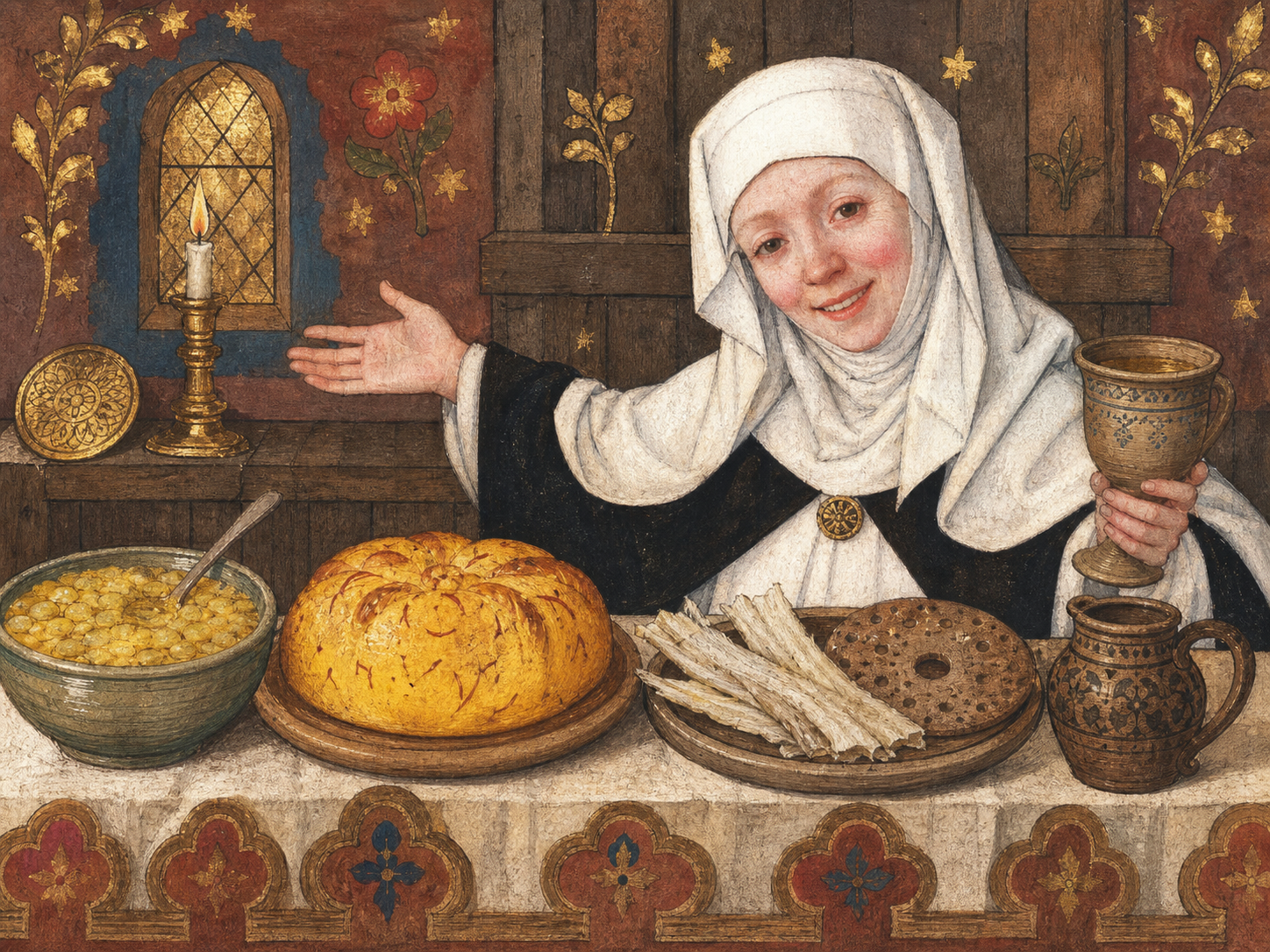
Bridget of Sweden at the table
1303 — 1373
On the menu
The two-meal table of the North, marked by fasting
In 14th-century Sweden, people ate twice a day: the morning *dagmål* and the evening *nattvard*. Rye bread was the immutable foundation; alongside came the *sovel*, the hot dish (porridge, peas, fish) eaten with the bread. The Church calendar divided the year into meat days and lean days: for a penitent widow like Bridget, almost every day was lean — bread, legumes, fish, never meat. Great feast days (Christmas, Easter, Saint Lucy's Day) broke the austerity with a golden, precious bread. Travelers and pilgrims, for their part, lived on *niste*: dried provisions that would not spoil on the road to Rome or Jerusalem.
Signature : Rye, the grain of the North
Rye is the backbone of this entire table: the daily dark bread, the hard hole-punched flatbread of the pilgrim, the hearth porridge. Hardy, it grows where wheat fails, keeps for months once dried, and nourishes both the fasting nun at Vadstena and the pilgrim on the road. Golden wheat, by contrast, appears only on feast days.
click to flip back
Bridget of Sweden at the table
1303 — 1373
5 period recipes
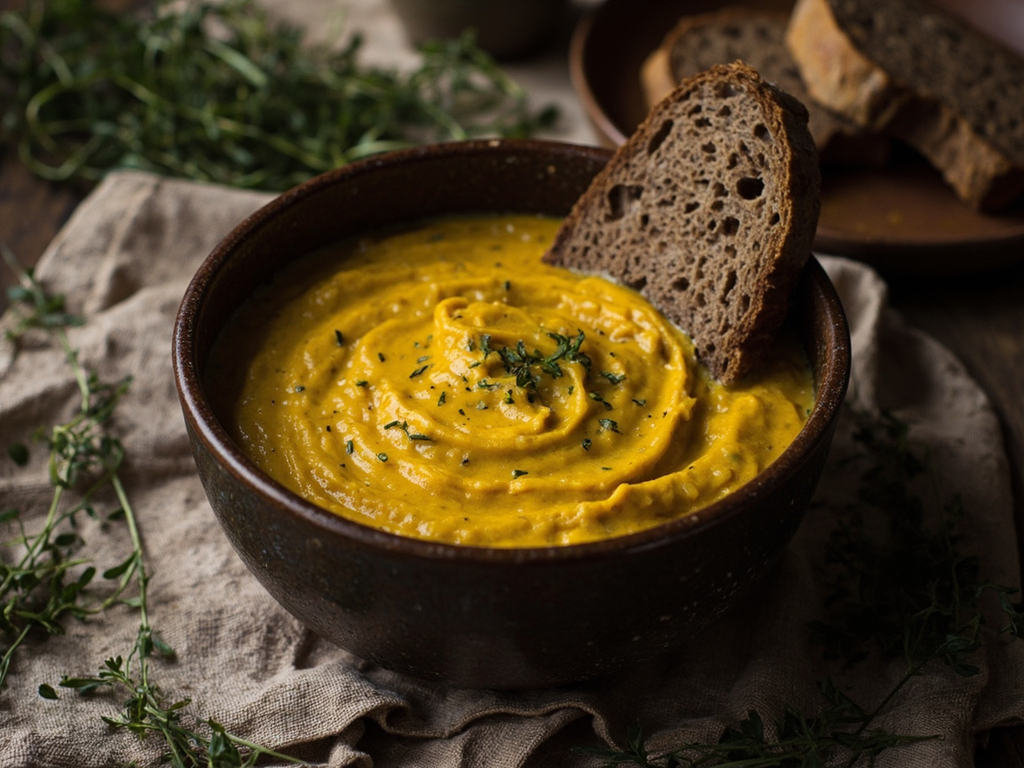 Everyday
Lean-day split peas with broad beans (ärtmos)
Sovel — the hot hearth dish eaten with rye bread
🧂 🍄· 1 h 15 (plus soaking)
View the recipe
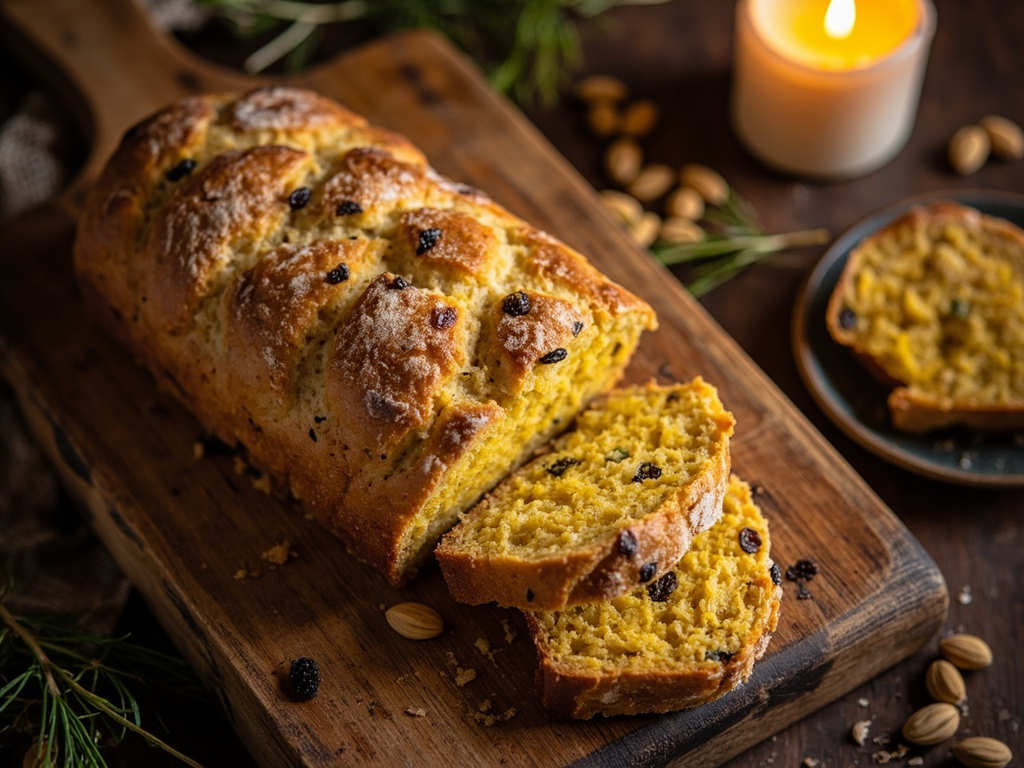 Festive
Golden saffron feast-day bread (saffranslimpa)
Helgdagsbröd — the precious bread reserved for great feast days
🍯 🌶️· 2 h 30 (with rising)
View the recipe
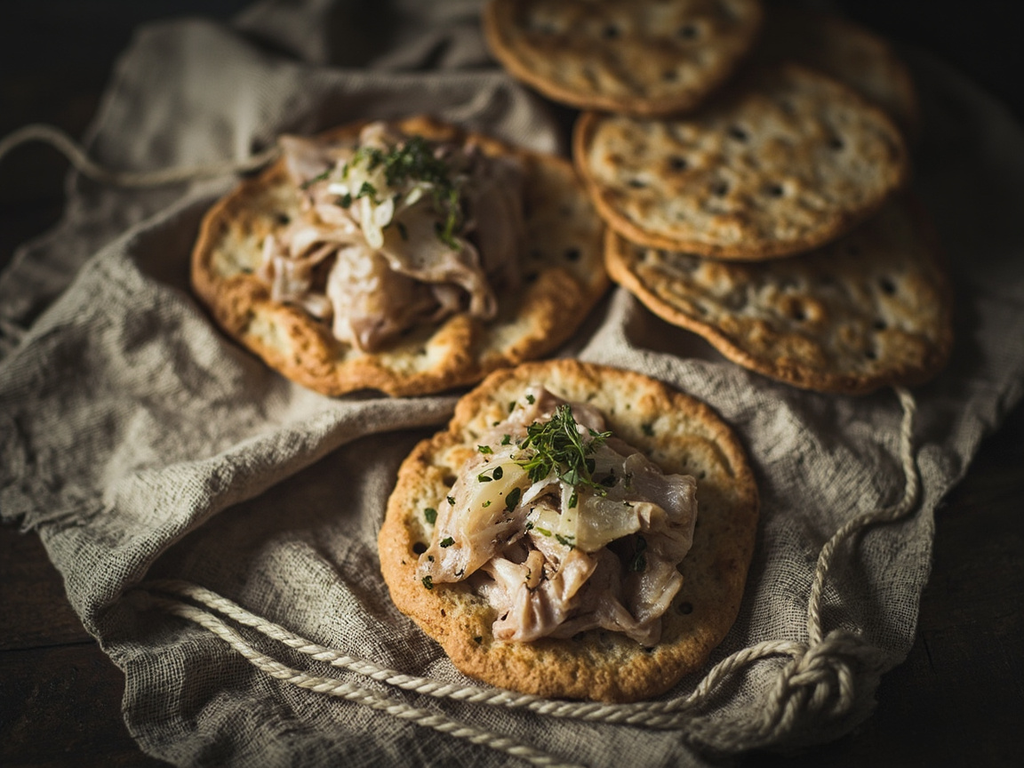 Travel
Pilgrim's niste: dried cod and hole-punched rye flatbread
Niste — the travel provender that does not spoil on long roads
🧂 🍄· 30 min (plus desalting)
View the recipe
 Drink
DrinkSpiced mead of the Northern table (kryddat mjöd)
Dryck — the table beverage, brewed at home
🍯 🫙· 30 min (infused version)
View the recipe
 Preserving
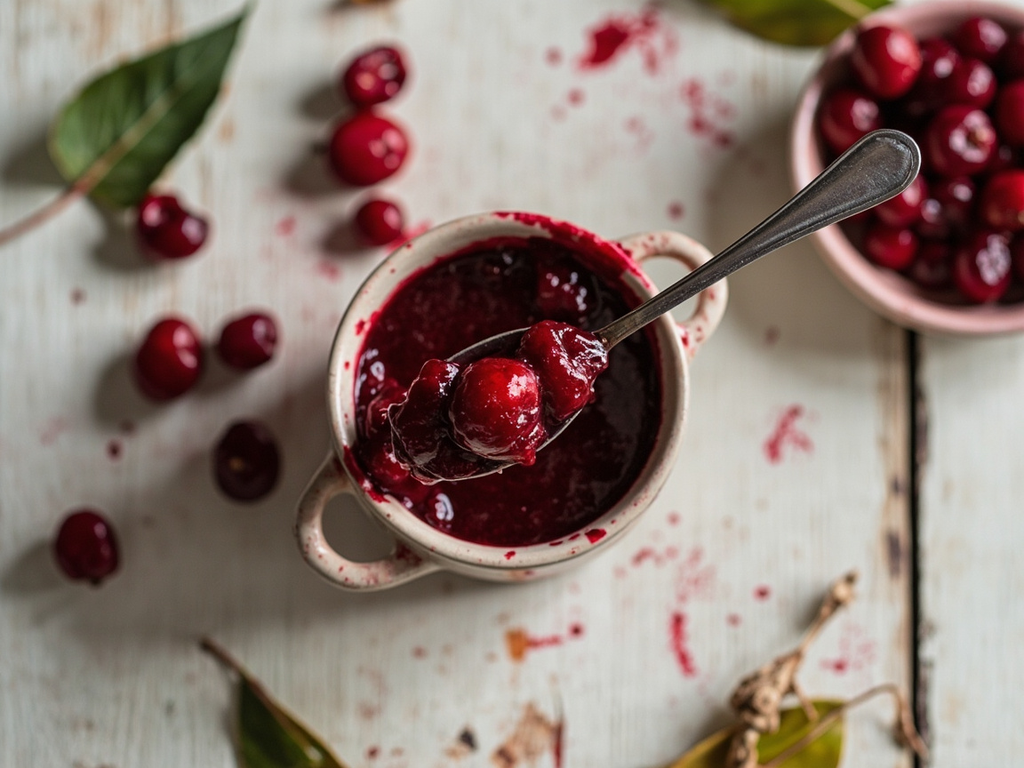
Honeyed lingonberries for the long cold season (lingonsylt)
Vinterförråd — the pantry preserve to get through winter
🍋 🍯· 20 min
View the recipe