 flip
flipLean-day split peas with broad beans (ärtmos)
Lean-day split peas with broad beans (ärtmos)
Why this dish? A penitent widow and later founder of an order, Bridget abstained from meat and fasted relentlessly: dried peas, the staple legume of the North, were the quintessential lean-day food, filling the stomach without gratifying the flesh. They were the everyday fare at her table and at those of the nuns of Alvastra and Vadstena.
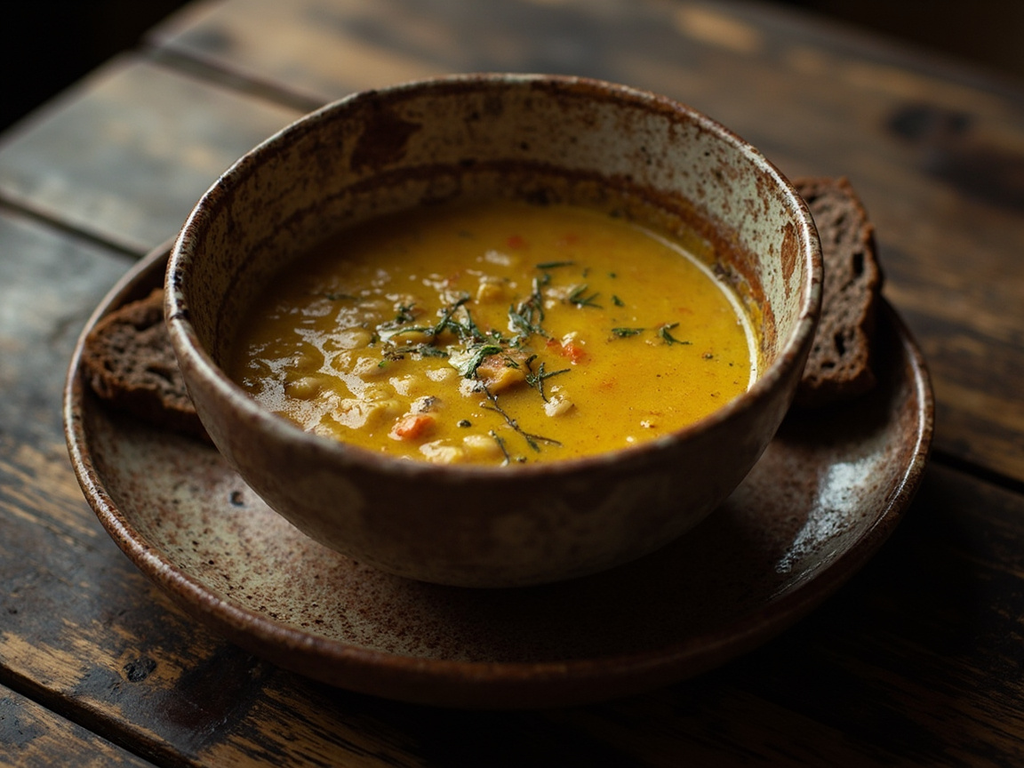
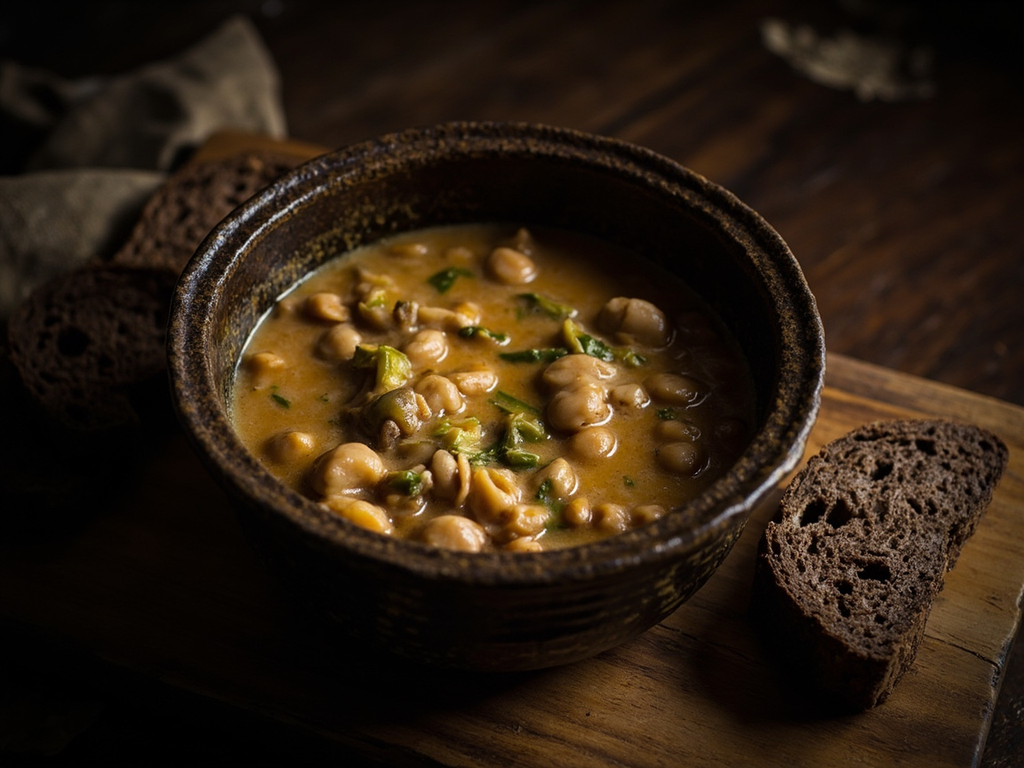
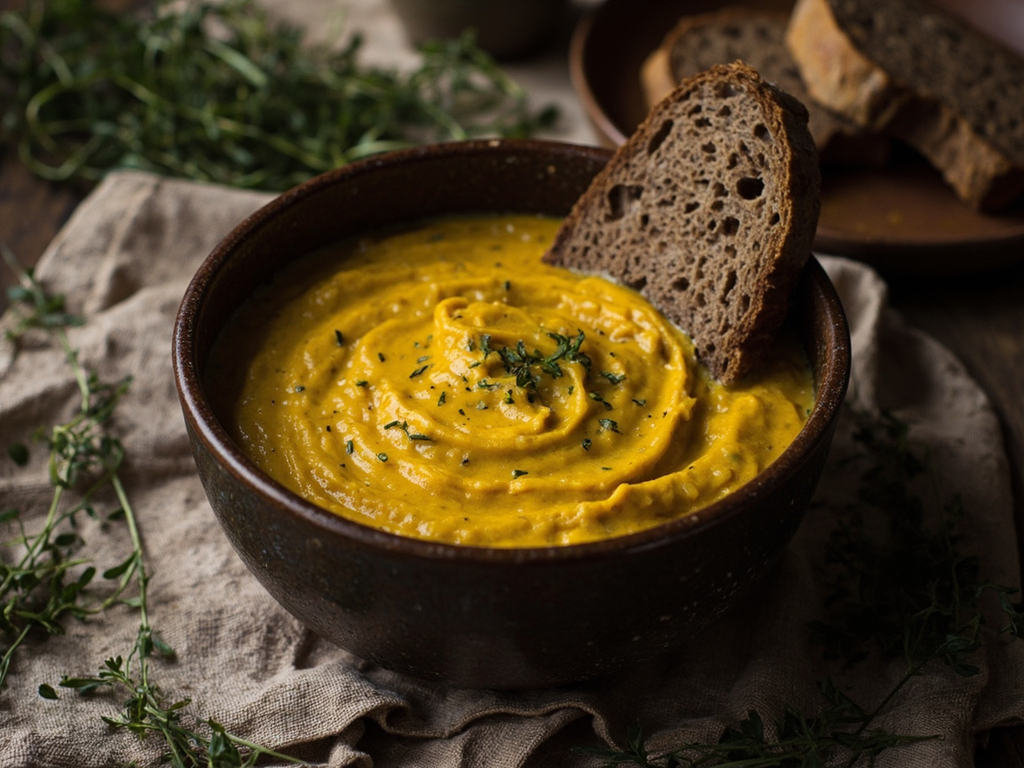
A thick purée of yellow peas (or broad beans) long-simmered with onion and a little leek, scented with garden herbs. Nourishing, earthy, humble — the meatless-day dish, spread on a slice of dark rye bread.
Approach, and do not mock the poverty of my bowl. Did not Our Lord satisfy the crowds with bread and fish, and not with venison? I soak my peas the night before, all night in rainwater; in the morning I set them on the embers and let them melt gently, stirring with my wooden spoon so they do not stick. An ounce of onion, a sprig of herb from the garden, and nothing more: for the fasting ear hears God's voice better than the sated mouth. Eat it with your dark bread, and give thanks.
- •Dried yellow peas (or dried shelled broad beans) — a good bowlful (nourishing base for lean days)
- •Onion — one (aromatic base)
- •Leek — one stalk (vegetable sweetness)
- •Butter (tolerated on lean days) or oil — a knob (binding and flavor)
- •Marjoram or lovage from the garden — a few leaves (scent)
- •Salt — to taste (seasoning)
Lean-day split peas with broad beans (ärtmos)
A thick purée of yellow peas (or broad beans) long-simmered with onion and a little leek, scented with garden herbs. Nourishing, earthy, humble — the meatless-day dish, spread on a slice of dark rye bread.
Why this dish? A penitent widow and later founder of an order, Bridget abstained from meat and fasted relentlessly: dried peas, the staple legume of the North, were the quintessential lean-day food, filling the stomach without gratifying the flesh. They were the everyday fare at her table and at those of the nuns of Alvastra and Vadstena.
Approach, and do not mock the poverty of my bowl. Did not Our Lord satisfy the crowds with bread and fish, and not with venison? I soak my peas the night before, all night in rainwater; in the morning I set them on the embers and let them melt gently, stirring with my wooden spoon so they do not stick. An ounce of onion, a sprig of herb from the garden, and nothing more: for the fasting ear hears God's voice better than the sated mouth. Eat it with your dark bread, and give thanks.
Ingredients (period version)
- Dried yellow peas (or dried shelled broad beans) — a good bowlful (nourishing base for lean days)
- Onion — one (aromatic base)
- Leek — one stalk (vegetable sweetness)
- Butter (tolerated on lean days) or oil — a knob (binding and flavor)
- Marjoram or lovage from the garden — a few leaves (scent)
- Salt — to taste (seasoning)
Ingredients
- Yellow split peas — 300 g (base)
- Onion — 1 large (base)
- Leek (white part) — 1/2 (sweetness)
- Butter — 30 g (binding)
- Dried marjoram (or fresh lovage) — 1 tsp (scent)
- Salt — 1 tsp (seasoning)
- Water — 1 liter (cooking)
Method
- Soak the split peas overnight in cold water (optional but more authentic), then drain.
- Slice onion and leek, sweat them in the butter without browning.
- Add the peas and water, bring to a simmer, skim.
- Simmer 45 minutes to 1 hour on low heat, stirring, until the peas break down into a thick purée.
- Salt, add marjoram, mash roughly with a spoon to keep some texture.
- Serve hot, spread on a slice of rye bread.
How it was made : Peas and broad beans (not the common bean, unknown in Europe before 1492) were the staple legumes of the medieval North. Dried, they kept all winter and provided protein for the countless lean days of the liturgical calendar. They were cooked for hours in a cauldron hung over the hearth fire.
The contemporary twist : A drizzle of toasted rapeseed oil and a few cress shoots on top: a contemporary Scandinavian nod to a seven-century-old purée.
Bridget of Sweden · Charactorium