 flip
flipGolden saffron feast-day bread (saffranslimpa)
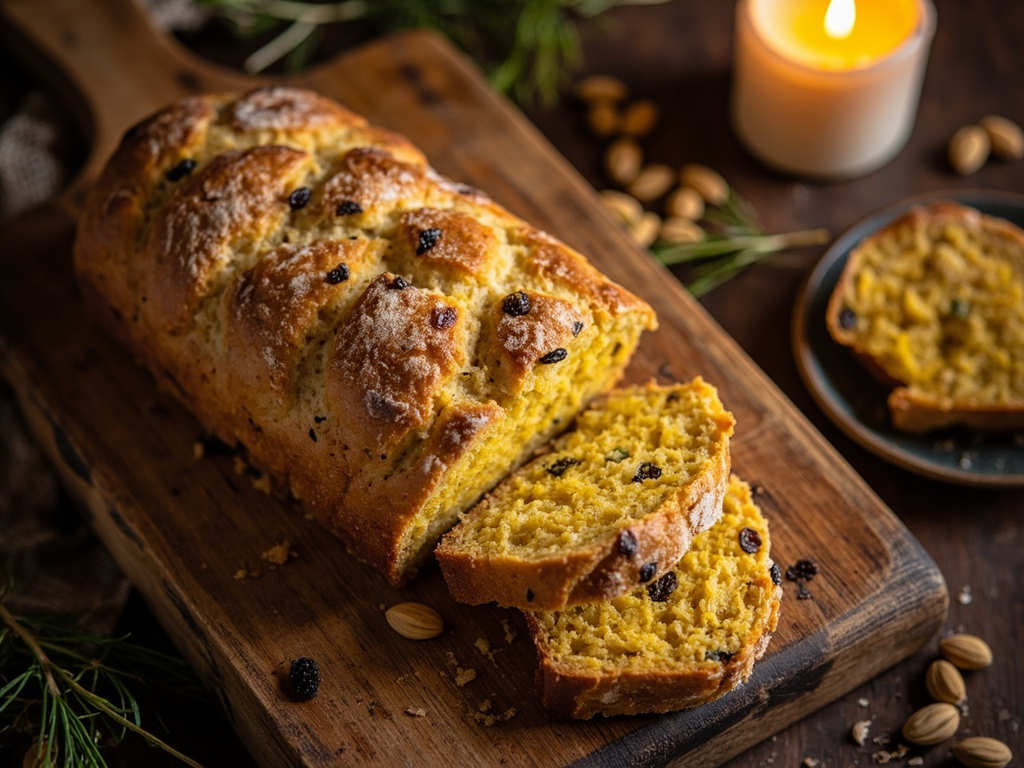
Golden saffron feast-day bread (saffranslimpa)
Why this dish? Bridget was of high birth, related to the Swedish crown, and received her royal family at her table before leaving everything for God. On great feast days, golden wheat bread tinted with saffron — an expensive Eastern spice that only the powerful could afford — crowned the table and broke the austerity of the fast.
A soft wheat bread, gilded with saffron, sweetened with honey and scented with cardamom, studded with raisins. The sober luxury of a great Northern house on days of rejoicing.
On the twelve days of Christmas, and on Easter morning when Christ is risen, I allow the table to be adorned. See this golden crumb like the low December sun: it is saffron, come from far across the seas, which my father paid for by weight of silver. I add honey from our hives and a few raisins kept from autumn, I knead for a long time, and I let the dough rise near the hearth under a cloth, as the soul rises toward Heaven. Eat little of it and with joy, for the feast too is a gift from God.
- •Wheat flour — enough for a fine loaf (base for feast days)
- •Saffron — a few precious threads (golden color and scent (festive signature))
- •Honey — two spoonfuls (sweetness)
- •Butter — a good piece (softness)
- •Milk — a cup (kneading liquid)
- •Beer barm (yeast) — as needed (leavening)
- •Cardamom — a few crushed grains (Eastern scent)
- •Raisins — a handful (garnish)
Golden saffron feast-day bread (saffranslimpa)
A soft wheat bread, gilded with saffron, sweetened with honey and scented with cardamom, studded with raisins. The sober luxury of a great Northern house on days of rejoicing.
Why this dish? Bridget was of high birth, related to the Swedish crown, and received her royal family at her table before leaving everything for God. On great feast days, golden wheat bread tinted with saffron — an expensive Eastern spice that only the powerful could afford — crowned the table and broke the austerity of the fast.
On the twelve days of Christmas, and on Easter morning when Christ is risen, I allow the table to be adorned. See this golden crumb like the low December sun: it is saffron, come from far across the seas, which my father paid for by weight of silver. I add honey from our hives and a few raisins kept from autumn, I knead for a long time, and I let the dough rise near the hearth under a cloth, as the soul rises toward Heaven. Eat little of it and with joy, for the feast too is a gift from God.
Ingredients (period version)
- Wheat flour — enough for a fine loaf (base for feast days)
- Saffron — a few precious threads (golden color and scent (festive signature))
- Honey — two spoonfuls (sweetness)
- Butter — a good piece (softness)
- Milk — a cup (kneading liquid)
- Beer barm (yeast) — as needed (leavening)
- Cardamom — a few crushed grains (Eastern scent)
- Raisins — a handful (garnish)
Ingredients
- All-purpose wheat flour — 500 g (base)
- Saffron — 1 good pinch (0.2 g) (color and scent)
- Honey — 60 g (sweetness)
- Butter — 75 g (softness)
- Warm milk — 200 ml (kneading)
- Active dry yeast — 1 packet (7 g) (leavening)
- Ground cardamom — 1/2 tsp (scent)
- Raisins — 80 g (garnish)
- Salt — 1 tsp (balance)
Method
- Infuse the saffron in the warm milk for 15 minutes to release color and aroma.
- Dissolve the yeast in the saffron milk with the honey.
- Mix flour, salt, and cardamom; add the milk and soft butter, then knead for 10 minutes until a supple dough forms.
- Add the raisins, cover with a cloth, and let rise for 1 hour near a heat source.
- Shape into a loaf (or a crown), let rise again for 30 minutes.
- Bake at 190°C for 25–30 minutes until golden brown; let cool slightly before slicing.
How it was made : Saffron circulated in medieval Europe as a prestige spice, reserved for the elite — its gold symbolized light and wealth. Saffron bread is later attested as a Swedish tradition (notably around Saint Lucy's Day); for the 14th-century Swedish noblewoman, this remains a plausible evocation rather than a documented recipe. Leavening was done with *barm*, the foam from fermenting beer.
The contemporary twist : Shaped as a braided crown and glazed with honey: a direct nod to the *lussekatter* of Saint Lucy's Day, distant heirs of these golden breads.
Bridget of Sweden · Charactorium