 flip
flipPilgrim's niste: dried cod and hole-punched rye flatbread
Pilgrim's niste: dried cod and hole-punched rye flatbread
Why this dish? Bridget was an indefatigable pilgrim: Saint Olav's, Compostela, Rome where she settled, and then Jerusalem shortly before her death in 1373. For such journeys, one needed provisions that would keep for weeks: dried fish and hard bread with a hole, strung on a cord — the *niste* of the Nordic traveler.
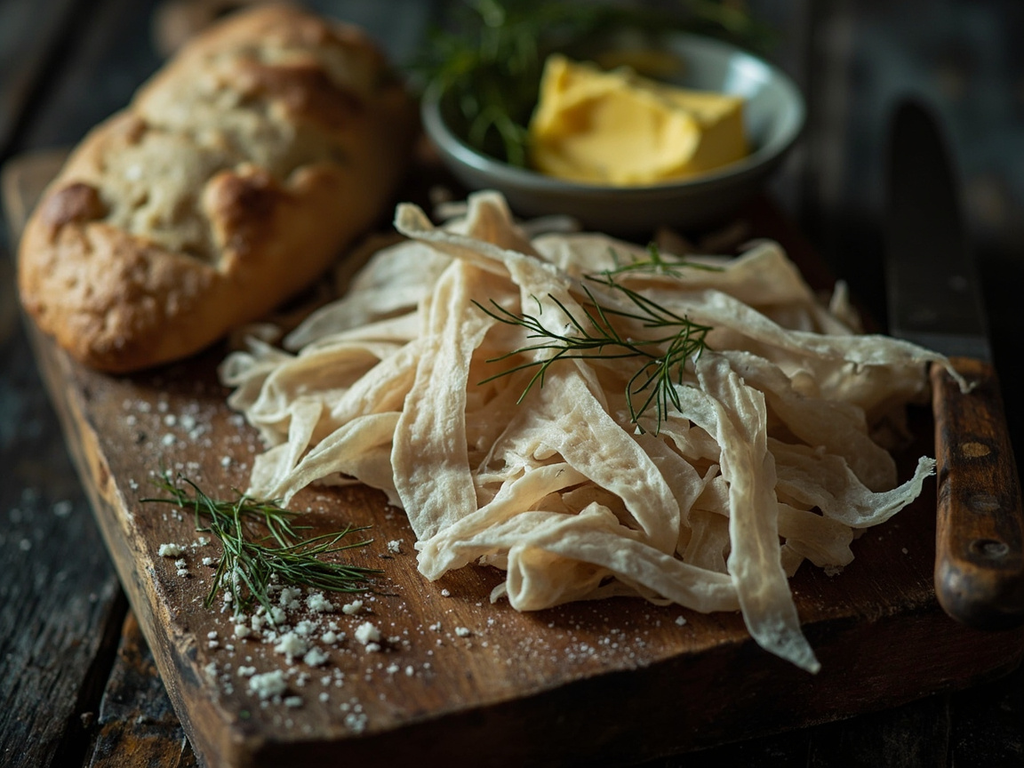
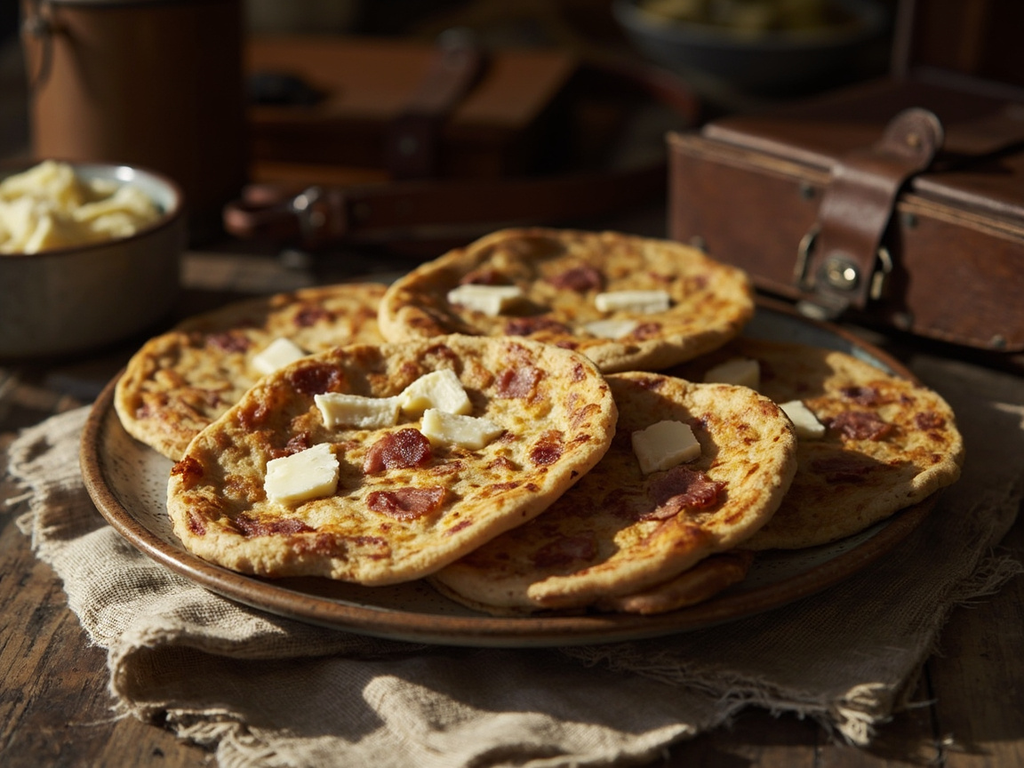
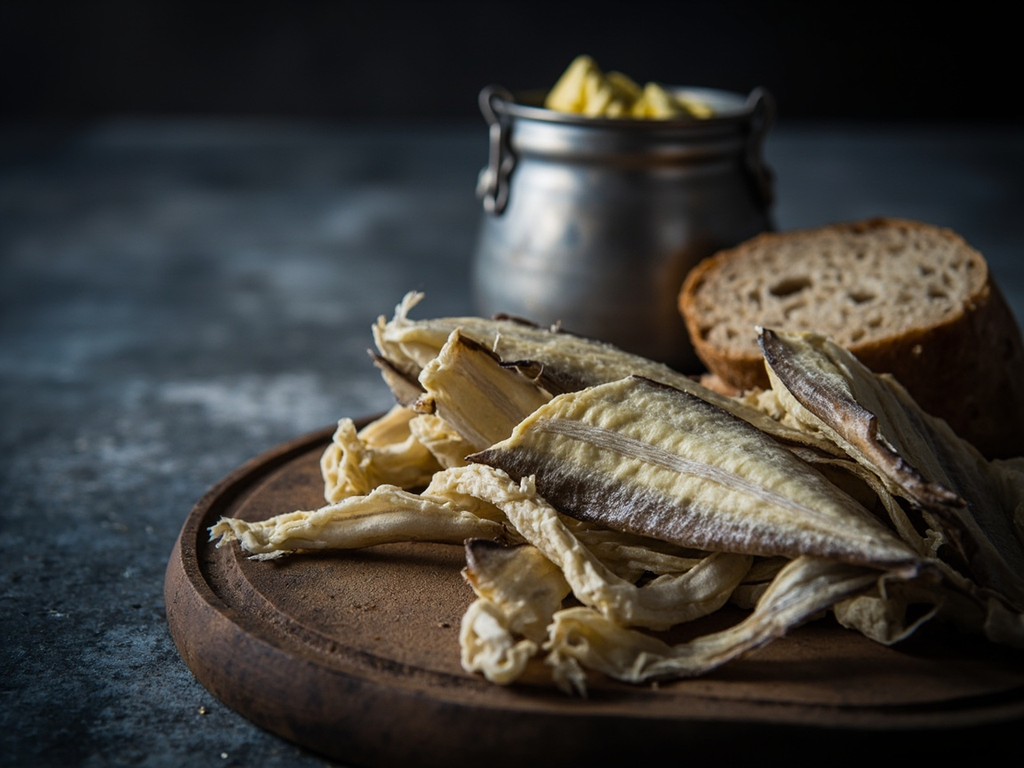
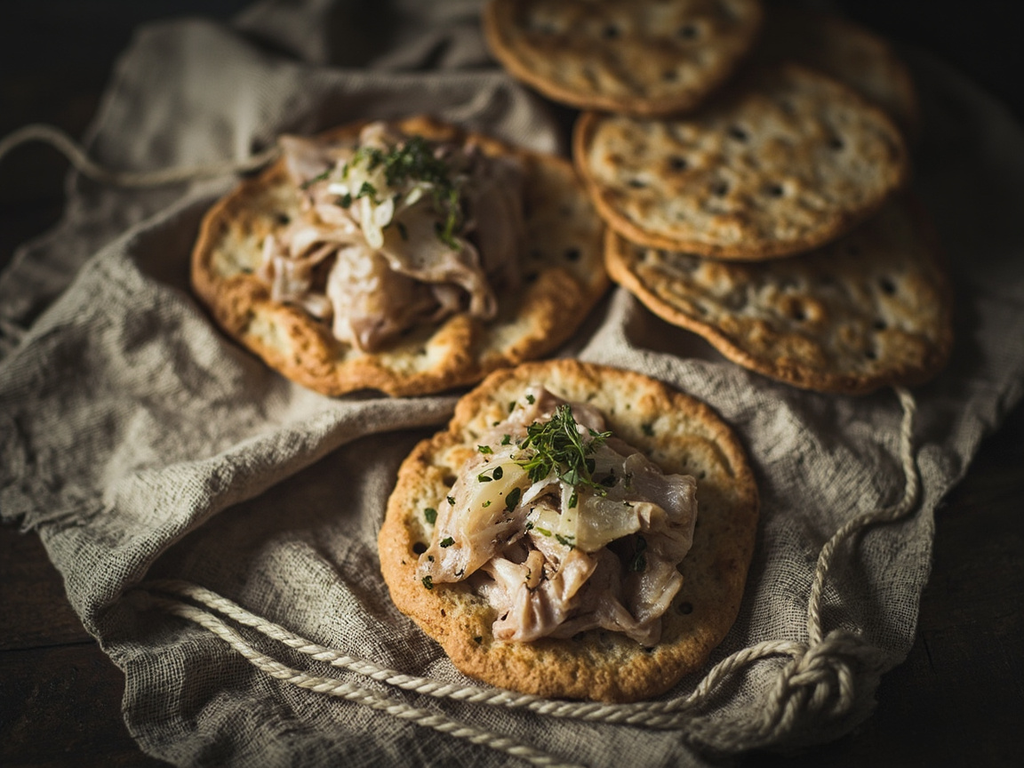
Rehydrated and flaked dried cod (stockfish), mixed with a little butter and onion, served on the hard hole-punched rye flatbread that travelers carried by the dozen. The food of the road, sober and indestructible.
When I took the road to Rome, and then to the Holy Land where Our Lord walked, I did not load my mule with delicate dishes. The fish dried in the North wind, hard as a plank, and the rye flatbread pierced with a hole to string on a cord: that is my fare. A few days in a stream, and the cod becomes tender again; a little butter if any is to be had, a field onion, and the pilgrim regains strength to praise God another mile. The belly content with little, the soul advances better.
- •Dried cod (stockfish) or wind-dried fish — one piece, rehydrated (travel protein)
- •Hard hole-punched rye flatbread — one or two (keeping bread (rye signature))
- •Onion — one (freshness and flavor)
- •Butter — a knob if available (fat binder)
- •Salt — already in the fish (preservation and flavor)
Pilgrim's niste: dried cod and hole-punched rye flatbread
Rehydrated and flaked dried cod (stockfish), mixed with a little butter and onion, served on the hard hole-punched rye flatbread that travelers carried by the dozen. The food of the road, sober and indestructible.
Why this dish? Bridget was an indefatigable pilgrim: Saint Olav's, Compostela, Rome where she settled, and then Jerusalem shortly before her death in 1373. For such journeys, one needed provisions that would keep for weeks: dried fish and hard bread with a hole, strung on a cord — the *niste* of the Nordic traveler.
When I took the road to Rome, and then to the Holy Land where Our Lord walked, I did not load my mule with delicate dishes. The fish dried in the North wind, hard as a plank, and the rye flatbread pierced with a hole to string on a cord: that is my fare. A few days in a stream, and the cod becomes tender again; a little butter if any is to be had, a field onion, and the pilgrim regains strength to praise God another mile. The belly content with little, the soul advances better.
Ingredients (period version)
- Dried cod (stockfish) or wind-dried fish — one piece, rehydrated (travel protein)
- Hard hole-punched rye flatbread — one or two (keeping bread (rye signature))
- Onion — one (freshness and flavor)
- Butter — a knob if available (fat binder)
- Salt — already in the fish (preservation and flavor)
Ingredients
- Desalted/rehydrated cod (or poached fresh cod) — 300 g (protein)
- Crisp rye bread (knäckebröd) — 4 flatbreads (base)
- Onion — 1 small (flavor)
- Butter — 30 g (binder)
- Pepper — to taste (seasoning (elite))
- Chives or dill — a few sprigs (freshness)
Method
- If using salted dried cod: desalt for 24–48 hours, changing water several times, then poach for 10 minutes; alternatively, poach fresh cod.
- Flake the fish, removing bones and skin.
- Melt the sliced onion in butter, add the fish, and warm gently.
- Season with pepper, sprinkle with fresh herbs.
- Serve the warm mixture on the crispy rye flatbreads immediately.
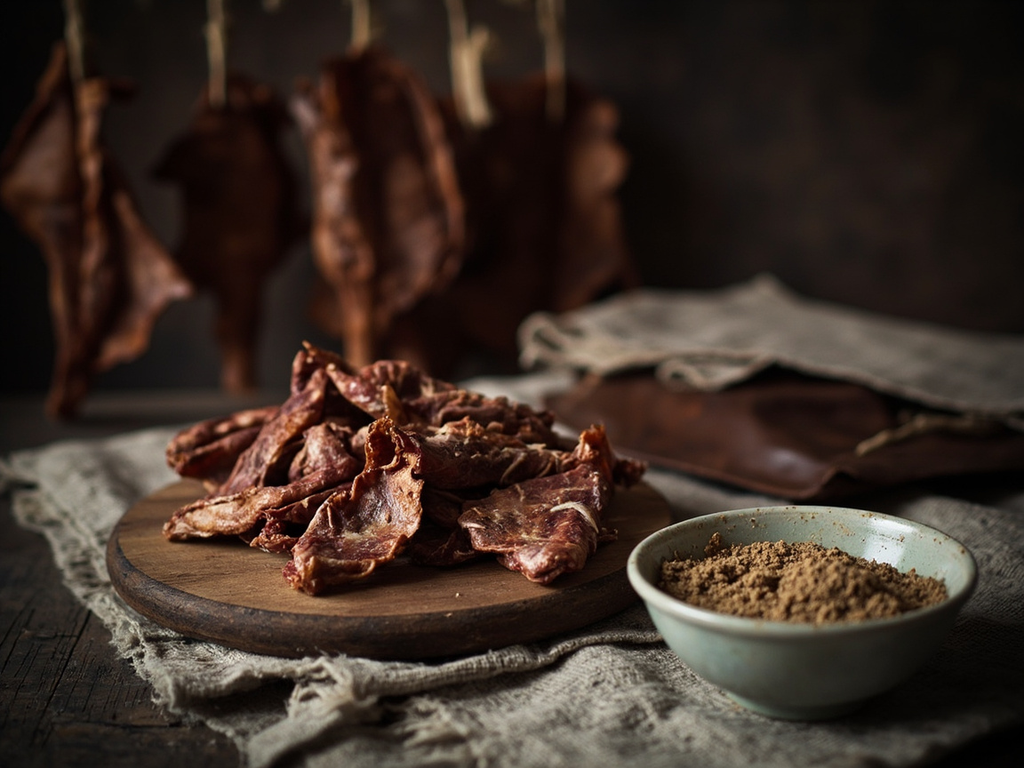
How it was made : Stockfish — cod dried in the cold northern air without salt, hard as wood — could keep for years and was a pillar of medieval trade and travel. The hard rye bread, twice-baked and pierced in the center, was hung on poles under the roof and lasted months: the direct ancestor of Swedish *knäckebröd*. Together they formed *niste*, the pilgrim's portable larder.
The contemporary twist : Served as a 'travel tartine' with a touch of mild mustard and dill: the Nordic *smörgås*, direct descendant of the pilgrim's flatbread.
Bridget of Sweden · Charactorium