 flip
flipSpiced mead of the Northern table (kryddat mjöd)
Spiced mead of the Northern table (kryddat mjöd)
Why this dish? The Swedish noble household kept its bees and brewed its own drinks. Mead — honey wine of the Nordic lands — accompanied feasts and the reception of distinguished guests that Bridget, before her conversion, received at Ulvåsa. A drink of joy and hospitality, to be served with moderation for a penitent.
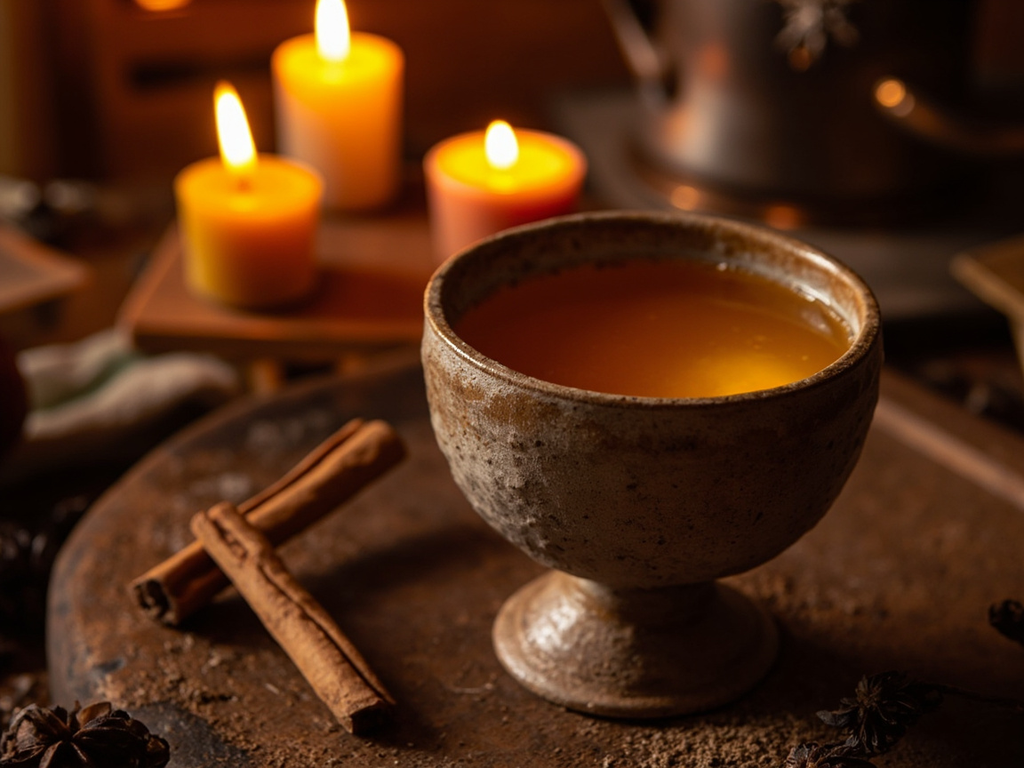
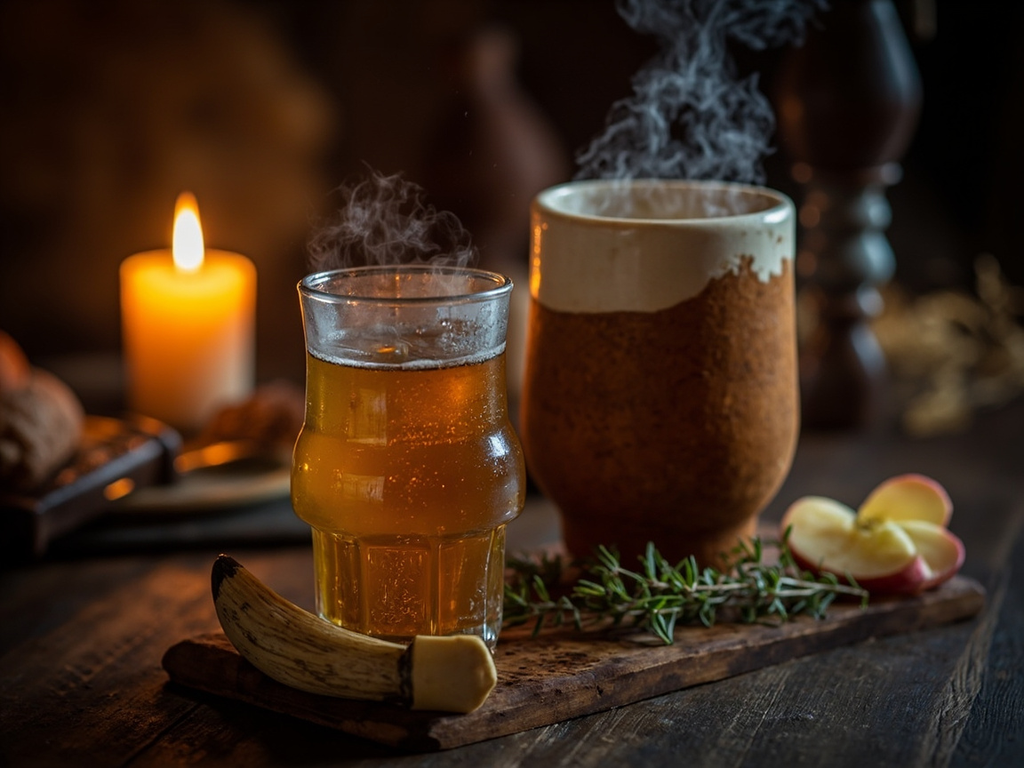
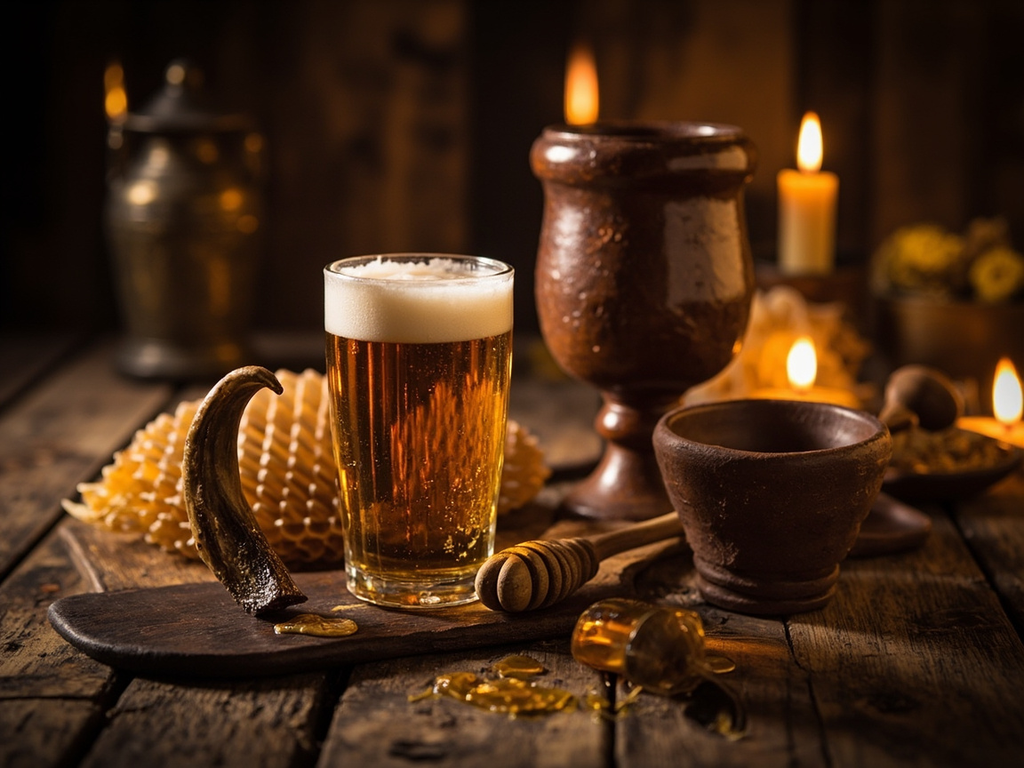
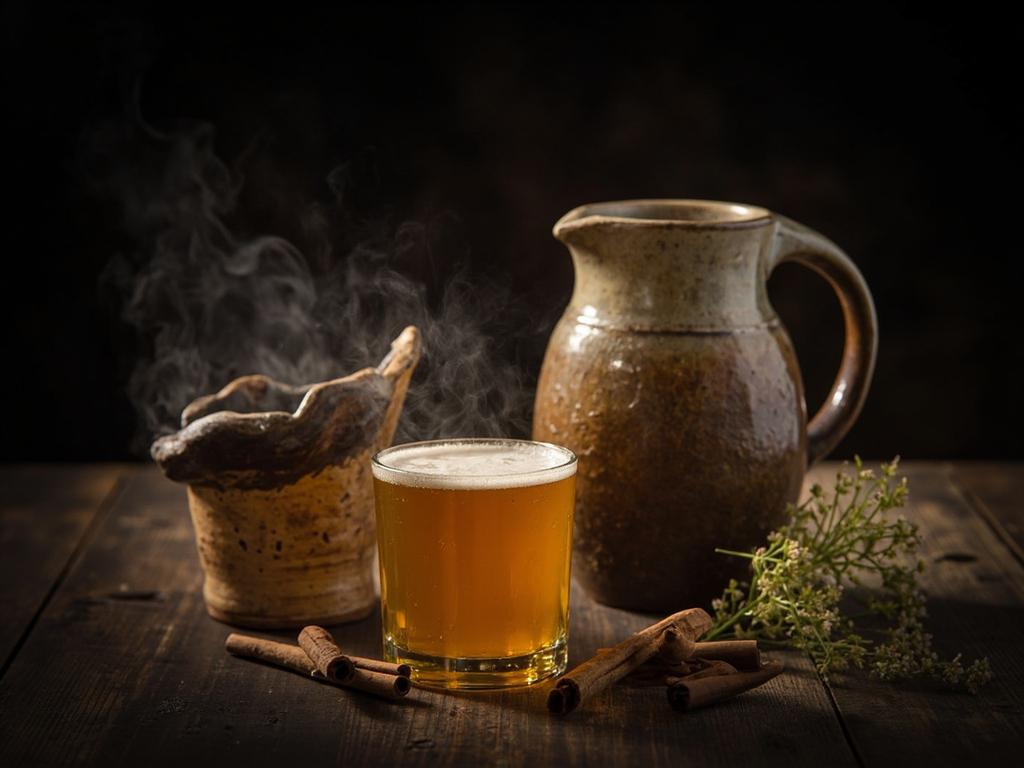
A golden honey wine, fermented and then spiced with ginger, cinnamon, and elderflower, sweet and slightly pungent. The hospitality drink of the medieval North.
Before Our Lord turned my heart entirely to Him, I kept house at Ulvåsa, and no guest was ever received without being offered a drink. The honey from our hives, mixed with pure water and left to work for weeks in a barrel, becomes this golden liquor that our Northern ancestors loved so much. I toss in a little ginger and cinnamon from overseas to warm the blood against winter. Drink it with moderation, I pray you: wine gladdens the heart of man, says Scripture, but drunkenness loses the soul.
- •Honey — a good measure (fermentable sugar (heart of the drink))
- •Spring water — three measures (base)
- •Fermentation starter (lees, barm) — as needed (fermentation)
- •Ginger — a piece (warm spice)
- •Cinnamon — one stick (scent)
- •Elderflower — a few umbels (floral aroma)
Spiced mead of the Northern table (kryddat mjöd)
A golden honey wine, fermented and then spiced with ginger, cinnamon, and elderflower, sweet and slightly pungent. The hospitality drink of the medieval North.
Why this dish? The Swedish noble household kept its bees and brewed its own drinks. Mead — honey wine of the Nordic lands — accompanied feasts and the reception of distinguished guests that Bridget, before her conversion, received at Ulvåsa. A drink of joy and hospitality, to be served with moderation for a penitent.
Before Our Lord turned my heart entirely to Him, I kept house at Ulvåsa, and no guest was ever received without being offered a drink. The honey from our hives, mixed with pure water and left to work for weeks in a barrel, becomes this golden liquor that our Northern ancestors loved so much. I toss in a little ginger and cinnamon from overseas to warm the blood against winter. Drink it with moderation, I pray you: wine gladdens the heart of man, says Scripture, but drunkenness loses the soul.
Ingredients (period version)
- Honey — a good measure (fermentable sugar (heart of the drink))
- Spring water — three measures (base)
- Fermentation starter (lees, barm) — as needed (fermentation)
- Ginger — a piece (warm spice)
- Cinnamon — one stick (scent)
- Elderflower — a few umbels (floral aroma)
Ingredients
- Honey — 250 g (base (non-alcoholic infused version))
- Water — 1 liter (base)
- Fresh ginger — 2 cm (spice)
- Cinnamon — 1 stick (scent)
- Dried elderflowers (or cordial) — 1 tbsp (floral aroma)
- Lemon juice — 1/2 lemon (acidic balance)
Method
- Family-friendly non-alcoholic version: bring water to a simmer with ginger and cinnamon, remove from heat.
- Dissolve the honey off the heat (to preserve its aromas), add the elderflowers.
- Let infuse for 20 minutes covered, then strain.
- Add lemon juice, adjust honey to taste.
- Serve warm in winter, or chilled in summer. (For a true fermented mead, allow yeast and several weeks of fermentation — a matter for informed adults.)
How it was made : Mead, honey wine, is one of the oldest fermented drinks of Northern Europe, predating the spread of viticulture to these latitudes. It was brewed at home in great houses, sometimes spiced for distinguished guests. Hops and imported spices flavored the drinks of the elite. The version offered here is a hot honey infusion, faithful to the flavors but without fermentation, for a family audience.
The contemporary twist : Served chilled with a lemon slice and an elderflower, like an ancestral summer lemonade.
Bridget of Sweden · Charactorium