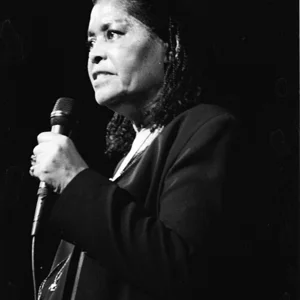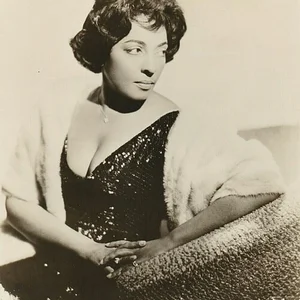

Carmen McRae (1922-1994) was an American jazz singer and pianist, regarded as one of the greatest vocal jazz voices of the 20th century. Known for her phrasing that lagged behind the beat and her subtle, ironic interpretation of lyrics, she stands in the lineage of Billie Holiday.
Carmen McRae(1920 — 1994)
Carmen McRae
États-Unis
6 min read
Frequently asked questions
Key Facts
- Born on April 8, 1922, in Harlem (New York), at the heart of the African American community.
- Started out as a bar pianist and backup singer before establishing herself as a solo vocalist in the 1950s.
- Recorded a tribute album to Billie Holiday, her main influence, in 1961.
- Celebrated for her offbeat phrasing and her highly personal interpretation of the Great American Songbook.
- Died on November 10, 1994, in Beverly Hills (California) after a long international career.
Works & Achievements
A song composed by Carmen McRae as a teenager and recorded by Billie Holiday: her first great source of pride, and the one that set the course of her career.
Her first album as a featured singer (Bethlehem label), shortly after being crowned by Down Beat.
A tribute album to Billie Holiday, her lifelong role model, on which she covers the songs associated with “Lady Day.”
A double album recorded live at Donte's club in Los Angeles, regarded as one of her finest achievements and a classic of vocal jazz.
A bold album on which she sets lyrics to the melodies of Thelonious Monk, including “'Round Midnight.”
A tribute to Sarah Vaughan, another towering jazz singer; the album was acclaimed by critics.
Anecdotes
As a teenager passionate about jazz, Carmen McRae wrote a song titled "Dream of Life." In 1939, her absolute idol, Billie Holiday, recorded it. For the young woman, barely nineteen, seeing her name linked to that of the greatest singer of the era was a thrill that sealed her calling.
In the 1940s, she married drummer Kenny Clarke, one of the inventors of bebop and of modern drumming. For a time, she even performed under the name "Carmen Clarke," before reclaiming her own name and building her own career.
In the early 1950s, she was the intermission pianist and singer at Minton's Playhouse, the Harlem club where bebop had been born a few years earlier. Between the sets of the great musicians, she accompanied herself on the piano and honed her craft.
In 1954, the famous jazz magazine Down Beat named her Best New Singer of the year. After years spent working as a secretary and singing in bands, this honor finally thrust her into the national spotlight.
In the late 1980s, at the height of her artistry, she devoted an entire album to Thelonious Monk, the genius of the piano. The challenge was bold: she set lyrics to instrumental melodies reputed to be impossible to sing, such as "'Round Midnight," creating one great musician's tribute to another.
Primary Sources
The song, composed by the very young Carmen McRae, was recorded by Billie Holiday in 1939: it was the future singer's first published work.
In 1954, the jazz magazine Down Beat named Carmen McRae “Best New Singer,” spotlighting an artist until then little known to the general public.
“The only influence I ever had was Billie Holiday,” Carmen McRae would often say, seeing herself in the phrasing and the storytelling art of her elder.
On this record, Carmen McRae sings, with added lyrics, the instrumental compositions of Thelonious Monk, including “'Round Midnight,” paying tribute to a musician she deeply admired.
Key Places
African American neighborhood and jazz capital where Carmen McRae was born in 1920, at the heart of the Harlem Renaissance.
Legendary club where bebop was born; Carmen McRae worked there as a pianist and intermission singer in the early 1950s.
“The Street,” New York's famous row of jazz clubs where the greatest performers played; McRae built her reputation there.
In the early 1950s, she sang in the clubs of Chicago, an important step before her national recognition.
Beloved by Japanese audiences, Carmen McRae gave many concerts there; Japan became one of her most devoted audiences.
Settled in the Los Angeles area, she spent her final years there and died there in 1994.
Typical Objects

An essential companion for the singer, the microphone lets her sing with all kinds of subtlety, almost in a whisper, to convey the irony and emotion of the lyrics.
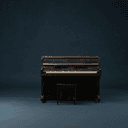
An excellent pianist, Carmen McRae often accompanied herself on the piano, as she did in her early days at Minton's Playhouse.

The medium for her albums from the 1950s onward, the long-playing vinyl record could hold a whole series of songs and made her voice known around the world.

Carmen McRae drew on the “Great American Songbook,” the repertoire of songs by Gershwin, Porter, and Ellington that she reinvented in her own way.

On stage, in clubs and concert halls alike, she often appeared in an elegant evening gown, the classic image of the jazz singer.

As a child and then a teenager, it was by tirelessly listening to Billie Holiday's records on a record player that she learned to sing.
School Curriculum
Vocabulary & Tags
Key Vocabulary
Daily Life
Morning
Working evenings and nights, Carmen McRae woke up late. The morning often began with a coffee, then with work on the texts: she would read and re-read a song's lyrics to grasp every nuance before singing it.
Afternoon
The afternoon was devoted to rehearsals with her trio (piano, double bass, drums), to choosing the repertoire, and to sound checks at the evening's club. On tour, it was also the time for traveling between cities and giving interviews.
Evening
Evening brought the heart of her craft: two or three sets on stage in intimate clubs, often lasting late into the night. Before an audience seated right up close, she would deliver the standards with her famous phrasing that lagged behind the beat.
Food
Life as a touring musician meant irregular meals, eaten at late hours between two concerts. Like many artists of her time, she lived to the rhythm of the clubs, in a smoke-filled atmosphere that eventually damaged her health.
Clothing
On stage, she embraced the elegance of jazz singers: refined evening gowns and understated jewelry. Backstage and while traveling, her outfits were simpler and more comfortable.
Housing
Born in a Harlem apartment, she first lived in New York, then in hotels as tours took her across the United States, Europe, and Japan, before settling in a house in California for her final years.