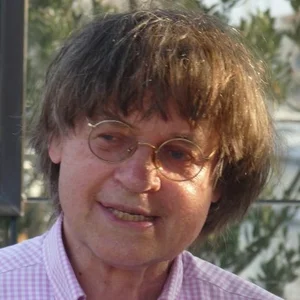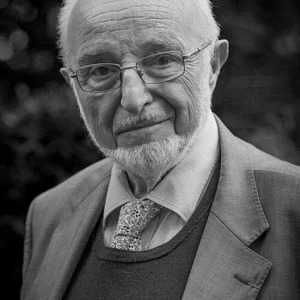

Chaval, whose real name was Yvan Le Louarn (1915-1968), was a French cartoonist and humorist. Famous for his dark, absurd and deeply pessimistic humor, he left his mark on the press and post-war editorial cartooning.
Chaval(1914 — 1968)
Chaval
France
4 min read
Frequently asked questions
Famous Quotes
« Birds are idiots»
Key Facts
- Born in 1915 in Bordeaux under the name Yvan Le Louarn
- Adopted the pen name “Chaval” and began publishing his drawings in the press from the 1940s onward
- Contributed to many newspapers and magazines (Paris Match, Le Figaro, Punch, Ici Paris)
- Developed a dark and absurd humor that became his signature, notably with “Birds are idiots” (1963)
- Died in 1968 in Paris
Works & Achievements
Hundreds of cartoons published in Paris Match, Le Figaro and Punch, which made Chaval one of the masters of the absurd and of comic pessimism.
A short film made from his drawings, a fake scientific documentary that became a cult classic for its absurd tone.
Collections gathering his most striking cartoons, which spread his humor beyond the press.
A graphic universe populated by resigned beings, useless machines and impassive animals, instantly recognizable.
Anecdotes
Chaval's real name was Yvan Le Louarn and he was born in Bordeaux. He chose as his pen name the name of a family hamlet, preferring to sign with a short, punchy word rather than his real name.
His drawings often featured tiny, drab, resigned characters, crushed by absurd machines or by the world's stupidity. This funny pessimism became his trademark: people still speak of “Chaval-style humor.”
In 1965, Chaval made a short film that became a cult classic, “Les oiseaux sont des cons” (“Birds Are Jerks”), built entirely from his drawings and a deadpan voiceover. The film reveals his taste for the absurd and for mock scientific rigor.
Famous for his dark humor, Chaval took his own life in January 1968 in his Paris studio. His sudden death shook the small world of press cartooning, where he was admired as one of the masters of the absurd.
Chaval published in prestigious papers such as Paris Match, Le Figaro, and the English magazine Punch. His plain line, seemingly almost clumsy, concealed a sharp sense of the punchline and the perfect phrase.
Primary Sources
A black-and-white animated film made from Chaval's drawings, which applies the tone of a mock scientific documentary to birds in order to better mock human foolishness.
A collection of humorous drawings in which big, placid animals and overwhelmed humans embody the absurdist comedy characteristic of Chaval.
Chaval regularly published dark-humor drawings there, featuring ordinary characters confronted with the absurdity of everyday life.
Key Places
Birthplace of Yvan Le Louarn, known as Chaval, in south-western France.
The capital where Chaval carried out most of his career as a newspaper cartoonist and where he died in 1968.
Parisian newspapers and magazines (Paris Match, Le Figaro) for which he supplied his humorous drawings.
City of the famous British satirical magazine Punch, which also published drawings by Chaval.
Typical Objects

Basic tools of the cartoonist, with which Chaval drew his crisp lines and characteristic flat areas of black.

The studio's tilted surface on which the artist composed his press cartoons before sending them to the newspapers.

Magazines such as Paris Match, Le Figaro or Punch that brought Chaval's humorous drawings to the general public each week.

A motion-picture camera used to animate his drawings and make his absurd short films.

Printed collections gathering his best black-humour drawings, sold in bookshops.
School Curriculum
Vocabulary & Tags
Key Vocabulary
Daily Life
Morning
In the morning, Chaval would settle down at his drawing board, searching for the idea and the punchline that would hit home. Cartoon humor requires finding the right word as much as drawing the right line.
Afternoon
The afternoon was devoted to executing the drawings in pen and ink, then sending them off to the Parisian editorial offices that awaited the weekly deliveries.
Evening
In the evening, he mingled with the world of cartoonists and journalists, exchanging ideas and jokes, or reworked his animated film projects.
Food
Like post-war Parisians, he shared the ordinary meals of his era, between the cafés and brasseries where the press crowd gathered.
Clothing
He wore the sober city clothes of the mid-20th century: suit, shirt and tie, the everyday attire of the artists and journalists of his time.
Housing
He lived and worked in Paris in a studio-apartment, a place that was both home and workshop, where drawings and materials piled up.
Historical Timeline
Period Vocabulary
Liens externes & ressources
Références
Œuvres
Dessins d'humour noir pour la presse
années 1950-1960
Les oiseaux sont des cons
1965
Albums de dessins
années 1950-1960
Personnages et créatures absurdes
carrière (années 1940-1968)