 flip
flipSpiced Lebkuchen, electuary style
Spiced Lebkuchen, electuary style
Why this dish? Gingerbread, heir to monastic recipes where honey and costly spices were as much pharmacy as pastry, ended court meals and was considered comforting — good for the stomach and the spirits. Christian Ludwig used it even in his sauces (see the venison roast): it was a key ingredient of his table.
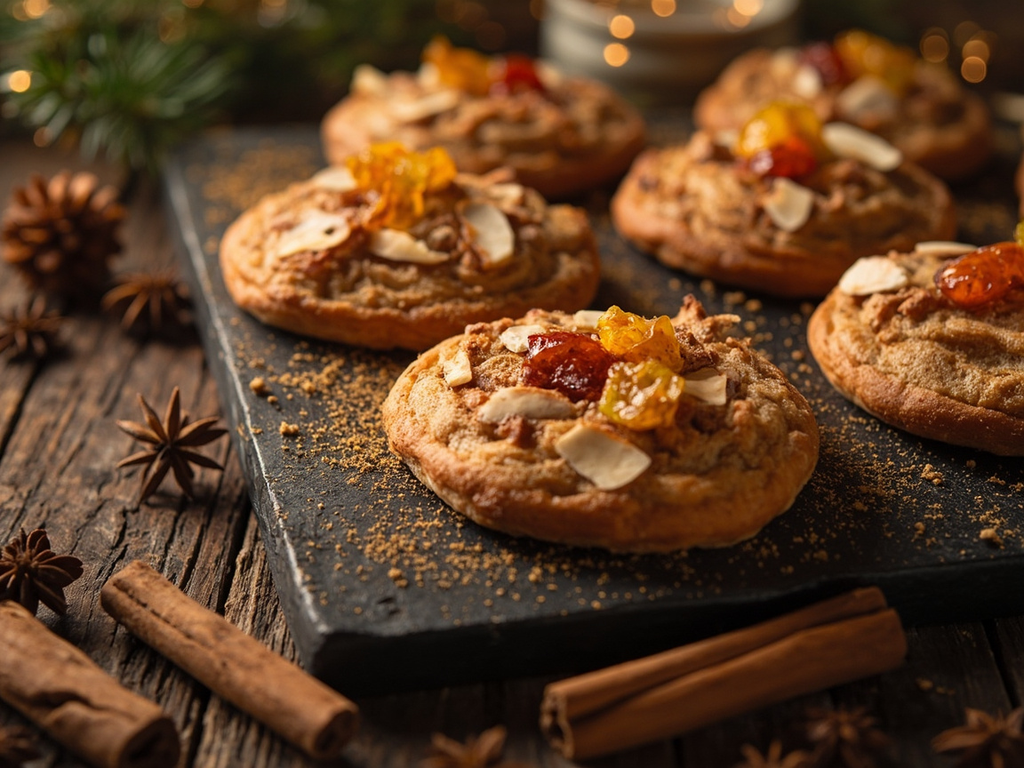
Small soft honey gingerbreads made with rye and wheat flour, loaded with cinnamon, ginger, clove, nutmeg, and pepper, topped with candied peel and almonds — a spiced sweet considered digestive and comforting.
Do not disdain these gingerbreads, Sir: our ancestors held them as remedy as much as treat. Honey and all these spices from far away — ginger, clove, nutmeg — warm the stomach and drive out cold humors, they say. My cook always keeps a supply: I nibble one after the concert, and he grates it into my game sauces to give them depth. A little spiced sweetness, and the spirit is set right again.
- •Honey — abundantly (sweetener and binder, ancient base)
- •Rye and wheat flour — mixed in parts (dough)
- •Spices (cinnamon, ginger, clove, nutmeg, pepper) — generously (signature and medicinal virtue)
- •Candied citrus peel — a handful, chopped (flavor and garnish)
- •Almonds — a few (garnish)
- •Potash water or leaven — a little (traditional light leavening)
Spiced Lebkuchen, electuary style
Small soft honey gingerbreads made with rye and wheat flour, loaded with cinnamon, ginger, clove, nutmeg, and pepper, topped with candied peel and almonds — a spiced sweet considered digestive and comforting.
Why this dish? Gingerbread, heir to monastic recipes where honey and costly spices were as much pharmacy as pastry, ended court meals and was considered comforting — good for the stomach and the spirits. Christian Ludwig used it even in his sauces (see the venison roast): it was a key ingredient of his table.
Do not disdain these gingerbreads, Sir: our ancestors held them as remedy as much as treat. Honey and all these spices from far away — ginger, clove, nutmeg — warm the stomach and drive out cold humors, they say. My cook always keeps a supply: I nibble one after the concert, and he grates it into my game sauces to give them depth. A little spiced sweetness, and the spirit is set right again.
Ingredients (period version)
- Honey — abundantly (sweetener and binder, ancient base)
- Rye and wheat flour — mixed in parts (dough)
- Spices (cinnamon, ginger, clove, nutmeg, pepper) — generously (signature and medicinal virtue)
- Candied citrus peel — a handful, chopped (flavor and garnish)
- Almonds — a few (garnish)
- Potash water or leaven — a little (traditional light leavening)
Ingredients
- Honey — 200 g (sweetener and binder)
- Rye flour — 100 g (dough)
- Wheat flour — 150 g (dough)
- Spice mix (cinnamon, ginger, clove, nutmeg, pepper) — 2 tsp total (signature)
- Chopped candied orange and lemon peel — 50 g (flavor)
- Sliced or whole almonds — 40 g (garnish)
- Baking soda — 1 tsp (leavening (modern equivalent of potash))
- 1 egg — 1 (binder)
Method
- Warm the honey to make it fluid; mix with flours, spices, and baking soda.
- Add the egg and chopped candied peel; knead into a soft dough. Let it rest (ideally a few hours, even overnight).
- Shape small domes or rounds on a paper-lined baking sheet.
- Decorate with almonds, pressing lightly.
- Bake at 170°C for 12 to 15 minutes: they should remain soft.
- Let cool; they soften further and keep for several weeks in a tin.
How it was made : Lebkuchen descends from the 'gingerbreads' of medieval monasteries, where honey and Eastern spices — expensive and reputedly medicinal — made these cakes true electuaries (remedies mixed with honey). They were leavened with potash water (Pottasche) before modern chemical leaveners arrived. They kept well, making them also a provision.
The contemporary twist : Glaze with sugar icing on only a quarter of the surface and cut them with music-note-shaped cookie cutters, a nod to Bach's dedicatee.
Sources : Marx Rumpolt, Ein new Kochbuch, 1581 · Maria Sophia Schellhammer, Das Brandenburgische Koch-Buch, 1723
Christian Ludwig of Brandenburg · Charactorium