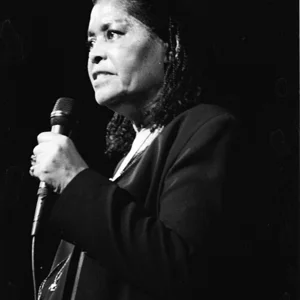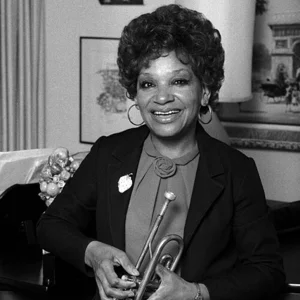

Clora Bryant (1927-2019) was an American jazz trumpeter, one of the very few women to establish herself as a soloist in bebop. A key figure on the Central Avenue scene in Los Angeles, she rubbed shoulders with the greatest musicians of her time.
Clora Bryant(1927 — 2019)
Clora Bryant
États-Unis
6 min read
Frequently asked questions
Key Facts
- Born on May 30, 1927, in Denison, Texas; died on August 25, 2019, in Los Angeles.
- In the 1940s, she became one of the only women trumpeters in bebop, on the Central Avenue scene in Los Angeles.
- Played and performed alongside major figures such as Dizzy Gillespie, Charlie Parker, and Billie Holiday.
- In 1957 she recorded her only album as a leader, “Gal with a Horn.”
- Invited to perform in the Soviet Union in 1989.
Works & Achievements
An all-female swing orchestra with which she performed during the war, all the way to the Apollo Theater in Harlem.
She made her mark in the clubs of Los Angeles alongside the great names of bebop, an exceptional feat for a woman instrumentalist.
Her only album as a leader, on which she plays trumpet and sings: a rarity for a woman in that era.
A tour of the Soviet Union that she requested herself, a symbol of cultural openness during the Cold War.
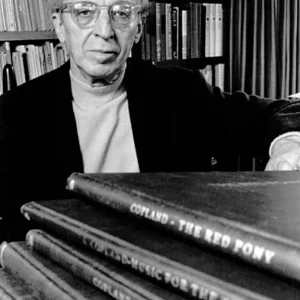
She contributed to this landmark book on the history of jazz in Los Angeles, passing on the memory of her generation.
Anecdotes
Clora Bryant never chose the trumpet: it was her two older brothers, Fred and Mel, who played it. When they left for the army during the Second World War, one of them left his instrument at home. Clora, then a teenager, taught herself to play, encouraged by her father, who was raising his children alone in Texas.
As a student at Prairie View College, she joined the Prairie View Co-Eds, an all-female swing band. During the war, these musicians filled in for the men who had gone off to fight, and they performed as far afield as the famous Apollo Theater in Harlem, New York.
On Central Avenue in Los Angeles, the heart of African American jazz life, Clora took part in late-night 'jam sessions' and 'cutting contests', duels in which musicians competed through improvisation. As one of the very few female trumpeters in this world of men, she held her own against the greatest soloists.
She idolized Dizzy Gillespie, one of the inventors of bebop, whom she regarded as her role model and mentor. She even composed a piece in his honor, and their friendship lasted for decades.
In 1989, she personally wrote to the Soviet authorities to ask permission to come and play in the USSR. Invited to do so, she became one of the first American jazz musicians to perform there, during the era of Mikhail Gorbachev.
In 1996, a major heart operation prevented her from playing the trumpet again, an instrument that demands powerful breath. Far from giving up music, she continued to sing and improvise through 'scat' with her voice well into old age.
Primary Sources
On Central Avenue, you could move from one club to the next all night long and hear the best musicians in the world. It was our university of music.
Clora Bryant plays trumpet and sings on it, backed by a quartet, proving that a woman could be both a bebop soloist and a singer.
I wanted to be judged as a musician, not as a 'woman trumpet player.' Dizzy Gillespie was my mentor and my idol.
Key Places
Town in northern Texas where Clora Bryant was born in 1927, in the then-segregated American South.
Historically Black university where she studied and joined the all-women band, the Prairie View Co-Eds.
The heart of African American jazz in Los Angeles, teeming with clubs where Clora built her reputation as a soloist.
The city where she lived most of her life, pursued her career, and died in 2019.
Soviet capital where she performed in 1989, among the first American women jazz musicians invited to the country.
Typical Objects

The instrument to which Clora Bryant devoted her life, which she taught herself on the trumpet left behind by one of her brothers. She made it a rare tool in the hands of a woman in bebop.

A small device that jazz trumpeters slip into the bell to produce a muffled, nasal sound. Essential to the sonic vocabulary of the bebop she played.

Her only album as a leader, recorded in 1957 on an LP. It showcases her twofold mastery of both the trumpet and singing.

The fast, intricate chord changes of bebop that musicians improvised over during jam sessions. Clora read through them and turned them into solos.

An elegant outfit worn on stage, where female musicians were expected to have a polished appearance. Clora had to both charm the audience and assert her talent as an instrumentalist.

After her heart surgery in 1996, the microphone became her main instrument: she carried on singing and improvising in scat.
School Curriculum
Vocabulary & Tags
Key Vocabulary
Tags
Daily Life
Morning
For a jazz musician, the morning is often a time of rest after the night's concerts. Clora devoted the start of her day to trumpet exercises: scales, sustained notes and breath work, essential for keeping her “chops” (lips) in shape.
Afternoon
The afternoon was for rehearsals with the other musicians and learning new bebop tunes, with their demanding chord changes. It was also the time to work her contacts and land “gigs,” the bookings in the clubs.
Evening
When evening came, real life began on Central Avenue: shows in the clubs, then improvised “jam sessions” until the early hours, where the musicians measured themselves against one another in frantic musical battles.
Food
Her meals drew on the African American cooking of the South (“soul food”): fried chicken, slow-cooked greens, cornbread. Musicians often ate late, between two sets, in the little restaurants open through the night.
Clothing
On stage, a woman was expected to show polished elegance: dressy gowns and immaculate hairstyles. Clora had to navigate this demand for appearance while asserting her standing as a serious instrumentalist.
Housing
She lived mainly in Los Angeles, in the African American neighborhoods near Central Avenue, in a context of segregation that limited the residential areas open to Black people. There she raised her four children.