The Sharing of the Sacrifice (thysía) and the Greek symposion
In ancient Greece, eating is not a private act: it is first and foremost a sharing with the gods. The meal revolves around the thysía, the sacrifice where the part of fragrant smoke (fat and bones) is burned for the Immortals, while humans share the roasted meat. Before all this come the bloodless offerings — barley and honey cakes (pélanos, pópana) placed on the altar or thrown into the pit for the ancient powers. The everyday meal is called deîpnon; it ends with the symposion, the drinking session, where a libation is first poured to the gods before drinking. The divine foods proper — ambrosia and nectar — remain reserved for the Immortals: mortals only approach them through the image of honey, sacred barley, and wine mixed with water.
Signature : Sacred Barley (oulaí) and Honey
Roasted barley and honey are the two sacred substances par excellence. Barley grains (oulaí) were sprinkled on the victim's head and on the altar before every sacrifice; honey, a food that does not spoil, was the earthly echo of ambrosia. Cakes, porridges, and drinks of the Titans and oracles revolve around this pair: barley from the earth, honey from the sky.
Coeus at the table
4 period recipes
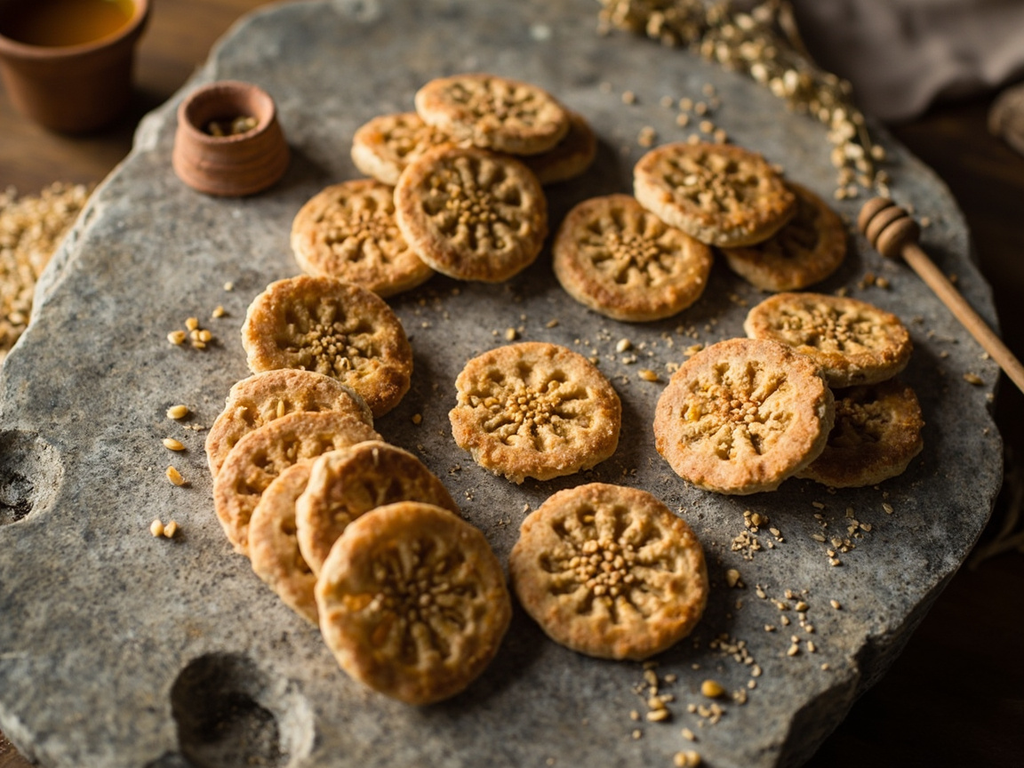 Offering
Pélanos of Coeus — barley and honey cake for the oracle
Bloodless offering (pélanos / pópanon) placed on the altar before the sacrifice
🍯· 40 min
View the recipe
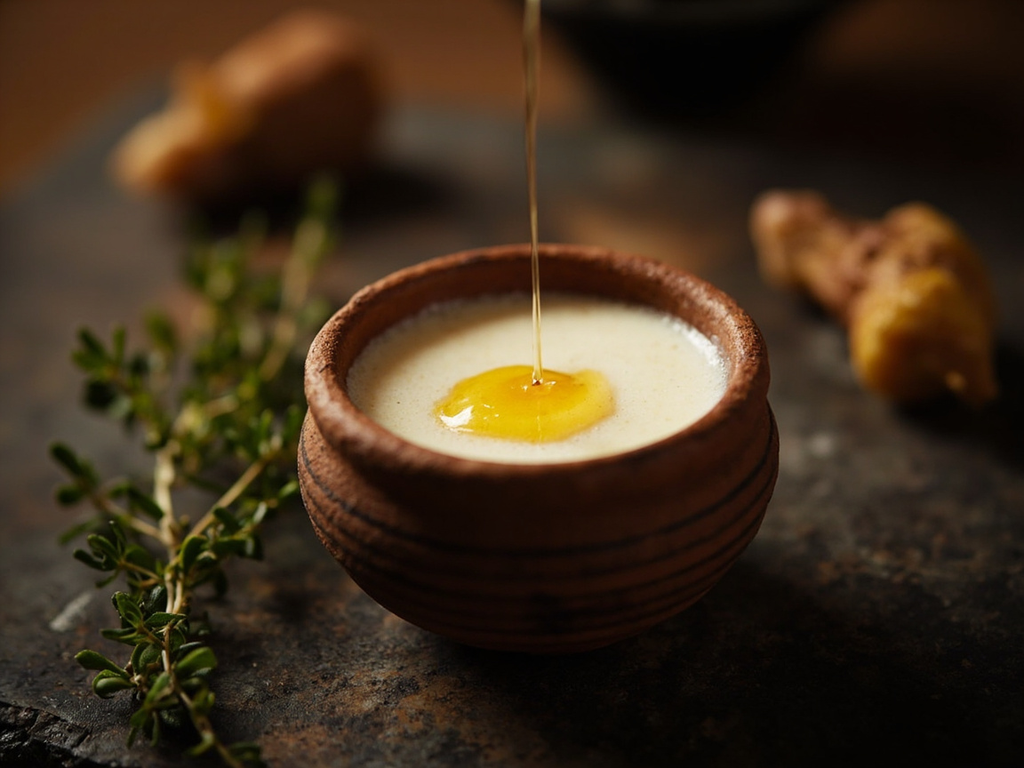 Drink
DrinkMélikraton — milk and honey libation for the Ancient Powers
Libation / ritual drink poured at the symposion or into the pit (bóthros)
🍯· 10 min
View the recipe
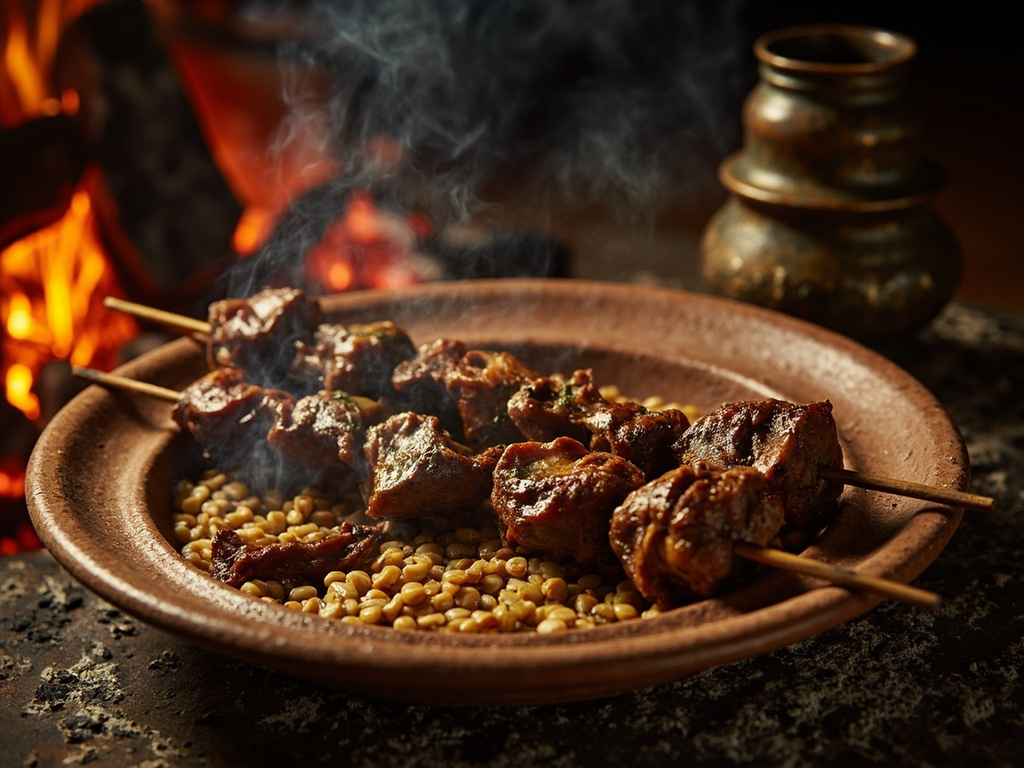 Festive
Grilled Splánchna and Barley — the human share at the feast
Sharing of the sacrifice (thysía): roasted offal on skewers, eaten on the spot
🧂 🍄· 50 min
View the recipe
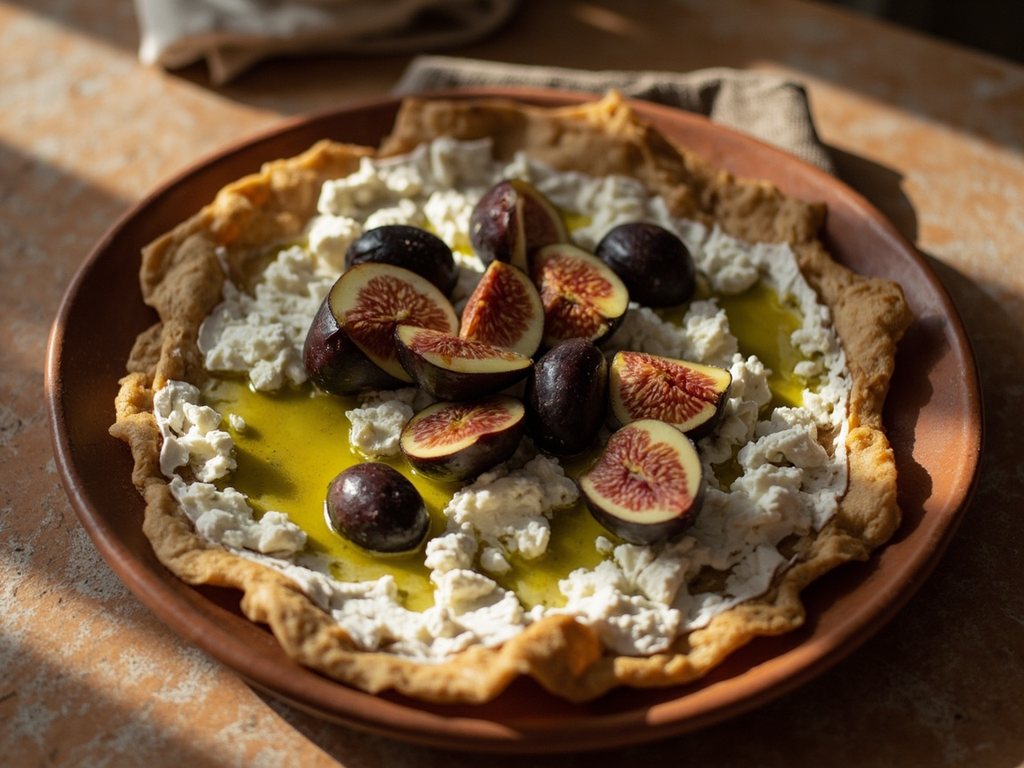 Everyday
Barley Mâza with Figs, Fresh Cheese, and Olives
Everyday meal (deîpnon): unleavened barley paste, the staple of Greek diet
🧂 🍋· 30 min
View the recipe